

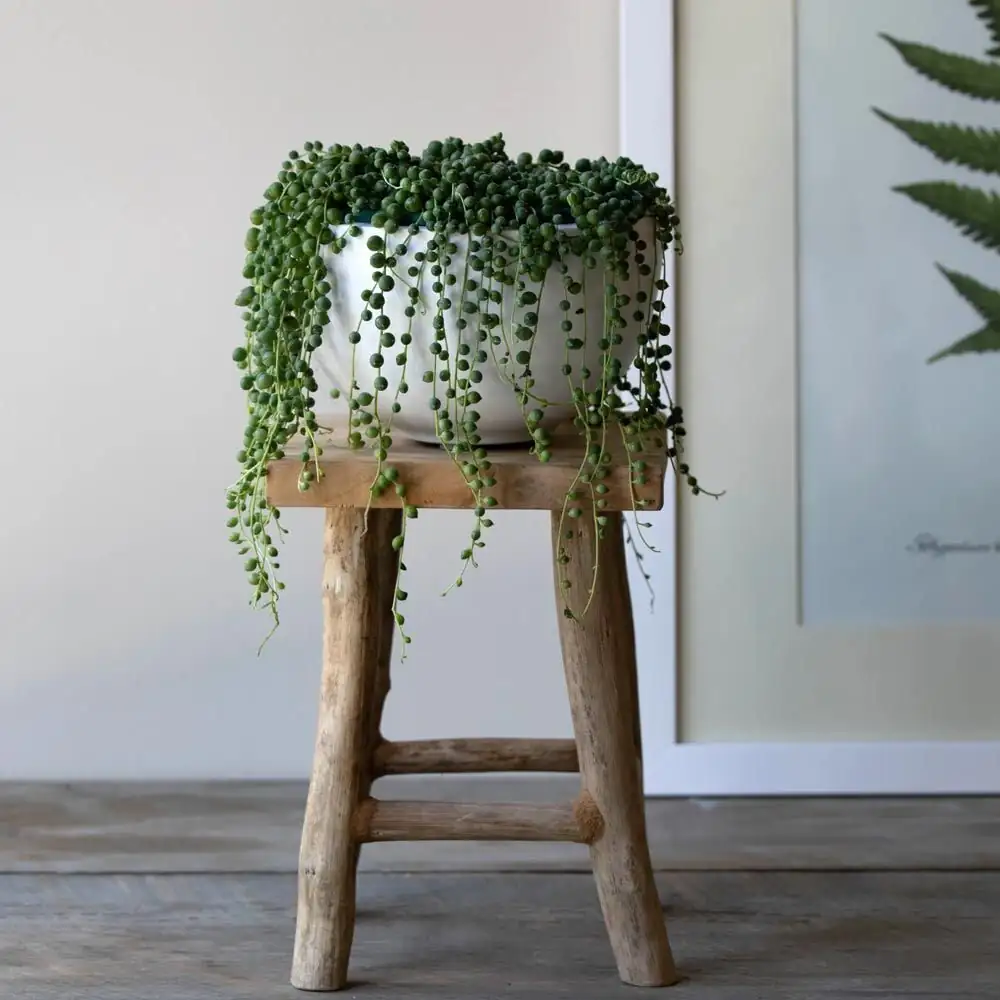
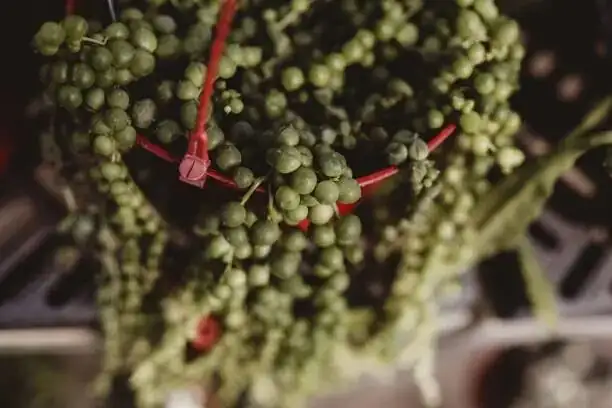
Imagine a living necklace that frames a bowl and spills over its edge in glittering green strands. That’s the magic of String of Pearls—Curio rowleyanus (syn. Senecio rowleyanus)—the trailing succulent whose bead-like leaves turn simple dishes into centerpieces. Pair it with other shallow-rooted, drought-tolerant allies like Haworthia, Echeveria, and Sedum, and you have a low-fuss, high-style composition that looks curated by nature itself.
Meet the star: String of Pearls, the natural rim-framer
- Identity and origin: A member of the daisy family (Asteraceae), String of Pearls hails from the drier regions of South Africa and southern Namibia. In the wild, it threads between rocks or under shrubs—bright light with some built-in shade.
- Habit and form: Shallow-rooted at the crown (around 2 in/5 cm tall) with elegant, cascading stems that can drape 2–3 ft (60–90 cm) or more in containers. Each “pearl” is a pea-sized, water-storing leaf with a faint translucent window that helps capture light.
- Flowers: Small creamy-white blooms often arrive late fall to early spring (commonly winter indoors). Lean in: they smell sweet and spicy—often compared to cinnamon/vanilla.
- Why it’s perfect in bowls: It naturally wants to spill. Nestle it at the rim and it finishes the design with movement and lace-like softness while the shallow root system fits beautifully in low dishes.
Design principles for shallow succulent bowls
Think like a landscape painter: set a simple horizon, add sculptural focal points, and let String of Pearls become the waterfall at the edge.
Vessel and top-dressing
- Choose a shallow, wide bowl with drainage holes—ceramic, terra-cotta, or sealed concrete. The wide footprint suits shallow roots and prevents soggy centers.
- Bonus styling: Use a “double-dish” look by placing your planted bowl on a second, slightly larger decorative saucer filled with pebbles. It elevates the display and catches excess water without letting the pot sit in it.
- Top-dress with mineral grit (2–5 mm pumice, granite, or pea gravel) to stabilize pearls, keep stems off soggy soil, and create clean negative space.
Soil and planting
- Soil: Very fast-draining cactus/succulent mix. A reliable DIY: 1:1 high-quality potting mix to mineral grit (perlite, pumice, or coarse sand). Some growers go 3:1 potting mix to coarse sand—still fast and airy.
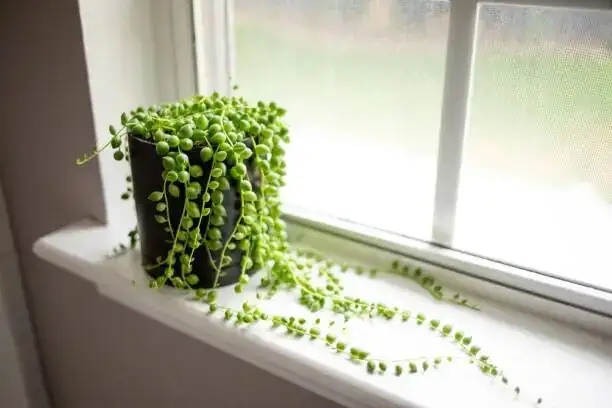
- Planting tip: Set taller or textural focal plants slightly off-center. Tuck String of Pearls right at the rim; lay a few beads on the soil so nodes can root and thicken the curtain.
Light, temperature, and airflow
- Light: Bright, indirect light with a little gentle direct sun (morning/late afternoon). East or west windows are often ideal; filter or step back from harsh midday sun to prevent scorching.
- Temperature: Happy at 60–80°F (15–27°C). It tolerates down to about 50°F (10°C), but not frost.
- Air: Average indoor humidity or drier; skip misting. Good ventilation keeps fungal issues at bay.
Watering and feeding
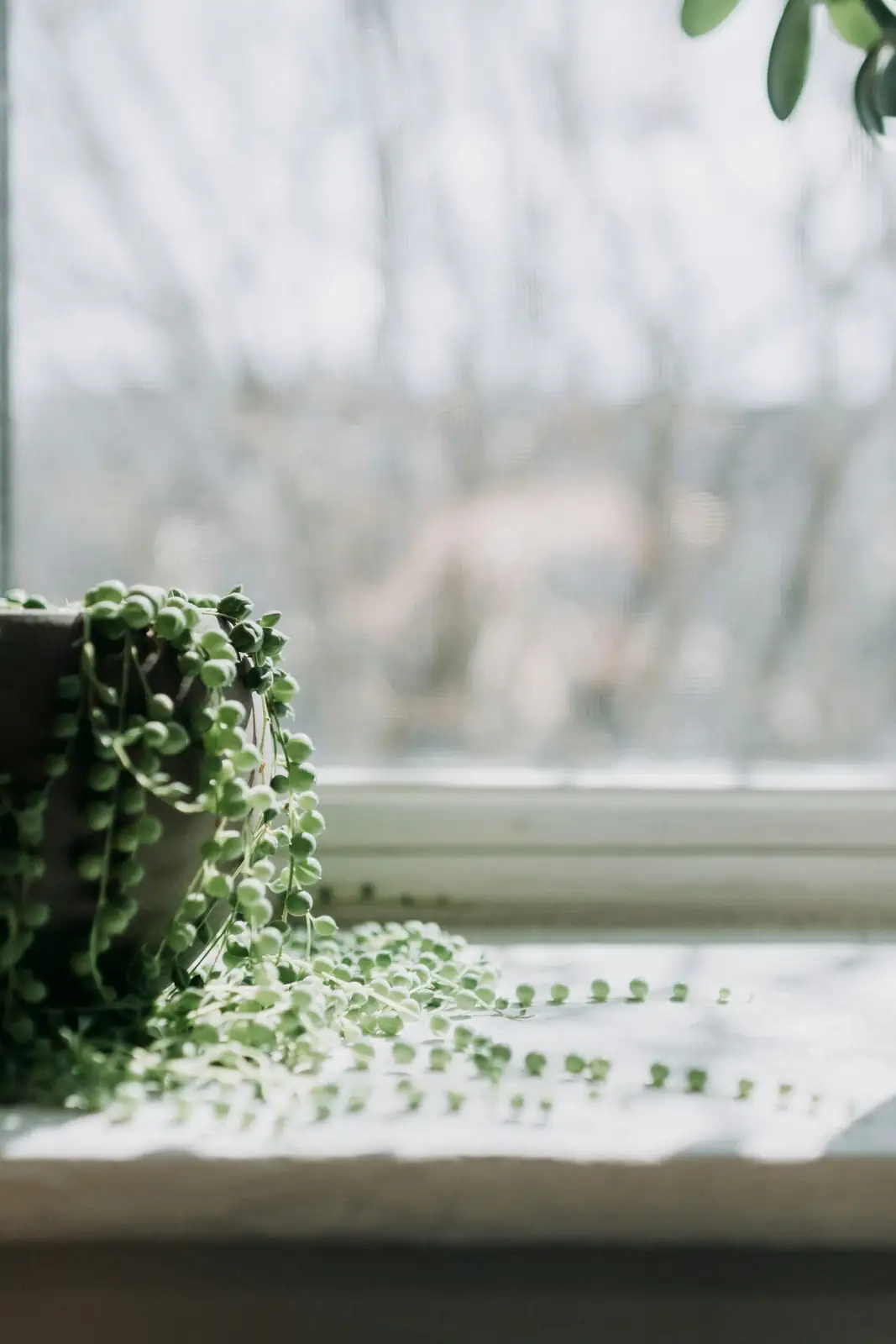
- Water like a succulent: Soak thoroughly, then allow the mix to dry well before watering again. Indoors in active growth, this often means every 2–3 weeks—always check dryness, not the calendar.
- Winter: Keep much drier, watering just enough to prevent severe shriveling. Slightly deflated pearls are your polite nudge to water.
- Fertilize lightly: Once a month (or every 4–6 weeks) spring through early autumn with a balanced liquid feed at 1/2 strength. Pause in winter.
Three head-turning bowl recipes
1) Halo Rosette Bowl (graphic elegance)
- Cast:
- Center/focal: A powdery-blue Echeveria (e.g., E. ‘Lola’ or E. elegans)
- Texture ring: A tiny-leaved Sedum (e.g., S. ‘Little Missy’ or S. dasyphyllum)
- Frame-and-spill: String of Pearls around the rim
- Layout:
- Set the Echeveria slightly off-center.
- Create a soft halo of Sedum around it.
- Tuck 3–5 small String of Pearls cuttings equidistant along the rim for an even cascade.
- Why it works: The sculptural rosette anchors the eye; Sedum softens the transition; String of Pearls delivers movement and a refined edge.
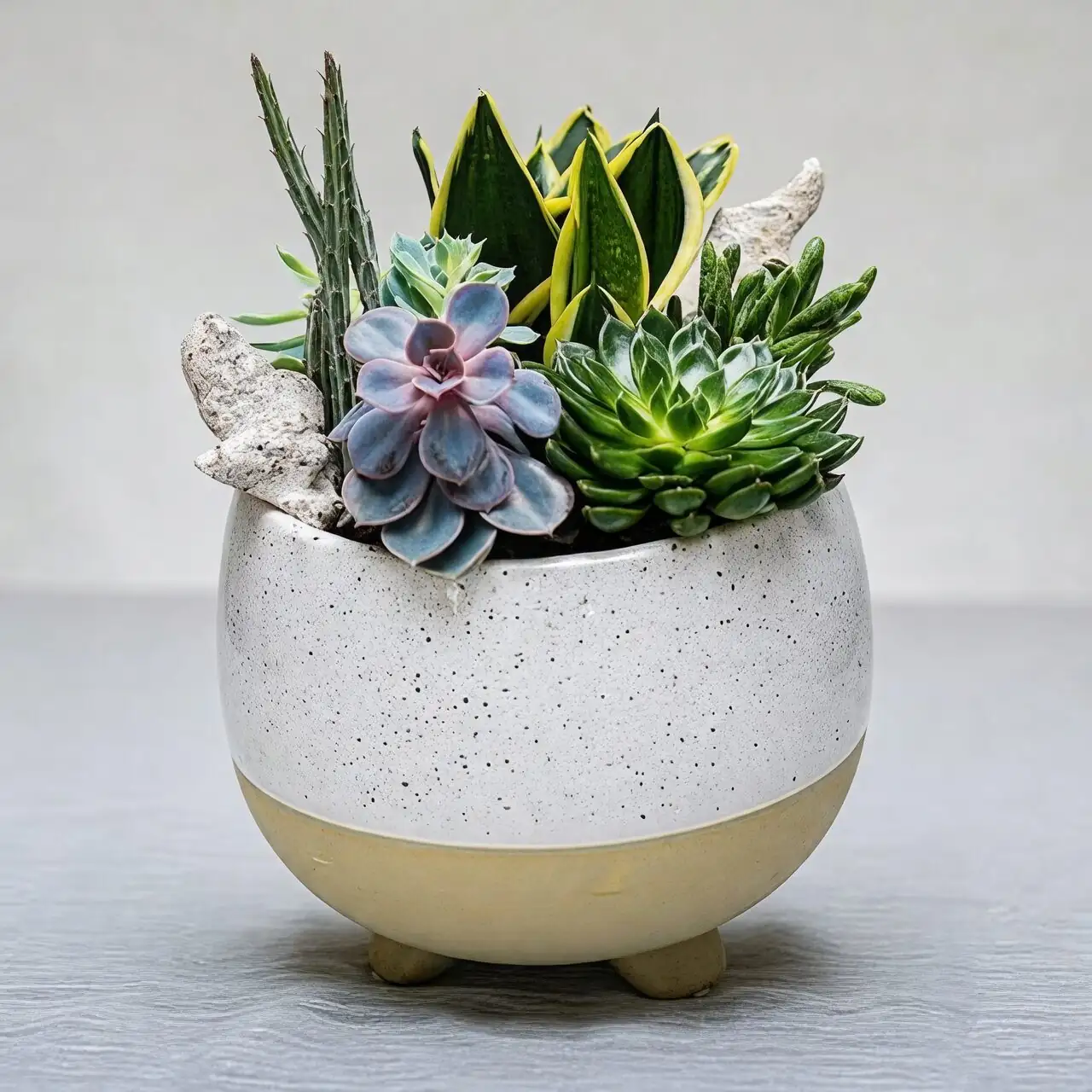
2) Shadow and Shine (low light tolerant chic)
- Cast:
- Cluster: Two or three Haworthia (e.g., H. cooperi or H. fasciata) for translucent or banded texture
- Accent: A miniature Echeveria for color pop
- Frame-and-spill: String of Pearls to drape
- Layout:
- Group Haworthia like little “rock outcrops.”
- Nestle the mini Echeveria toward the brightest side.
- Run String of Pearls where it will catch the light and trail.
- Why it works: Haworthia tolerate slightly gentler light indoors and offer architectural contrast to the pearls’ round beads.
3) Desert River Bowl (modern minimal)
- Cast:
- Spine: A line of dwarf Haworthia or compact Echeveria creating a “ridge”
- Groundcover: A silvery Sedum (e.g., S. spathulifolium) as “desert moss”
- Frame-and-spill: String of Pearls flowing like a river over the rim
- Layout:
- Draw a diagonal “riverbed” of pale gravel across the bowl.
- Plant along one bank; let pearls pour over the opposite side for directional drama.
- Why it works: Negative space and a clear flow line turn a small bowl into a landscape.
Pro tip for all three: For instant fullness, lay a few String of Pearls cuttings flat on the soil surface with nodes touching the mix. Pin them lightly with floral pins or bent paperclips. They’ll root in 2–3 weeks and thicken the edge.
Styling tricks that make bowls look curated
- Use odd numbers: Plant 1, 3, or 5 focal elements for natural balance.
- Color echoes: Blue Echeveria + silvery top-dress + pale-green pearls = serene. Or go warm with pinkish Echeveria, golden gravel, and variegated String of Pearls (cream-streaked) for a softly luminous palette.
- Height illusions: Slightly mound the center with extra mineral grit under the root balls to create subtle elevation.
- Repetition: On a shelf, repeat String of Pearls across multiple bowls to visually tie the display together.
- Keep it shallow: The star is shallow-rooted—your bowl should be, too. This helps the mix dry faster and protects from rot.
Care and maintenance for mixed bowls
- Pruning and shaping: Trim long, bare, or leggy trails (spring is ideal) to encourage branching. Replant cuttings into the bowl’s surface to fill gaps.
- Repotting: Every 2–3 years in spring. Choose only a slightly larger dish; oversized pots stay wet too long.
- Pests and health:
- Common culprits: Mealybugs, aphids, and spider mites—especially indoors.
- Strategy: Improve airflow, isolate if infested, and treat with insecticidal soap or neem/horticultural oil. Dial watering back toward “dry.”
- Safety note: String of Pearls is toxic if ingested and its sap may irritate sensitive skin. Keep bowls out of reach of curious pets and kids.
Troubleshooting the spill
- Pearls shriveling:
- Slightly deflated but firm: likely thirsty—water thoroughly and drain well.
- Shriveling while mix is wet: check for root rot; repot into gritty mix and save healthy strands as cuttings.
- Mushy stems or dropping beads: classic overwatering. Brighten light, dry out, and reset in faster-draining soil.
- Gaps between beads (stretching): increase brightness with gentle direct sun and prune/replant tips for a fuller top.
- Mix stays wet too long: add more mineral grit, switch to a shallower or more porous pot, and confirm the drainage hole isn’t blocked.
Seasonal rhythm for bowl perfection
- Spring: Resume gentle feeding; repot or refresh top-dress; prune and propagate freely.
- Summer: Bright light with protection from harsh midday sun; water only after the mix dries; in heat waves above ~86°F (30°C), offer light shade and good airflow.
- Fall: Slow watering; reduce fertilizer.
- Winter: Bright light, cooler temps around 50–60°F (10–16°C) can encourage flowering; keep on the dry side and protect from cold drafts.
A note on blooms and “flower language”
- The flowers: Up close, they’re small, creamy-white, and wonderfully fragrant—sweet and spicy, like a tiny cinnamon candle. Indoors, they most often appear in winter into early spring.
- Symbolism: Often associated with enduring bonds and strings of connection, the plant’s trailing beads naturally evoke continuity and good fortune. While not rooted in ancient lore, this modern “flower language” reflects how we live with it—on shelves and sills, where its ever-lengthening necklaces feel like gentle reminders that good things can keep growing.
Quick-start checklist (pin it by your pot)
- Light: Bright, with a little soft sun; avoid harsh midday rays.
- Soil: Gritty, free-draining succulent mix; shallow bowl with drainage.
- Water: Soak, then dry well; much less in winter.
- Feed: Half-strength monthly, spring to early autumn.
- Trim: Prune leggy strands; replant cuttings along the rim.
- Safety: Toxic if ingested; handle with care.
When your String of Pearls frames a bowl of Haworthia, Echeveria, and Sedum, the whole arrangement reads like jewelry for your table—sparkle at the center, craftsmanship at the edges, and a graceful drape that makes every glance feel like a small celebration.