

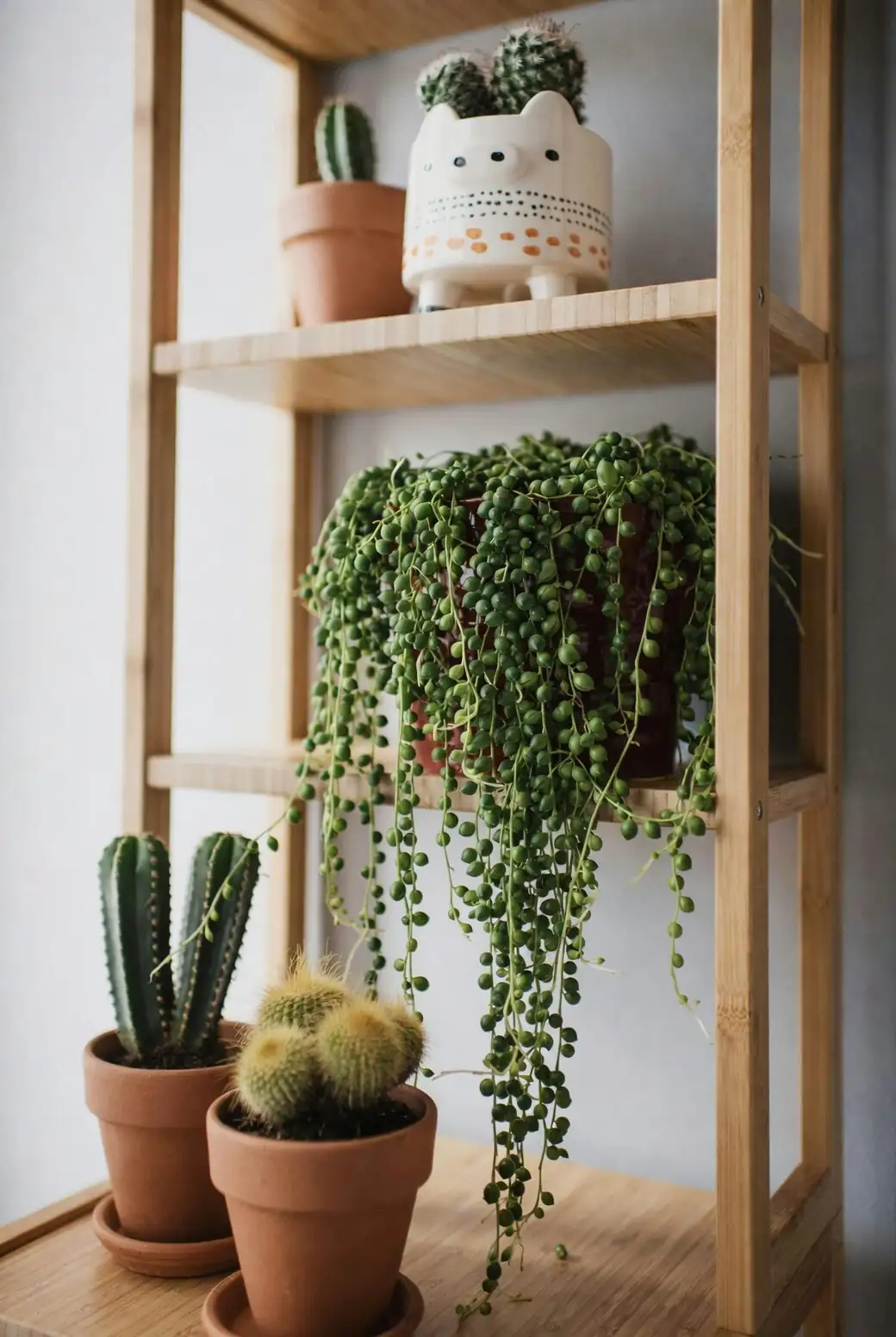
If you love the look of a green necklace cascading from a pot but also share your home with curious kids or whiskered climbers, breathe easy—String of Pearls can be part of a safety-first home. With smart placement, careful handling, and a few clever styling swaps, you can enjoy Curio rowleyanus (syn. Senecio rowleyanus) without inviting trouble.
Meet the beaded beauty
String of Pearls is a trailing succulent from the drier regions of South Africa and southern Namibia. Each “pearl” is a pea-sized, water-storing leaf with a tiny translucent window, strung along slender stems that pour over pot rims. It’s in the Asteraceae family (think daisies), and when content, it produces petite creamy-white blooms that smell sweet and spicy—like cinnamon and vanilla.
- Also known as: String of Beads, Bead Plant, Rosary Vine, Pearl Plant
- Habit and size: A low crown (about 2 in / 5 cm tall) with trailing stems typically 2–3 ft (60–90 cm) long, longer with age
- Flowers: Small, white/creamy composite blooms with noticeable stamens; fragrant; most often late fall to early spring indoors
Safety first: essential facts for homes with kids and pets
- Toxicity: Toxic if ingested to people and pets; sap may irritate sensitive skin. Symptoms in pets can include drooling, vomiting, diarrhea, and lethargy; in people, ingestion may cause minor GI upset, and sap may cause dermatitis.
- Keep out of reach: Prioritize placements that are physically inaccessible to children, cats, and dogs.
- Quick response if there’s contact:
- Ingestion: Remove plant material from the mouth and contact your veterinarian or Poison Control for guidance.
- Skin or eye exposure to sap: Rinse with cool running water and seek medical advice if irritation persists.
Place it so nobody can reach it: hanging and wall-shelf strategies
Give String of Pearls the bright light it craves and the distance your household needs.
- Ceiling hangers done right
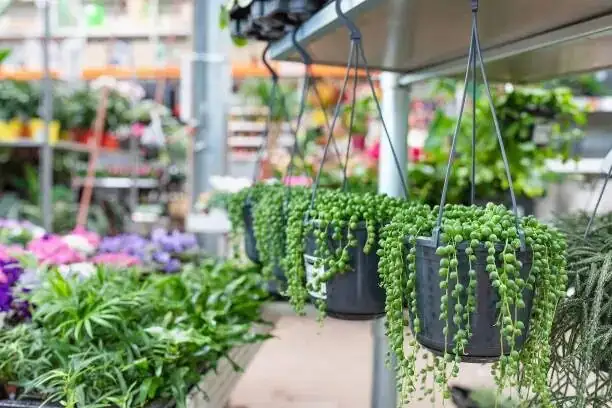
- Install heavy-duty ceiling hooks anchored into studs or use rated toggle anchors (check weight limits).
- Choose enclosed or deep-sided hanging planters so trails don’t brush passersby.
- Keep the lowest trail at least 6–7 ft (1.8–2.1 m) above the floor—well beyond a child’s reach and most cats’ leaping zones.
- Wall shelves with safety lips
- Mount high, bracketed shelves into studs; add a 1–2 in (2.5–5 cm) front lip to block curious paws.
- Use plant cages, trellis hoops, or discreet command hooks to loop trails back upward so they don’t dangle within reach.
- Smart traffic mapping
- Avoid cat “superhighways” (tops of bookcases, window ledges used for sunbathing, fridge tops).
- Keep plants out of nurseries, playrooms, and near cribs.
- Best rooms: a bright office with a door, a sunroom with a baby gate, or a high, south/west-facing wall where trails can’t bridge to furniture.
- Outdoor-only (mild climates)
- Patio or balcony? A high wall bracket may work if no furniture allows climbing—and only if temps stay above about 50°F/10°C; protect from frost.
Handling and housekeeping protocols (sap-savvy and kid/pet-aware)
- Suit up lightly: Wear gloves for pruning/repotting. If you’re prone to irritation, add sleeves and eye protection.
- Control the clippings: Place a towel or tray beneath the plant before trimming. Bag prunings immediately; don’t leave “pearls” where little hands or paws might find them.
- Propagate out of reach: Root cuttings on a high shelf or behind a closed door.
- Clean as you go: Wipe sap drips from pots or shelving; vacuum fallen beads promptly.
- Water neatly: Use a gooseneck watering can and a catch tray to avoid spills that draw attention.
Light and water—tuned for both plant health and safety
Healthy plants shed fewer pieces, so your care routine doubles as a safety strategy.
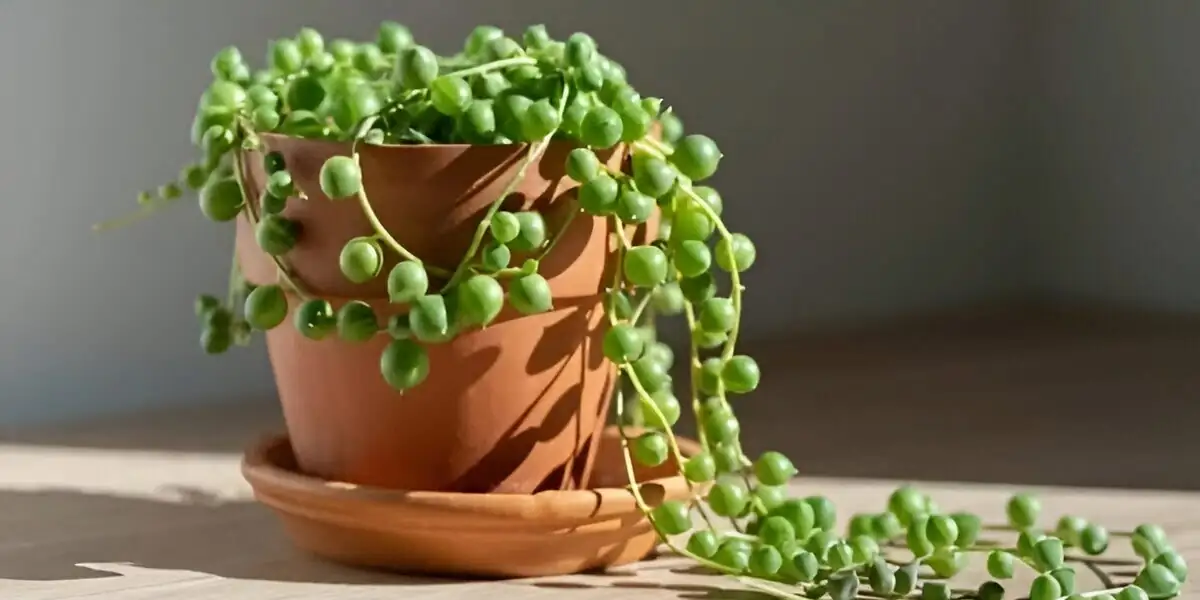
- Light: Bright, indirect light with a touch of gentle direct sun (morning or late afternoon). Avoid harsh midday sun through glass to prevent scorch.
- Water: Soak thoroughly, then let the mix dry well before watering again. In active growth indoors, this often means every 2–3 weeks—adjust by checking dryness, not the calendar. In winter, water sparingly—just enough to prevent pronounced shriveling.
- Why this matters for safety: Overwatering causes mushy stems that can break and drop beads. Bright light and a fast-draining mix reduce this risk.
The care cheat sheet (kid- and pet-aware)
- Soil and pot: Use a very free-draining cactus/succulent mix. A reliable DIY blend: roughly 1:1 potting mix to mineral grit (perlite/pumice/coarse sand). Shallow pots with drainage holes fit the shallow root system.
- Temperature: Comfortable at 60–80°F (15–27°C). Tolerates brief dips to about 50°F (10°C) but is not frost-hardy. In heat above ~86°F (~30°C), give light shade and airflow.
- Humidity: Prefers low to average; avoid misting. Good ventilation helps prevent fungal issues.
- Feeding: Lightly, at half-strength monthly (spring to early autumn); taper off in winter to avoid weak, leggy growth.
- Pruning: Trim long, bare strands—especially in spring—to encourage branching and a fuller crown. Remove shriveled or rotting sections promptly.
- Propagation: Take 3–4 in (8–10 cm) cuttings; remove a few pearls at the base, let callus for a couple of days, then lay nodes on gritty mix. Keep bright, barely damp until rooted (about 2–3 weeks).
- Repotting: Every 2–3 years, or when crowded. Size up modestly to avoid soggy soil.
- Pests and diseases: Mealybugs, aphids, and spider mites can show up indoors—treat with insecticidal soap or neem/horticultural oil and improve airflow. Most problems stem from excess moisture—keep it draining fast and on the dry side.
Smart, pet-safe styling alternatives
Love the trailing, textured look but want zero worry? Mix and match these non-toxic stars in the “reach zone,” and keep String of Pearls for high, off-limits spots only.
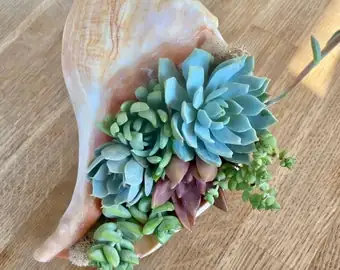
- Trailing lookalikes and friendly companions
- Burro’s tail (Sedum morganianum): Plush, pendulous chains; great in bright light.
- Hens and chicks (Sempervivum spp.): Rosettes that spill and cluster; perfect for shallow bowls.
- Peperomia (e.g., Peperomia prostrata “String of Turtles”): Petite, patterned leaves with a cascading habit; non-toxic and charming.
- Haworthia spp.: Miniature, architectural rosettes; safe and sculptural for desks and low shelves.
- Echeveria spp.: Rosette succulents with endless colors and forms; stunning in low bowls on coffee tables.
- Design tips for a pet-safe vibe
- Layer heights: Keep non-toxic plants at eye level and below; reserve any toxic species for true “no-access” heights.
- Mixed bowls: Create a “stringy” effect with safe trailers (Sedum/Peperomia) edging the pot and upright Haworthias/Echeverias in the center.
- Faux finishers: Add a realistic faux “String of Pearls” garland to low arrangements for drape without risk.
- Faux and framed options
- High-quality artificial strands look convincing and can safely trail at kid height.
- Try a preserved moss frame or a wall-mounted faux succulent panel for texture without temptation.
Bloom notes and the meaning behind the “pearls”
Indoors, cooler, bright winters (around 50–60°F / 10–16°C) can encourage the plant to produce its dainty white blooms with a wonderfully spicy-sweet scent. As for symbolism, String of Pearls is often associated with enduring bonds and the idea of life’s moments connected like beads on a thread. In modern “flower language,” that translates to continuity, good fortune, and relationships that keep unfolding—fitting for a plant that lengthens its living necklace over time.
Fast fixes: common questions
- Why are my pearls shriveling?
- Usually thirst. Water thoroughly, let excess drain, and pearls should plump within a day or two. If soil is wet and pearls still shrivel, check for root rot.
- Why are stems turning mushy or pearls dropping?
- Classic overwatering or dense soil. Increase light, let it dry, and repot into a gritty mix. Save healthy pieces as cuttings.
- How do I make it fuller instead of stringy?
- Brighter light (with gentle direct sun), regular trimming of leggy trails, and replanting cuttings back into the pot to fill the crown.
- Can it handle low light?
- It can survive for a while, but expect stretched growth and larger gaps between beads. Aim for several hours of bright, filtered light daily.
- Is there a truly safe place to keep it with pets and kids?
- Yes: high ceilings with secure ceiling hooks; wall-mounted shelves with safety lips in closed rooms; bright offices/sunrooms behind doors or gates. Keep the lowest trails well out of reach and prune routinely.
Enjoy your String of Pearls like a jewel in your collection—displayed high, handled thoughtfully, and paired with pet-safe beauties below. The result is a stylish, layered indoor landscape that feels as good as it looks.