

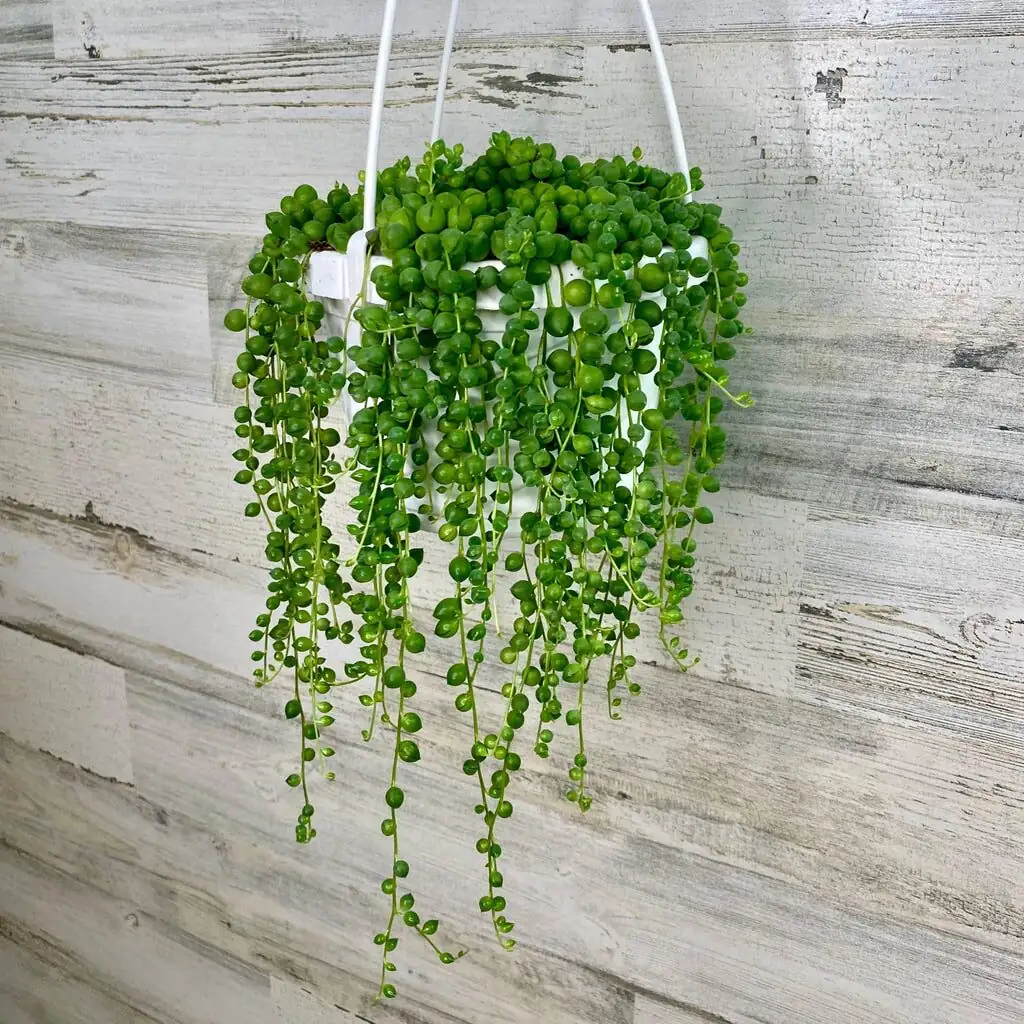
Meet String of Pearls—Curio rowleyanus (syn. Senecio rowleyanus)—the succulent that wears its water reserves like jewelry. Those glossy green beads cascade in easy elegance, but the real magic arrives in the cool months: petite, creamy blooms that smell sweet and spicy, like cinnamon-vanilla. If you’ve been waiting to see (and sniff) that winter show, here’s your bloom-boosting playbook—bright light, cool nights, lean watering, and a timely feeding cutoff.
Meet the plant, then make it bloom
- What it is: A trailing succulent in the Asteraceae family, native to dry southwestern Africa (notably South Africa’s Eastern Cape and southern Namibia).
- Look: A shallow-rooted crown just ~5 cm (2 in) tall, spilling strings of pea-sized leaves along slender stems that typically trail 60–90 cm (2–3 ft), sometimes more with age.
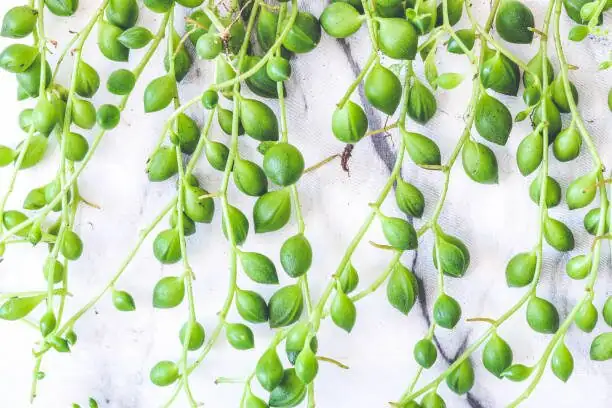
- Secret superpower: Each bead often shows a faint “window”—a translucent stripe that channels light into the leaf while conserving water.
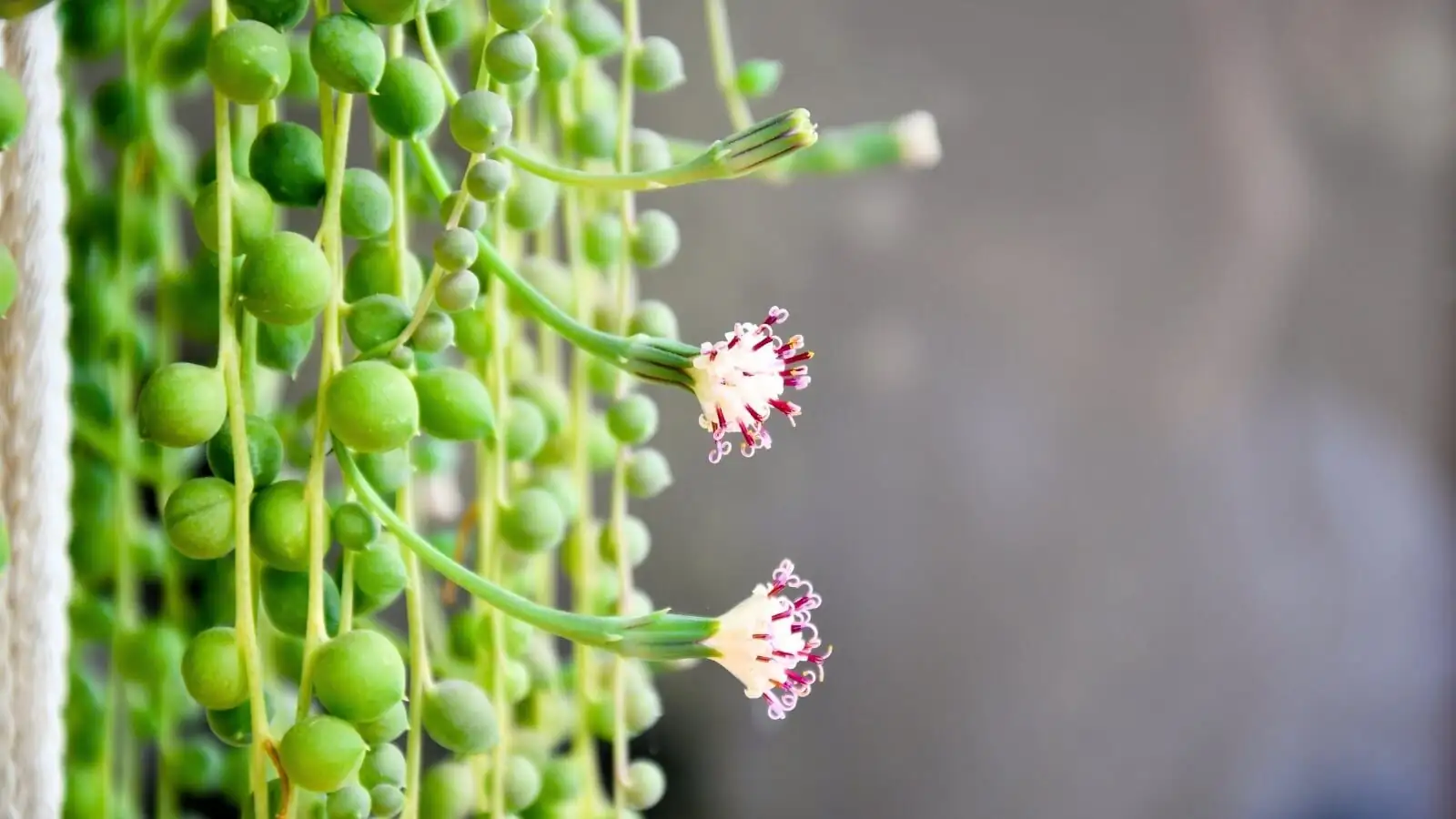
- Scent surprise: In late fall to early spring (often winter indoors), it can produce small white to creamy composite blooms that are surprisingly fragrant—sweet and spicy, often likened to cinnamon or vanilla.
The bloom-boosting playbook (the quick version)
- Give it bright light, including some gentle direct sun.
- Aim for cool nights: 50–60°F (10–16°C) in winter.
- Water lean: soak, then let the mix dry well; go extra light in winter.
- Feed lightly in the growing season—and stop in winter.
Below is the deeper “why” and “how.”
Light: the flower-fueling ingredient
Bright, indirect light with a little soft direct sun (morning or late afternoon) keeps beads plump and close-set—and supports flower production.
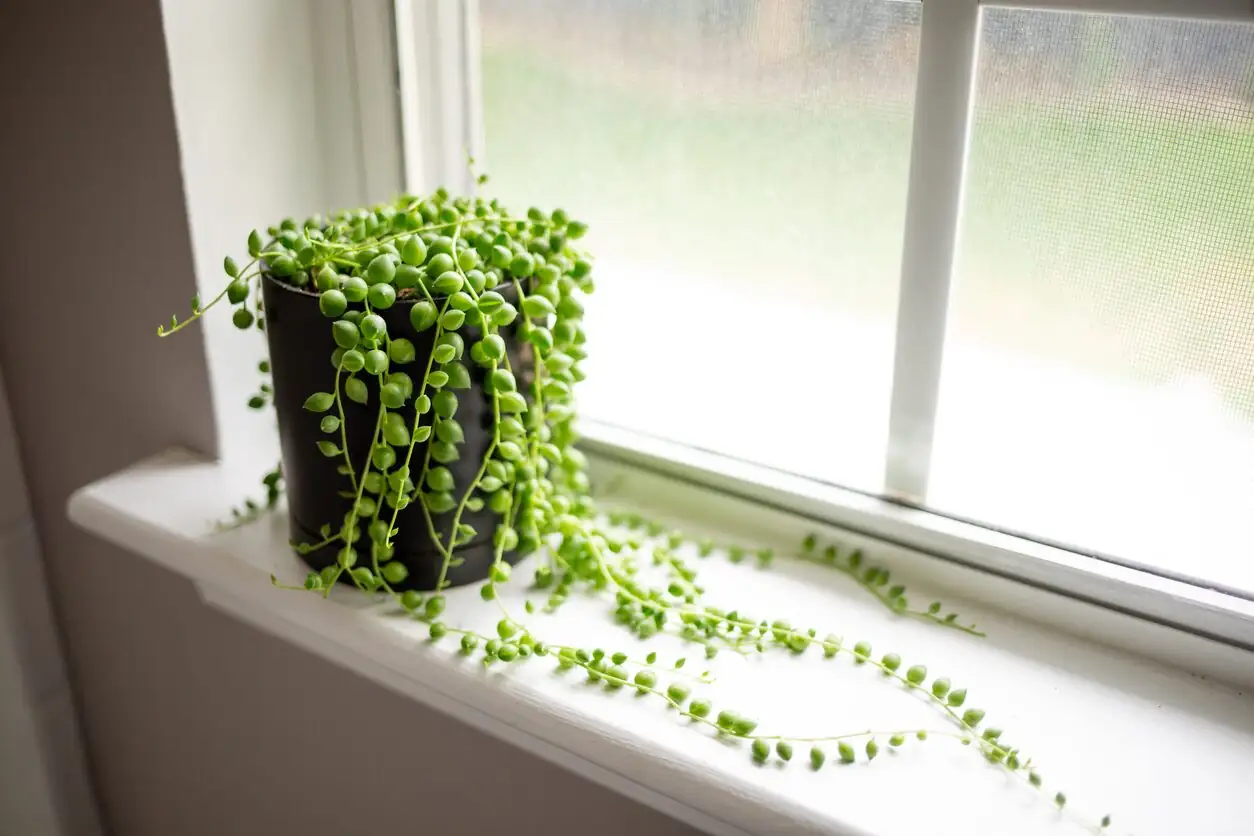
- Best spots: East or west windowsills; a bright room a step back from a south window; high shelves near bright windows.
- Signs you nailed it: Dense strings, compact spacing between beads, and a subtle silica-like bloom (that “powdery” look) left intact.
- Signs of trouble:
- Too little light: long, sparse gaps between pearls; dull color.
- Too much/harsh midday sun (especially behind glass): yellowing or scorched beads.
Temperature: cool nights cue the show
Comfortable by day at 60–80°F (15–27°C), this plant responds to a winter cool-down with better bloom potential.
- Bloom-friendly range: Nights around 50–60°F (10–16°C) for several weeks in fall/winter.
- Heat notes: Above ~86°F (30°C), growth can slow; provide bright light with some protection and good airflow.
- Frost rule: Not frost-hardy—protect from near-freezing or below.
Watering: lean and clean, especially in winter
Water like a succulent: give a thorough soak, then let the mix dry well before the next drink.
- Spring–summer: Often every 2–3 weeks indoors (always judge by dryness, not the calendar).
- Fall–winter: Cut way back—water just enough to prevent severe shriveling while keeping the root zone dry most of the time. Slightly deflated beads are your cue for a careful, modest drink.
- The fastest route to failure: constantly wet soil, which triggers root and crown rot.
Feeding: light touch, then a cutoff
- Growing season: A balanced liquid fertilizer at half strength about monthly (every 4–6 weeks) from spring through early autumn.
- Bloom aid: Taper, then stop feeding by fall. A nutrient lean period plus cool nights helps nudge flowering. Overfeeding encourages weak, leggy growth.
Soil and potting: gritty, swift-draining, and shallow
- Mix: A very free-draining cactus/succulent blend. Try roughly 1:1 potting mix to mineral grit (perlite/pumice/coarse sand), or about 3:1 potting mix to coarse sand—adjust to drain fast.
- Pot: Always use drainage holes. Shallow pots suit the shallow root system and dry more evenly.
- Repot: Every 2–3 years in spring; go only slightly larger (many growers thrive in 10–15 cm / 4–6 in pots).
Air, humidity, and placement
- Humidity: Low to average, with good airflow. Skip misting.
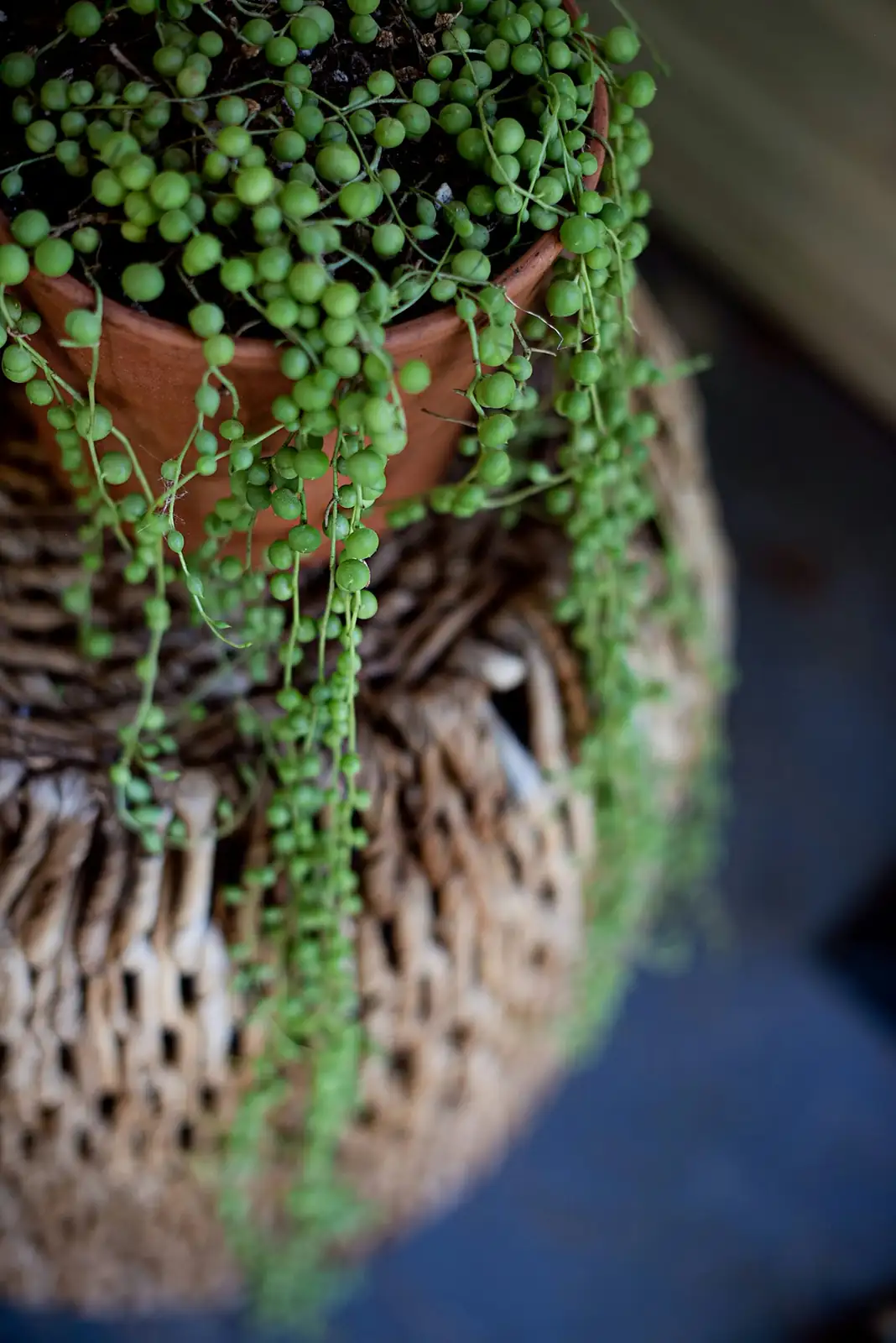
- Placement ideas: Hanging baskets, high shelves, or a bright windowsill that lets trails spill. Keep off cold drafts and away from blasting heat or AC.
The winter flower show: what to expect
- Season: Late fall to early spring indoors (often winter); sometimes spring depending on your conditions.
- Look and scent: Small white to creamy blooms, about 2–2.5 cm (~1 in) across when open, with conspicuous stamens. The perfume is the star—sweet, spicy, cinnamon-vanilla.
Your month-by-month rhythm
- Spring
- Resume steady growth; repot if needed.
- Prune to shape and encourage branching.
- Begin light feeding; propagate with fresh, 8–10 cm (3–4 in) cuttings.
- Summer
- Keep it bright but protect from harsh midday sun.
- Water only after the mix dries well; ensure airflow in heat.
- Fall
- Gradually reduce watering.
- Taper and then stop fertilizer.
- Aim for cooler nights (50–60°F / 10–16°C).
- Winter
- Keep it bright and mostly dry.
- Maintain cool nights and steady, gentle light.
- Enjoy the fragrance if blooms appear.
Pruning, styling, and easy propagation
- Fuller plants: Trim long, bare sections—especially in spring—to spark branching. Replant tip cuttings back into the crown to fill the top.
- Cuttings: Let cut ends callus for a day or two. Lay the stripped nodes on gritty mix (tuck slightly or pin in place). Keep bright, barely moist; rooting often takes 2–3 weeks.
- Layering: Pin a living strand onto the soil to root while still attached—near foolproof and tidy.
Troubleshooting cheat sheet
- Pearls shriveling
- Likely thirsty: water thoroughly, let drain well. Beads usually plump up within a day or two.
- If soil is wet but plant is shriveling: suspect root rot; unpot, trim rot, repot in gritty mix, and restart with careful watering.
- Mushy stems or dropping pearls
- Classic overwatering and/or heavy soil. Move to brighter light, let it dry, then repot into a fast-draining mix. Save healthy strands as cuttings.
- Stringy, sparse look
- Needs more light. Provide brighter conditions with some gentle direct sun; prune and replant cuttings to thicken the crown.
Pests and plant health
- Usual suspects: Mealybugs, aphids, and spider mites—especially indoors.
- Response: Improve airflow, isolate, and treat with insecticidal soap or neem/horticultural oil. Adjust watering to the dry side to discourage fungal issues.
- Disease driver: Excess moisture. Avoid waterlogged soil and stagnant, humid air.
Safety note
Toxic if ingested and sap may irritate sensitive skin. Keep out of reach of children, cats, and dogs; wash hands after handling if you’re prone to irritation.
Where it comes from—and why it matters
In the wild, String of Pearls grows among rocks or tucked beneath shrubs in dry South African landscapes—bright conditions with just enough protection from brutal, midday sun. That’s your indoor blueprint: bright light, excellent drainage, lean watering, and airflow. The species name honors Gordon Douglas Rowley, a beloved British botanist renowned for his work on succulents.
Symbolism and “flower language”
Often linked with enduring bonds and “strings” of connection, this plant’s symbolism feels intuitive: a living necklace that keeps lengthening, bead by bead. While there’s no deep ancient lore attached, modern houseplant culture leans into themes of continuous good fortune and relationships that grow over time—fitting for a plant that can trail for years and even perfume your winter with warm, spicy blooms.
Fun facts
- Those translucent “epidermal windows” in each bead help channel light inside the leaf—an elegant desert adaptation.
- The sphere shape minimizes surface area to slow water loss.
- You’ll still see it sold widely as Senecio rowleyanus, though Curio rowleyanus is now broadly accepted.
Quick specs at a glance
- Common names: String of Pearls, Bead Plant, Pearl Plant, Rosary Vine, String of Beads, String of Peas
- Scientific: Curio rowleyanus (syn. Senecio rowleyanus)
- Habit: Trailing succulent; stems 60–90 cm (2–3 ft), often longer with age
- Light: Bright, indirect with gentle direct sun
- Temperature: 60–80°F (15–27°C); winter nights 50–60°F (10–16°C) for blooms
- Soil: Fast-draining succulent mix with ample mineral grit
- Water: Soak, then let dry well; scant in winter
- Feeding: Half-strength monthly spring–early autumn; stop in winter
- Hardiness: USDA 9–11 (sometimes listed 9–12); not frost-tolerant
- Placement: Hanging baskets, shelves, bright windows; good airflow, low to average humidity
Follow the playbook—bright light, cool nights, lean watering, and a gentle feeding cutoff—and your “pearls” will reward you with that cozy, cinnamon-kissed winter bloom.