

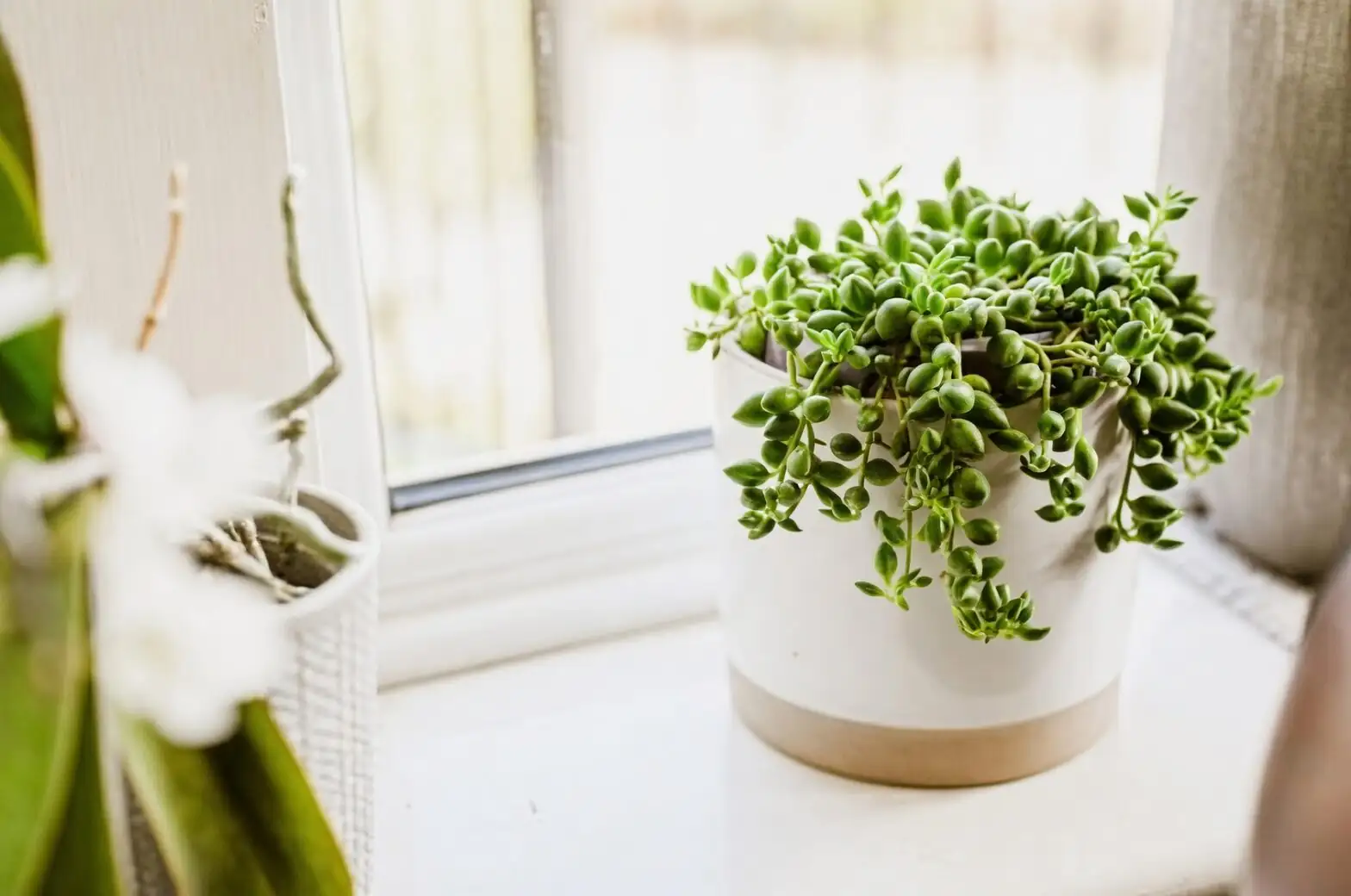
Imagine a living necklace that drapes from a shelf, catches the light, and trails in perfect green beads. Curio rowleyanus (syn. Senecio rowleyanus), better known as String of Pearls, is the minimalist’s statement piece: sculptural, graphic, and utterly dramatic when styled right. Here’s your design-forward guide to spotlight those pearls with shallow, draining pots, bright east/west windows, and smart use of height, shelves, and contrast.
The Look: Why String of Pearls Steals the Show
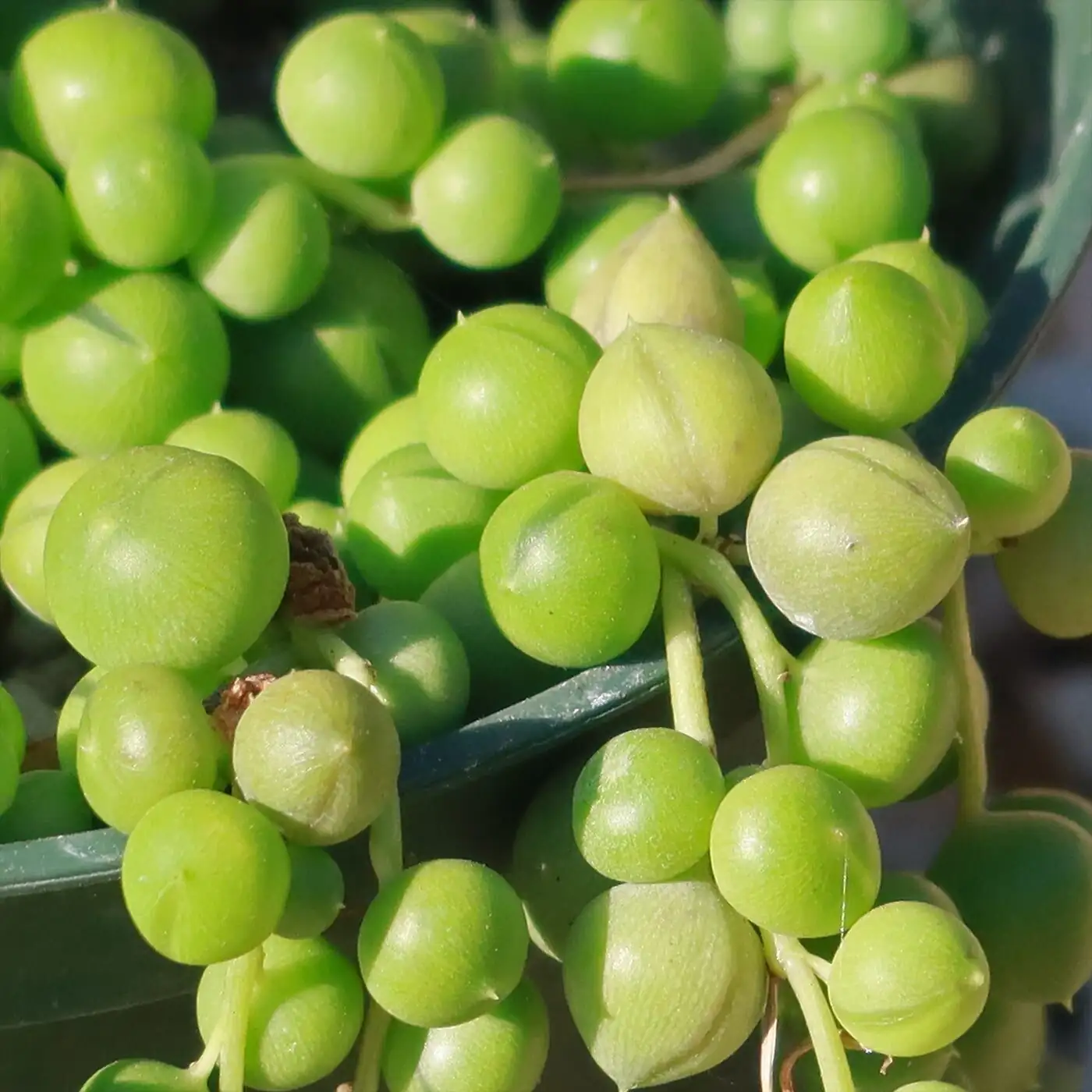
- Bead-like leaves: Small, spherical “pearls” about 1/4 inch across, each with a subtle translucent stripe (an epidermal window) that channels light into the leaf.
- Trailing habit: Stems often reach 2–3 feet indoors (60–90 cm), flowing like a green waterfall.
- Flowers (the secret bonus): Creamy-white, cinnamon/vanilla-scented blooms in late fall to early spring (often winter indoors). They’re modest but deliciously fragrant up close.
- Roots: Shallow and fast-draining by design—your cue to pick the right pot and soil.
Origin story for styling inspiration: Native to dry, sunny regions of South Africa and southern Namibia, this plant thrives with bright light, air movement, and rapid drainage. Mimic that and it will model for you.
Light Is Your Styling Tool
Think of light as both life support and spotlight.
- Best windows:
- East-facing: Gentle morning sun—perfect for daily glow without scorch.
- West-facing: Great, but filter harsh late-afternoon rays with a sheer or set the plant a little back from the glass.
- South-facing: Works with a step back or filtered light. Avoid intense midday sun pressed against hot glass.
- Keep the crown lit: The top of the plant (soil level) must receive bright light. If it’s in shadow—common in hanging baskets—the base thins and trails go bare at the rim.
- Designer tricks: Use wall shelves aligned with the window pane, picture ledges just below the sill, or a plant stand that lifts the pot into the light stream.
- Rotate monthly to keep the cascade even.
- Temperature sweet spot: 60–80°F (15–27°C). In winter, a cooler 50–60°F (10–16°C) with bright light can encourage flowering. Protect from frost and cold drafts.
Pots That Make It Pop (and Keep It Alive)
Shallow, fast-draining, and stylish is the winning formula.
- Shape and size:
- Choose wide, shallow vessels—think low bowls—so roots fill quickly and soil doesn’t stay wet.
- A 4–6 inch (10–15 cm) pot suits a modest plant. Size up conservatively every 2–3 years.
- Material:
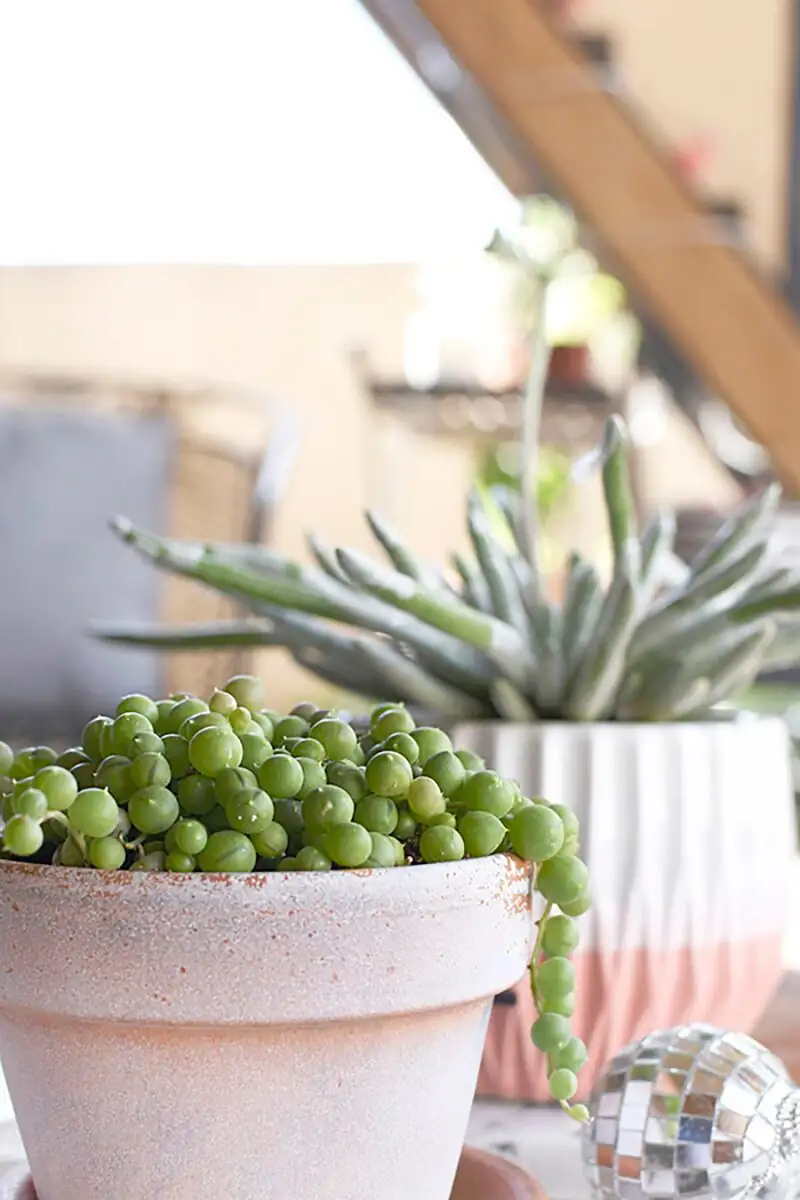
- Unglazed terracotta = extra breathability, dries faster, crisp matte contrast with glossy pearls.
- Glazed ceramic or concrete works too—just commit to a gritty mix and careful watering.
- Drainage details:
- Always use drainage holes. Add a mesh over the hole and pot feet or risers to prevent water from pooling under the pot.
- Skip cachepots without a plan—set an inner nursery pot with holes inside a decorative outer pot and empty excess water promptly.
- Soil (non-negotiable):
- Very free-draining cactus/succulent mix.
- DIY: about 1:1 potting mix to mineral grit (perlite, pumice, or coarse sand). Some growers succeed around 3:1 potting mix to coarse sand—aim for quick drain and airy texture.
- Top-dressing (for function and flair):
- A thin sprinkle of decorative gravel keeps pearls off damp soil, cuts fungus gnats, and finishes the look. Don’t bury nodes—roots still need easy access to the mix.
Compose the Perfect Cascade
Use height, lines, and contrast like a stylist.
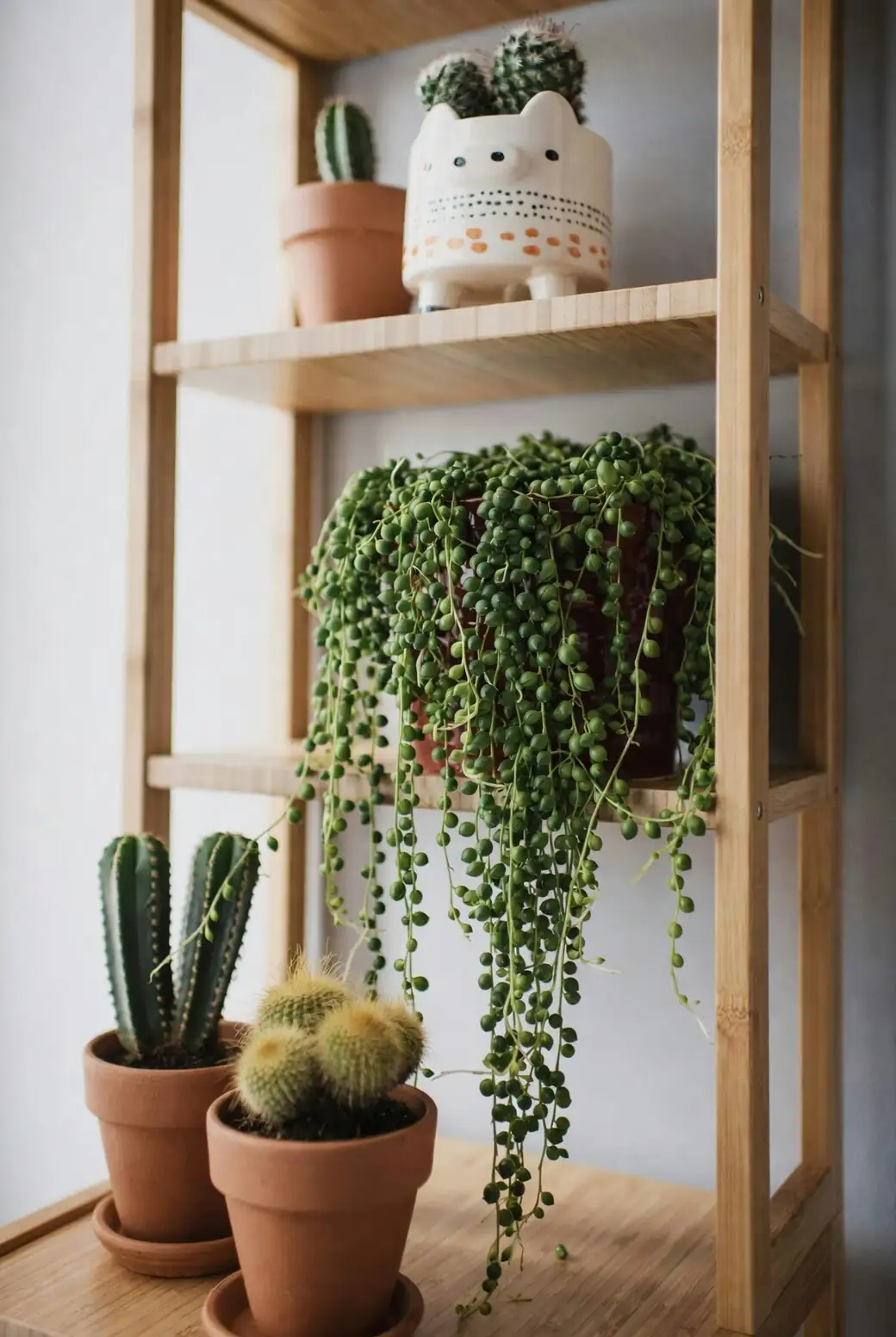
- High shelf drama:
- Place on a bright east or west window shelf and let strands fall in front of a pale wall for maximum shadow play.
- Leave negative space beneath the pot so the cascade reads as one clean silhouette.
- Hanging elegance (with caution):
- Use a wide-rim, shallow hanging bowl; ensure the rim isn’t shading the crown.
- Hang near—but not hugging—the window to avoid scorching glass heat.
- Contrast cues:
- Dark pot + pale wall = graphic pop.
- White or sand-toned pot + dark wall or wood = gallery calm.
- Grouping:
- Stage a trio by height: a tall sculptural succulent (thriller), String of Pearls (spiller), and a compact textured rosette (filler) in separate, matching vessels.
- If combining in one bowl, stick to other drought-tolerant succulents with identical light and watering needs.
- Safe-and-chic placement:
- Keep out of reach of pets and kids (it’s toxic if ingested). High shelves and window ledges are both safe and stunning.
- Secure wall shelves and use discreet cord clips to keep strands from brushing heaters or AC vents.
Water, Then Wait: An Easy Rhythm
This plant forgives a missed watering, but not a soggy pot.
- Method:
- Water thoroughly until excess drains, then let the mix dry well before watering again.
- In spring/summer, this often means every 2–3 weeks indoors—but always follow dryness, not a calendar.
- In fall/winter, water sparingly—just enough to prevent deep shriveling.
- Read the pearls:
- Slightly deflated pearls = time for a drink.
- Mushy, translucent, or dropping pearls = overwatering—dry out and check roots.
- Pro tip: Water early in the day and tilt the pot afterward to pour off any water trapped at the crown. Constantly wet soil is the fastest route to root/crown rot.
Prune, Refresh, and Multiply
Regular trims both refine the silhouette and create new plants.
- Pruning:
- In spring, trim long, bare, or leggy trails just above a node to prompt branching and fuller drape.
- Remove dead or shriveled sections promptly.
- Propagation (effortless and aesthetic):
- Take 3–4 inch (8–10 cm) cuttings; remove a few pearls near the cut end.
- Let cut ends callus for a day or two.
- Lay the stripped nodes on gritty mix, tucking lightly so nodes contact the soil.
- Keep in bright, indirect light; lightly moisten after a few days, then maintain barely damp until rooted (often 2–3 weeks).
- For a fuller pot fast, coil or pin a healthy strand onto the soil to root while still attached—near foolproof.
Encourage Winter Blooms
- Light: Keep bright through winter (east/west still ideal).
- Temperature: Cool, around 50–60°F (10–16°C), boosts blooming potential.
- Water and feed: Water sparingly and pause fertilizer. When flowers open, lean in—the cinnamon/vanilla scent is lovely.
Troubleshooting in Style
- Pearls shriveling:
- Usually thirst. Water thoroughly and drain—pearls often plump within a day or two.
- If soil is wet yet pearls still shrivel, suspect root rot; unpot, trim mushy roots, and replant in fresh, gritty mix.
- Stems mushy or pearls dropping:
- Classic overwatering or heavy soil. Move to brighter light, let dry well, and repot into faster-draining mix if needed. Rescue with cuttings.
- Stringy, sparse trails:
- Increase light (gentle direct morning/late afternoon). Trim and replant cuttings at the crown to fill in.
- Pests:
- Mealybugs, aphids, spider mites can appear indoors. Improve airflow, isolate, and treat with insecticidal soap or neem/horticultural oil.
- Humidity:
- Prefers low to average humidity and good ventilation. Skip misting and avoid persistently humid, stagnant spots.
Fast Facts for Designers
- Botanical: Curio rowleyanus (syn. Senecio rowleyanus), family Asteraceae.
- Common names: String of Pearls, String of Beads, Rosary Vine, Pearl Plant.
- Size: About 2 inches (5 cm) tall at the crown; trails typically 2–3 feet (60–90 cm) indoors.
- Light: Bright, indirect with some gentle direct sun; avoid harsh midday scorch.
- Soil: Very free-draining succulent mix; shallow pots with drainage holes.
- Water: Soak, then let dry well; much less in winter.
- Temperature: 60–80°F (15–27°C); cool, bright winters help flowering.
- Hardiness: USDA 9–11 (sometimes listed 9–12). Not frost-hardy.
- Humidity: Low to average; good airflow.
- Safety: Toxic if ingested; sap can irritate skin—style high and handle with care.
Meaning and Mood
String of Pearls often symbolizes enduring bonds and “strings” of connection—an elegant nod to continuity and good fortune. As with most plant symbolism (often called flower language), these meanings are cultural rather than botanical. They arise from the plant’s necklace-like form and its seemingly endless cascade, making it a poetic choice for spaces that celebrate togetherness and flow.
Quick-Start Checklist: Stage a Show-Stopping String of Pearls
- Place on a bright east or west window shelf; filter intense rays if needed.
- Use a shallow, draining pot (4–6 inches) with a gritty succulent mix.
- Keep the crown in strong light—raise, don’t recess, the pot.
- Water deeply, then wait until the mix dries well; go very light in winter.
- Trim in spring and replant cuttings at the crown for lush fullness.
- Top-dress with a thin mineral gravel layer for a crisp, gallery finish.
- Style with contrast (dark pot/pale wall or vice versa) and generous negative space.
- Protect from pets and kids; ensure airflow and avoid humid, stagnant corners.
Curio rowleyanus is minimal care, maximal impact—especially when you use light, line, and texture to let those beaded trails take center stage. Set the scene once, and this plant will do the rest.