

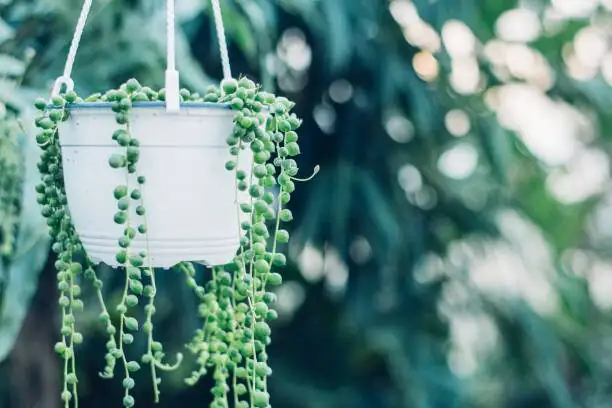
If you’ve ever wished your windowsill would wear jewelry, String of Pearls is the necklace that actually grows. Even better: with a couple of 3–4 inch cuttings and a gritty mix, you can turn one strand into a lush, cascading curtain in just a few weeks. This hands-on guide shows you exactly how to callus, pin, and root Curio rowleyanus (syn. Senecio rowleyanus) with near-foolproof consistency—plus the mineral grit ratios that keep pearls plump and rot at bay.
Meet String of Pearls (Curio rowleyanus)
- What it is: A trailing succulent in the Asteraceae family, famous for pea-like, water-storing leaves (“pearls”) and wiry stems that spill 2–3 feet (60–90 cm) in containers.
- Native vibe: Southwestern Africa (South Africa’s drier regions and southern Namibia), where it often tucks under shrubs or among rocks—bright light with some protection.
- Why growers love it: Drought-tolerant, sculptural, and—when content—it releases petite, creamy-white blooms with a sweet cinnamon/vanilla fragrance from late fall to early spring.
The foolproof propagation playbook
We’ll root 3–4 inch (8–10 cm) cuttings fast by (1) letting wounds callus, (2) pinning nodes to gritty mix, and (3) keeping the substrate just barely damp until roots pop.
What you’ll need
- Clean, sharp snips
- 3–4 inch (8–10 cm) healthy strands with firm pearls
- Shallow pot with drainage holes (4–6 in / 10–15 cm works beautifully)
- Bright, indirect light (a bright windowsill; gentle morning sun is welcome)
- Pins: repurposed hairpins, U-shaped floral/greening pins, or bits of wire
- Your mix (see next section), plus a mister or squeeze bottle
Mix matters: mineral grit ratios that root fast
String of Pearls adores air around its roots. Think “lean and fast-draining,” not rich and moisture-holding.
For most homes:
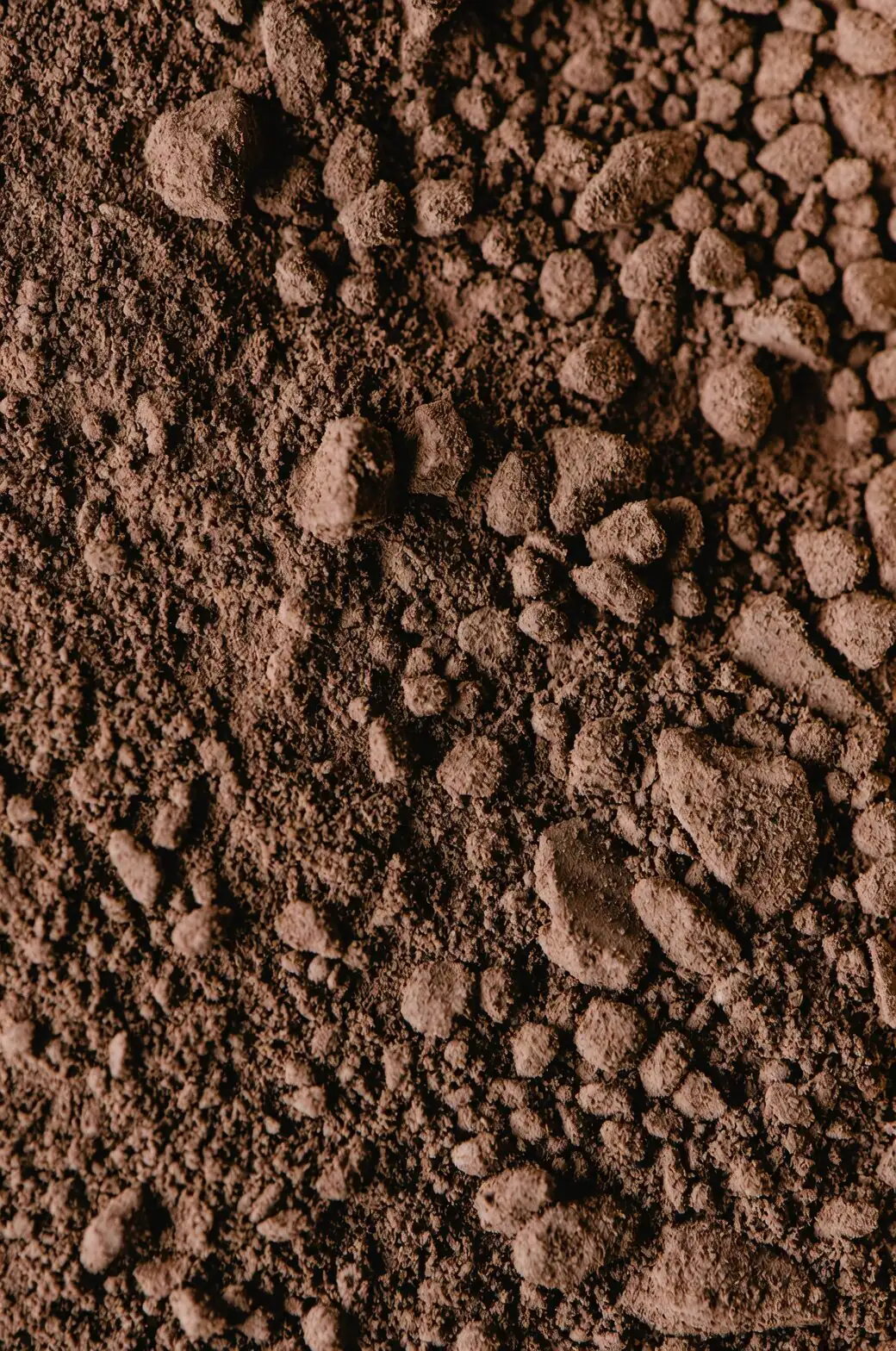
- 1:1 high-quality potting mix : mineral grit (perlite or pumice; you can include some coarse sand)
Also widely used (especially if your environment is already quite dry):
- 3:1 potting mix : coarse sand
If your air is humid or you tend to overwater, go more mineral-leaning during propagation:
- About 40:60 potting mix : mineral grit (aim for a chunky texture)
Grit tips:
- Particle size: aim for 2–6 mm (pumice/perlite) for structure.
- Skip fine sand that compacts; use “coarse” horticultural sand if you include sand at all.
- Pre-moisten the blend so it’s barely damp—crumbly, never soggy.
Take perfect 3–4 inch cuttings
- Select: Choose firm, unblemished pearls on a vigorous strand.
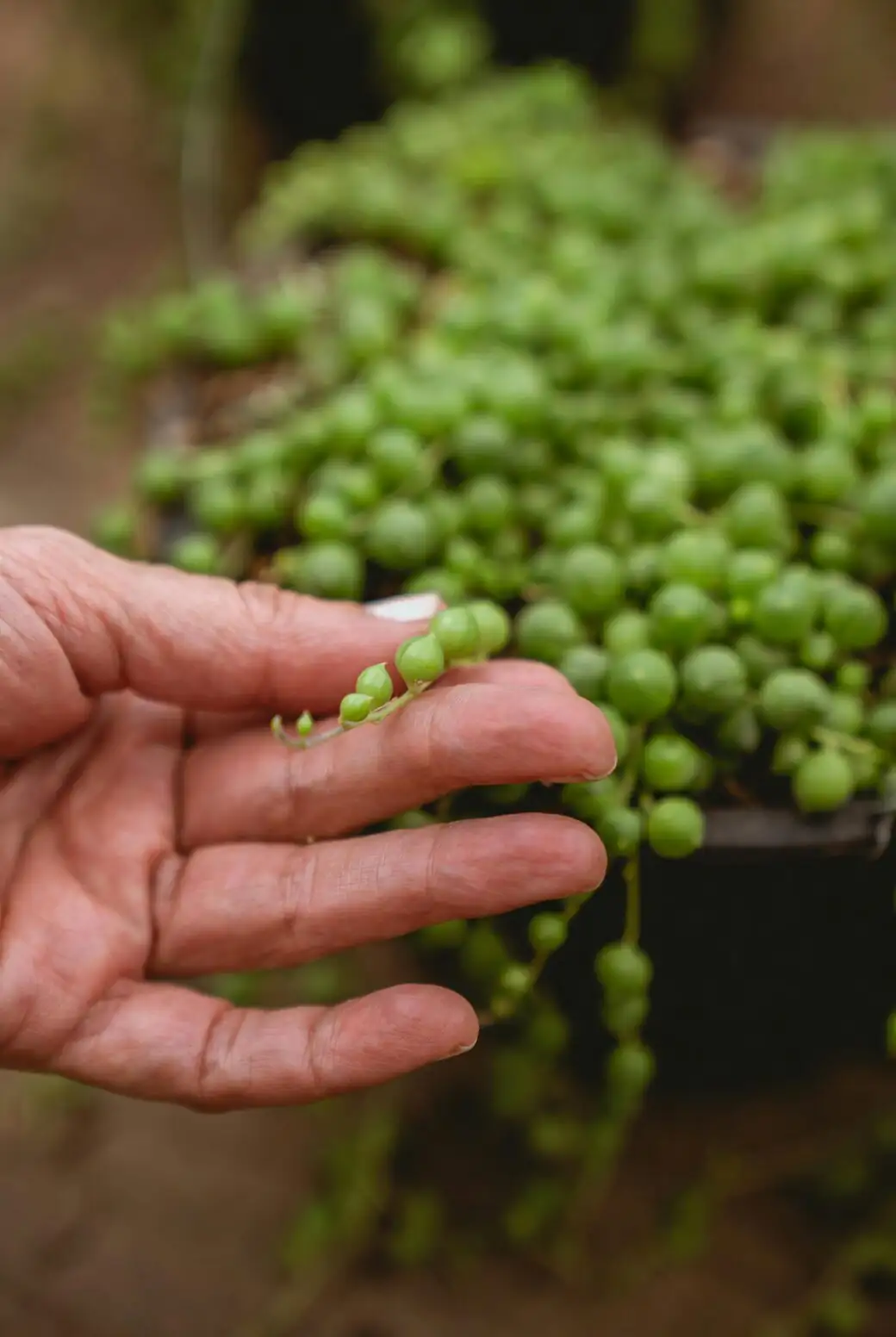
- Snip: Cut 3–4 inches (8–10 cm). Avoid overly thin, stretched stems.
- Strip nodes: Remove 3–6 pearls from the cut end to expose a few bare nodes—this is where roots will form.
- Callus: Lay cuttings dry on a tray in bright, indirect light for 24–48 hours (thicker stems benefit from the full 48). The cut end should feel dry, not tacky.
Planting: two ways to lock in success
Both methods sit the nodes right on the mix so roots can form quickly.
1) Surface-lay and pin (fastest for full pots)
- Coil or lay each cutting on the surface so 2–4 nodes contact the mix.
- Pin the stem gently at each node so it stays flush (don’t bury the whole stem).
- Lightly top with a whisper of grit (optional) to stabilize without suffocating.
2) Tuck the tip, lay the rest
- Tuck just the first bare node slightly into the mix (5–8 mm), then lay and pin the remaining nodes on the surface.
Pro move: Layer a living strand
- Without cutting it from the mother plant, loop a section onto fresh mix in the same or a neighboring pot.
- Pin at nodes, keep the area barely damp. After 2–3 weeks, snip the newly rooted section free. This is the near-foolproof route.

Watering during rooting: the “barely damp” rule
- Days 0–3: Do not water. Let cut surfaces continue to dry while pinned on barely damp mix.
- Day 3–4: Lightly moisten the mix around nodes with a mister or syringe; avoid soaking.
- Weeks 1–3: Keep the mix barely damp—think “dry with brief sips.” Good airflow, no humidity domes.
- Roots pop in about 2–3 weeks. You’ll feel gentle resistance if you tug softly. New growth at the tips is your green light.
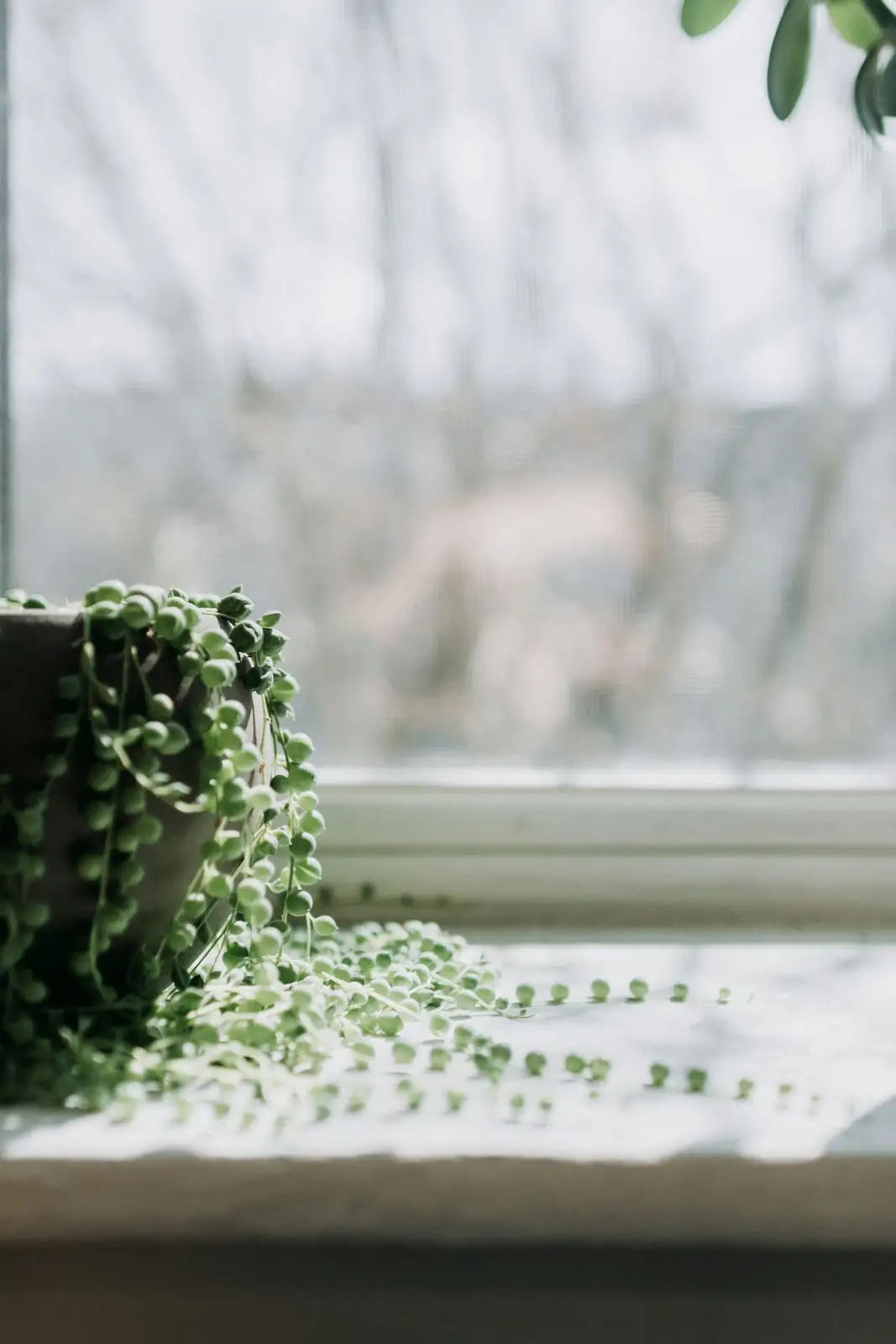
Common pitfall to avoid: Watering before callusing or keeping the substrate evenly wet. This plant forgives thirst, not sogginess.
After they root: shift to the long-haul routine
- Light: Bright, indirect light with a little gentle direct sun (morning or late afternoon). Harsh midday sun behind glass can scorch pearls; too little light stretches them.
- Water: Water thoroughly, then let the mix dry well before you water again. Indoors, this often means every 2–3 weeks in spring/summer; in fall/winter, water sparingly—just enough to prevent significant shriveling.
- Temperature: Comfortable at 60–80°F (15–27°C). It tolerates cool spells near 50°F (10°C) but is not frost-hardy.
- Humidity: Low to average is best; skip misting. Ensure good airflow.
Potting for a fuller necklace
- Pot choice: Shallow, well-drained pots suit this shallow-rooted plant.
- Top-fill trick: As strands elongate, lay segments back onto the top of the soil and pin at nodes. Each pinned node can root, thickening the crown.
- Prune to multiply: Trim leggy trails in spring and replant the cuttings into the same pot.
- Repot every 2–3 years in spring, only stepping up slightly in size. Oversized pots stay wet too long.
Feeding, calendar, and bloom boost
- Fertilizer: Balanced liquid feed at half strength monthly (or every 4–6 weeks) from spring through early autumn. Ease off in winter.
- Seasonal rhythm:
- Spring: Resume growth—prune, propagate, repot if needed, start feeding.
- Summer: Bright light with protection from fierce midday sun; water after drying.
- Fall: Gradually reduce watering and fertilizer.
- Winter: Keep bright and on the dry side; a cooler rest around 50–60°F (10–16°C) can encourage those cinnamon/vanilla-scented blooms from late fall to early spring.
Troubleshooting like a pro
- Pearls shriveling: Usually thirst. Water thoroughly and let drain. If the soil is wet yet pearls shrivel, check for root rot.
- Mushy stems or dropping pearls: Classic overwatering or heavy mix. Move to brighter light, let dry, then repot into a grittier blend. Save healthy pieces as cuttings.
- Sparse, gappy strings: Not enough light. Increase brightness (with some gentle direct sun), and replant tip cuttings to fill the crown.
- Pests: Mealybugs, aphids, spider mites. Improve airflow, isolate, and treat with insecticidal soap or neem/horticultural oil. Keep the plant on the dry side during recovery.
Safety note
String of Pearls is toxic if ingested and the sap may irritate sensitive skin. Keep away from pets and children, and wash hands after handling if you’re prone to irritation.
Mini FAQ
- How long until cuttings root? Often 2–3 weeks with the callus–pin–barely-damp method in bright, indirect light.
- Can it live in low light? It can survive, but pearls space out and trails get leggy. Aim for bright, filtered light daily.
- How do I get instant fullness? Use many short cuttings pinned in loops across the surface, or layer living strands to root in place before snipping them free.
The quiet symbolism behind those beads
While it isn’t steeped in classical “flower language,” String of Pearls has picked up modern symbolism: continuity, connection, and quiet prosperity. Each bead links to the next, like relationships or good habits that, over time, create a living necklace. It’s a gentle reminder that small nodes—rooted well—add up to something beautiful.
—
Field-tested quick-start recipe
- Cuttings: 3–4 inches (8–10 cm), strip the bottom pearls, callus 1–2 days.
- Mix: 1:1 potting mix : pumice/perlite (include a bit of coarse sand if you like). In humid homes, go leaner—up to ~60% grit.
- Planting: Lay and pin nodes on the surface; keep the mix barely damp.
- Light: Bright, indirect; touch of morning sun.
- Timeline: Tug test at 2–3 weeks; begin normal succulent watering once rooted.
Do this once and you’ll never buy String of Pearls again—you’ll just keep making more, one sparkling strand at a time.