

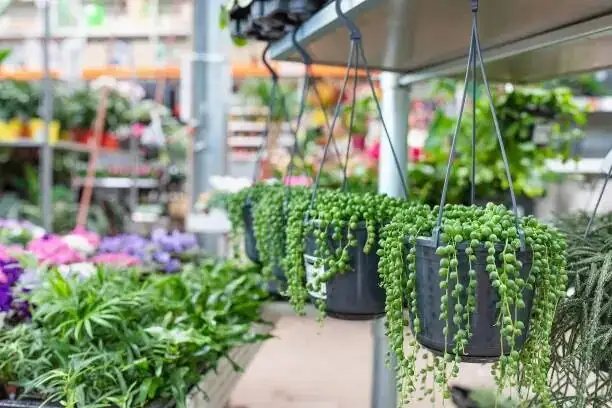
Meet the succulent that wears its science on its sleeve (er…string): Curio rowleyanus (syn. Senecio rowleyanus), better known as String of Pearls. Native to the drier reaches of southwestern Africa, this daisy-family (Asteraceae) oddball evolved a toolkit of desert smarts that doubles as irresistible houseplant charm. Let’s unpack its greatest hits—five tiny superpowers hiding in those beads.
1) Spherical leaves: engineering the slow-drip life
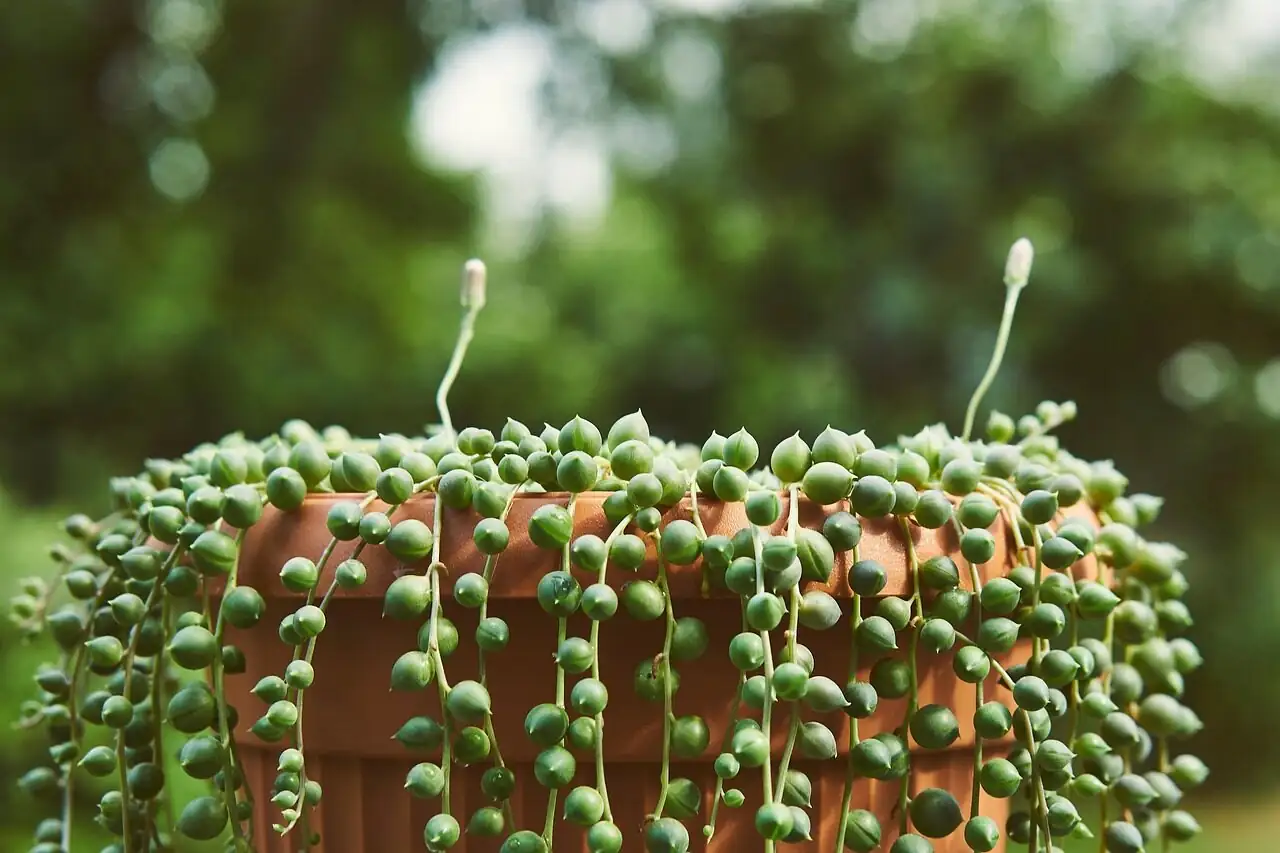
Each “pearl” is a pea-sized, nearly spherical leaf (about 0.6 cm / 1/4 in across) packed with water-storing tissue. Why round? Because spheres have the lowest surface area for their volume. That means:
- Less surface to lose water to dry air
- More internal storage to fuel growth between rare rains
- A bonus waxy/powdery bloom that further slows evaporation
In habitat, String of Pearls often tucks under shrubs or among rocks—bright light, but a little shade at scorched midday. Indoors, think bright window with a touch of gentle sun; too little light stretches the beads and widens gaps.
Pro move: If your pearls look a bit deflated, that’s a thirst cue. Water thoroughly, then let the mix dry well again—constantly wet soil is the fast lane to rot.
2) Built‑in “epidermal windows”: tiny skylights for photosynthesis
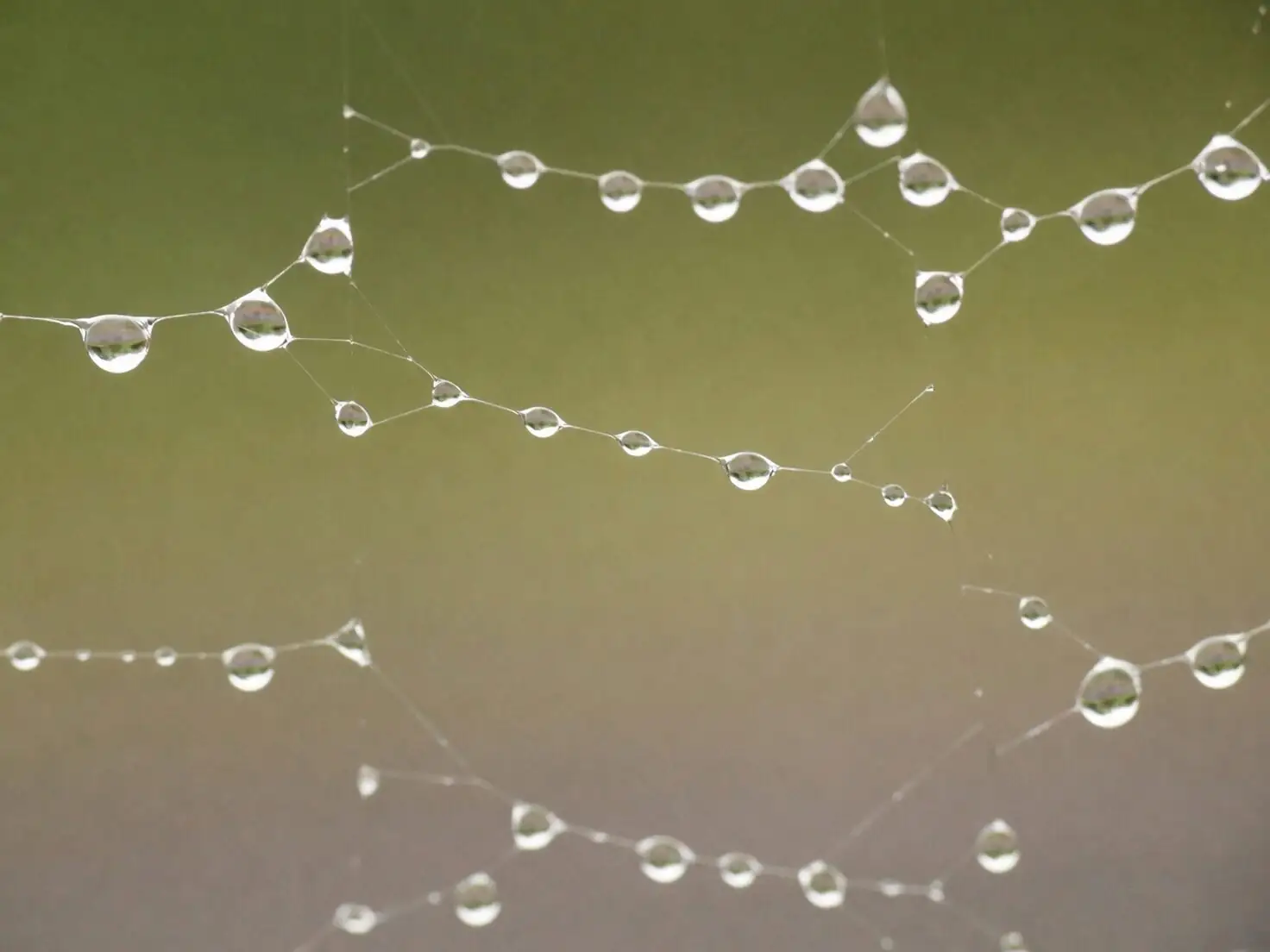
Look closely and you’ll spot a faint translucent stripe along each bead—the epidermal window. It:
- Channels light deeper into the leaf, boosting photosynthesis in a chubby, light-limited shape
- Lets the plant keep most of its surface opaque and water-thrifty while still running the sugar factory inside
Fun micro-experiment: Hold a pearl to bright light and rotate it—you’ll catch the cat’s-eye shimmer of that window.
3) Dessert-scented blooms (yes, really)
When this plant is happy, it produces small creamy-white flower heads (composite blooms—this is the daisy family, after all) that open to reveal a little brush of stamens. Up close they’re gorgeous, around 2–2.5 cm (about 1 in) across when open. The kicker: a sweet, spicy fragrance often likened to cinnamon and vanilla.
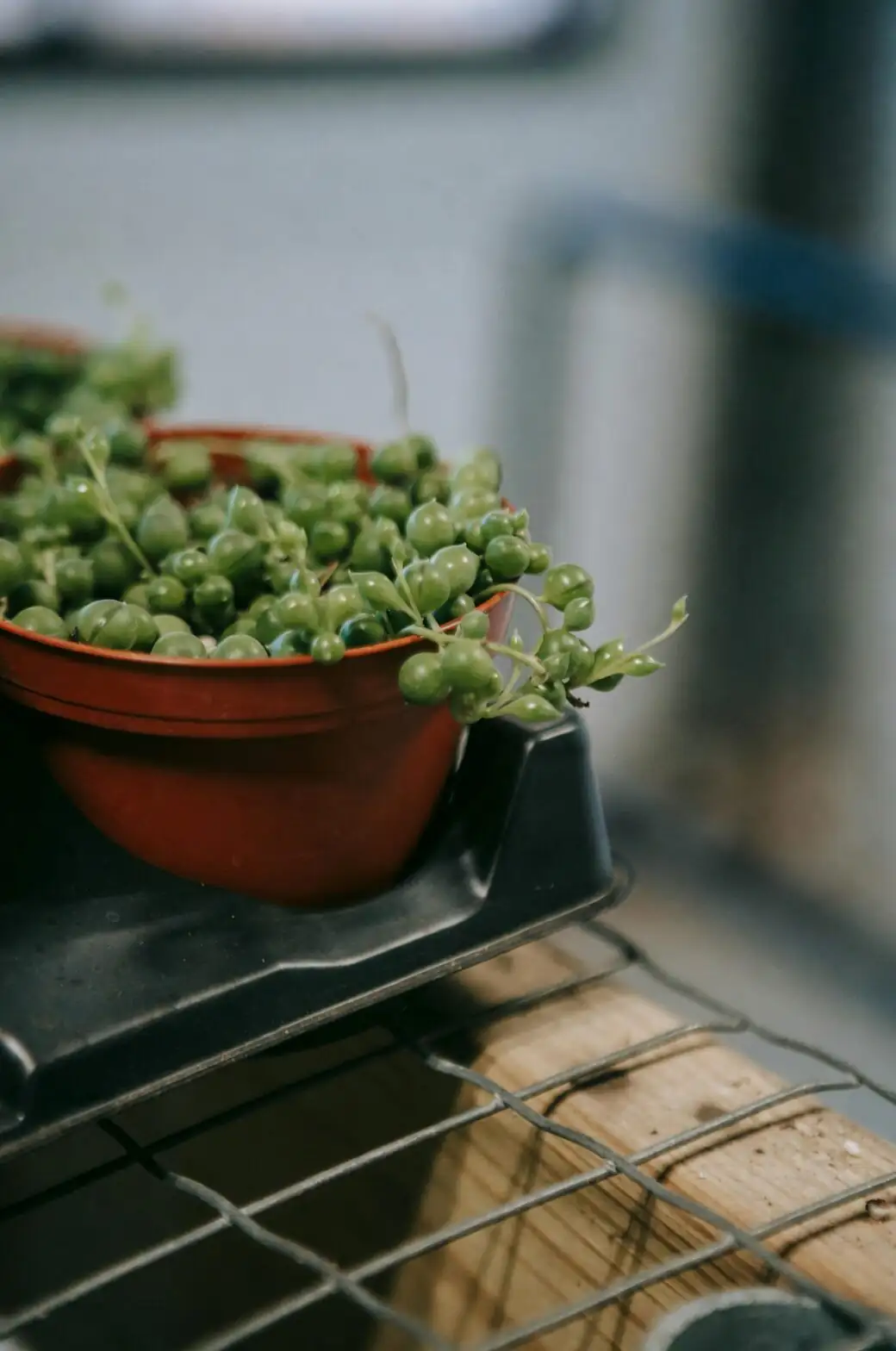
- Timing: Most commonly late fall to early spring (often winter indoors), with some growers reporting spring—conditions and climate steer the show.
- How to nudge blooms:
- Keep it bright all year
- Offer a cooler, drier winter rest: nights around 10–16°C (50–60°F), water sparingly
- Good airflow; no misting
4) CAM timing: the midnight metabolism that saves water
String of Pearls runs on CAM (Crassulacean Acid Metabolism). Translation:
- Night: stomata open (cooler, more humid air), CO2 is stockpiled as organic acids
- Day: stomata mostly close to conserve water; the plant “spends” last night’s CO2 stash for photosynthesis
Why you care:
- It’s built for drought tolerance—overwatering is the real risk
- Cooler nights can improve performance and encourage flowering
- Water early in the day so surfaces dry before night, lowering rot risk
5) Root‑where‑you‑land: beads that turn trails into tapestries
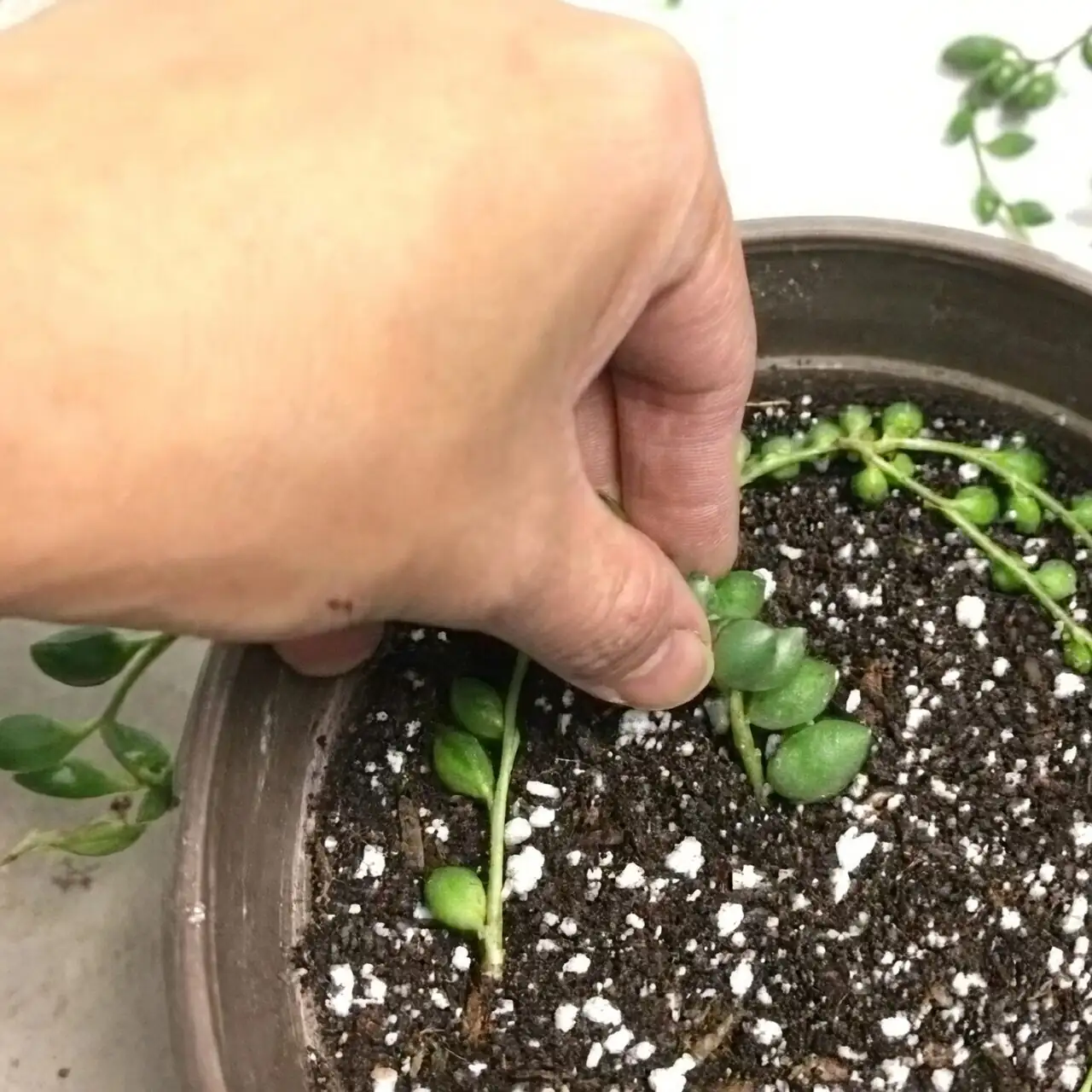
Stems creep and cascade (commonly 60–90 cm / 2–3 ft in containers), and they can root at nodes wherever they touch mix—exactly how the plant forms mats under shrubs back home.
Leverage the knack:
- Layering the crown: Coil a strand across the pot’s surface and pin a few nodes down; they root in 2–3 weeks
- Cuttings: Take 8–10 cm (3–4 in), remove a few pearls at the base, let the cut end callus a couple of days, then lay or tuck nodes onto gritty mix; keep barely moist and bright
- Replant pruned tips into the mother pot to instantly thicken the top
—
Set the stage at home: quick, confident care
- Light
- Best: bright, indirect light plus gentle direct sun (morning or late afternoon)
- Avoid harsh midday sun behind glass; too little light = stretched, sparse strings
- Soil and pot
- Very free‑draining cactus/succulent mix
- Add mineral grit (perlite/pumice/coarse sand) roughly 1:1 with potting mix
- Use a pot with drainage; shallow pots suit the shallow root system
- Water
- Soak, then let dry well before the next drink
- Spring–summer: often every 2–3 weeks indoors (go by dryness, not the calendar)
- Fall–winter: go sparse—just enough to prevent severe shriveling
- Temperature and humidity
- Happy at 15–27°C (60–80°F); tolerates down to ~10°C (50°F); not frost‑hardy
- Low to average indoor humidity; no misting; ensure airflow
- Feeding
- Light touch: balanced liquid fertilizer at 1/2 strength monthly (spring to early autumn). Pause in winter
- Pruning
- Trim long, bare trails in spring to encourage branching; use trimmings for propagation
- Hardiness and placement
- USDA 9–11 (sometimes listed 9–12); grow as a houseplant where winters are cold
- Perfect for hanging baskets, high shelves, bright sills (east/west are great; south with a bit of filtering)
Troubleshooting: what the pearls are telling you
- Shriveling pearls
- Most often thirst—water thoroughly and drain. If soil is wet yet pearls shrivel, check roots for rot
- Mushy stems or pearls that drop
- Overwatering or dense soil. Move to brighter light, let dry, and repot into gritty mix. Save healthy strands as cuttings
- Stringy, sparse look
- Increase light (add gentle direct sun), prune, and replant cuttings into the crown for fullness
- Pests
- Mealybugs, aphids, spider mites may appear indoors. Improve airflow, isolate, and treat with insecticidal soap or neem/horticultural oil
Safety note: Toxic if ingested and sap may irritate skin. Keep away from pets and kids; wash up if you’re sensitive.
—
Names, origins, and a tiny taxonomy detour
- Scientific: Curio rowleyanus (syn. Senecio rowleyanus)
- Family: Asteraceae (daisy family)
- Common names: String of Pearls, String of Beads, String of Peas, Rosary Vine, Bead Plant, Pearl Plant
- Origin story: Southwestern Africa—especially drier parts of South Africa’s Eastern Cape and southern Namibia—where it often threads under shrubs or among rocks
—
Bloom booster mini‑plan
- Fall: Reduce watering gradually; keep bright
- Winter: Cool nights (10–16°C / 50–60°F), bright light, and a slightly dry regime; excellent airflow
- Spring: Resume gentle feeding and normal watering as growth picks up
—
Symbolism and “flower language”
In modern houseplant culture, String of Pearls symbolizes continuity and connection—the way one bead leads to the next evokes enduring bonds, prosperity that keeps “stringing along,” and networks of support. Unlike traditional floriography tied to old-world bouquets, this meaning grew organically from the plant’s appearance and habit: a living necklace that lengthens with care, roots wherever it touches, and turns many small beads into a shared tapestry.
—
Fast facts to flex
- Height at crown: about 5 cm (2 in); trails commonly 60–90 cm (24–35 in) or more
- Each bead: a water tank with a translucent “window” for inner-leaf photosynthesis
- Fragrance: cinnamon‑vanilla sweet-spicy blooms—small, but mighty on scent
- Care mantra: Bright light, gritty mix, deep-but-infrequent watering, and skip the misting
- Prop hack: Wherever a node kisses the soil, roots follow—use it to your advantage
String of Pearls proves you don’t need broad leaves to be brilliant. With skylight beads, night-shift photosynthesis, dessert-scented flowers, and a rooting habit that turns one strand into a curtain, it’s equal parts science lesson and showpiece—no lab coat required.