

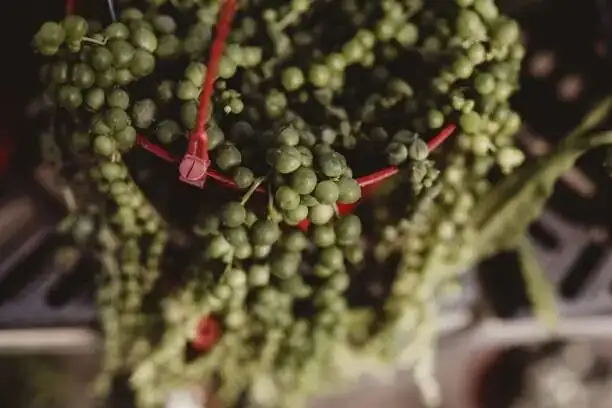
Imagine a green necklace slipping off a sandstone ledge in the African sun, its beads cool to the touch, each one a tiny canteen. That’s Curio rowleyanus—better known as String of Pearls—beginning its long journey from the bright, rocky shelter of South Africa and southern Namibia to the shelves and windows of modern homes worldwide. Its pearls aren’t just pretty; they’re the plant’s biography written in flesh—pages on drought, light, shade, and the clever ways a succulent survives.
Born of Bright Shade: The Wild Home of String of Pearls
In the drier regions of South Africa (notably the Eastern Cape) and into southern Namibia, this trailing succulent doesn’t bask in raw, midday heat. Instead, it threads itself under scrubby shrubs and between rocks, exactly where light is bright but softened, and run-off from brief showers trickles into crevices. There, the plant’s wiry stems creep and root whenever a node kisses the soil, stitching together a living green tapestry across gravel and stone.
- Family: Asteraceae (the daisy family)
- Genus: Curio
- Scientific name: Curio rowleyanus (syn. Senecio rowleyanus)
- Common names: String of Pearls, String of Beads, Bead Plant, Rosary Vine, String of Peas
How the Habitat Shaped a Jewel Box of Adaptations
Water-storing “pearls”
Those pea-sized spheres (about 0.6 cm across) are leaves—plump, efficient reservoirs that let the plant ride out dry spells. A sphere has minimal surface area relative to its volume, which helps slow water loss. In the veld, that’s survival. In your apartment, it’s forgiveness for a missed watering.
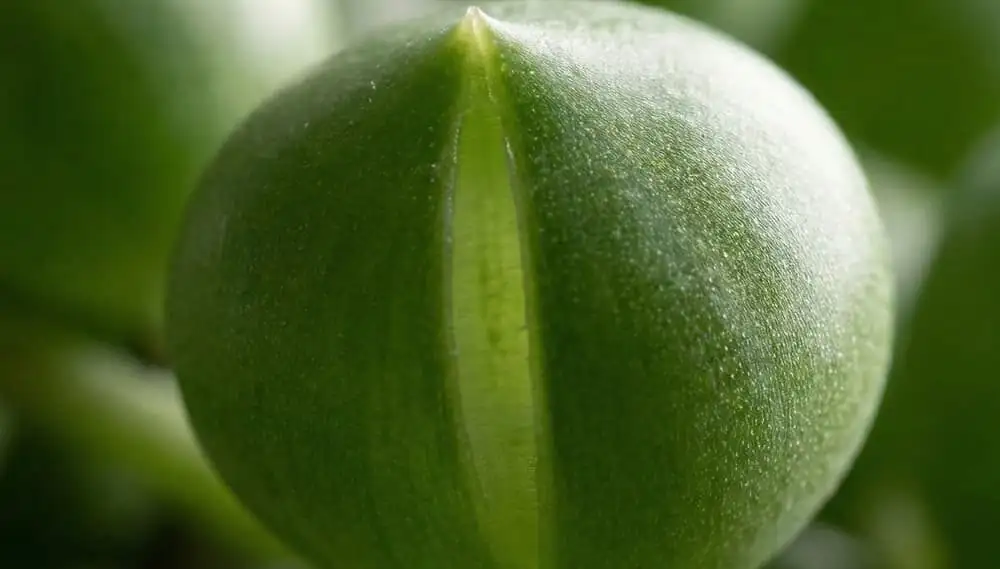
The “epidermal window”
Look closely and you’ll spot a slender, translucent stripe on many pearls. This window lets light reach inner tissues without forcing the plant to lay out flat like a solar panel. It’s a genius compromise for bright, sheltered niches—photosynthesis without the burn.
Trailing, node-rooting stems
Long, slender stems (often 60–90 cm long in containers) drape and explore. Where a node touches mix or a damp crevice, it can root. In nature: a fast way to colonize and catch passing moisture. At home: the secret to full, curtain-like pots when you loop or layer strands back into the soil.
Bringing the Rocks Indoors: Light and Placement
Think “bright, with a bit of a veil.”
- Light: Bright, indirect light with some gentle direct sun (morning or late afternoon). A bright east or west window is perfect. South windows can work if filtered or set back. Too little light = stretched, gappy strings.
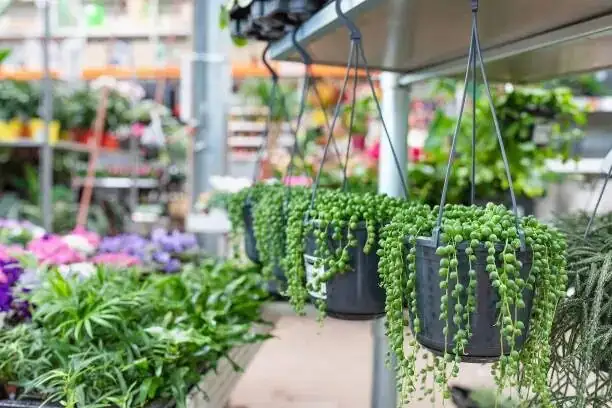
- Placement: Hanging baskets and high shelves suit its cascading habit. Keep it off blasting heat/AC vents and out of cold drafts.
Temperature, Humidity, and Air
- Temperature: Happy at 15–27°C (60–80°F); tolerates down to ~10°C (50°F). Not frost-hardy.
- Heat tips: Above ~30°C (86°F), give light shade and good airflow; growth may pause.
- Humidity: Prefers low to average indoor humidity and moving air. Skip misting to avoid fungal issues.
Soil and Pot: Fast Flow, Shallow Roots
- Soil: Use a very free-draining cactus/succulent mix. A reliable DIY blend is roughly 1:1 potting mix to mineral grit (perlite/pumice/coarse sand). Shallow pots match the shallow root system.
- Pot: Always choose drainage holes. Avoid oversized pots that stay wet too long.
Watering: Read the Beads, Not the Calendar
Water like a succulent—thorough soaks, then a good dry.
- Spring–Summer: Often every 2–3 weeks indoors, but only when the mix has dried well. Look for slightly deflated pearls as your cue.
- Fall–Winter: Go sparse. Keep just hydrated enough to prevent severe shriveling. Constantly wet soil is the express lane to rot.
Feeding: Just a Whisper
- Fertilizer: Use a balanced liquid feed at 1/2 strength about once a month (every 4–6 weeks) from spring to early autumn. Little to none in winter. Overfeeding = lanky strings.
Pruning, Propagation, and Fullness
- Prune: In spring, trim long, bare, or leggy strands to encourage branching. Remove dead or mushy sections promptly.
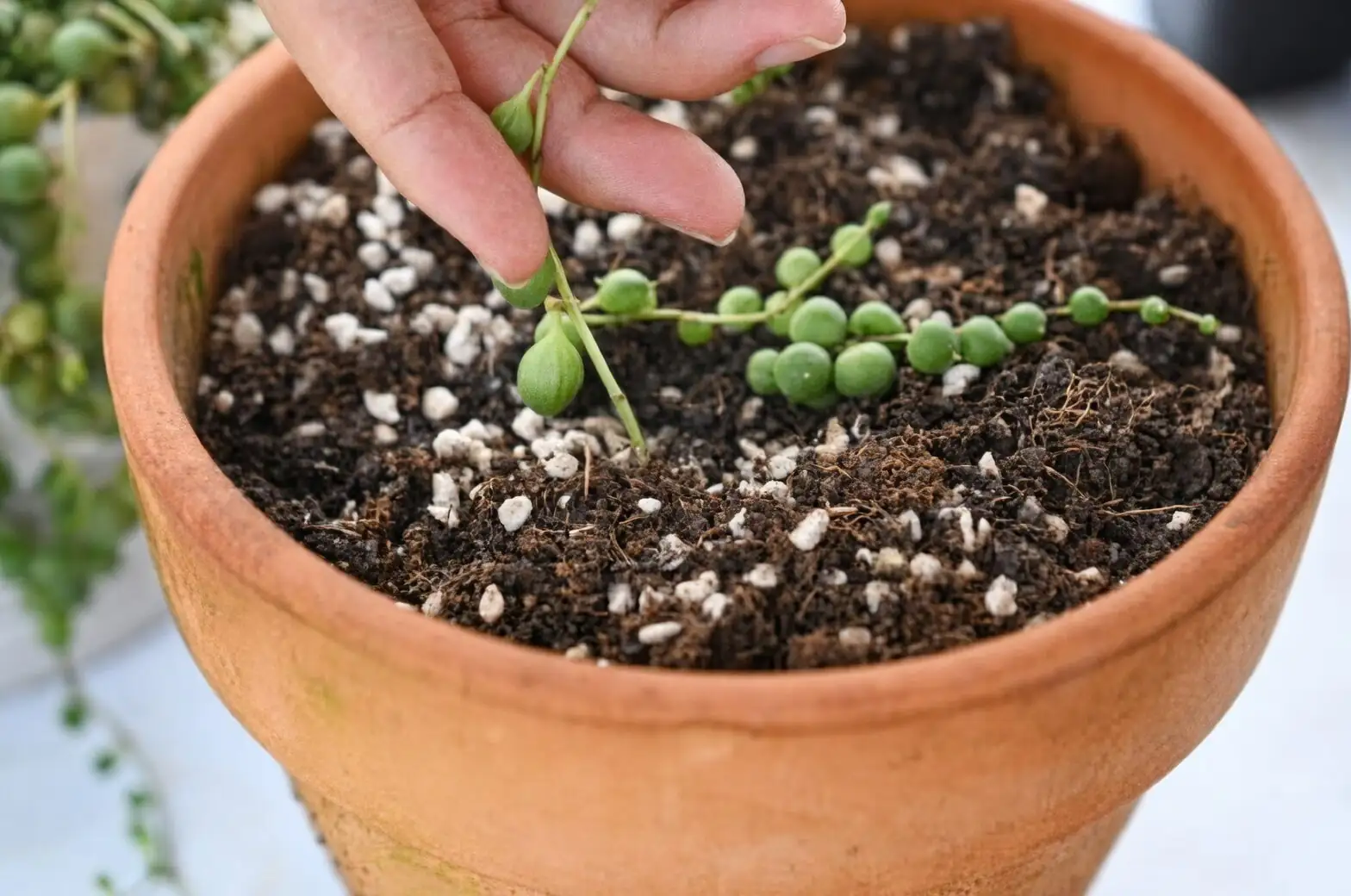
- Propagate: Near foolproof from stem cuttings or layering.
- Cuttings: Take 8–10 cm (3–4 in), remove a few pearls at the cut end, let callus a couple of days, then lay the bare nodes on gritty mix (tucked slightly or resting on top). Keep bright and barely moist; roots often form in 2–3 weeks.
- Layering: Pin a living strand to the soil to root in place—effortless fullness.
- Repot: Every 2–3 years or when crowded, ideally in spring. Size up only slightly; fresh, gritty mix is more important than a bigger pot.
Flowers: A Winter Treat with a Spicy Secret
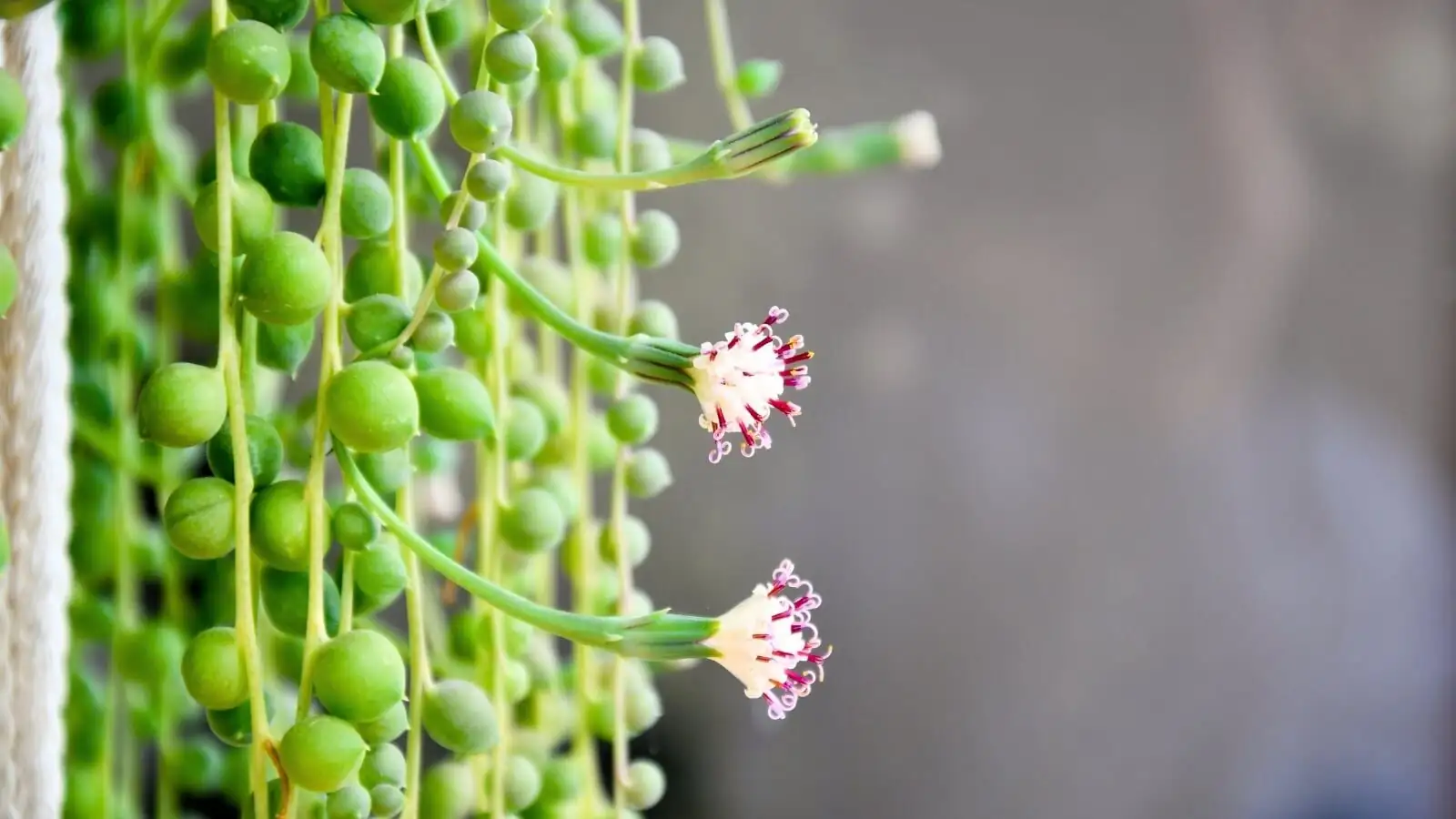
When conditions suit—especially after a brighter, cooler, slightly drier winter rest around 10–16°C (50–60°F)—String of Pearls may produce small, creamy-white composite blooms in late fall to early spring (often winter indoors; sometimes tipping into spring). Up close, the flowerheads open to about 2–2.5 cm (around 1 in) across, with noticeable stamens and a cinnamon/vanilla-like fragrance. Not showy, but utterly charming.
Common Pitfalls (and Quick Fixes)
- Shriveling pearls?
- Most often thirst. Water thoroughly and drain well; pearls usually plump in a day or two. If soil is wet yet foliage still shrivels, inspect for root rot.
- Mushy stems or dropping pearls?
- Classic overwatering and/or dense mix. Move to brighter light, let dry, then repot into gritty soil. Save healthy tips as cuttings.
- Stringy, sparse growth?
- Increase light (with gentle direct sun), prune, and replant cuttings back into the crown for fullness.
- Pests:
- Watch for mealybugs, aphids, and spider mites—especially indoors. Improve airflow, isolate infested plants, and treat with insecticidal soap or neem/horticultural oil. Keep on the dry side to discourage fungus.
Hardiness and Outdoor Living
- USDA Zones: 9–11 (sometimes listed as 9–12 depending on microclimate). Protect from frost. In cooler regions, enjoy it outdoors in warm months and bring it in before cold sets in.
A Quick Home-Care Snapshot
- Light: Bright indirect + gentle direct sun
- Water: Soak, then dry well; sparing in winter
- Soil: Fast-draining succulent mix; shallow pot
- Temperature: 15–27°C (60–80°F); never frost
- Humidity: Low to average; no misting
- Habit: Trailing stems 60–90 cm; roots at nodes
- Safety: Toxic if ingested; sap may irritate skin
Symbolism and “Flower Language”
String of Pearls is often linked with continuity and connection—those unbroken strings symbolize enduring bonds, prosperity, and the way small moments bead together into a life. Unlike ancient floral lore, this meaning grew from modern houseplant culture: people gifting “living necklaces” to mark friendships, new homes, and milestones. It’s a gentle reminder that resilience (water-storing pearls), clarity (epidermal windows), and flexibility (trailing, rooting stems) help connections thrive.
Buying Guide: Choose a Healthy Strand
- Look for plump, firm, evenly green pearls and resilient, unblemished stems.
- Avoid many shriveled beads (chronic thirst or heat stress) and especially mushy, translucent, or dropping pearls (rot).
- Peek at the potting mix if you can—it should be gritty and fast-draining, not dense or soggy.
Seasonal Rhythm: A Simple Care Calendar
- Spring: Resume growth; prune to shape; repot if needed; start light feeding; propagate cuttings freely.
- Summer: Bright light with protection from harsh midday sun; water only after drying; watch for heat stress.
- Fall: Ease off watering; taper fertilizer; keep bright.
- Winter: Keep bright and on the dry side; cooler 10–16°C (50–60°F) can encourage flowering; absolutely no frost or cold drafts.
Fun-to-Know Nuggets
- Each bead’s “window” is a skylight for photosynthesis while conserving water.
- The sphere shape isn’t just cute—it’s math at work to minimize evaporation.
- You’ll still see it sold as Senecio rowleyanus, though Curio rowleyanus is now widely accepted.
The Journey Continues
From rocky refuges in southwestern Africa to a sunlit shelf in your home, Curio rowleyanus brings its landscape along: pearls tuned to drought, windows tuned to light, and stems tuned to opportunity. Give it bright, sheltered light and a fast escape route for water, and it will repay you with a living cascade—an elegant strand that tells a story bead by bead.