

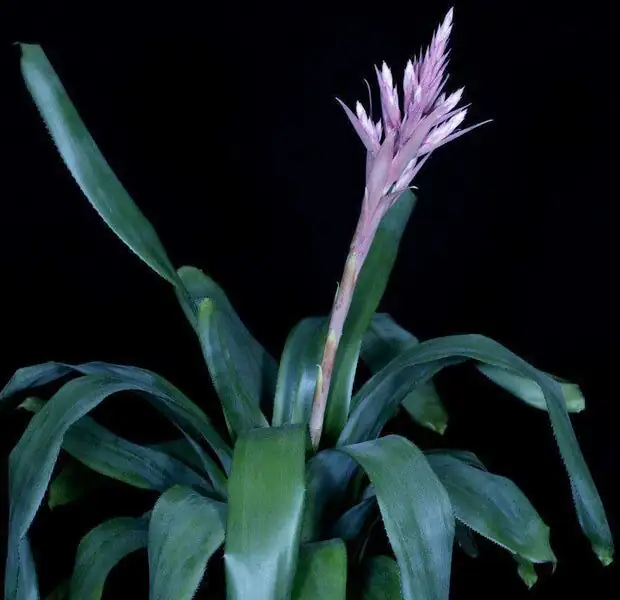
Ready to turn one Dragonfly Bromeliad into many? Aechmea fendleri is wonderfully generous with pups (offsets), and with a few smart moves you can separate, pot, and root them fast—without flirting with rot. Here’s your step‑by‑step, confidence‑boosting guide.
Meet Aechmea fendleri, the Dragonfly Bromeliad
- Look: An elegant, vase‑shaped rosette of silver‑green, subtly banded leaves. In summer, a tall spike with pink bracts and small purple flowers steals the show.
- Habit and size: Rosette‑forming epiphyte that clumps over time. About 60 × 60 cm (24 × 24 in).
- Light: Bright, filtered light (partial shade). Avoid harsh midday sun.
- Temperature: 15–27°C (59–81°F); keep above 10°C (50°F).
- Watering style: Fill the central “cup” with rainwater or distilled water; refresh/top up every 4–8 weeks. Keep potting mix lightly moist in the warm season; let it dry before watering in winter.
- Roots: Epiphytic and shallow—think “anchor,” not “thirsty feeder.” This is why an airy mix and a snug pot are key.
Pup Propagation, Demystified
- When pups appear: Usually after the mother blooms. The parent will slowly decline, channeling energy into her babies—totally normal.
- Best size to separate: When each pup is about one‑third to one‑half the size of the mother and shows some roots of its own.
- Why wait for that size: You’ll get a sturdier, quicker‑to‑establish plant that bounces back faster after the cut.
- Best season: Spring to late summer—warmth, bright light, and higher humidity speed rooting.
Tools and Setup
- Gloves (many Aechmeas have fine, scratchy spines).
- Sterile cutting tool: a sharp knife, pruning saw, or heavy shears.
- Disinfectant: 70% isopropyl alcohol or a 10% bleach solution (re‑sterilize between cuts).
- Optional: A pinch of ground cinnamon or garden sulfur to dust fresh cuts.
- Snug nursery pots: Drainage holes are a must. Pups often start best in a compact pot; mature plants commonly sit well in 12.5–15 cm (5–6 in).
- The ideal airy mix (choose one):
- Equal parts orchid bark mix + perlite + coconut coir (fluffy, fast‑draining, and root‑friendly), or
- 1:1 blend of orchid bark mix and general‑purpose potting mix.
- Optional: a small handful of horticultural charcoal for freshness.
- Pre‑moisten your mix so it’s barely damp—never wet.
Step‑by‑Step: Separating Aechmea fendleri Pups
- Hydrate the day before. Fill the mother’s central cup and lightly moisten the mix to reduce stress.
- Expose the base. Tip the plant and gently tease away enough mix to see where each pup joins the mother.
- Identify the “neck.” Find the narrow connection between pup and parent. Slide in your sterilized blade and make a clean, confident cut. Keep as many of the pup’s own roots as possible.
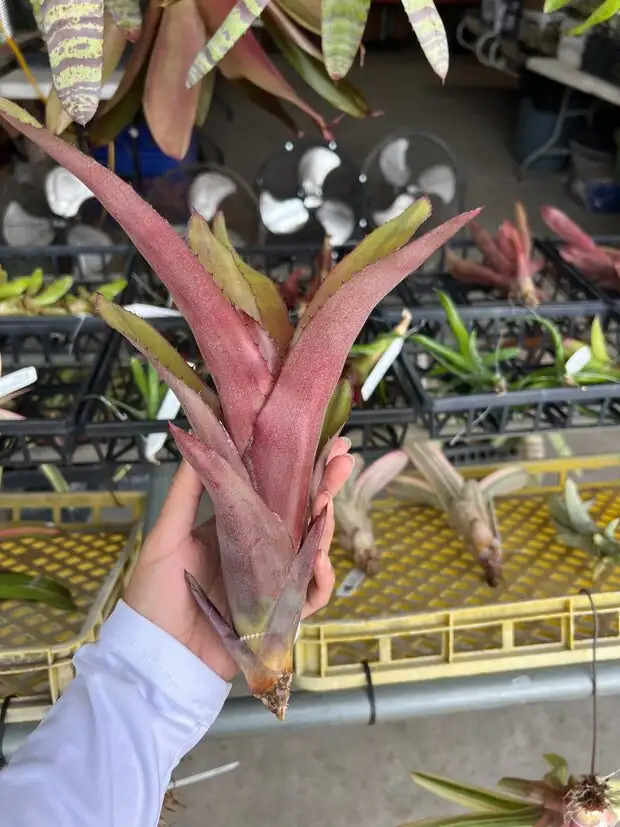
- Tidy and protect. Remove any slimy or dead tissue. Optionally dust the cut ends with cinnamon or sulfur. If the cut is especially juicy, let the pup air for 30–60 minutes to lightly callus.
- Pot snugly. Seat the pup high so the leaf bases are not buried—crown above the mix, roots in the mix. Backfill gently; don’t compact. A top‑dress with coarse bark helps anchor without suffocating roots.
- Settle in. Lightly water the mix to remove air pockets. Do not drench.
The Airy Mix, Explained (and why it prevents rot)
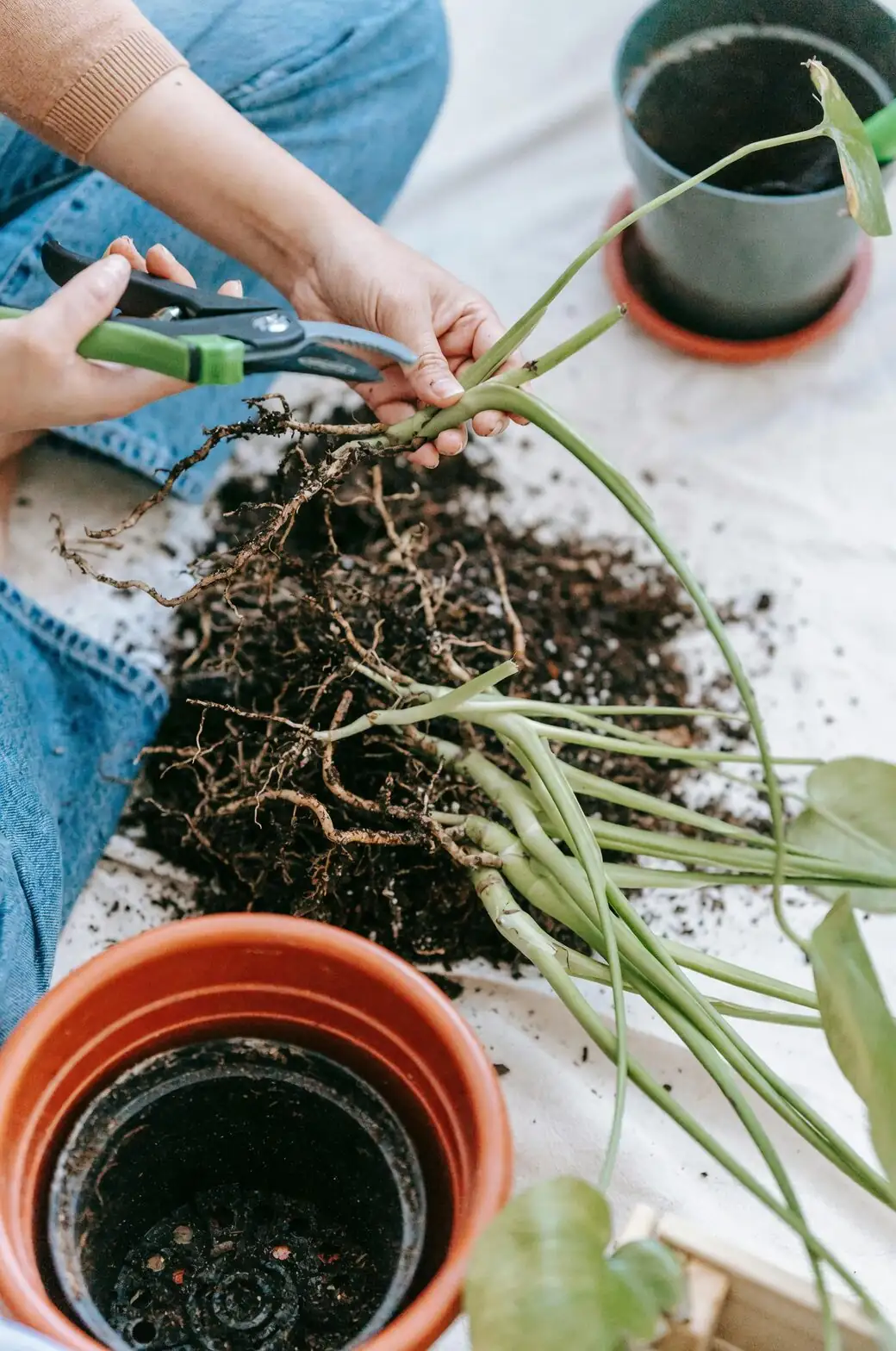
- Orchid bark: Chunky structure, airflow, and rapid drainage—mimics barky perches.
- Perlite: Keeps the blend open and resists compaction.
- Coconut coir (or a small portion of potting mix): Holds just enough moisture for new roots without going sodden.
This combo gives oxygen‑rich pockets around tender roots, which speeds root initiation and slashes rot risk.
Aftercare That Speeds Rooting—Without Rot

- Light: Bright, filtered light. Indoors, try an east window or a bright north exposure; for south/west, use a sheer curtain. Avoid midday scorch.
- Watering in the first 2–3 weeks:
- Mix: Keep barely moist—think “lightly damp, then nearly dry,” never soggy.
- Central cup: For fresh divisions, keep just a small splash in the cup or mist it—don’t brim it yet. Always use rainwater or distilled water.
- Humidity and airflow: Aim for moderate humidity with gentle air movement. A small fan on low across the room is perfect. In hot, dry spells, mist daily or every other day.
- Warmth: Rooting is fastest at 21–27°C (70–81°F). Keep away from cold drafts; never below 10°C (50°F).
- Feeding: Wait 3–4 weeks, then feed at 1/2 strength every 2 weeks from spring through late summer—either a light foliar spray or a splash into the cup. Flush with plain water occasionally to prevent salt buildup.
- Support: If a pup wobbles, nestle stones or a bamboo skewer beside it—don’t bury the crown or pack the mix tight.
- The tug test: After 4–6 weeks, a gentle tug should meet resistance—that’s new roots. You’ll also see a fresh central leaf emerging.
Signs of Trouble (and quick fixes)
- Mushy base or sour smell: Unpot, cut away rot to firm tissue, dust with cinnamon/sulfur, let it dry for a few hours, and repot into fresher, drier, airier mix.
- Wilting in bright light: Ease back the light or add a sheer curtain; check that the mix isn’t bone‑dry for too long.
- Pests (mealybugs, scale, spider mites): Increase humidity/airflow, and wipe or dab pests with isopropyl alcohol. Spider mites thrive in dry air—mist and rinse foliage.
What About the Mother Plant?
- Don’t toss her yet. Keep her cup filled (using rain or distilled water), maintain bright filtered light, and remove the spent flower spike. She may produce more pups over the next year or two as she slowly declines.
- Want more pups sooner? Separating some can redirect energy to forming new ones. Prefer faster pup maturity? Leave them attached longer before you harvest.
Your Propagation Checklist
- Pup size: 1/3–1/2 of the mother, with roots showing.
- Season: Spring to late summer.
- Mix: Airy, bark‑heavy, fast‑draining.
- Pot: Snug, never oversized; excellent drainage.
- Water: Barely moist mix; only a small splash in the cup at first; rain or distilled water.
- Environment: Warm, bright, humid, with gentle airflow.
- Feed: Resume light feeding after 3–4 weeks.
Quick FAQs
- How long until a separated pup blooms? Expect a bloom in a few years under bright, warm, well‑fed conditions.
- Can I use tap water? Better to use rainwater or distilled to avoid mineral buildup in the central cup.
- When should I repot again? Only when crowded; move up just one pot size. Many Aechmeas prefer to feel snug.
A Note on Meaning
Bromeliads like the Dragonfly Bromeliad are often linked with hospitality and resilience. It’s a modern, symbolic “flower language” rather than an ancient one: the rosette’s water‑holding cup suggests welcome, while the plant’s long‑lasting bracts and ability to thrive with modest care embody staying power.
With the right cut, the right mix, and the right aftercare, Aechmea fendleri rewards you quickly—and elegantly. One plant becomes a colony, and your confidence grows right alongside it.