

Think of Parlor Palm (Chamaedorea elegans) as the understory friend that actually likes living indoors with you. In water culture, it looks impossibly clean and graceful—lush fronds above, a white lace of roots below—so long as you give those roots fresh, oxygenated water, gentle nutrients, and keep the stem bases high and dry. Here’s your hands-on, no-rot hydro guide.
Why this palm shines in water culture
- Built for bright, filtered light and steady warmth—classic “indoor palm” energy.
- Clumping habit gives a mini-grove look in a clear vase or opaque cachepot.
- Tolerant and slow-to-moderate growing, which makes maintenance predictable.
- Caveat worth repeating: it’s sensitive to cold and waterlogging. In hydro, that means impeccable hygiene, warm temps, and stems above the waterline.
Set-up essentials (keep it simple and clean)
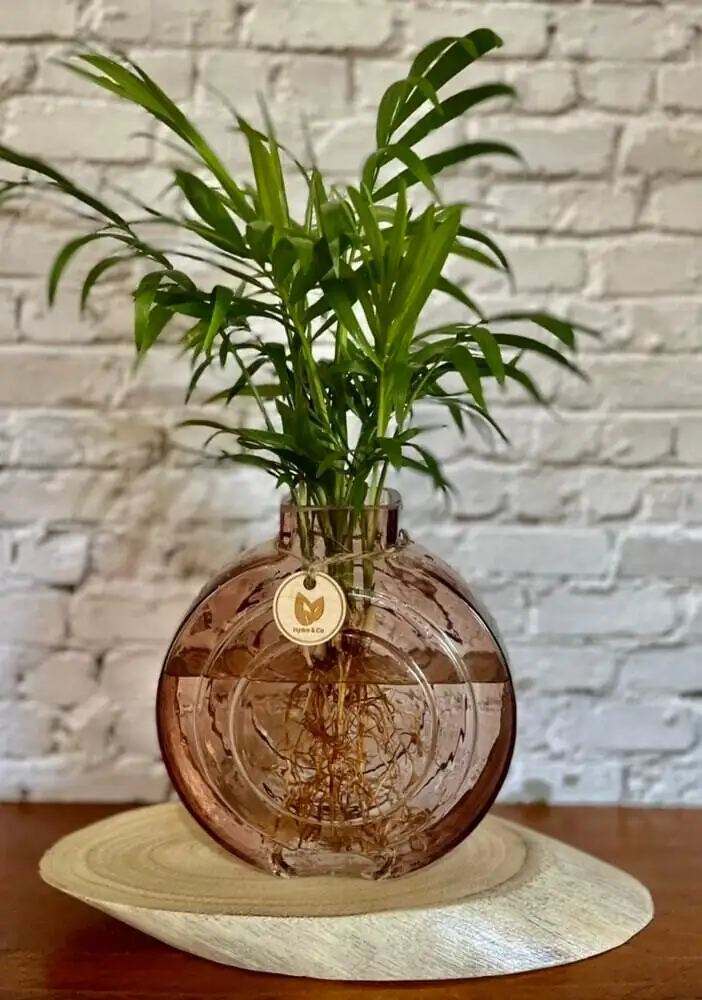
- Vessel: choose a container tall enough to submerge roots but keep stem bases/crowns above the surface. Opaque or dark glass helps discourage algae; a wide neck makes cleaning easier.
- Anchors/support: rinsed pebbles or LECA pellets to stabilize clumps and hold stems above water.
- Water: room temperature. Filtered or rainwater can help if your tap is hard or you see tip-browning over time.
- Tools: a soft basin for soaking, a gentle sprayer or faucet, clean scissors/pruners, paper towels or clean cloths.
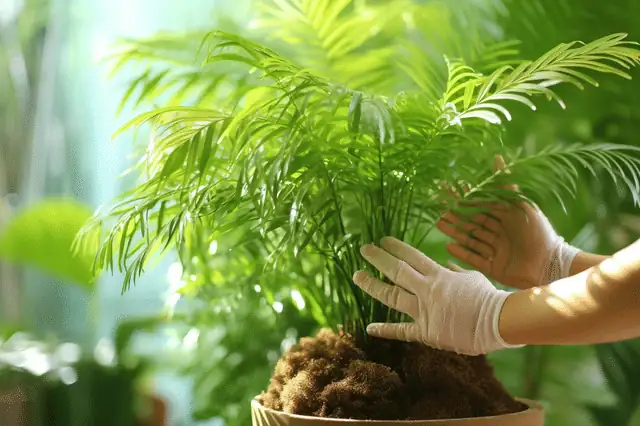
Step-by-step: from pot to pristine hydro
- Pre-hydrate the plant
Water the potted palm the day before. This softens the mix and reduces root breakage.
- Soak and tease
- Slide the plant out. Soak the root ball in a basin of lukewarm water 10–20 minutes.
- Gently massage away potting mix. Rinse under a slow stream until roots are clean.
- Trim only what’s truly dead
- Healthy roots: firm, pale to creamy.
- Remove mushy, dark, or hollow roots with clean snips. Avoid heavy root pruning—this palm resents it.
- Rinse again, then position
- Give a final swish in clean water.
- Set the plant in its vessel. Add pebbles/LECA around the root zone to stabilize the clump.
- Set the waterline
- Submerge roots, but keep the stem bases and crown above the waterline—no exceptions.
- Leave a small air gap so oxygen reaches the crown zone and to account for evaporation.
- The first 2–3 weeks: go nutrient-free
- Use plain water while the plant settles and new “water roots” begin forming.
- Place in bright, indirect light (30–50% shade if sun is strong). Keep warm: ideally 18–24°C (64–75°F), above 10°C (50°F) at all times.
Refresh rhythm by season (the no-rot rule)
- Summer: change water every 3–5 days.
- Autumn and winter: every 10–15 days.
- Pro tips:
- If water clouds, smells sour, or the sides film up, refresh sooner.
- Top up between changes, but don’t let the waterline creep up onto the stems.
Gentle feeding that keeps roots happy
Start nutrients only after the plant looks stable and you see fresh, white roots (usually 3–4 weeks after conversion).
- How much: aim light. About 1/8 to 1/4 the label rate of a balanced hydroponic nutrient for foliage plants.
- How often:
- Spring–early autumn: add to fresh water every other change or about monthly—light and steady beats heavy and sporadic.
- Winter or slow growth: stop feeding.
- Watchouts:
- Overfeeding shows up as browning tips, algae blooms, or a sour smell. If so, switch to plain water for a couple of cycles.
- Mix nutrients into fresh water only; never “top up” concentrated feed.
Keep stems above the waterline—why it matters
- Anatomy 101: the palm’s crown and stem bases are not built to stay wet.
- Constant submersion invites basal rot. Even a few millimeters of stem in water can be a problem over time.
- Maintain a clear gap: roots in water, stems and crown in air. Recheck after each top-up or change.
Hygiene and oxygen: your rot-prevention playbook
- Rinse on every change: dump water, swish roots in fresh, and wipe the vessel. A soft bottle brush removes biofilm; avoid scented soaps that can cling to roots.
- Give roots air: don’t fill to the brim—an air gap plus frequent changes keeps oxygen levels up.
- Temperature discipline: cool + wet = risk. Keep above 10°C (50°F), ideally 18–24°C (64–75°F).
- Light management: bright, indirect light supports sturdy foliage without overheating the vessel or exploding algae growth.
- Optional niceties: an airstone on very low can help in larger vessels, but fresh water on schedule is usually enough.
Troubleshooting (fast fixes)
- Yellowing fronds + mushy roots
Likely cold conditions and stale water. Move to a warmer, bright spot; trim rot; refresh water more often; pause feeding.
- Browning tips on otherwise firm roots and healthy stems
Often dry air or minerals. Increase ambient humidity gently; try filtered/rainwater; keep nutrients mild.
- Algae on the glass
Use an opaque container, shade the vase back, or clean more frequently. It’s mostly aesthetic unless it slimes the roots.
- Post-transfer sulk (a bit limp)
Normal during the first 1–2 weeks. Hold nutrients, keep warm and bright, refresh on schedule, and avoid direct sun.
- Pests (spider mites, scale, mealybugs)
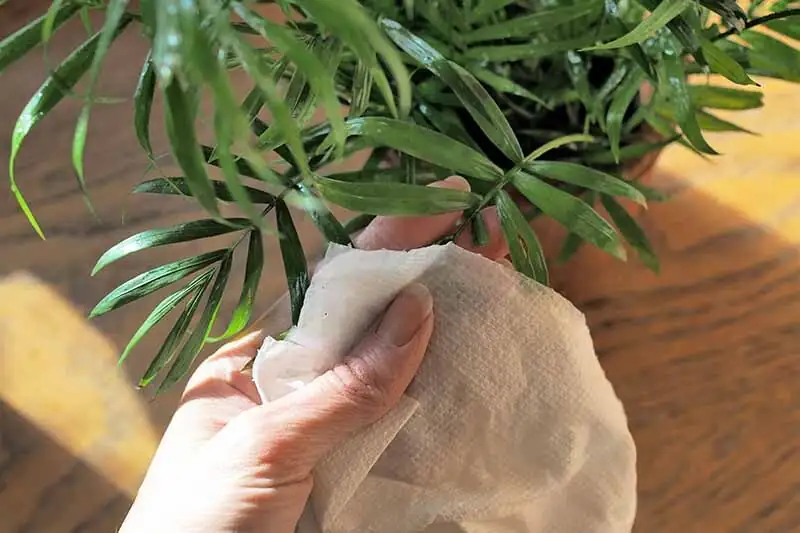
Wipe leaves regularly; improve airflow. Treat early with insecticidal soap or horticultural oil and repeat as needed.
Styling ideas that also help the plant
- Tall, smoky glass or matte ceramic vessels hide algae and frame the fronds.
- A ring of rinsed pebbles/LECA keeps multi-stem clumps upright while leaving crowns dry.
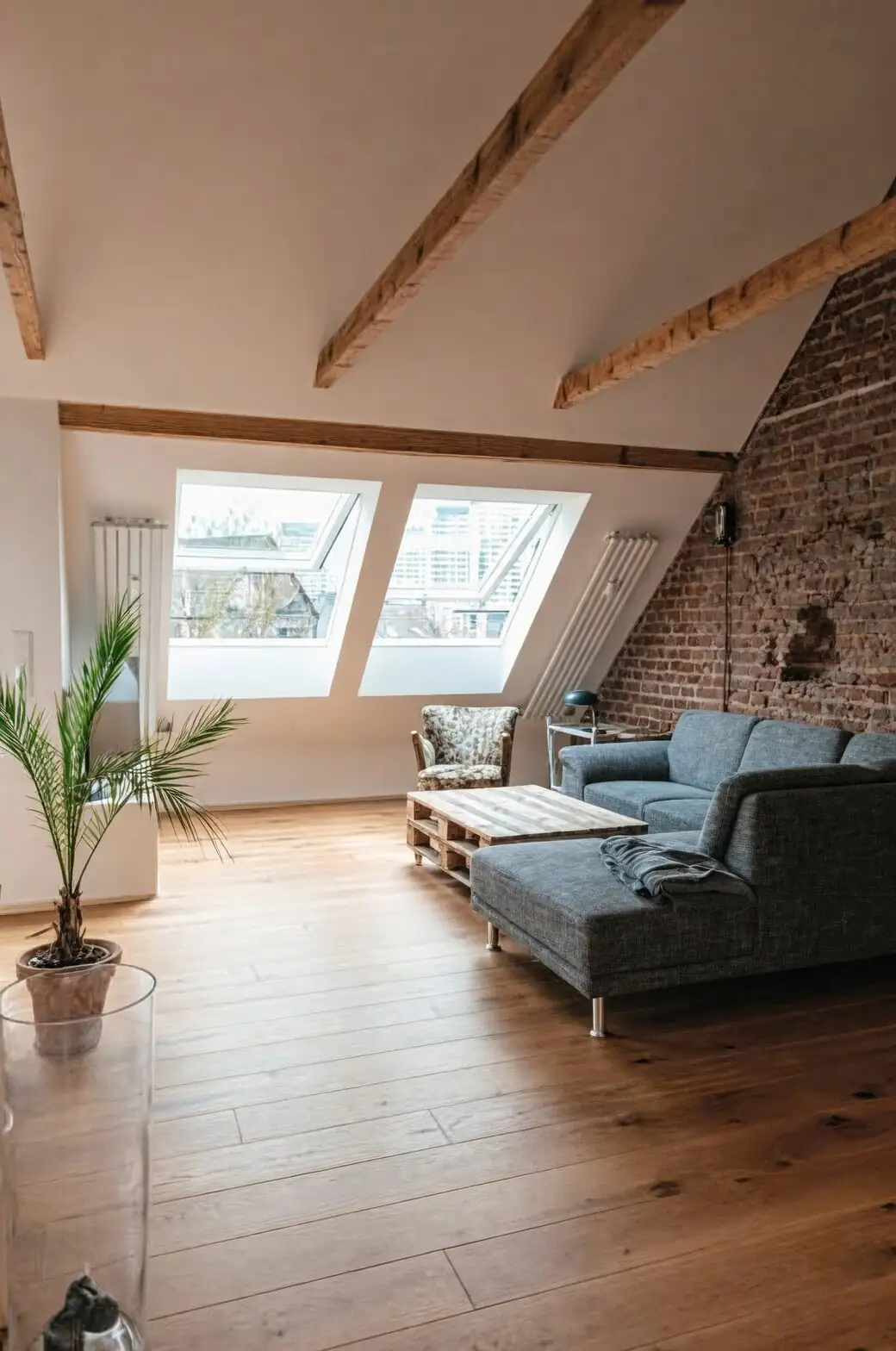
- Set near an east or bright north window; if using a stronger window, soften with a sheer curtain.
Quick seasonal checklist
- Spring
- Resume very light feeding once you see fresh roots.
- Keep bright, indirect light; avoid hot midday beams.
- Summer
- Refresh every 3–5 days; top up between changes.
- Shield from harsh sun; keep the room comfortably warm and humid.
- Autumn
- Reduce/stop feeding as growth eases.
- Stretch refreshes toward 10–15 days if water stays clear.
- Winter
- Brightest safe spot, away from drafts; never below 10°C (50°F).
- Refresh every 10–15 days; no feeding; skip misting if the room is cool.
A little meaning, a lot of history
Nicknamed the “Parlor Palm” because it graced Victorian parlors without fuss, this species picked up a reputation for welcome, good luck, and quiet elegance. While “flower language” lore isn’t botanical science, the symbolism fits: a long-lived, tidy palm that thrives in the gentle light of everyday rooms feels like an invitation to stay, settle, and grow.
At-a-glance plant notes
- Species: Chamaedorea elegans (aka Bella Palm, Dwarf Parlor Palm, Good Luck Palm, Neanthe Bella Palm)
- Origin: Tropical understory of southern Mexico and Guatemala
- Size indoors: typically 60–120 cm (2–4 ft)
- Light: bright, indirect; tolerates lower light with slower growth
- Pet-friendly: generally considered non-toxic to cats and dogs
With clean roots, a strict waterline, seasonal refreshes, and feather-light feeding, your Parlor Palm will look salon-fresh year-round—no soil, no mess, just pure, tropical poise.