

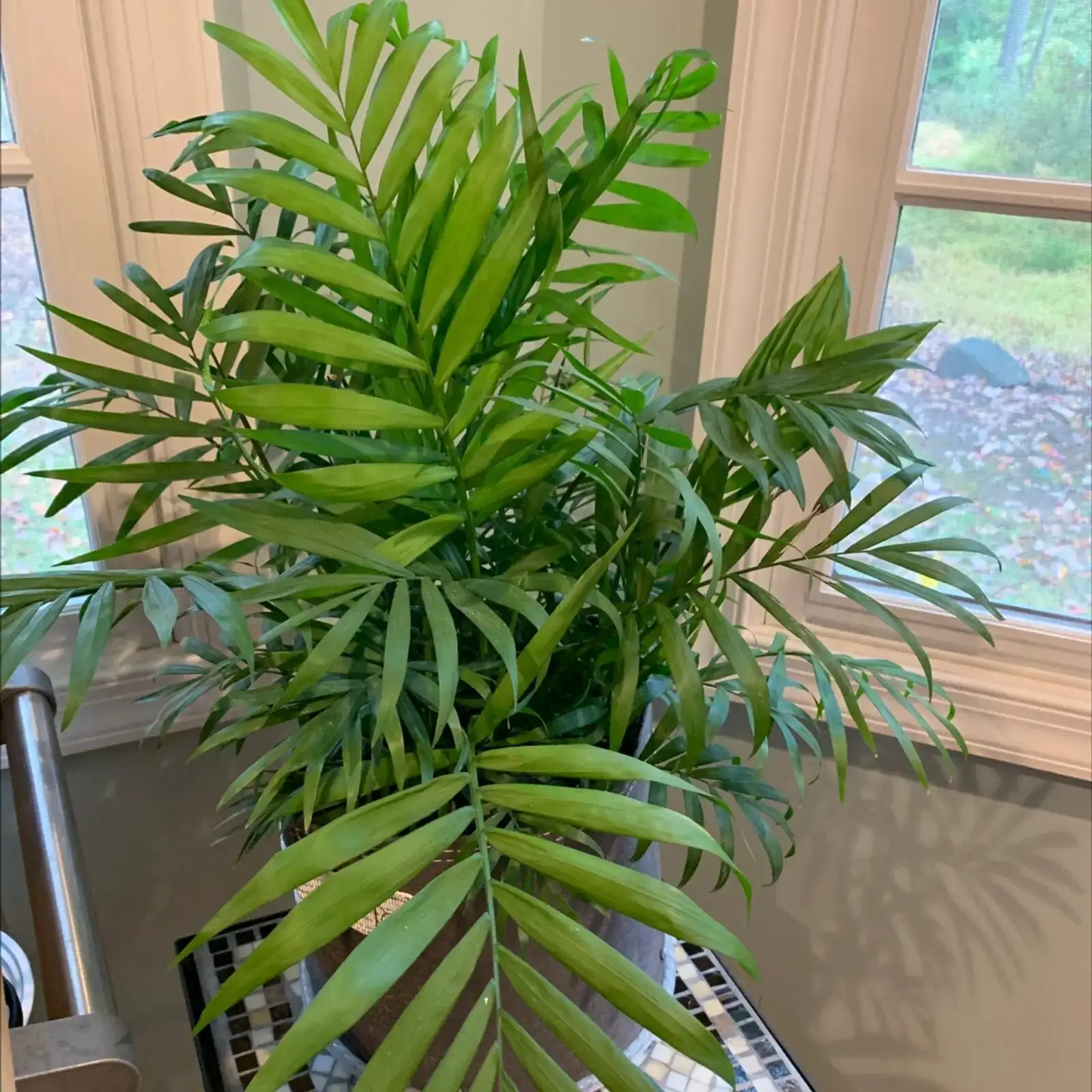
You’ve seen it on desks, shelves, and in sun-dappled corners: the parlor palm (Chamaedorea elegans) is the throwback star from Victorian parlors that still thrives in modern apartments. It’s famously tolerant, but “tolerant” doesn’t mean “anything goes.” Today we’ll bust the fuzzy myths around “bright, indirect light,” give you real window-to-plant distances, and share ways to thicken growth in low-light rooms—without crisping those elegant fronds.
Meet the plant: elegant by nature, forgiving by design
- Origins: Southern Mexico and Guatemala, under the forest canopy—built for dappled, filtered light.
- Look: Soft, feathery deep-green fronds rising from slender, clumping stems; typically 2–4 ft indoors with age.
- Vibe: One of the most adaptable indoor palms. It handles medium to low light, but looks fullest in bright, filtered light. In steady warmth, mature clumps may even toss up tiny yellow flower sprays.
Myth-buster #1: What “bright, indirect light” really looks like
“Bright, indirect” doesn’t mean “far from any window,” and it’s not “direct sun for a minute is fine” either. Think forest understory light—bright surroundings, no blazing sun on the leaves.
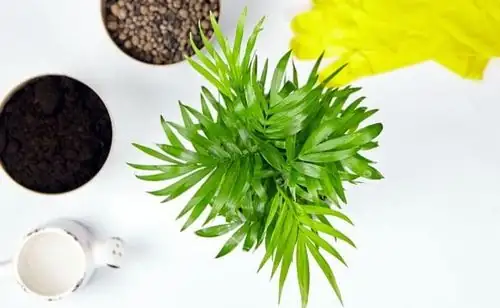
Use these quick tests:
- Shadow test: Hold your hand 30 cm above a white surface at midday. Bright, indirect light gives a soft, slightly fuzzy shadow. A crisp, sharp-edged shadow = direct sun.
- Curtain clue: A sheer or thin white curtain typically provides about 30–50% shade—perfect for this palm by strong windows.
- Phone lux app (rough guide):
- Low light: ~50–100 foot-candles (500–1,000 lux)
- Medium: ~100–300 fc (1,000–3,000 lux)
- Bright, indirect: ~300–800 fc (3,000–8,500 lux)
The parlor palm tolerates low light, but for plumper fronds and steadier growth, aim squarely for the “bright, indirect” band.
Exactly how far from each window?
Every room is different (trees outside, balcony overhangs, white walls that bounce light), but this placement cheat-sheet works in most homes. Adjust a little if your space is unusually bright or dim.
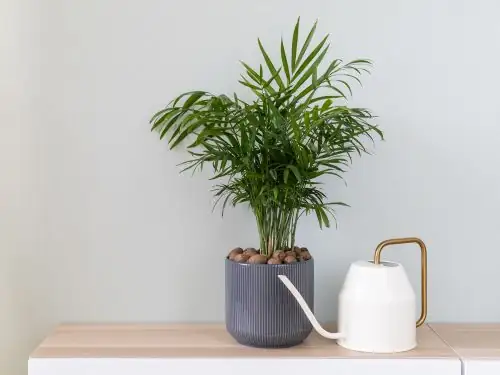
- North-facing window
- Distance: On the sill to 0.5–2 ft (15–60 cm) away.
- Why: Gentle light, usually no scorch risk. Great everyday spot.
- East-facing window
- Distance: 1–4 ft (30–120 cm) away, or directly on the sill behind a sheer.
- Why: Morning sun is softer; a sheer keeps leaves pristine.
- West-facing window
- Distance: 4–8 ft (1.2–2.5 m) back with no curtain; 2–5 ft (60–150 cm) behind a sheer.
- Why: Afternoon sun can be harsh—filter it or set the plant well back.
- South-facing window
- Distance: 4–8 ft (1.2–2.5 m) back with no curtain; 3–5 ft (90–150 cm) behind a sheer providing ~30–50% shade.
- Why: Strongest sun. Filter or give it respectful distance.
- Skylights and glass doors
- Keep off to the side or under a sheer/frosted panel. Overhead midday rays can scorch.
Tip: If a fingertip on the frond feels warm from the sun, it’s probably too direct. Filter it or increase the distance.
Thickening growth in low-light rooms—without sun scorch
Your parlor palm won’t “bush out” by pinching (palms don’t branch that way), but you can coax denser, darker foliage and a fuller clump with these strategies:
1) Give it more safe brightness
- Filter don’t fry: Use a sheer curtain, frosted window film, or blinds tilted up. Aim for that soft-shadow light band.
- Bounce light: Place near light-colored walls or a mirror (off-angle to avoid hot spots). White surroundings boost brightness without adding direct beams.
- Rotate the pot: A quarter-turn every 1–2 weeks prevents leaning and evens out growth.
2) Add a gentle grow light
- What works: A warm-white or neutral-white LED (4,000–5,000 K), 9–20 W, placed 12–18 inches (30–45 cm) above the fronds.
- Timing: 10–12 hours daily is plenty for steady, compact growth.
- Intensity cue: You’re aiming to simulate bright, indirect—not a tropical noon. If leaves look washed-out or develop crisped tips near the light, raise the fixture a few inches.
3) Choose a fuller clump
- Many pots are planted with multiple seedlings for that lush “mini grove” look. When buying, pick a pot with higher stem count and tight spacing for instant fullness.
- Division is possible but stressful; only separate clumps in spring and keep as many roots attached as possible.
4) Support compact growth with steady care
- Temperature: Best appearance at 18–24°C (64–75°F). Keep above 10°C (50°F). Avoid cold drafts.
- Humidity: Average home humidity is fine; a pebble tray or humidifier helps in dry seasons.
- Feeding: During spring to early autumn, feed lightly with a balanced liquid fertilizer—either monthly at normal strength or every two weeks at half strength. Pause in winter.
- Potting: Use a snug pot with excellent drainage. Overpotting invites soggy mix and stretch-prone roots.
What not to do
- Don’t cut green fronds to “force” bushiness—palms resent it and each stem has a single growing point.
- Don’t blast it with sudden, unfiltered sun. Acclimate over 1–2 weeks or keep that sheer in place.
- Don’t keep the soil wet and cold. That’s a recipe for yellowing and root rot.
Watering that keeps fronds lush (and roots safe)
- Spring–summer: Water thoroughly, then let the top 2–3 cm (about 1 inch) of mix dry before watering again. Evenly moist, never soggy.
- Autumn–winter: Reduce frequency; let the mix dry a bit more between waterings—but don’t keep it bone-dry for long.
- Always: Empty saucers; never let the pot sit in water. Use room-temperature water. If tips brown easily, try filtered or rainwater to minimize mineral buildup.
Soil and pot
- Mix: A loose, well-draining houseplant blend—regular potting mix improved with perlite/coarse sand and a bit of fine bark.
- Pot: Must have drainage holes. Typical sizes 6–10 in (15–25 cm) for home plants; step up just one size when repotting.
Optional hydro-style
- The plant can adapt to water culture: rinse soil from roots, trim any rot, keep stem bases above the waterline, refresh water frequently, and add a small hydro nutrient dose once stable.
Quick placement and care blueprint
- Best everyday spots: East or north windows, or several feet back from bright south/west windows with a sheer.
- Ideal light: Bright, indirect (soft shadow). Medium light is okay but slower; low light is survivable with thinner growth.
- Ideal climate: 15–25°C (59–77°F), warm and steady. Keep away from vents and drafts.
Seasonal tune-up
- Spring: Resume feeding; give bright, filtered light (30–50% shade if sun is strong).
- Summer: Water when the surface dries; maintain humidity; protect from harsh midday sun.
- Autumn: Ease up on watering; keep filtered light.
- Winter: Brightest safe spot; keep above 10°C (50°F) (15°C/59°F+ for best looks); water sparingly; pause fertilizer.
- Repot every 2–3 years in spring, one size up.
Troubleshooting at a glance
- Browning tips: Usually dry air, inconsistent watering, mineral-heavy water, or cold drafts. Boost humidity slightly, water evenly, consider filtered water.
- Yellowing + mushy roots: Cold plus waterlogged soil. Warm it up, improve drainage, let the top inch dry before rewatering.
- Scorch/bleaching: Too much direct sun or a grow light too close. Filter or increase distance.
- Pests: Spider mites (dry-air favorite), scale, mealybugs, sometimes thrips. Wipe leaves, inspect regularly, treat early with insecticidal soap or horticultural oil.
Safe around pets, stylish for years
Parlor palm is generally considered non-toxic to cats and dogs. Still, discourage nibbling—any plant can upset sensitive stomachs.
A little lore: everyday elegance and quiet good luck
Once the darling of Victorian parlors, this palm became the symbol of gracious welcome—thriving in dimmer rooms where fussier palms faltered. Over time it picked up “good luck” associations and a reputation for youthful vitality. Maybe that’s because, with simple, steady care, it just keeps looking fresh—gracing rooms for years without demanding the sun.
—
Bottom line: Give Chamaedorea elegans a bright, filtered seat—soft shadow light near an east or north window, or a few feet back behind a sheer in south/west rooms. Let the top inch of soil dry between drinks, keep it warm, and feed lightly in the growing season. For thicker, lusher fronds in darker spaces, add a gentle grow light or bounce more safe brightness its way. No sunburns, no drama—just an elegant, enduring green companion.