

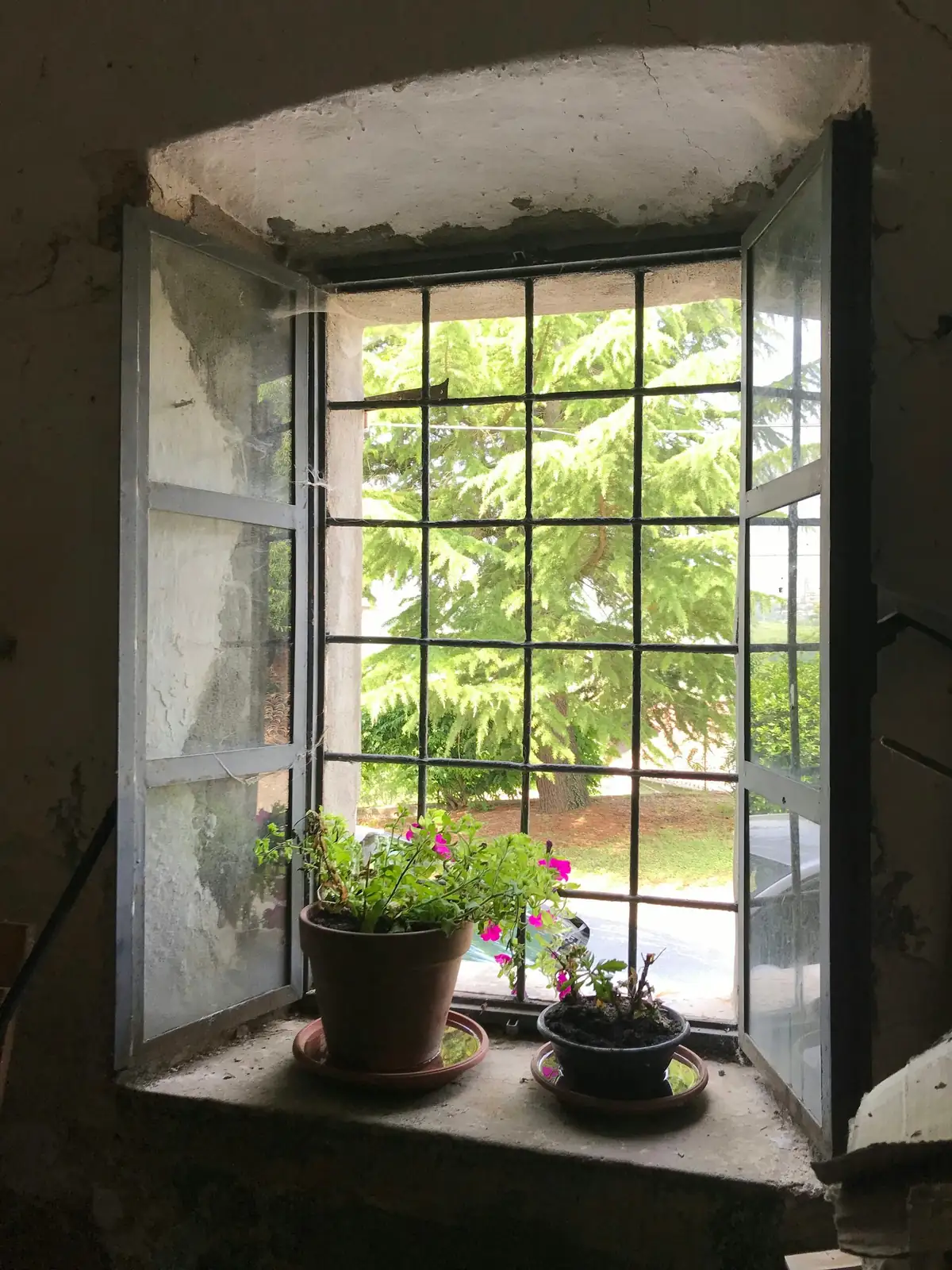
There’s nothing sadder than an Echeveria that’s lost its poise—leaves gapping like loose teeth, rosette slouching toward the nearest window, colors washed out. The good news: with deliberate light rehab and a clean cut at the right time, you can bring that tight, sculptural rosette back. Here’s a hands-on recovery plan tailored to Echeveria sp. (aka Hens and Chicks, Mexican Snowball)—practical lux targets, safe light ramp-up, when to behead, and how to sculpt a compact form again.
Echeveria at a glance
- Family: Crassulaceae; genus Echeveria, native to Mexico and Central America
- Habit: Rosette-forming succulent; 10–20 cm (4–8 in) tall, 10–25 cm (4–10 in) wide
- Look: Blue‑green, fleshy leaves often dusted with protective farina; edges blush burgundy under strong light
- Flowers: Pink stalks in summer with bell-shaped blooms, pink outside, yellow to yellow‑orange inside
- Sweet spot: Strong light plus a complete dry-down between waterings
Why it stretched—and how to read the rosette
- Etiolation: Long internodes, visible stem, flattened or open rosette, paler color, plant leaning. That’s chronic low light.
- Sunburn: Bleached white/tan patches that don’t “heal.” Usually from a sudden jump in intensity or hot midday sun after shade.
- Overwater stress: Translucent/mushy leaves, base blackening, sour smell—risk of rot.
- Underwater stress: Many lower leaves wrinkling at once; plant feels too light.
Part 1: Light rehab with numbers (no sunburn allowed)
Your Echeveria wants bright light to full sun. Indoors, that means a sunny window or strong grow lights with airflow. Use a phone lux app at leaf level to get objective.

Indoors under grow lights
- Starting target (week 1): 12,000–15,000 lux for 12–14 hours/day
- Goal for compact form (weeks 2–4): 20,000–30,000 lux for 12–14 hours/day
- Advanced/color-up goal (weeks 4+): brief peaks up to 35,000–40,000 lux if temps and airflow are excellent (watch for stress)
At a bright window
- Aim for 4–6+ hours of direct sun (south or west exposure in the Northern Hemisphere). Indoor summer sun can hit 20,000–60,000+ lux near glass—acclimate gradually to avoid burn.
Outdoors (mild climates)
- Full sun can exceed 60,000–100,000 lux at midday. Start with morning sun only, then step up exposure.
A gentle 2–3 week ramp to prevent sunburn
- Days 1–4: 10,000–12,000 lux (or 30–45 min morning sun). Increase airflow.
- Days 5–8: 15,000–18,000 lux (or 60–90 min morning sun).
- Days 9–12: 20,000–25,000 lux (or 2–3 hours morning sun).
- Days 13–21: 25,000–30,000 lux sustained. For outdoor transitions, expand to half-day sun, shielding from harsh midday until leaves toughen.
Pro tips:
- Keep temps 15–27°C (59–81°F); in heat waves, give midday shade and extra ventilation.
- Don’t wipe the farina—this wax shields against UV and water loss.
- Rotate the pot a quarter turn every 3–4 days for symmetrical growth.
- A small fan prevents stagnant, humid air (rot/pest insurance).
Part 2: When to behead—and how to do it cleanly
Beheading is the reset button. Do it when:
- The visible bare stem is longer than 1–1.5 rosette heights
- Leaf spacing is wide and the plant can’t tighten up even in bright light
- The plant is wobbly or shading itself with a leaning crown
- Early rot at the base threatens the top (salvage the rosette)
Step-by-step beheading
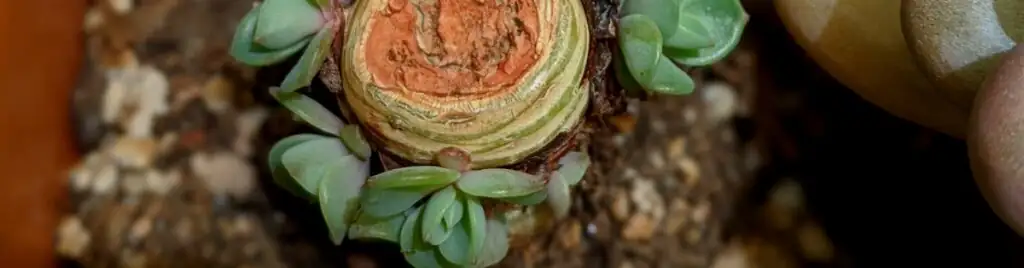
1) Prep
- Withhold water 2–3 days beforehand to firm tissues.
- Sterilize a sharp blade (70% isopropyl alcohol).
- Have a fast-draining, gritty mix ready (cactus mix + extra pumice/perlite).
2) The cut
- Identify solid, healthy tissue 1–3 cm (0.4–1.2 in) below the last tight leaf whorl.
- Slice cleanly. If there’s any translucence/rot, cut higher until the core is clean.
3) Callus
- Strip 1–2 rows of lower leaves from the head to create a short bare stem.
- Air-dry the rosette and the stump in bright, indirect light (10,000–15,000 lux), warm room temps, 3–7 days until cut surfaces are dry and leathery.
4) Rooting the rosette
- Set the rosette on dry gritty mix; bury only the bare stem. Top-dress with gravel to stabilize.
- Light: start 10,000–15,000 lux for week 1, then 20,000–25,000 lux.
- Water: wait until you feel resistance on a gentle tug (2–4 weeks). Then give the first light watering; switch to full “soak and dry” as roots establish.
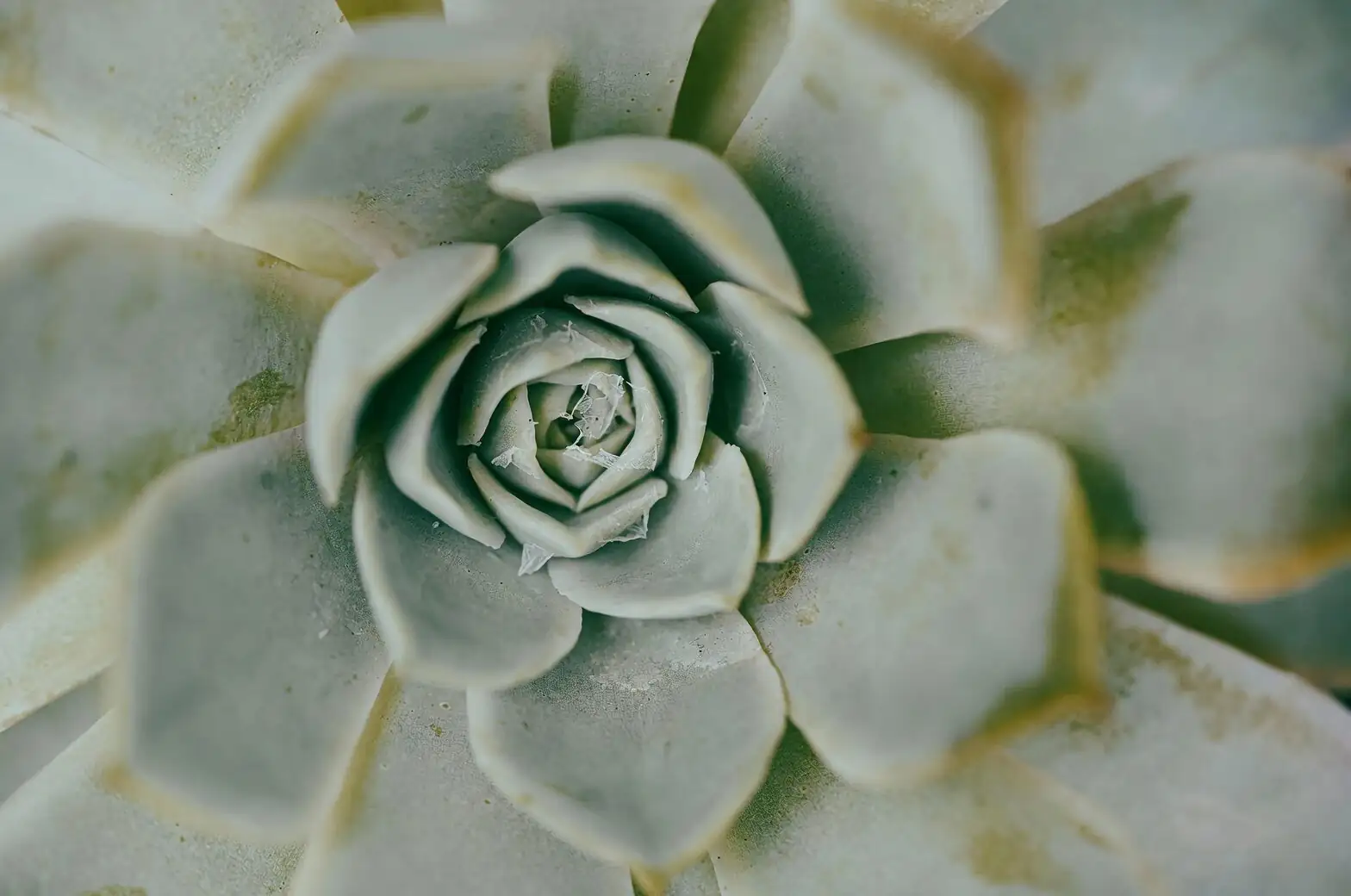
5) The stump
- Keep it dry at first, then water sparingly once you see nubs. Offsets usually appear in 2–6 weeks under 15,000–20,000 lux.
Bonus propagation
- Healthy leaves you removed can be callused 2–5 days and laid on dry mix; mist sparingly until tiny roots and pups form.
Part 3: Sculpting a compact rosette (and holding it)
Light and airflow are your chisels. Water and substrate are your polish.
Light that holds shape
- Maintain 20,000–30,000 lux (12–14 h under LEDs) long term; allow brief peaks to 35,000–40,000 lux with good airflow to encourage burgundy edging.
- Outdoors: full sun is fine once acclimated; provide midday shade in extreme heat.
- Keep the plant centered under the light; rotate weekly.
Water that keeps leaves tight
- Use “soak and dry”: water thoroughly, then allow the mix to dry completely.
- In warm, bright conditions: typically every 7–14 days; in winter/low light: every 3–5 weeks.
- Keep water out of the rosette center; never let pots stand in saucers of water.
- For color and form, allow a mild, safe dry spell before each watering.
Substrate, pot, and feeding
- Soil: very fast-draining succulent mix; add extra pumice/perlite for a gritty, airy texture.
- Pot: drainage hole mandatory; terracotta helps dry-down and tighter growth.
- Fertilizer: spring–summer only, low-nitrogen cactus feed at 1/4–1/2 strength every 4–6 weeks. Skip in winter.
Grooming and shaping cues
- Gently remove dry lower leaves to improve airflow; don’t tug healthy ones.
- After summer bloom, cut spent flower stalks.
- If the rosette starts to splay, increase light by 10–20% and extend dry-down slightly.
Common pitfalls to dodge
- Rushing light increases: sudden jumps scorch farina and leaf tissue.
- High humidity + low airflow: invites mealybugs and rot.
- Overpotting: wet centers, slow dry-down, floppy growth.
- Rubbing the farina: once removed, it won’t return on that leaf.
Troubleshooting quick guide
- Rosette opening, stem visible: increase light to 20–30k lux over 2–3 weeks; consider beheading if already tall.
- Lower leaves shriveling fast: likely underwatering; give a full soak, then return to proper rhythm.
- Leaves translucent/mushy: overwatering or rot; unpot, cut to healthy tissue, re-root the top after callus.
- No burgundy edges: intensify light slowly, ensure full dry-down, and keep nutrients lean.
Environment cheat sheet
- Sun: bright light to full sun; 4–6+ hours direct sun outdoors or the brightest indoor window. Grow lights work well with the lux targets above.
- Temperature: 15–27°C (59–81°F) ideal. Protect from frost; keep above 5°C (41°F). Shade/ventilate in extreme heat.
- Humidity: low to average; avoid stagnant, humid air.
- Hardiness: generally USDA 9–11.
- Placement: sunny sill, bright balcony/patio, or under grow lights with a fan.
Pests and peace of mind
- Mealybugs in leaf joints, aphids on flower stalks, spider mites in hot, dry rooms—check often.
- Spot-treat with cotton swabs dipped in alcohol, insecticidal soap, or horticultural oil. Strengthen your prevention with better light, airflow, and faster drainage.
- Generally non-toxic to people and pets, but nibbling can still upset tummies.
Why the burgundy edges matter
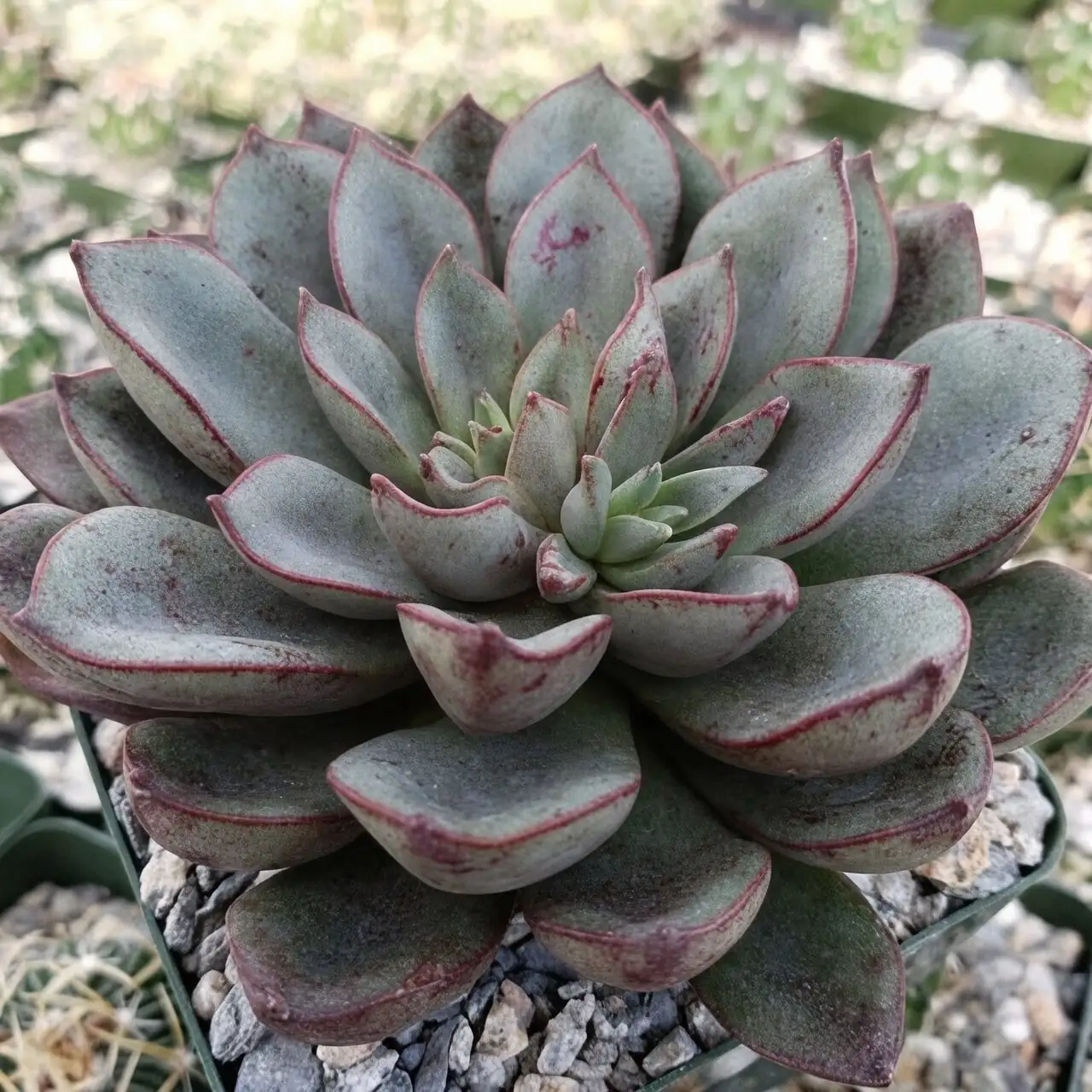
Those wine-red margins are your living light meter. They show your plant is receiving strong light and mild, non-damaging stress—exactly what tight, elegant Echeveria rosettes love.
Symbolism, briefly
Echeveria is often associated with resilience and enduring love—apt for a plant that stores water in plump leaves and keeps its poise through dry spells. This is modern, popular symbolism rather than an ancient floral code, but it resonates: care well, and it rewards you with longevity and grace.
Your 4-week comeback plan (at a glance)
- Week 1: Measure lux; set 12–15k lux (or short morning sun). Withhold water until mix is bone-dry, then do one thorough soak.
- Week 2: Increase to 18–22k lux; maintain strong airflow. Evaluate stem length; schedule beheading if needed.
- Week 3: Hold 22–28k lux. If you beheaded, keep the rosette on dry mix; no watering yet. Begin rotating for symmetry.
- Week 4: 25–30k lux steady. Start light watering for newly rooted tops; prune spent leaves; continue soak-and-dry. Enjoy the rosette tightening.
With patient light ramping, crisp dry-downs, and a decisive cut when the stem gets goofy, your Echeveria will return to that compact, powder-dusted perfection—ready to blush at the edges and throw up those elegant summer bells when the season arrives.