

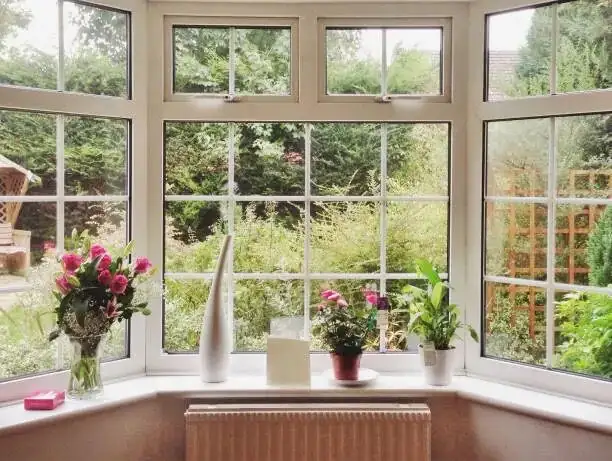
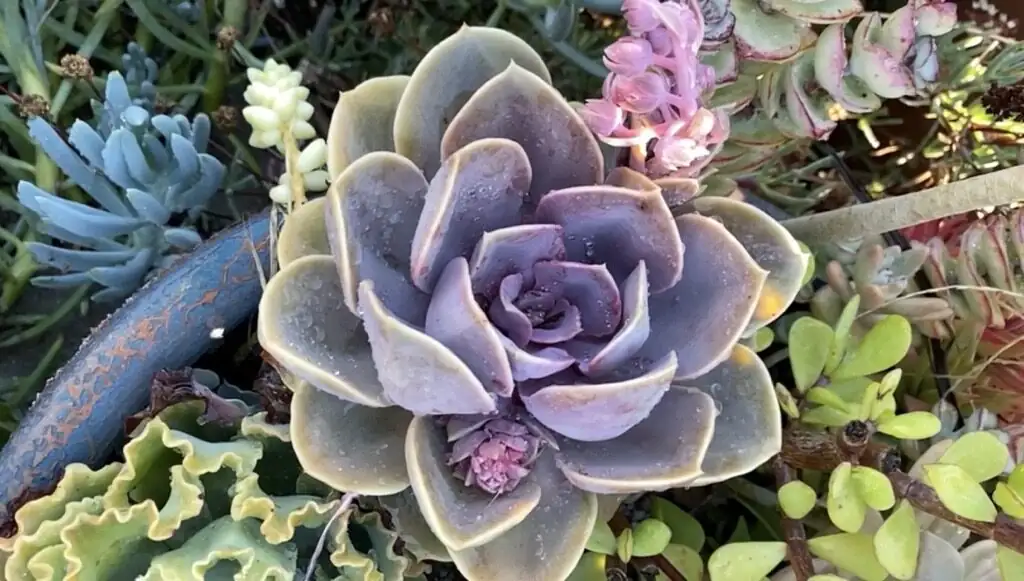
Think of a plant that looks like a little lotus carved from sea glass—each leaf a plump petal storing its own sip of rain. That’s Echeveria, the rosette-forming succulent that quietly became a modern emblem of resilience and lasting love. Its water-storing leaves and serene geometry made it Instagram-famous in the 2010s, and with that fame came a new wave of “flower language” for succulents: a vocabulary of endurance, devotion, and simplicity that people now weave into gifts, weddings, and feng shui decor.
Echeveria at a glance
- Botanical notes: Echeveria sp. (Crassulaceae), a New World genus named for Mexican botanical illustrator Atanasio Echeverría y Godoy; native range spans Mexico and Central America.
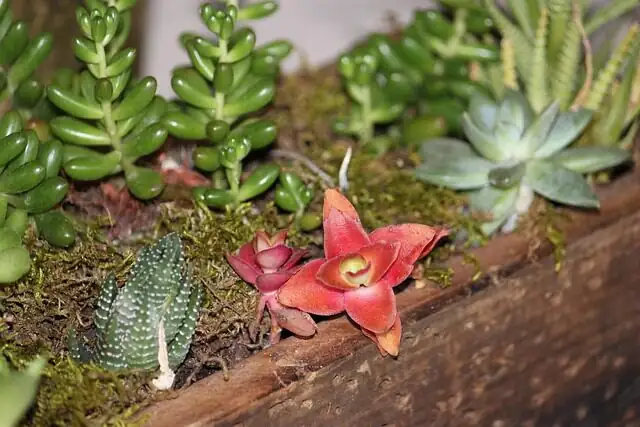
- Look: Tight, lotus-like rosettes of blue‑green, fleshy leaves. Under strong light, leaf margins often blush burgundy to wine red. Many carry a powdery wax (farina) that protects from sun and water loss—avoid rubbing it off.
- Flowers: In summer, tall pink stalks rise with clusters of small, bell-shaped blooms—typically pink outside, yellow to yellow‑orange within.
- Size: Usually 10–20 cm tall with rosettes 10–25 cm wide; flower stalks can reach 20–50 cm.
- Aliases you’ll see in shops: Hens and Chicks, Mexican Snowball (trade names and hybrids abound).
Why this rosette became a love letter to resilience
- Water in the leaves, hope in the form: Echeveria hoards moisture against drought, staying handsome through long dry spells. That self-reliance fuels its symbolism of endurance, quiet strength, and devotion that keeps showing up—even when conditions aren’t easy.
- Lotus-like geometry: The orderly spiral suggests harmony and renewal. Many people read the rosette as a “living mandala,” a reminder to center, simplify, and persist.
- Summer bells: Those airy pink stalks with golden bells feel celebratory—like a promise kept after a long wait, perfect for messages of patience and love that matures.
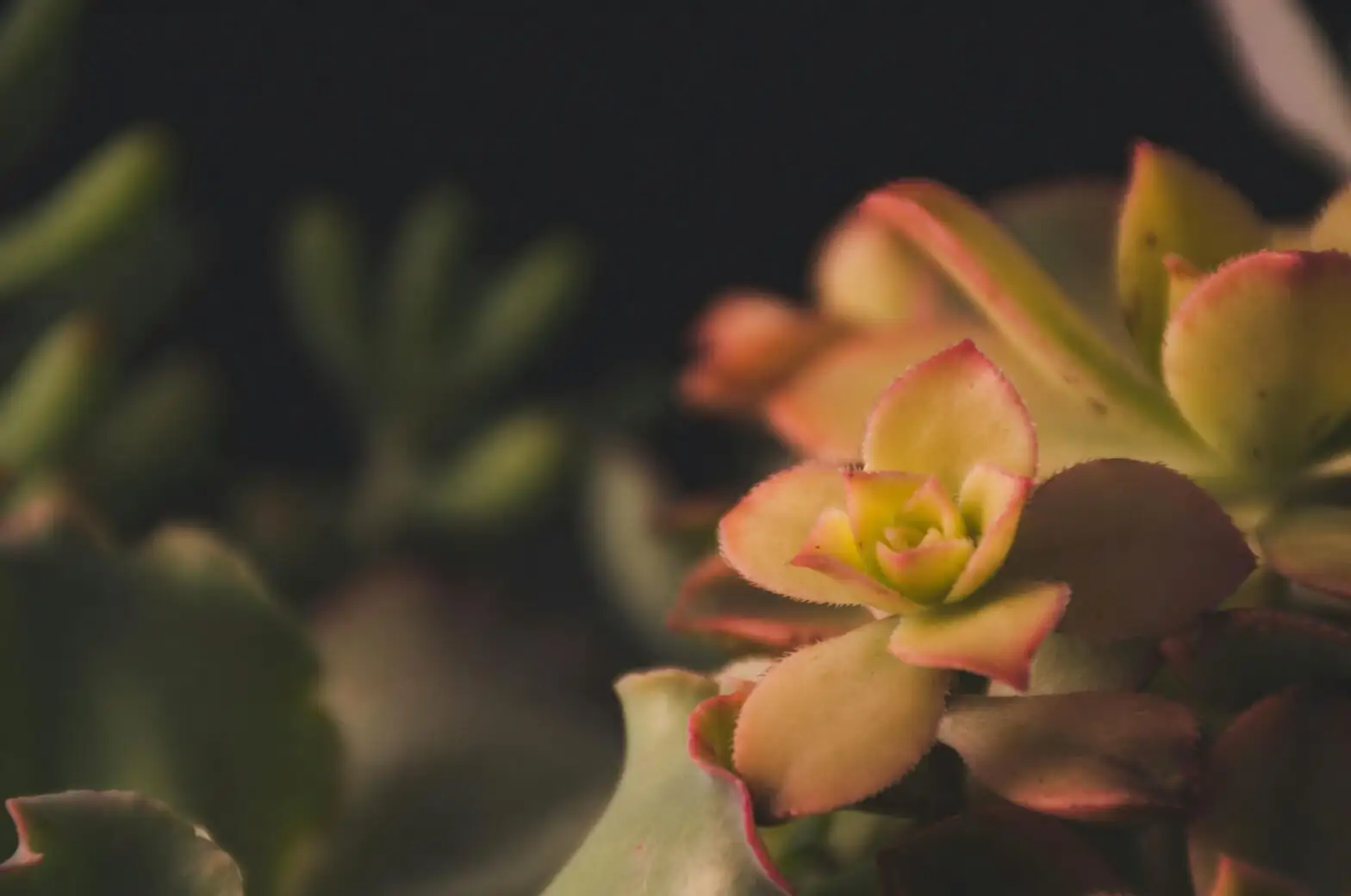
Flower language, then and now
- Where “flower language” comes from: Western floriography bloomed in the Victorian era, while Japan’s hanakotoba assigned nuanced meanings to blossoms. Today, the internet has revived the idea—adapting it to plants we keep close at home.
- How Echeveria fits: Unlike fleeting bouquets, a rosette can thrive for years. That durability recasts love not as sudden flame but as steady ember. In modern parlance, Echeveria often stands for:
- Enduring love and loyalty
- Resilience and self-sufficiency
- Simplicity and “quiet luxury”
- Patience and growth (especially when those summer flowers appear)
The 2010s succulent boom—and the birth of shared meanings
- Cultural roots: Small apartments, drought-aware gardening, and a craving for low-maintenance beauty converged. Bright windowsills filled with rosettes; social feeds filled with their perfect spirals.
- Community and craft: Swaps, propagation tutorials, and DIY wedding favors turned growers into storytellers. A single leaf could become a new plant—proof of renewal that people folded into proposals, anniversaries, and new‑home rituals.
- Aesthetic minimalism: Blue‑green tones with burgundy edges matched the era’s clean lines and neutral palettes. The plant’s calm presence underlined a collective value: sustainability without fuss.
Gifting with meaning
Pair the plant’s look and lore with the moment you’re marking.
- Occasions
- Weddings and anniversaries: A living emblem of love that lasts through dry spells.
- Housewarmings and new jobs: Self-sufficiency, prosperity, and fresh starts.
- Sympathy and support: Quiet strength and remembrance without the pressure of weekly care.
- Gift message ideas
- “For love that endures and keeps its beauty, even in dry seasons.”
- “A rosette for your fresh start—rooting, growing, and blooming in time.”
- “Quiet strength, steady light—may it live on your windowsill and in your days.”
- Presentation tips
- Choose a compact, symmetrical rosette with firm leaves.
- Pot in a breathable terracotta with fast-draining succulent mix.
- Tuck in a simple care card (bright light, soak‑and‑dry watering).
- For wedding favors, tiny rosettes in biodegradable pots let guests plant a memory at home.
Note: Echeveria is generally considered non‑toxic to people and pets, though nibbling can still cause mild tummy upset—good news for gift‑giving households.
Feng shui decor: placing living symbols with intention
While feng shui is a traditional art rather than hard science, many enthusiasts love using Echeveria for its gentle, rounded energy.
- Where to place
- Wealth (southeast): A lush, healthy rosette symbolizes steady prosperity.
- Health and family (east): Use a thriving clump or trio for harmony and growth.
- Near the entry: A welcoming rosette suggests protection and well-being as you cross the threshold.
- How to style
- Group in odd numbers (3, 5, 9) to amplify energy.
- Favor rounded rosettes for bedrooms and calm spaces.
- Use natural clay pots to anchor the earth element and keep the soil airy.
- Practical harmony (good chi is also good horticulture)
- Bright light to full sun (aim for 4–6+ hours daily).
- Excellent drainage; avoid humid, stagnant corners.
- Keep water out of the rosette center to prevent rot.
Care cheat sheet (so the symbolism lives on)
- Light: Bright to full sun. Indoors, choose the brightest south- or west-facing window or strong grow lights with airflow.
- Water: Soak and dry. Water thoroughly, then let the mix dry out completely. In bright warmth, that may be every 7–14 days; in winter or low light, every 3–5 weeks. Never let the pot sit in water.
- Soil and pot: Fast-draining cactus/succulent mix amended with pumice or perlite; always use a pot with drainage. Terracotta helps the mix dry evenly.
- Temperature: Best at 15–27°C (59–81°F). Protect from frost; keep above 5°C (41°F).
- Grooming: Remove spent bloom stalks; peel away only dead lower leaves. Farina (that powdery bloom) won’t return on the same leaf if rubbed off.
- Feeding: Lightly in spring and summer with a diluted, low‑nitrogen succulent fertilizer every 4–6 weeks. Skip winter.
- Propagation (renewal in action): Offsets when present; leaf cuttings after callusing 2–5 days; or behead and re‑root a leggy rosette.
- Pests: Check leaf joints for mealybugs; treat with alcohol swabs or insecticidal soap and improve light/airflow. Biggest risk is rot from soggy soil and low light.
Styling for weddings and home
- Weddings and events
- Boutonnières and bouquets: A single blue‑green rosette adds sculptural calm.
- Centerpieces: Clustered rosettes with candles signal enduring love and clarity.
- Favors: Mini rosettes guests can plant—living memories that outlast cut blooms.
- At home
- Minimalist shelves: A single, perfectly shaped rosette as a daily reminder to breathe.
- Desk totems: Pair with a smooth stone or small bell jar (vented) for focus and balance.
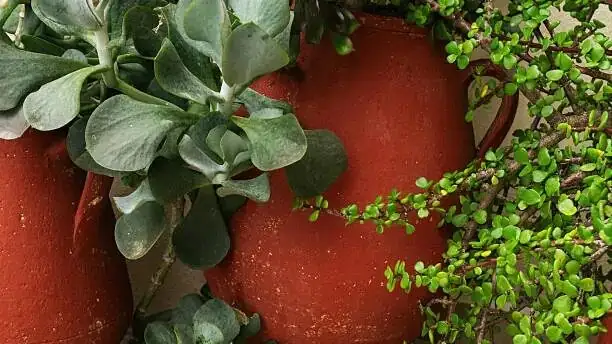
- Sunlit kitchens: A trio of rosettes in earthy bowls—prosperity with every morning coffee.
Quick answers to common questions
- My rosette is stretching open. What’s wrong?
- Etiolation from insufficient light. Gradually move it brighter (to avoid sunburn) or use grow lights. Behead and re‑root if the stem is long.
- The leaf edges used to be burgundy—now they’re pale. How do I bring back the color?
- Provide stronger light, a gritty mix, and full dry-downs between waterings. Color often deepens with bright light and mild, non-damaging stress.
- Bottom leaves are wrinkling. Help?
- A little lower‑leaf loss is normal. If many shrivel quickly, water more thoroughly but less often. If leaves turn translucent or mushy, you’re overwatering—let the mix dry fully and improve drainage and airflow.
Echeveria’s genius is simple: store what matters, shed what doesn’t, and bloom when the time is right. No wonder it’s become the plant of modern love and resilience—a living keepsake that keeps its promise on a sunny sill.