

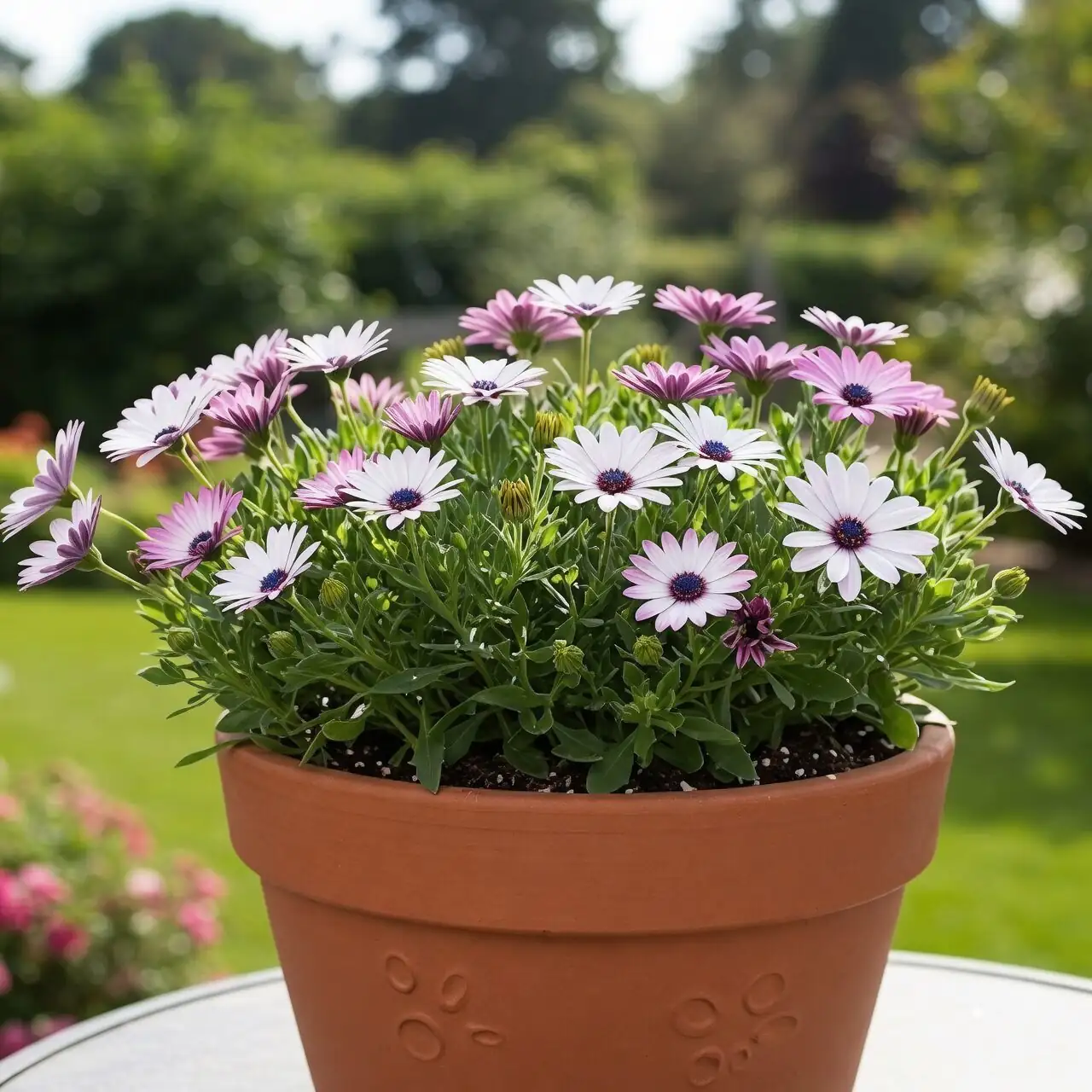
Think of Falling Stars Cape Daisy (Osteospermum ecklonis) as your balcony’s little pocket of good weather—compact, sky-toned daisies sparkling above tidy green mounds. On high-rise patios, these beauties thrive with a few microclimate tricks: tame heat bounce, soften wind, insulate the pot, and water smartly. Do that, and you’ll get a long, lively bloom show from early spring well into fall.
Meet your plant partner: compact, sunny, and long-blooming
- Botanical name: Osteospermum ecklonis (Asteraceae)
- Common names: Falling Stars Cape Daisy, African Daisy, Blue-Eyed Daisy, Cape Daisy
- Origin: South Africa’s Cape region
- Habit and size: Compact, mounding clumps, typically 20–45 cm tall and 30–60 cm wide
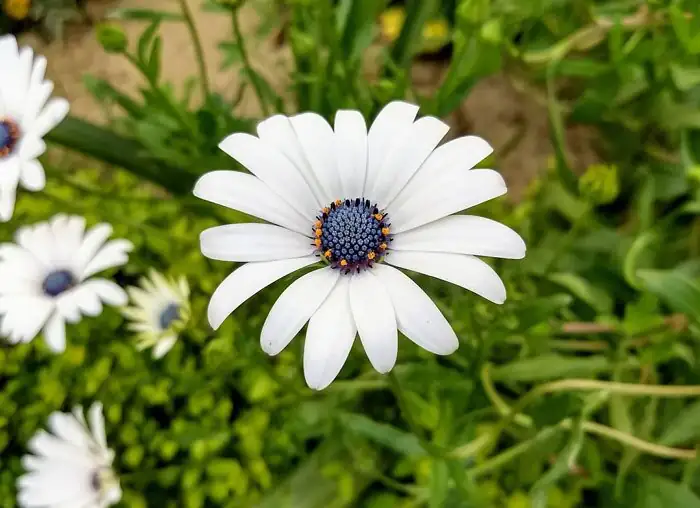
- Flowers: Soft, sky-blue daisies with a darker “eye”; heavy bloom in sun, longest in cool-to-mild weather
- Season: Early spring through fall
- Sun: Full sun for best flowering (aim for 6+ hours)
- Hardiness: USDA 9–11; grow as an annual or overwinter frost-free in colder zones
- Ideal for: Containers, bright patios and balconies, front-of-border accents
Good to know: Blooms open in bright light and often close in low light or at night—normal behavior, not a problem.
Crack the balcony code: microclimates matter
City balconies are mini weather labs. Before you plant, read your space:
- Track sun: Count hours of direct light. South- and west-facing balconies usually deliver the most; aim for 6+.
- Feel the heat: Midday, place your hand on railings and walls. If they’re too hot to touch for more than a second, radiant heat may stress roots and buds.
- Note the wind: Find your prevailing direction. High-rise gusts desiccate leaves and dry pots fast.
- Check glare: Glass and pale walls can bounce light—and heat—onto leaves.
Tip: One bright spot can be enough. If your balcony has mixed light, position Cape daisies in the sunniest pocket and lift the pot above railing shade if needed.
Reflective heat management: more light, less scorch
Balconies can be both light-starved and heat-blasted. The goal is to boost brightness without cooking your plant.
- Use gentle reflectors:
- Matte white boards or foam panels placed a short distance behind the plant brighten without focusing heat.
- A car sunshade (the silvery kind) works well if angled to reflect morning or late-day light, not the fiercest noon sun.
- Skip mirrors and highly polished metal near foliage—they can concentrate heat and cause leaf scorch.
- Angle and adjust: Start with a shallow angle (30–45°). If the leaf surface feels hot to the touch after 10 minutes, reduce exposure or move the reflector back.
- Cool the surroundings:
- Light-colored pots and surfaces reflect heat away.
- Keep a small air gap (2–5 cm) between pots and hot walls to reduce radiant heat transfer.
- In extreme heat waves, a light shade cloth or a temporary umbrella during peak hours keeps buds setting.
Wind breaks that don’t steal the sun
Wind steals moisture and can snap stems, but Cape daisies appreciate airflow. Soften gusts—don’t block them completely.
- Permeable screens: Balcony-safe mesh, reed panels, or lattice reduce wind speed while letting light and air pass.
- Clear baffles: A low, clear acrylic panel with a few vent gaps shelters without shading.
- Container clustering: Group pots in a triangle; place the tallest, sturdiest container windward to shield your daisies.
- Living buffers: Compact grasses or sturdy, sun-loving herbs (rosemary, thyme) can serve as low windbreaks without casting much shade.
- Weight and stability: Use pot feet and add a layer of gravel at the bottom (above drainage holes) or choose broader, heavier containers to resist tipping.
Pot insulation: protect the root zone, fuel the flowers
Roots are the engine of continuous bloom. Keep them cool, oxygenated, and well-drained.
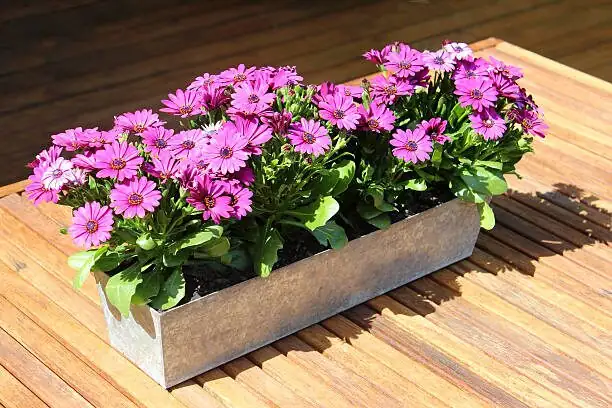
- Choose the right container:
- Light-colored resin, fiberglass, or ceramic resists heat gain better than thin, dark plastic.
- Ensure multiple drainage holes; never let pots sit in water.
- Double-potting: Slip your planted nursery pot into a slightly larger cachepot to create an insulating air gap. Add cork or coir sheets between if needed.
- Wrap discreetly: Cork, coir, or a thin layer of bubble wrap (hidden inside a decorative sleeve) buffers temperature swings.
- Elevate: Pot feet prevent hot surfaces from baking the roots and keep drainage sharp.
- Mulch lightly: A 1–2 cm layer of pale grit or small pebbles reduces evaporation and keeps the crown dry. Avoid heavy, dark stone that overheats.
- The mix that drains fast:
- Use a high-quality potting mix with added grit: for example, 2 parts potting mix + 1 part perlite/pumice + 1 part coarse sand.
- Aim for moderately fertile, sandy/loamy texture; water should run through swiftly.
Smart watering on high-rise patios
Consistent moisture without sogginess is the secret to non-stop bloom and healthy roots.
- The rule: Water thoroughly, then let the top 2–3 cm (about 1 inch) of mix dry before watering again.
- Timing: Mornings are best—plants face the day hydrated, and foliage dries quickly.
- In heat and wind: Check daily; containers dry faster aloft. Use the finger test or learn the “heft” of the pot.
- Technique:
- Water until it runs from the drainage holes, then empty saucers.
- Self-watering containers can work if there’s an overflow and your mix is airy; still allow the upper layer to dry between refills.
- Avoid night-time soakings and heavy, frequent sips—both promote root and crown problems.
- Signs you’re close to perfect:
- Leaves are turgid by midday, buds keep forming, and there’s no sour smell from the soil.
Feed lightly, groom regularly—compact mounds, endless daisies
- Fertilizer: During active growth, use a balanced liquid feed at half strength every 2–4 weeks, or apply a slow-release fertilizer per label. Ease off during cool, low-light periods.
- Deadheading: Snip spent blooms just above a leaf node to keep the assembly line of buds going.
- Shape it: Pinch or trim leggy stems; after a big flush, a modest cutback encourages fresh growth and another round of flowers.
- Rotate the pot monthly so all sides meet the sun and the mound stays even.
Choosing plants and potting up for small spaces
- What to buy:
- Look for compact, well-branched plants with healthy green foliage and plenty of unopened buds.
- Avoid yellowing leaves, soggy media, or visible pests (check leaf undersides for aphids/whiteflies).
- Repotting:
- Refresh into a free-draining mix in spring.
- Move up just one size (about 2–5 cm wider) to avoid cold, wet soil pockets around roots.
Troubleshooting on sun-blasted, windy balconies
- Flower pause in midsummer:
- Cape daisies prefer cool-to-mild weather. In intense heat, they may slow their show.
- Keep them in full sun, manage peak heat with light shade at midday, water consistently (never waterlog), deadhead, and lightly trim after a flush. Blooms typically rebound as temperatures ease.
- Pests:
- Aphids, whiteflies, spider mites, and thrips can appear in dry, hot, or overcrowded conditions.
- Prevent with strong light, good airflow, and careful watering. Treat early with insecticidal soap or horticultural oil, repeating per label.
- Rot risks:
- Waterlogged or poorly drained pots invite root/crown rot. Fix drainage, loosen the mix, and reset your watering rhythm.
- Leggy growth and fewer flowers:
- Usually too little sun. Relocate to a brighter spot or augment light reflectively (with heat caution).
Safety note: Not widely reported as toxic to people or pets, but chewing may cause mild stomach upset—best to keep curious nibblers away.
Seasonal game plan for high-rise gardeners
- Spring:
- Plant after frost risk. Start light feeding, and begin regular deadheading. Repot if needed.
- Summer:
- Water more often; keep drainage excellent. Use wind breaks and reflective-light tweaks; add light shade during extreme heat. Trim lightly after heavy flushes.
- Fall:
- Continue deadheading; reduce fertilizer as days cool.
- Winter (cold zones):
- Overwinter indoors in a bright, cool spot around 10–15°C. Water sparingly, just enough to keep roots from drying out.
Quick balcony layout that works
- Place your Cape daisy in the sunniest, least gusty pocket.
- Set a matte white reflector behind it, angled to bounce morning sun; reassess during heat waves.
- Add a low mesh screen on the windward side or cluster pots to create a gentle lee.
- Use a light-colored, well-drained pot, double-potted or wrapped for insulation; raise it on feet.
- Mulch with pale grit, water deeply in the morning, and let the top inch dry between cycles.
- Deadhead on your coffee rounds; feed lightly every 2–4 weeks in active growth.
Propagation for the keen balcony botanist
- Softwood cuttings in spring or summer root readily. Take 7–10 cm tips from non-flowering shoots, strip lower leaves, and set in a very free-draining medium. Keep bright but not scorching, and evenly moist—not wet.
Flower language and the “why” behind their mood-lifting charm
Falling Stars Cape Daisy is often linked with cheerfulness and optimism—the bloom reads like a small, open sky with a starry eye at the center. While the Victorian “language of flowers” popularized symbolic meanings, this association is more contemporary: months of easy color, petals that greet bright sun, and a tidy, “ready-for-the-day” posture. In other words, its symbolism grew from lived experience on porches and patios—reliable color that makes small spaces feel wider and lighter.
Final word: small plant, big patio payoff
Osteospermum ecklonis was made for containers and bright balconies. Give it full sun, fast drainage, steady-but-never-soggy watering, and a little microclimate magic—reflective light without scorch, soft wind breaks, and insulated roots—and your compact mound will keep tossing up sky-blue flowers from spring right through the shoulder seasons. That’s the kind of optimism every high-rise could use.