

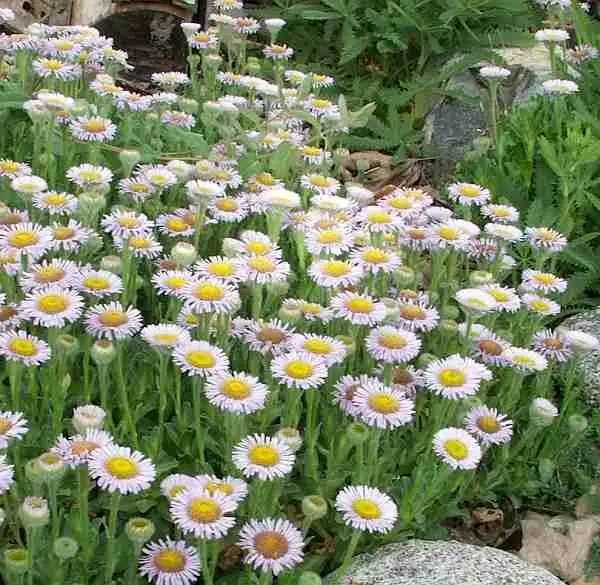
Imagine a patio washed in sunlight and brushed by ocean air, where cool, sky-blue daisies hover above textured foliage like little portholes of summer. That’s the magic of Osteospermum ecklonis—Falling Stars Cape Daisy—in containers. Native to South Africa’s Cape region, this compact, mounding charmer turns color theory into a living palette and looks right at home in Mediterranean-style and coastal gardens. Give it strong sun, fast drainage, and smart companions, and it will bloom from early spring well into fall—often longest in cool-to-mild weather.
Below, you’ll find design-forward container recipes that make those pale blue blooms sing, plus practical tips for sunny patios and breezy, salt-kissed settings.
Meet the star: what Falling Stars Cape Daisy wants
- Habit and size: Compact and free-flowering, typically 8–18 in (20–45 cm) tall and 12–24 in (30–60 cm) wide.
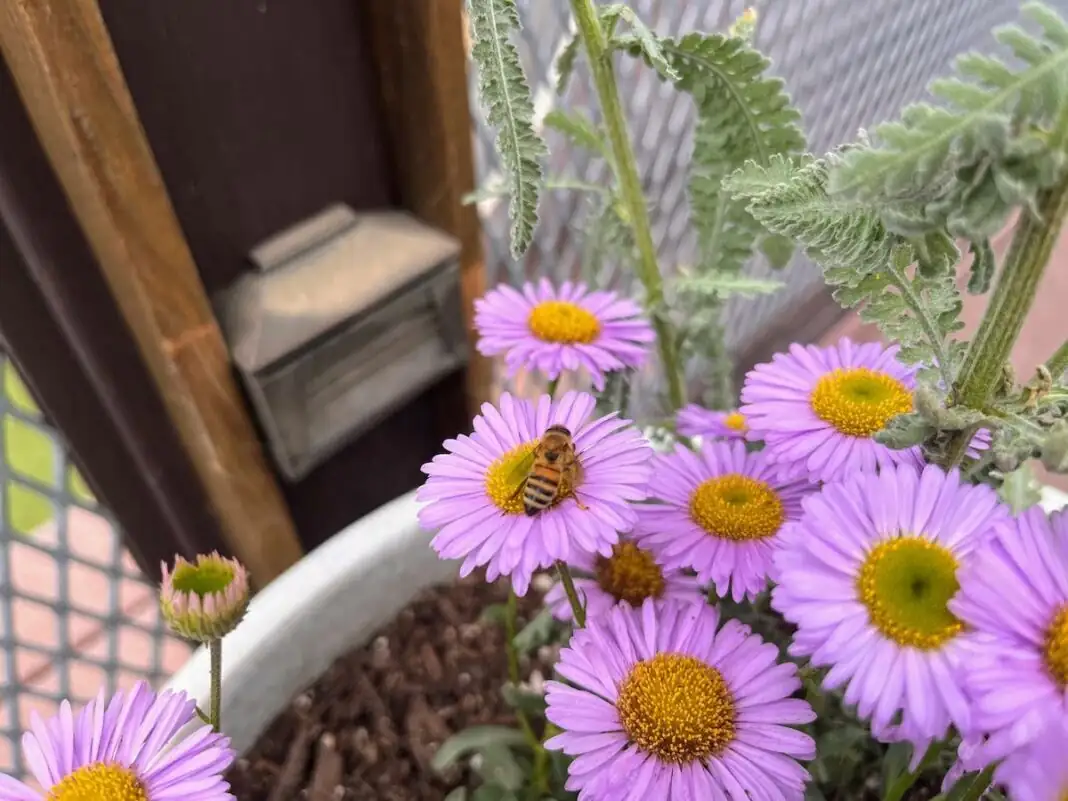
- Flowers: Soft, sky-blue daisy blooms with a darker eye; flowers open in bright sun and often close at night—consider it your patio’s solar clock.
- Season: Early spring through fall (best performance in cool-to-mild conditions).
- Sun: Full sun for best flowering (aim for 6+ hours daily).
- Temperature: Thrives around 50–75°F (10–24°C). Protect from hard frost.
- Soil: Well-drained, moderately fertile sandy or loamy mix—containers must never sit in water.
Design note: In colder zones, treat it as an annual or overwinter pots indoors in a bright, cool spot (50–59°F / 10–15°C).
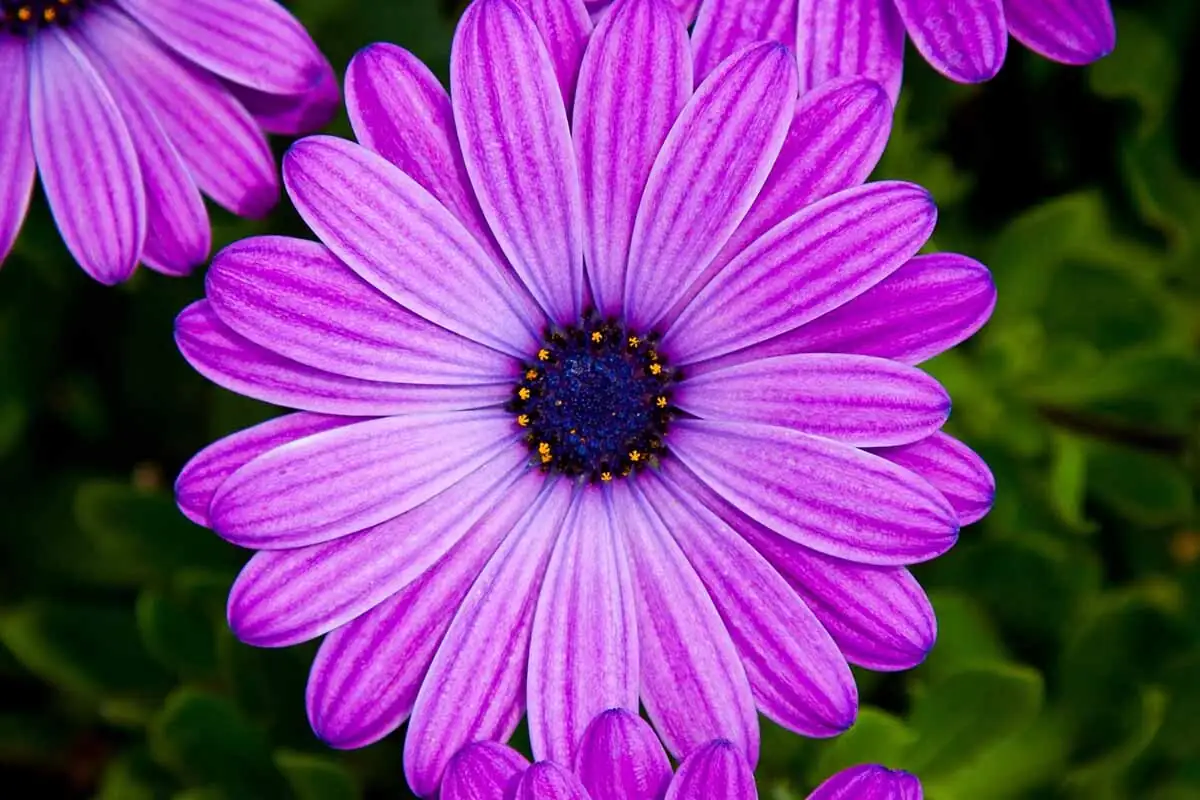
Color theory that makes sky blue pop
- Complementary heat (blue + orange): Blue’s opposite on the color wheel is orange. Think coppery foliage, saffron accents, and warm-hued containers to electrify the daisies.
- Analogous calm (blue + blue-green + violet): Coastal-calm tones—silver, sea-glass green, lavender—create a sophisticated, breezy gradient.
- High-contrast modern (blue + chartreuse + near-black): Crisp, contemporary drama. Chartreuse and deep burgundy/near-black foliage turns the soft blue into a focal point.
Container tip: Pot color is part of your palette. Cobalt amplifies blue-on-blue, sand and matte stone ground a Mediterranean scheme, while copper/terra-cotta intensify warm complements.
Design-forward container recipes for sunny (and breezy) patios
All recipes assume full sun, sharp drainage, and steady but not soggy moisture. In coastal areas, tuck containers where they’re sheltered from direct salt spray, but still enjoy the breeze.
1) Surf + Sunset Pop (complementary contrast)
- Thriller: Festuca glauca (blue fescue) — airy, steel-blue tufts add height and movement.
- Filler: Osteospermum ecklonis (Falling Stars Cape Daisy) — sky-blue disks with darker eyes.
- Spiller: Dichondra argentea ‘Silver Falls’ — cascades of frosted leaves echo sea spray.
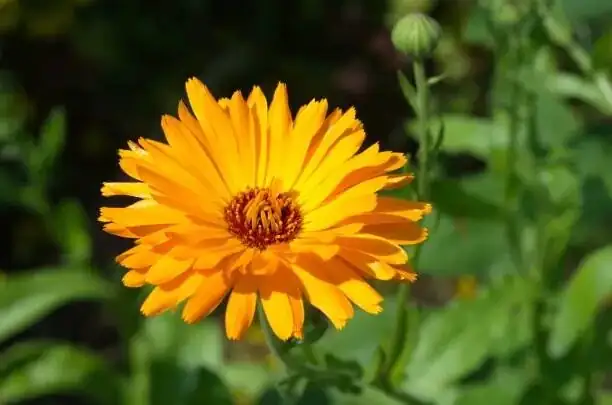
- Accent: Calendula (rich orange selections) or Bidens (gold) — tiny sparks of complementary warmth.
Why it works: Blue daisies meet orange-gold accents for high-energy contrast; silver foliage ties the whole scheme to a coastal mood.
Container: Low, wide bowl in warm terra-cotta or brushed copper to amplify the complementary palette.
2) Sea-Glass Gradient (analogous coastal)
- Thriller: Helichrysum italicum or Helichrysum petiolare (licorice plant) — silvery mounds or soft trailing shoots.
- Filler: Osteospermum ecklonis — the blue anchor.
- Spiller: Scaevola aemula (fan flower) in soft lavender or white — tough, sun-loving, coastal-friendly spiller.
- Edge: Lobularia maritima (sweet alyssum), white — honeyed fragrance and a cloud-like rim.
Why it works: A cool, beach-glass spectrum—blue, silver, lavender, white—feels effortlessly elegant and stands up to heat with proper drainage.
Container: Matte sand, limestone, or weathered concrete for a sun-bleached look.
3) Modern High-Contrast (graphic and gutsy)
- Thriller: Pennisetum setaceum ‘Rubrum’ (purple fountain grass) — arching burgundy plumes.
- Filler: Osteospermum ecklonis — cool blue punctuation.
- Ground: Sedum rupestre ‘Angelina’ — chartreuse needles spill and glow around edges.
Why it works: Blue is spotlighted by neon-chartreuse sedum and near-black plumes. The composition is bold but water-wise.
Container: Charcoal fiberstone or blackened steel for gallery-level drama.
4) Mediterranean Jetty (sun-baked elegance)
- Thriller: Santolina chamaecyparissus (lavender cotton) — clipped silver cushions.
- Filler: Osteospermum ecklonis — breezy blue.
- Spiller: Thymus serpyllum (creeping thyme) — drought-tolerant carpet, aromatic and bee-magnetic.
Why it works: All love sun, lean soil, and airflow. The textures suggest wind-worn dunes—soft, silvery, and structured.
Container: Rectangular trough to mimic a low sea wall; top-dress with pale gravel.
5) Soft Blue + Citrus Zest (sunny uplift)
- Thriller: Carex testacea (orange-burnished sedge) — fine-textured, coppery fountain.
- Filler: Osteospermum ecklonis — cool counterpoint.
- Spiller: Lotus berthelotii (parrot’s beak) — delicate silver lace that mirrors the coast.
- Accent: Argyranthemum (yellow selections) — daisy-on-daisy joy to echo the sun.
Why it works: Citrus-yellow and copper flicker against blue, while silver runners keep the container airy and coastal.
Container: Glazed mustard or sunny ochre for a joyful, resorty vibe.
6) Monochrome Breeze (blue-on-blue sophistication)
- Thriller: Convolvulus sabatius (syn. C. mauritanicus; blue rock bindweed) trained upright on a small hoop or obelisk.
- Filler: Osteospermum ecklonis — light blue center stage.
- Spiller: Scaevola aemula (soft blue) — fans tumbling like ripples.
Why it works: Multiple shades of blue read as depth, not monotone. Texture and flower shape keep it dynamic.
Container: Glossy cobalt or indigo to lean into the theme.
7) Coastal Minimalist (texture-forward, water-wise)
- Hero: A mass of Osteospermum ecklonis — one variety, many blooms.
- Wingmen: Senecio cineraria (dusty miller) — sculptural silver rosettes set at intervals.
- Edge: Sedum ‘Angelina’ — clean chartreuse line around the rim.
Why it works: A restricted palette and strong shapes feel modern and calm; each element earns its place.
Container: Long, narrow balcony planter with pot feet for drainage.
Planting and care: the design is only as good as the culture
- Potting mix: Use a fast-draining, moderately fertile blend. Blend in coarse sand or fine grit for patio heat; top-dress with gravel to keep crowns dry.
- Watering: Drench, then let the top 1 in (2–3 cm) dry before watering again. Containers dry faster in wind and sun; never let pots stand in saucers of water.
- Feeding: Light touch only—balanced liquid at half strength every 2–4 weeks in active growth, or a slow-release per label. Ease off in cool, low-light periods.
- Grooming: Deadhead to extend bloom. If plants get leggy after a big flush, trim back to a neat mound; you’ll trigger fresh growth and more buds.
- Sun and heat: Aim for 6+ hours of sun. Blooms may pause in peak heat; keep deadheading and water steadily (not soggy). Flowering resumes as temperatures ease.
- Pests and problems: Watch for aphids, whiteflies, spider mites, and thrips. Use insecticidal soap or horticultural oil as needed. Avoid waterlogged soil to prevent root/crown rot.
- Size and spacing: Expect a low, bushy clump—plan for 12–24 in (30–60 cm) spread. Give air between neighbors for better bloom and fewer pests.
- Cold and overwintering: Hardy around USDA 9–11. In colder zones, bring containers indoors before frost to a bright, cool 50–59°F (10–15°C) space and water sparingly.
Coastal-and-wind savvy
- Shelter smartly: Place containers behind railings, low walls, or glass to soften direct salt spray while keeping the breeze.
- Rinse after storms: A gentle hosing can remove salt residue from leaves.
- Choose resilient accessories: Use powder-coated or fiberglass planters; elevate on pot feet to improve drainage and airflow.
- Companion strategy: Lean on silver-leaved and Mediterranean partners (Helichrysum, Santolina, Scaevola, Dusty Miller, thyme, blue fescue) that handle sun, wind, and lean soils well—an excellent aesthetic and practical match for your Cape daisies.
Quick buying guide
- Look for compact, bushy plants with healthy green foliage and plenty of buds.
- Skip any with yellowing leaves, soggy soil, or visible pests—check under leaves for aphids/whiteflies.
Repotting rhythm
- Repot in spring into fresh, free-draining mix. Step up only 1–2 in (2–5 cm) in diameter to avoid soggy soil pockets around roots.
The meaning behind the bloom
Gardeners often read Osteospermum ecklonis as a symbol of cheerfulness and optimism—makes sense when a plant throws open cool, sky-blue blooms on the year’s gray edges. There’s also poetry in how the flowers follow the light: many open wide in bright sun and rest in low light or at night, a sun-chaser habit that feels like hope reliably returning every morning.
Troubleshooting fast answers
- Mid-summer bloom stall? Heat pause is normal. Keep in full sun, water steadily (without waterlogging), deadhead, and lightly trim after a flush. The show revs back up as nights cool.
- Indoors possible? Best bloom performance is outdoors. Overwinter indoors by giving very bright light, cool temps (50–59°F / 10–15°C), and sparse watering.
Bring on the sun, pair those sky-blue daisies with savvy, salt-aware textures, and let color theory do the rest. With smart design and simple care, your containers won’t just survive a breezy patio—they’ll become its brightest, most stylish feature.