

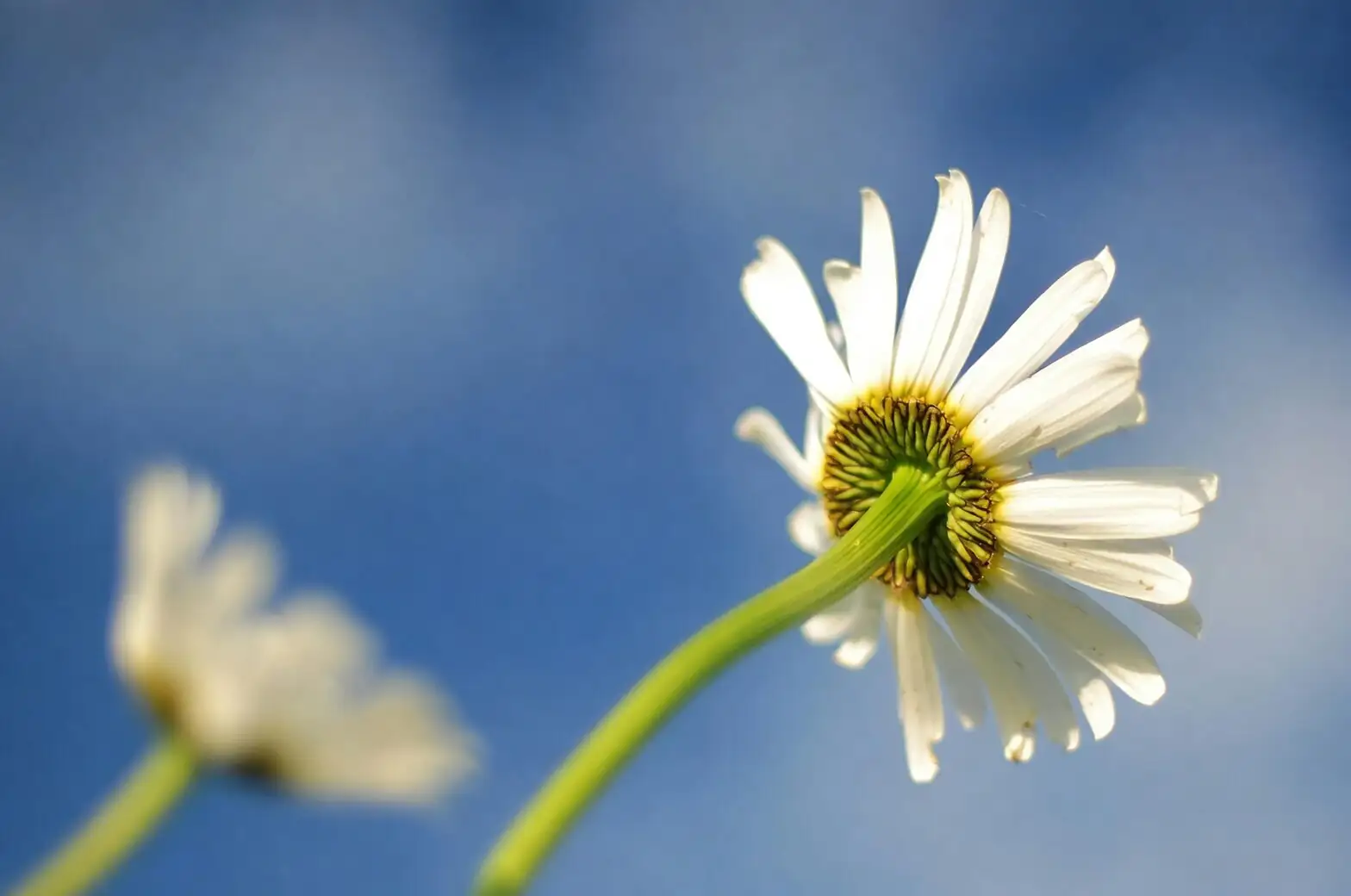
At first light on a Cape hillside, a scatter of sky-blue stars turns to greet the sun. By noon they’re humming with pollinators; by evening they fold like little umbrellas, saving their shine for tomorrow. That daily theatre is the calling card of Osteospermum ecklonis—Falling Stars Cape Daisy—born in South Africa’s coastal flora and now a beloved staple from Mediterranean courtyards to city balconies worldwide.
From the Cape’s wild slopes to the world
South Africa’s Cape region, famed for its fynbos richness, is the ancestral home of Falling Stars Cape Daisy. On sandy, sharply drained slopes and rocky edges, this daisy learned two crucial life skills: love the light, and dodge soggy feet. Those instincts travel beautifully. Give it bright sun, air that moves, and soil that never puddles, and it will respond with bloom after bloom in cool-to-mild weather—exactly the rhythm that suits Mediterranean-style gardens.

- Origin: Native to South Africa (Cape region)
- Natural cues it carries into gardens: full sun, quick drainage, and an aversion to persistent damp
A brief botanical footnote: you may still see plants labeled with older names in catalogs, but in horticulture this garden favorite is widely known as Osteospermum ecklonis.
Meet Falling Stars Cape Daisy
Think compact, mounded sparkle with an ocean-breeze palette.
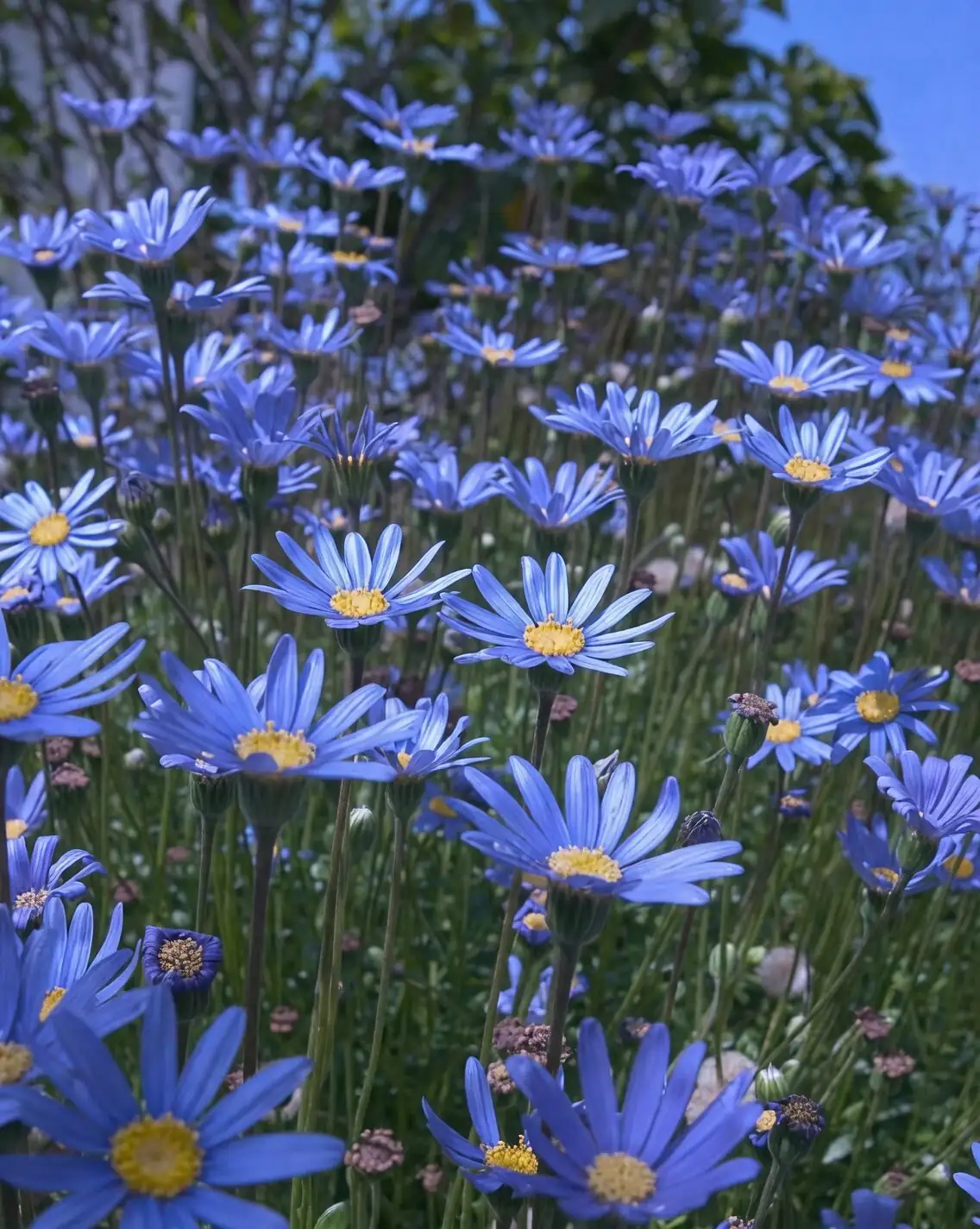
- Habit and size: Mounding to spreading clumps, typically 20–45 cm (8–18 in) tall and 30–60 cm (12–24 in) wide
- Foliage: Narrow to spoon-shaped, medium-green leaves, evergreen to semi-evergreen in mild climates
- Flowers: Free-flowering, daisy-like blooms in soft, pale-to-light blue with a deeper-toned “eye” that makes each blossom pop
- Flowering season: Early spring through fall, with the longest, showiest runs in cool-to-mild weather
- Sun trick: Many blooms open wide in bright sun and close in low light or at night—part of their charm
- Pollinator appeal: A nectar stop for visiting insects, adding gentle movement and life to patios and borders
Aliases to watch for when shopping: African Daisy, Blue-Eyed Daisy, Cape Daisy, and Falling Stars.
How breeders turned a sky-blue spark into a color chorus
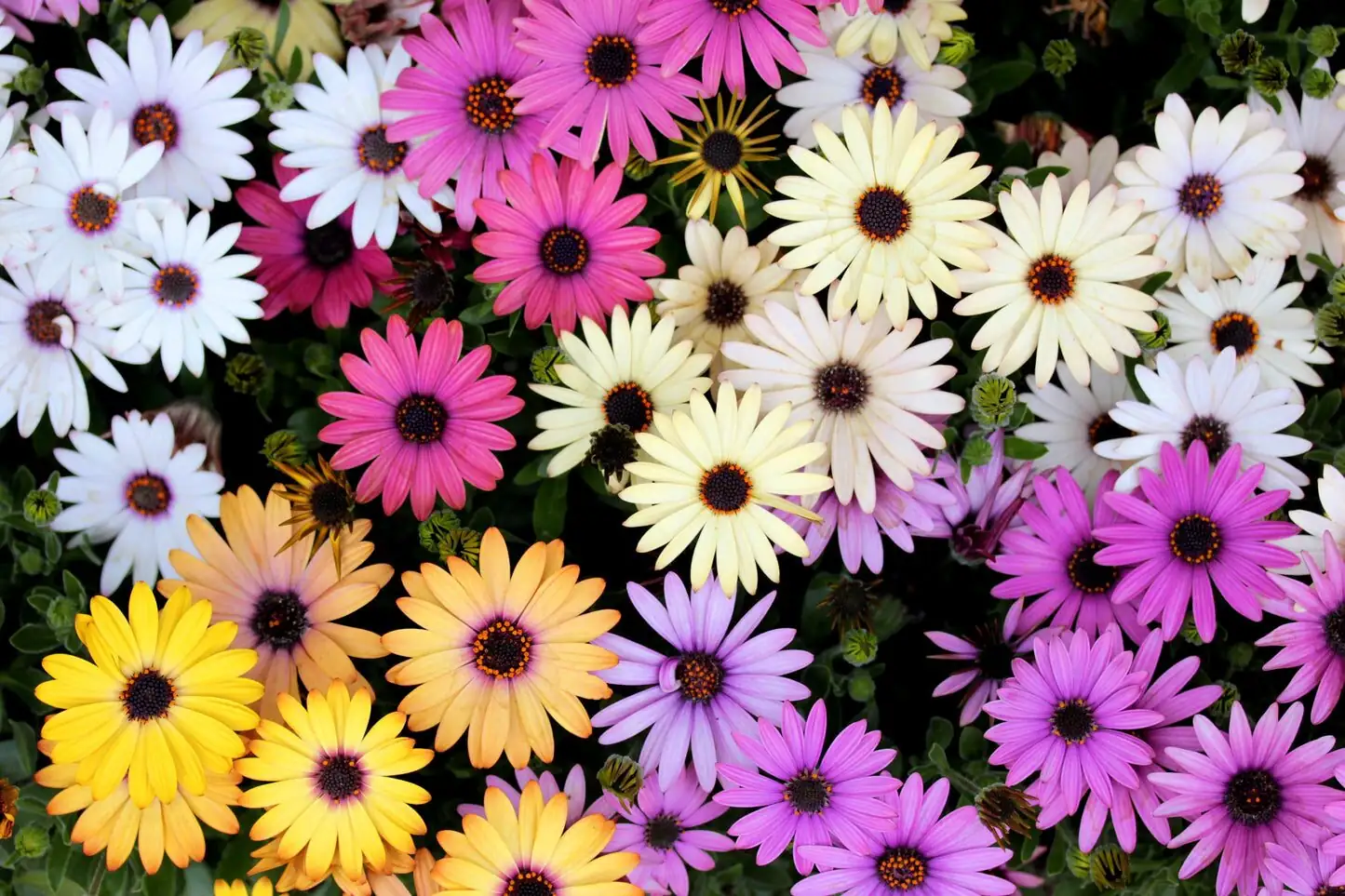
Gardeners first fell for the species’ easy charm and sky-blue glow. Breeders then amplified its best traits—long bloom, compact habit, sun-loving vigor—and painted the palette wider. Within the Osteospermum ecklonis clan, modern selections now range from porcelain whites and lilacs to berry purples, apricots, and sunny tints, often with a dramatic contrasting “eye.” Petal shapes got playful too, with some lines showing spooned or quilled rays that riff on the classic daisy silhouette.
Yet the Falling Stars selection keeps faith with its roots: that soft, sky-blue look that reads like good weather in flower form.
Why this fynbos export thrives in Mediterranean-style gardens
- Sun worshipper: It wants 6+ hours of direct sun for peak flower power.
- Cool-season charisma: Blooms are most prolific in mild temperatures, often pausing in extreme summer heat and revving back up as nights cool.
- Drainage first: Sandy or loamy soils suit it; waterlogged ground does not. Mediterranean gardens excel at “bright and well-drained.”
- Container natural: Tight, mounding growth and repeat flowering make it stellar in pots, window boxes, and front-of-border spots.
- Climate fit: Best as a perennial in USDA Zones 9–11; elsewhere it’s grown as a seasonal star or overwintered frost-free.
Planting and care essentials
- Sunlight: Full sun for best flowering; light shade is tolerated but yields fewer blooms.
- Soil: Well-drained, moderately fertile; sandy or loamy mixes are ideal. In containers, use a free-draining potting mix.
- Watering: Soak thoroughly, then let the top 2–3 cm (about 1 in) of soil dry before watering again. Never let pots sit in saucers of water.
- Feeding: During active growth, use a balanced liquid feed at half strength every 2–4 weeks, or apply a slow-release fertilizer per label. Ease off in cool, low-light periods.
- Grooming: Deadhead regularly to keep flowers coming. Pinch or lightly trim if stems stretch; after a big flush, a modest cutback sparks fresh growth and buds.
- Temperature: Best growth at 10–24°C (50–75°F). Protect from hard frost; brief light frost may be tolerated but prolonged freezing will damage plants.
- Humidity and airflow: Average humidity is fine—just avoid stagnant, damp conditions. Good air movement helps prevent issues.
- Hardiness and overwintering: USDA Zone 9–11. In colder zones, treat as an annual or overwinter indoors in bright light at 10–15°C (50–59°F), watering sparingly.
- Repotting: Refresh and up-pot by just one size in spring using a free-draining mix.
- Propagation: Take softwood cuttings in spring or summer for reliable clones; seed is possible but named forms don’t come true.
- Pests and diseases: Watch for aphids, whiteflies, spider mites, and thrips. Root and crown rot follow overwatering or poor drainage. Manage pests with insecticidal soap or horticultural oil; prevent disease with sun, airflow, and careful watering.
- Safety note: Not widely reported as toxic to people or pets, but ingestion can cause mild stomach upset—best to discourage nibbling.
A simple year-round rhythm
- Spring: Plant out after frost risk; begin light feeding and steady deadheading.
- Summer: Water more often (pots dry fast), keep drainage sharp; trim after heavy flushes.
- Fall: Continue deadheading; reduce feed as days cool.
- Winter (cold regions): Move containers indoors to a bright, cool spot and water lightly.
Design ideas: how to make it sing
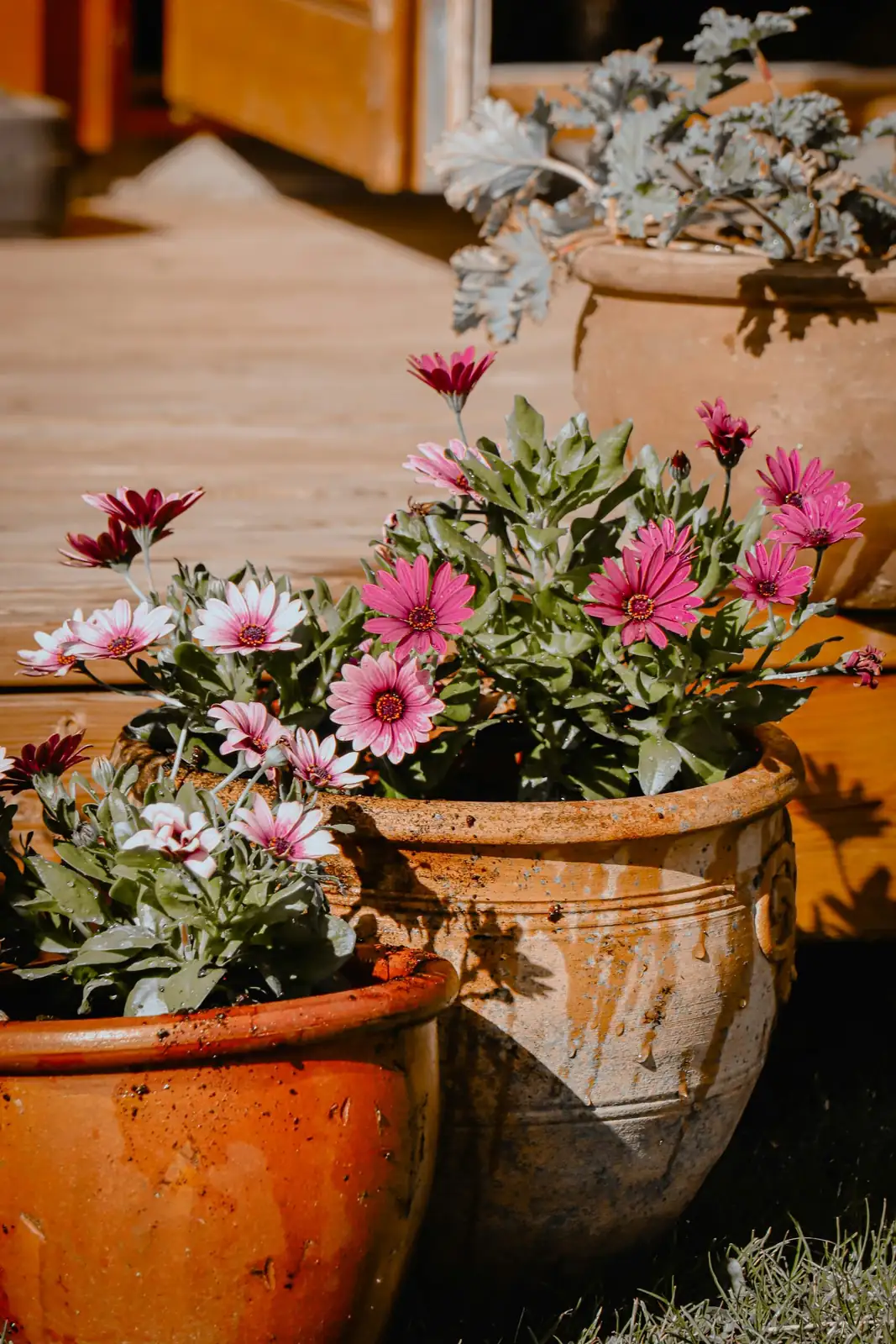
- Containers with a view: Let Falling Stars tumble from terracotta on sunny steps or brighten balcony rail planters.
- Front-of-border edging: Use its compact, mounding habit to stitch color along paths or in gravel gardens with excellent drainage.
- Color harmonies: Pair the sky-blue blooms with silver-leaved herbs and shrubs, or cool partners like sea lavender and soft grasses for an airy, coastal feel.
- Pollinator pockets: Mix with other long-blooming, sun-loving daisies to build a lively nectar corridor from spring into fall.
Quick buying guide
- Choose plants with healthy, deep-green leaves and plenty of tight buds.
- Avoid yellowing foliage, soggy potting mix, or signs of pests—check leaf undersides for aphids or whiteflies.
FAQs
- Why did my plant stop flowering in mid-summer?
Cape daisies prefer cool-to-mild conditions and often pause in intense heat. Keep them in full sun, water consistently without waterlogging, deadhead often, and give a light trim after a big flush. Bloom usually rebounds as temperatures ease.
- Can I grow it indoors?
It flowers best outdoors. You can overwinter it indoors: provide very bright light, keep it cool (about 10–15°C / 50–59°F), and water sparingly to avoid rot.
Flower language and what it really means
Daisies have long carried the banner of cheerfulness and clear skies in Western “flower language”—a tradition popularized in the Victorian era. Falling Stars Cape Daisy leans into that, reading as optimism and bright spirits, thanks to its sun-triggered blooms that seem to summon good weather on cue. While not rooted in ancient folklore, this modern symbolism is spot-on: few plants deliver such a long, upbeat season of color with so little fuss.
Closing scene: a blue note that travels
From the Cape’s sandy slopes to patio pots half a world away, Osteospermum ecklonis has kept its essentials: chase the sun, shun the soggy, and put on a show when the air is kind. Breeders may have taught the family new colors, but the heart of Falling Stars remains that sky-blue, dark-eyed wink—a small daily promise of fair weather, wherever you grow it.