

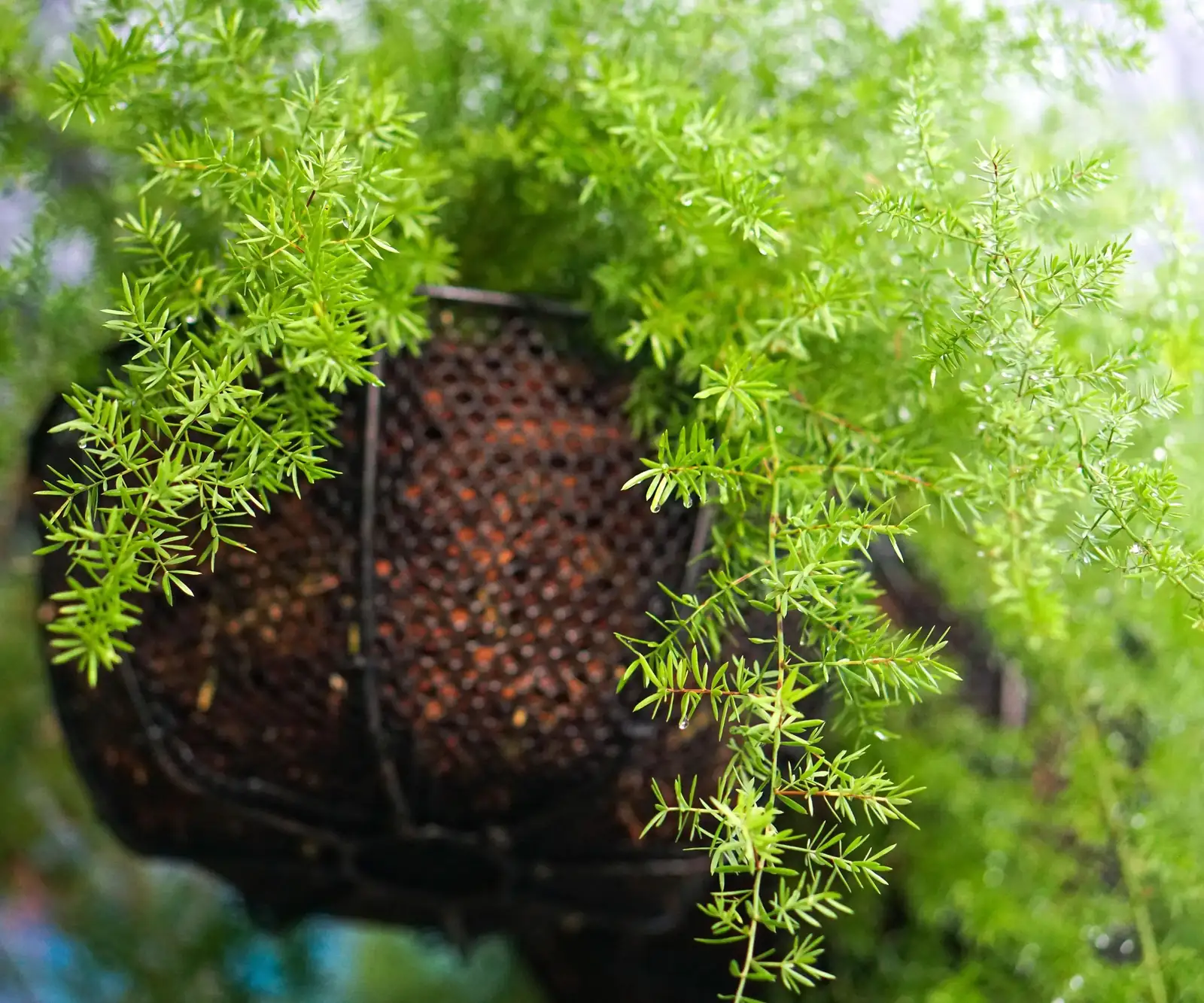
Floaty, feathery, and far tougher than it looks, Asparagus densiflorus (aka Asparagus Fern) is the plant to choose when you want a soft, cloudlike cascade from a hanging basket or tall planter. Despite the “fern” nickname, it’s an Asparagus relative with water-storing roots—meaning it forgives the occasional lapse but sulks if kept cold or soggy. Ready to style it like a pro? Here’s how to harness light, manage drips, and pair textures for that airy, design-forward look.
Find its light: bright, indirect, beautifully bounced
Asparagus densiflorus loves bright, indirect light to partial shade. Think of it as the friend who enjoys a luminous room with the blinds drawn—glow, not glare.
- The sweet spot
- Place near an east- or north-facing window, or a few feet back from a bright south/west window behind sheers.
- A little gentle morning or late-afternoon sun is fine; avoid harsh midday rays that bleach or crisp the cladodes (those tiny “needles” are actually modified stems).
- Rotate your basket or planter every 1–2 weeks for even growth.
- Use “light bounce” like a stylist
- White walls, pale floors, and light-toned curtains softly bounce light up under the plant, filling in its underside so the “cloud” stays dense.
- Angle a mirror to reflect diffuse morning light toward the plant (not direct beams—no mini solar-oven moments).
- In deep rooms, perch your tall planter closer to the room’s natural light path and lift the foliage so it sits in the bright zone, not shadowed below the rim.
- Temperature and drafts
- Ideal: 13–24°C (55–75°F). Avoid cold drafts and bring plants inside before nights approach 10°C (50°F).
The right vessel: hanging baskets and tall planters that work (and don’t leak)
A dreamy cascade starts with smart hardware. Drainage is non-negotiable; style comes from what you do around it.
Hanging baskets: airy silhouettes, tidy watering
- Basket and liner choices
- Plastic or fiber liners keep moisture steady; coco liners breathe beautifully but dry faster—great if your space runs dimmer and you water lightly but frequently.
- Go wide and not too deep (around 25–30 cm/10–12 in) to encourage side-sweeping plumes.
- Discreet drip control
- Use a nursery pot with drainage inside a slightly larger hanging cachepot. Water, let it drain fully in the sink, then rehang—clean and stress-free.
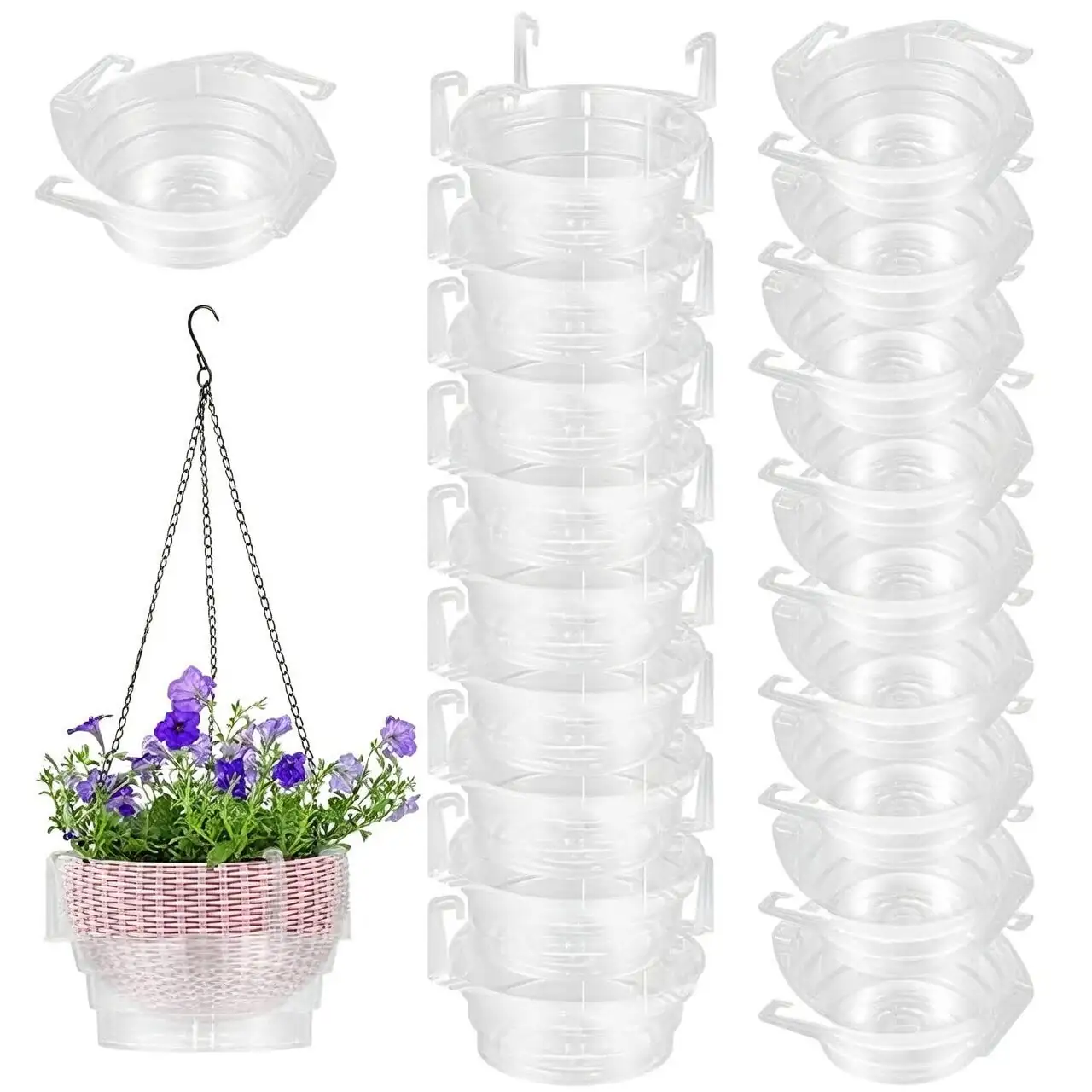
- Prefer to water in place? Clip-on or nested saucers exist for hanging baskets; pick a clear, snug saucer that doesn’t press on the root zone. Empty any standing water promptly.
- Balance and safety
- Keep weight manageable: lightweight potting mix and a modest saucer. Always use secure hooks and anchors rated for more than the total wet weight.
Tall planters: sculptural drama without swampy roots
- Double-pot with a false bottom
- Drop the plant (in its drainage-holed nursery pot) into the tall planter.
- Create a stable riser inside using an inverted plastic pot, bricks, or a foam block so the foliage spills right from the lip.
- Add a hidden, removable saucer under the nursery pot to catch drips; lift the inner pot to empty.
- Airflow and insurance
- Pot feet or an internal grid keep the inner pot from sitting in runoff.
- If protecting floors, slip a thin waterproof mat or felt-backed tray under the planter.
Build the cloud: mix, moisture, and momentum
Dense, floating plumes come from a light, draining mix plus steady—not swampy—moisture.
- Potting mix
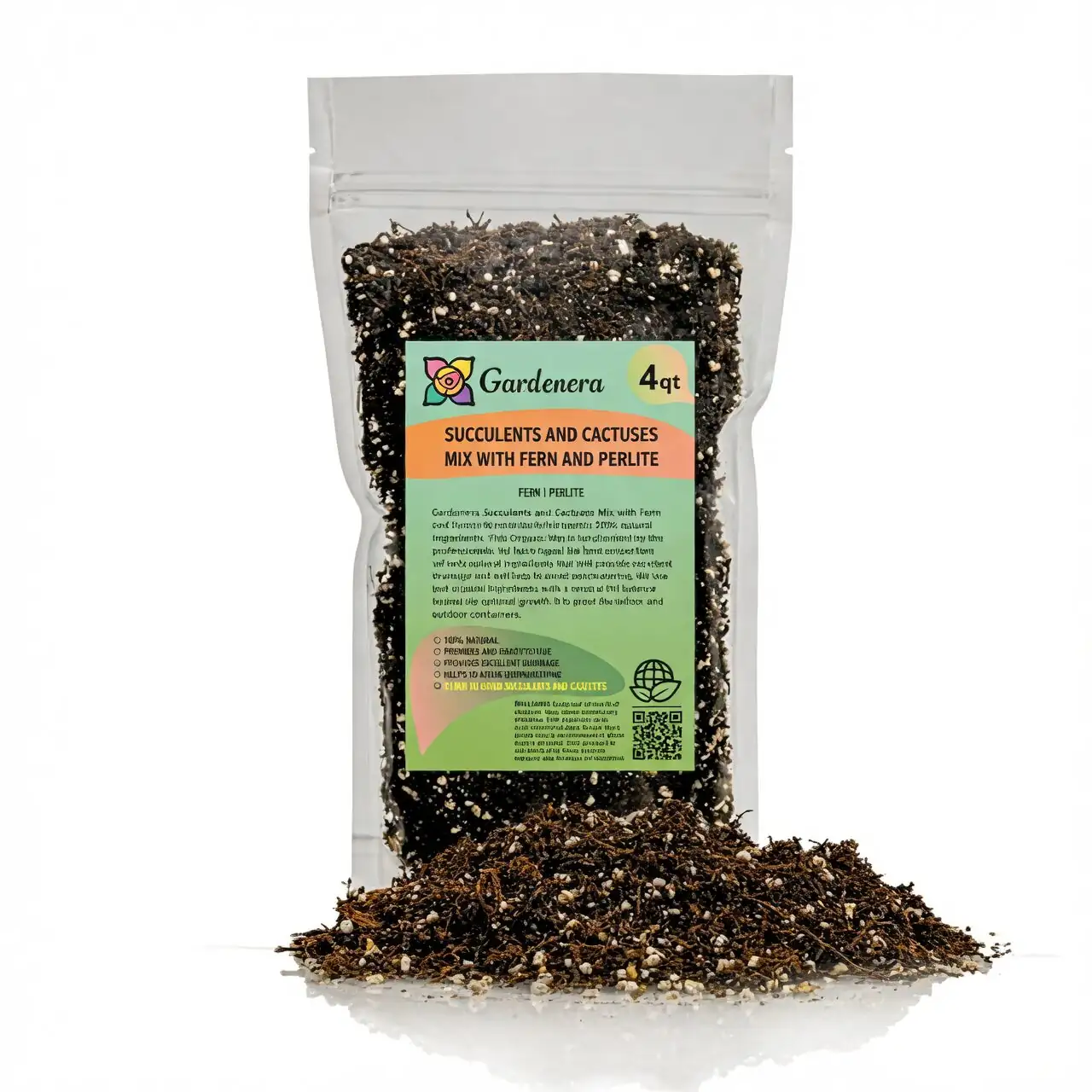
- Use a loose, well-draining blend (peat or coco base) amended with perlite and a bit of fine bark. Avoid heavy, water-retentive soils.
- Always use a pot with drainage holes.
- Watering rhythm
- Spring–autumn: water when the top 1–2 cm (0.4–0.8 in) of mix begins to dry; aim for evenly moist.
- Winter: let the surface dry between waterings.
- The plant’s tuberous roots store water, so it forgives a missed drink better than a soggy stint.
- Feeding and humidity
- Feed monthly at half-strength with a balanced liquid fertilizer from spring through autumn; pause or greatly reduce in winter.
- Average indoor humidity is fine; occasional misting or a pebble tray helps, especially in heated rooms.
Styling for maximum “cumulus”
Think in silhouettes, layers, and tactile contrast to make the foliage read as cloud, not clutter.
Choose your form
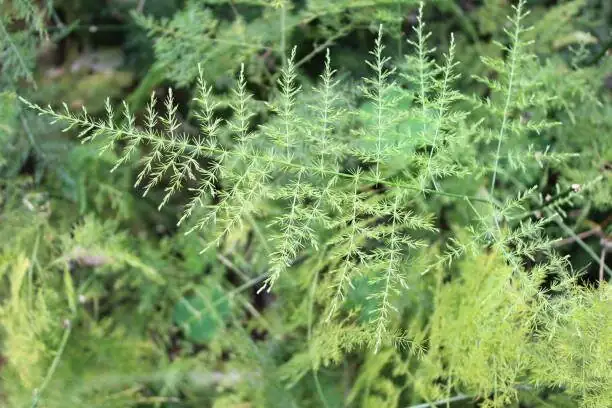
- Trailing/archer (often sold as “Sprenger’s asparagus”): naturally cascades—your classic cloud over the rim.
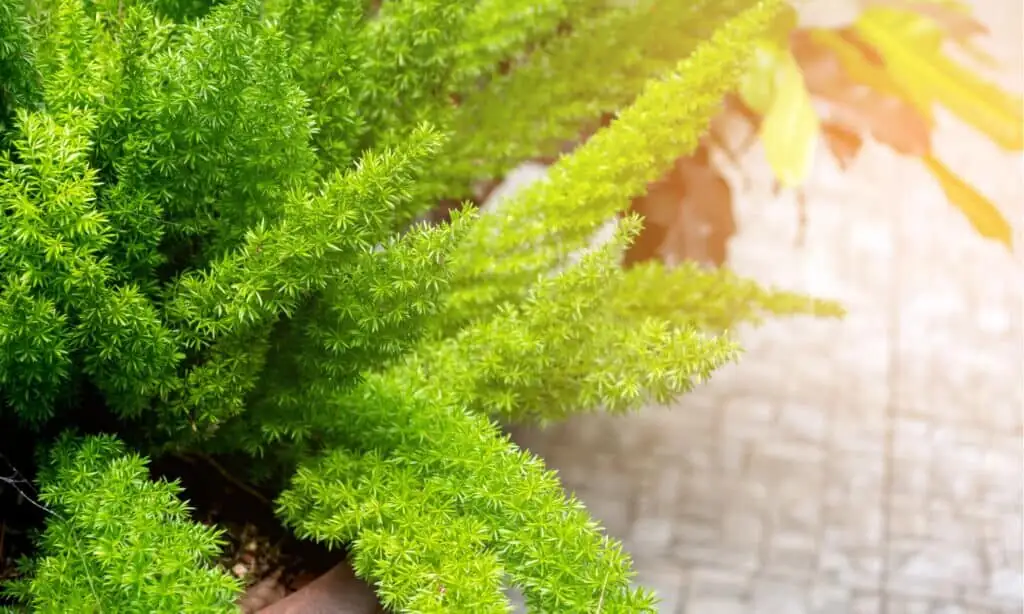
- “Foxtail” type (bottlebrush plumes): sculptural mounds that read as soft “puffs.” Beautiful in tall, narrow planters for a hovering effect.
Tip: For instant fullness, cluster two smaller plants in a wider basket—spaced so air still flows between crowns.
Shape it
- In spring, cut brown, damaged, or overly long stems at the base to tidy and prompt fresh plumes.
- Let a few longer strands trail to create that wispy, weightless perimeter.
Texture pairings that flatter
Keep co-planting only with species that enjoy similar light and moisture; otherwise, group in separate pots.
- In the same container (similar care)
- Tradescantia zebrina or T. fluminensis: metallic stripes against the ferny green make a dazzling edge.
- Heartleaf philodendron (Philodendron hederaceum): satiny hearts drape amid the fine spray—romantic without being fussy.
- Peperomia scandens: small, glossy leaves add punctuation to the haze.
- Grouped side-by-side (different pots, unified vibe)
- A bold-leaf counterpoint (Monstera deliciosa or a cane begonia) beside your asparagus “cloud” reads like sky and skyline.
- Materials: matte porcelain, limewashed terracotta, sand-finished concrete, or woven rattan all enhance the soft-focus effect.
- Seasonal porch moment
- Park it under dappled shade with flowering companions perched nearby (think a geranium pot above and behind) so blooms appear to float on a green cloud. Mind light: keep the asparagus fern out of strong midday sun and water consistently.
Quick fixes and ongoing care
- Yellowing or needle drop?
- Most often inconsistent watering (too wet or too dry for too long), low light, or spider mites. Brighten the spot, adjust watering, and check for pests.
- Pests
- Spider mites, mealybugs, and scale are the usual culprits—improve airflow, rinse foliage, and treat with insecticidal soap or horticultural oil if needed.
- Repotting and propagation
- Repot every 1–2 years, up one size (2–5 cm/1–2 in). Divide in spring by splitting the root ball so each section has tuberous roots and healthy stems.
- Safety
- Mildly toxic if ingested; berries and foliage can upset pets and people. Sap may irritate sensitive skin—gloves recommended.
Placement cheat sheet
- Indoors: near bright east/north windows; a few feet back from intense south/west exposures with sheers.
- Outdoors (mild climates or summering): morning sun, afternoon shade. Protect from cold; not frost hardy (typically USDA 9–11 outdoors).
Mini care calendar
- Spring
- Prune, repot or divide if crowded; resume regular feeding and watering.
- Summer–autumn
- Keep evenly moist; fertilize monthly at half strength.
- Winter
- Bright, filtered light; reduce watering, keeping the surface dry between drinks; hold fertilizer.
Fun to know
- Not a true fern: those “needles” are cladodes—modified stems—explaining why it tolerates average indoor air better than many real ferns.
- Built-in resilience: tuberous roots store water, so it weathers the occasional missed watering.
Symbolism (and why it fits)
Often associated with enduring affection and resilience, Asparagus densiflorus looks gossamer but stands up to real-life conditions—exactly the kind of quiet strength those meanings point to. While “flower language” traditions mostly sidestep this species (and its indoor blooms are occasional), the plant’s longstanding role as a dependable, soft-textured greenery in homes and arrangements likely seeded its reputation: love that lasts, and beauty that doesn’t bruise easily.
Design take-home: give your asparagus fern a bright, softly lit stage; hide the plumbing (drip trays) with clever double-potting; and surround those feathery plumes with contrasting textures. The result? A living cloud that hovers elegantly above your room—and never rains on your floor.