

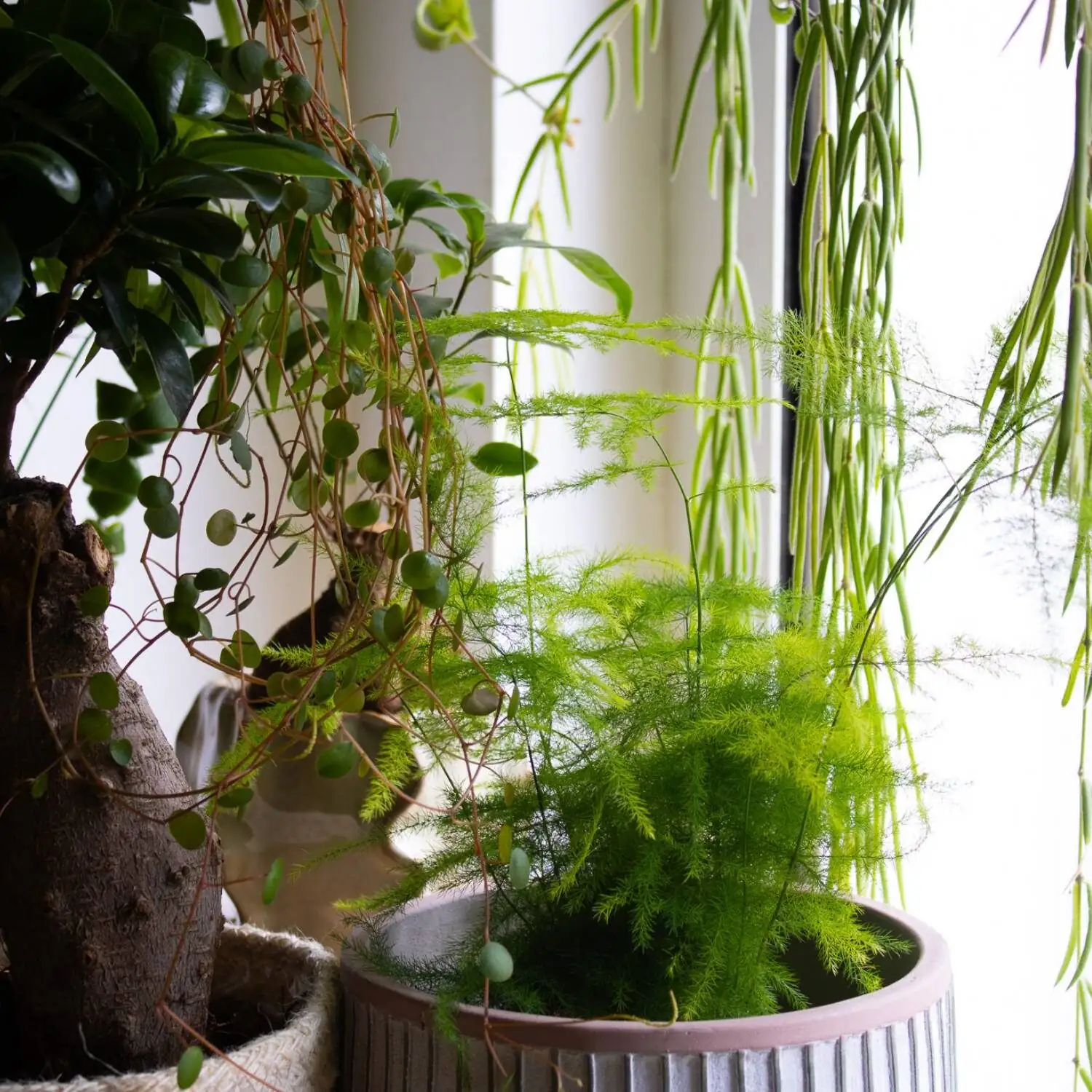
Meet the “not-a-fern” that behaves like the easiest fern you’ve ever grown. Asparagus densiflorus (aka Asparagus Fern, Foxtail/Plume Asparagus, Sprenger’s Asparagus) throws soft, feathery sprays that look delicate but live tough—thanks to water‑storing roots and a forgiving nature. Here’s your punchy, step‑by‑step playbook for perfect watering rhythms, smart light acclimation, and temperature tweaks across the seasons so those fronds stay plush, bright, and photo‑ready.
Know your plant: why this “fern” is different
- Not a true fern: those “needles” are tiny cladodes (modified stems), not leaves.
- Built‑in buffer: tuberous roots store water, so it forgives a late watering better than a soggy spell.
- Habit: arching, trailing cascades that excel in hanging baskets and tall planters.
- Sweet spot indoors: bright, indirect light to partial shade with average home humidity.
The trio that makes or breaks the look
Light, water, and temperature work together. Boost one and the others shift. Nail the balance and your plant answers with dense, vivid plumes.
—
Light: gentle brightness, gradual gains
The target
- Bright, indirect light to partial shade.
- A few hours of soft morning or late‑afternoon sun are fine; avoid harsh midday rays that can scorch or bleach.
Where to place it
- MVP spots: near an east- or north‑facing window, or a few feet back from a bright south/west window with a sheer curtain.
- Hanging baskets love bright rooms with filtered light; rotate the pot a quarter turn weekly for even growth.
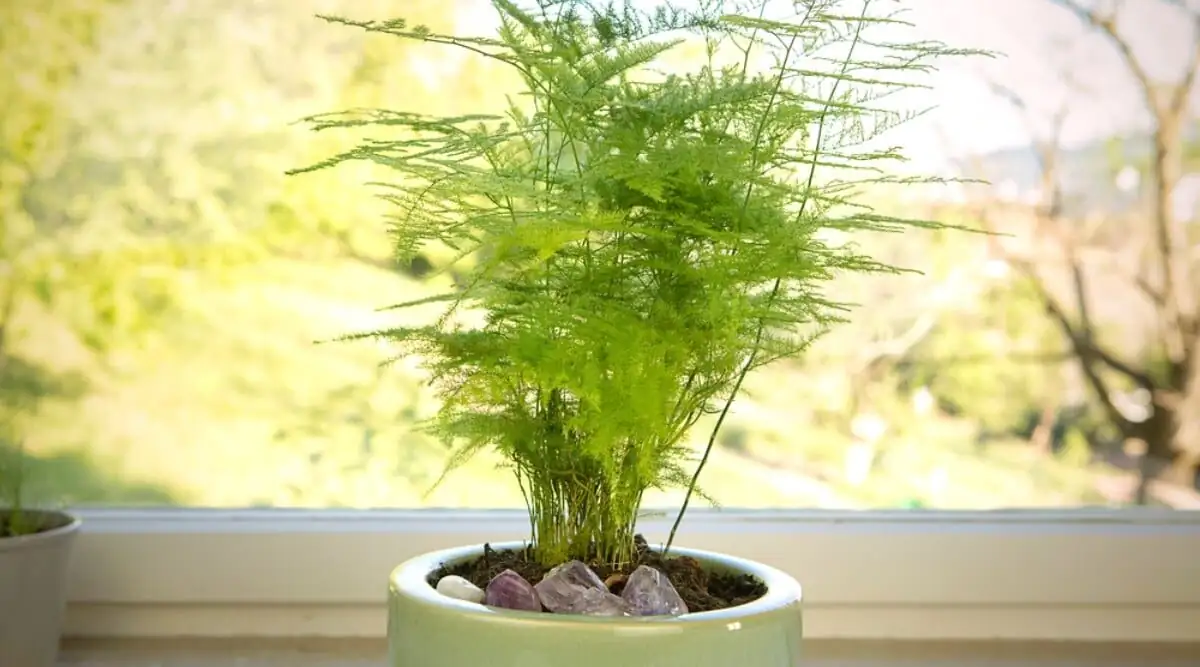
2‑week indoor acclimation plan (no scorch, no sulk)
- Days 1–3: Move the plant a bit closer to the window than before (still out of direct noon sun).
- Days 4–7: Edge it closer again or open the sheer for an extra hour in the morning.
- Days 8–14: Introduce 30–60 minutes of early morning sun, then return to filtered light.
- Watch for signals:
- Too bright: pale patches or crisp tips on exposed sides.
- Too dim: lanky, open growth and dull color.
Moving outdoors for summer?
- Wait until nights are consistently above 13°C/55°F.
- Week 1: Full shade.
- Week 2: Bright shade/dappled sun.
- After: Allow gentle morning or late‑day sun, never midday blaze. Bring it back indoors at first hint of cool nights.
—
Watering rhythms: build a cadence that sticks
Your simple rule
- Spring through autumn: water when the top 1–2 cm (0.4–0.8 in) of mix begins to dry.
- Winter: let the surface dry a bit more between waterings.
Step‑by‑step watering
- Check dryness: use a finger or lift the pot—light pot = time to water.
- Water thoroughly: drench until water runs from the drainage holes.
- Drain fully: empty the saucer; never let it sit in runoff.
- Reset: do not “sip water” daily—give a full drink, then allow partial dry‑down.
How to tune frequency (what actually changes it)
- More frequent if: warmer temps, brighter light, smaller pot, terracotta pot, airy mix.
- Less frequent if: cooler temps, lower light, larger plastic pot, denser mix.
- Self‑watering pots: watch carefully; this plant hates a constantly soggy root zone.
What the plant tells you
- Underwatered: fronds thin out, tips crisp, pot feels feather‑light.
- Overwatered: persistent wilting despite wet soil, yellowing sprays, musty smell, or mushy roots.
- Course‑correct fast: if you overdo it, let the mix dry to just moist, improve airflow, and check drainage.
Pro moves
- Monthly flush: run extra water through to wash out fertilizer salts.
- Moisture meter optional: treat as a second opinion, not gospel; confirm with finger/weight check.
—
Temperature: steady warmth, no cold drama
- Ideal range: 13–24°C (55–75°F).
- Avoid: cold drafts and temps below about 10°C (50°F).
- Summer tip: brighter light = a little faster drying; water cadence speeds up.
- Winter tip: indoor heat dries soil tops faster while root zones stay cooler—always check below the surface before watering.
Draft defense
- Keep off radiator tops and away from AC blasts or leaky windows.
- Outdoors, bring inside before nights dip below 10–13°C/50–55°F to avoid shock.
—
Your season‑by‑season playbook
Spring (reset and rev)
- Light: move to brighter filtered light; start a gentle 2‑week acclimation.
- Water: shift to “evenly moist” rhythm—water when the top 1–2 cm dry.
- Feed: monthly, balanced liquid fertilizer at 1/2 strength.
- Groom/shape: prune brown or leggy stems at the base to spark fresh growth.
- Repot/divide if root‑bound; go just one size up with a loose, well‑draining mix and a pot with drainage holes.
Summer (plush and growing)
- Light: bright, indirect; allow soft morning sun. Outdoors, stick to bright shade and gentle AM rays.
- Water: the fastest cadence of the year—don’t let it fully dry out.
- Temperature: keep within 13–24°C; shield from midday scorch.
- Pest watch: spider mites, mealybugs, and scale love warm, dry air. Rinse sprays and improve airflow if needed.
Autumn (ease down)
- Light: maintain brightness as days shorten; pull plants a bit closer to windows.
- Water: start stretching the interval slightly as growth slows.
- Feed: taper and stop by late autumn.
Winter (coast and protect)
- Light: the brightest filtered light you can give; avoid deep shade.
- Water: reduce—let the surface dry between drinks; never keep soggy.
- Warmth: keep above 13°C and away from drafts; pebble tray or occasional misting helps, but this plant tolerates typical indoor air better than true ferns.
—
Soil and pot setup that supports your rhythm
- Mix: loose, well‑draining (peat or coco base with perlite/pumice; a pinch of fine bark is a plus).
- Pot: drainage holes are non‑negotiable. Terracotta breathes (dries faster), plastic holds moisture longer.
- Start modest: a 10–15 cm (4–6 in) pot suits young plants. Size up slowly—this species likes a snug fit.

—
Keep it plush: quick troubleshooting
- Yellowing or needle drop: inconsistent watering (most often too wet), low light, or spider mites. Brighten light, adjust cadence to “top 1–2 cm dry,” and inspect for pests.
- Brown tips: underwatering, overly bright sun, or low airflow. Restore even moisture and pull back from direct midday sun.
- Sparse, leggy sprays: not enough light. Move closer to bright, filtered light and rotate weekly.
- Root rot red flags: sour smell, blackened roots, collapsing stems. Unpot, trim rot, repot into fresh, airy mix, and correct watering.
Pest toolkit
- Spider mites, mealybugs, scale: improve humidity/airflow, rinse foliage, then treat with insecticidal soap or horticultural oil. Repeat in 7–10 days.
—
Styling and placement wins
- Hang it high near an east window for soft morning sun and dramatic cascades.
- On a tall planter, let it spill over a shelf edge for a ferny waterfall effect.
- Give it space—brushing traffic can break tender sprays.
—
Safety note
- Mildly toxic if ingested; berries and foliage can upset stomachs in people and pets. Sap may irritate sensitive skin—wear gloves if you’re reactive and keep out of reach of cats, dogs, and kids.
—
A short word on symbolism
- Often linked to resilience and enduring affection—soft to the touch yet surprisingly tough at the core. That contrast is the charm: a gentle look with a hardy heart, perfect for spaces that need calming green that doesn’t quit.
—
Quick checklist to lock in your routine
- Light: bright, indirect; morning or late‑day sun only.
- Water: spring–autumn, water when the top 1–2 cm dry; winter, extend the interval slightly.
- Temperature: aim for 13–24°C, never below about 10°C.
- Feed: monthly at half strength in growing season; pause in winter.
- Prune: remove brown/leggy stems at the base in spring.
- Repot/divide: every 1–2 years when crowded, one size up, fresh airy mix.
Do these on repeat, and your Asparagus densiflorus will reward you with lush, bright, feathery cascades that look high‑maintenance—and live anything but.