

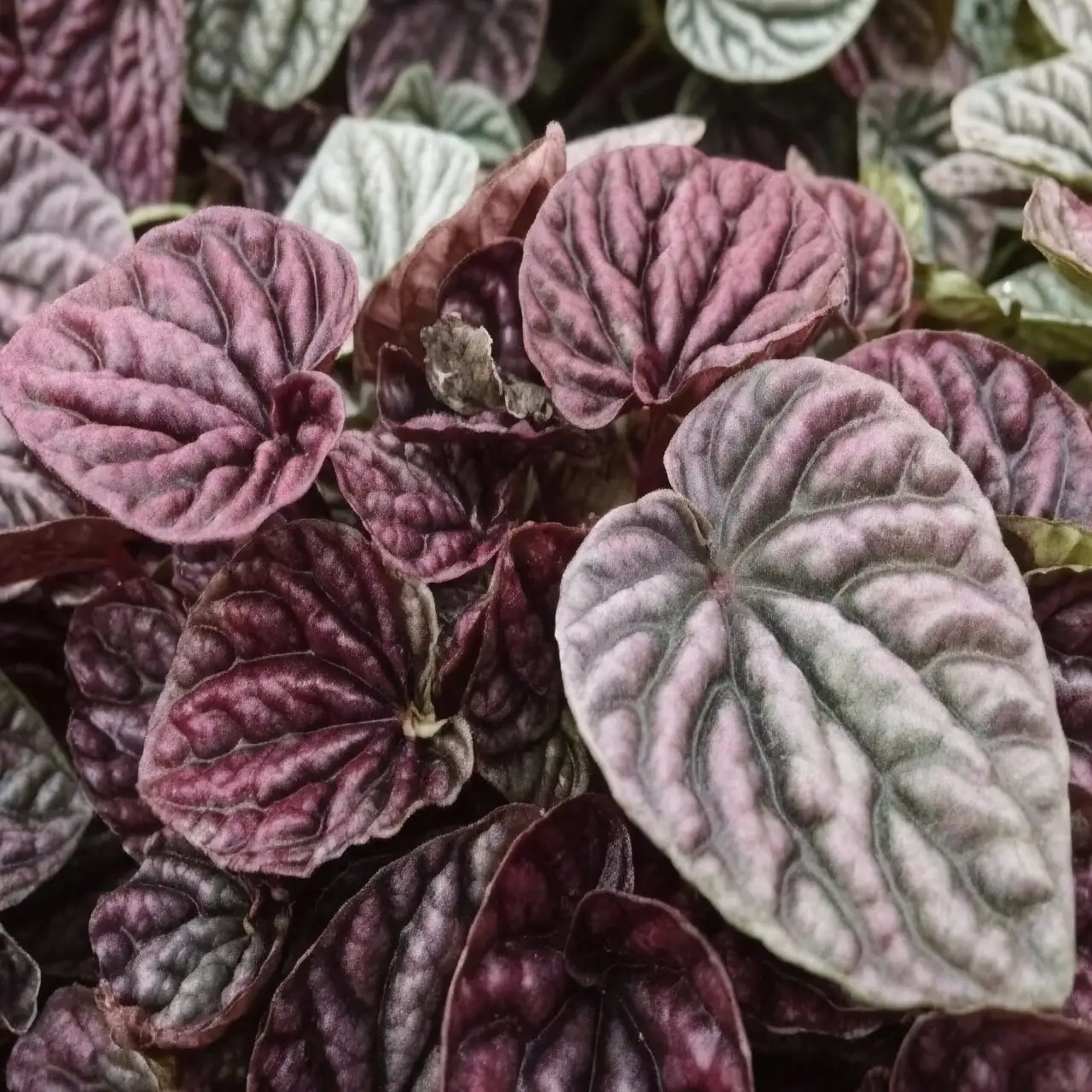
Meet Ripple Peperomia (Peperomia caperata): a compact, heart‑leafed charmer from tropical South America that thrives on gentle light, tidy routines, and a light watering hand. Those puckered, emerald to burgundy leaves look sculpted—like folded silk—while summer brings up slender, cream‑to‑pale‑green flower spikes that rise like little candle wicks. Below is a simple, printable, month‑by‑month calendar for watering, feeding, pruning, and tidying those flower spikes—plus how to dodge cold drafts in winter and boost humidity in summer without misting.
Before you print: the one‑minute setup
- Light: Bright, indirect light to partial shade; avoid harsh midday sun that can scorch those ripples.
- Temperature: 15–24°C (59–75°F). Keep it above 12°C (54°F) and protect from cold drafts.
- Humidity: Moderate to high (around 50%+). Great in a bathroom or kitchen.
- Pot and mix: A small pot (around 10 cm/4 in) filled with a loose, airy, fast‑draining mix. Use a quality houseplant mix with a generous handful of perlite.
- Watering philosophy: Err slightly on the dry side. Overwatering is the main risk.
- Humidity aid: Use a pebble tray with the pot above the waterline; avoid misting—water can sit in the leaf ripples and cause spotting.
The Ripple Peperomia care calendar
Note: Indoors, timing pivots with light and warmth. Use these monthly prompts plus the golden rule—water only when the surface of the mix has dried.
January
- Watering: Winter rest. Keep the mix almost dry; water sparingly only after the surface dries fully.
- Feeding: Skip.
- Grooming: Remove any yellowing leaves.
- Environment: Draft patrol—move off cold windowsills and away from exterior doors. Aim for steady 15–24°C.
February
- Watering: As above—sparingly, only when the surface dries.
- Feeding: Skip.
- Grooming: Wipe dust from leaves to maximize late‑winter light.
- Environment: Check for cold leaks at night; add a small pebble tray for gentle humidity.
March
- Watering: Growth wakes. Begin the warm‑season rhythm—water when the surface dries.
- Feeding: Start monthly feeding at 1/2 strength (balanced liquid fertilizer).
- Grooming: Light tidy of older leaves; rotate the pot for even growth.
- Repotting/Propagation: If rootbound, repot now into a slightly larger, still‑snug pot. Start leaf or stem cuttings.
April
- Watering: Stay steady—when the surface dries.
- Feeding: Monthly at 1/2 strength.
- Grooming: Inspect weekly for mealybugs/spider mites/scale; treat early with insecticidal soap or horticultural oil if needed.
- Environment: Bright, indirect light; avoid any direct midday sun.
May
- Watering: Often a bit more frequent as days warm; still wait for the surface to dry.
- Feeding: Monthly at 1/2 strength.
- Grooming: Pinch only to neaten; this is a minimal‑pruning plant.
- Humidity prep: Set up a pebble tray or move to a naturally humid room before summer heat arrives.
June
- Watering: As needed when the surface dries; never let the pot sit in runoff.
- Feeding: Monthly at 1/2 strength.
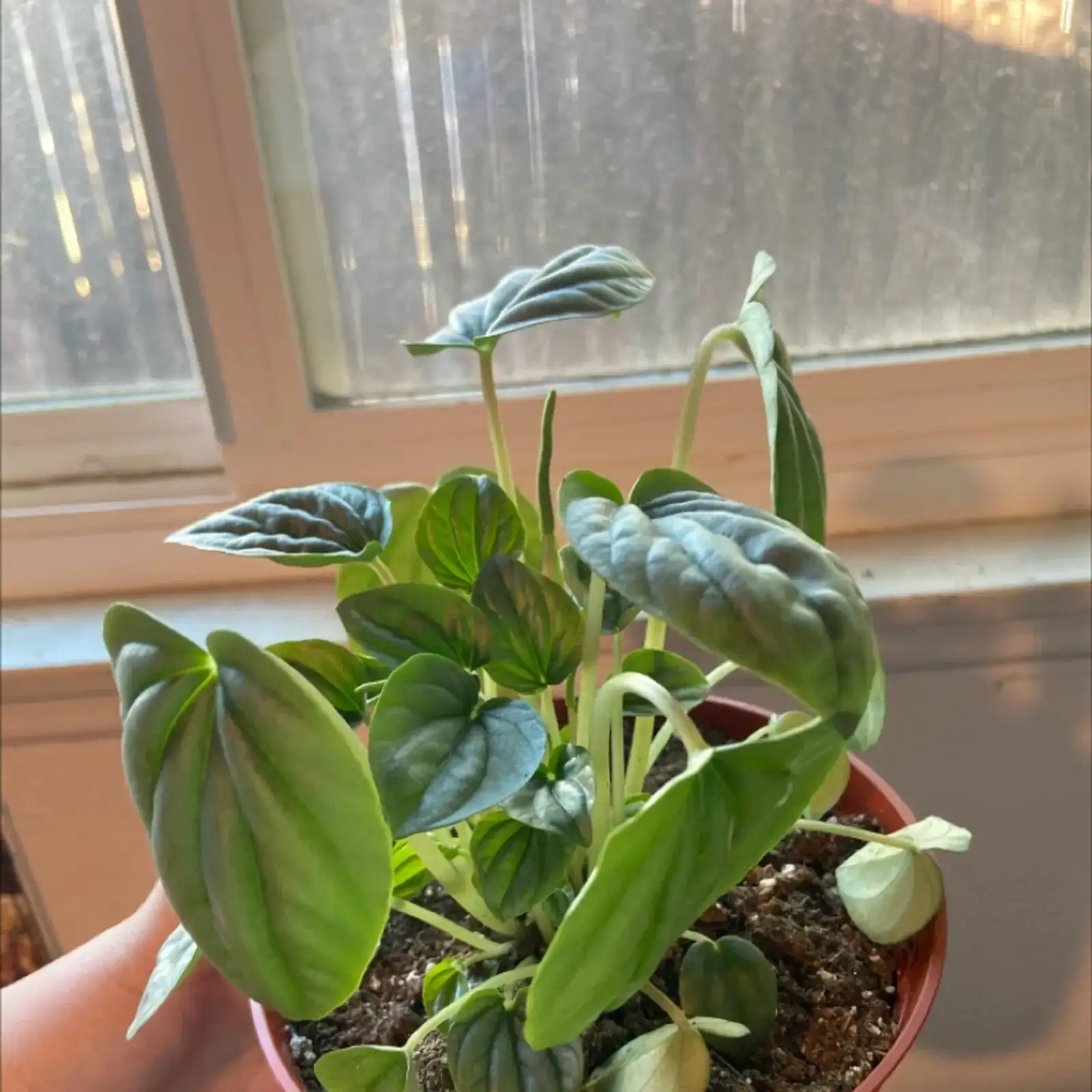
- Flower‑spike watch: Slender spikes may appear. Enjoy them, or remove early if you prefer leaf growth. Always cut spent spikes cleanly at the base.
- Heat & light: Shield from harsh sun; keep airflow gentle but not drafty.
July
- Watering: Warmest month—check more often but stick to the dryness rule.
- Feeding: Monthly at 1/2 strength.
- Humidity boost: Top up the pebble tray; group plants; avoid misting those ripples.
- Grooming: Remove yellowing leaves and any finished flower spikes at the base.
August
- Watering: Steady; surface dry before watering.
- Feeding: Monthly at 1/2 strength.
- Flower‑spike tidying: Continue removing spent spikes to keep the mound neat.
- Propagation: Late‑summer cuttings root well in a warm, airy medium.
September
- Watering: Begin easing back as light shortens; still, water only when the surface dries.
- Feeding: This is a good month for the final feed of the season (1/2 strength).
- Grooming: Final flower‑spike tidy if any remain; remove tired leaves.
- Repot review: If badly rootbound and growth is stalling, repot; otherwise wait until spring.
October
- Watering: Slow the pace; allow the mix to dry more thoroughly before watering.
- Feeding: Stop for winter.
- Environment: Pull back from cold glass and drafts as nights cool; keep above 12°C (54°F).
- Grooming: Wipe leaves; adjust placement for softer autumn light.
November
- Watering: Minimal—keep the mix almost dry, watering sparingly after the surface dries.
- Feeding: Skip.
- Environment: Draft avoidance is key—check window seals and keep off radiators or heating vents that dry the plant.
- Pests: Dry air can invite spider mites; inspect and treat early.
December
- Watering: Light and infrequent; the plant is resting.
- Feeding: Skip.
- Environment: Stable warmth, no cold blasts. A pebble tray maintains gentle humidity without wetting leaves.
- Gratitude round: Rotate the plant a quarter turn to even out winter lean.
How to water Ripple Peperomia like a pro
- Check first: Press a fingertip into the top 1–2 cm (about 0.5 in). If it’s dry, water; if even slightly moist, wait.
- Technique: Water at the soil line, not over the leaves. Moisten the mix evenly and let excess drain completely; never let the pot stand in water.
- Winter mode: “Almost dry” means longer pauses between light waterings—especially in cooler rooms.
- Warning signs: Mushy stems or sour‑smelling soil signal overwatering. Let the mix dry more thoroughly and improve drainage.
Summer humidity boosts that actually help (no misting needed)
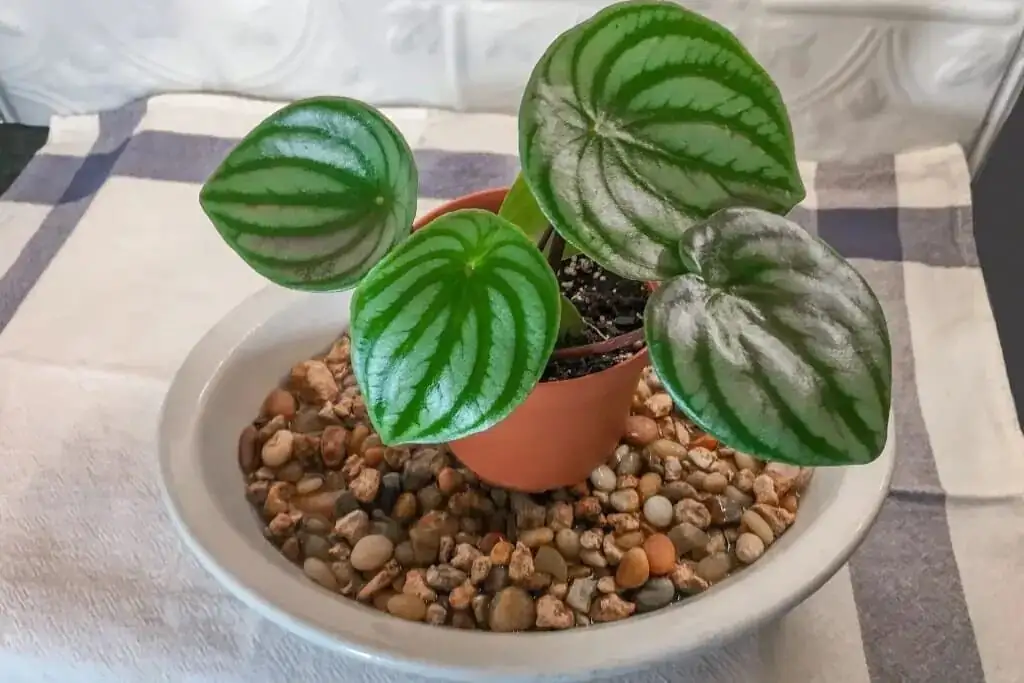
- Pebble tray: Fill a tray with pebbles and water; rest the pot on the pebbles above the waterline for a gentle humidity halo.
- Smart placement: Bathrooms and kitchens often deliver the 50%+ humidity this plant loves.
- Team players: Group humidity‑loving plants to create a shared microclimate.
- Air, not drafts: Encourage light air movement, but avoid blasting fans or AC vents.
Cold‑draft avoidance made easy
- The hand test: If your hand feels chilled near the window or door, your plant will too—shift it a little farther in.
- Night shuffle: In deep winter, park it at least a book’s width from cold glass.
- Temperature floor: Keep it reliably above 12°C (54°F); ideal range is 15–24°C (59–75°F).
Quick extras for peak plant health
- Soil and potting: Use a well‑draining mix with added perlite in a small, snug pot. Oversized pots stay wet too long.
- Pruning: Minimal. Snip yellowing leaves and spent flower spikes at the base for a neat, mounded look.
- Repotting rhythm: Every 2–3 years or when rootbound.
- Propagation: Leaf or stem cuttings root well at 20–24°C (68–75°F) in a moist, airy medium.
- Pests: Mealybugs, spider mites, and scale are the usual suspects—especially in dry air. Wipe leaves, improve airflow, and treat early with insecticidal soap or horticultural oil.
- Pet‑friendly: Generally considered non‑toxic to cats and dogs (though nibbling any plant may cause mild stomach upset).
A note on meaning
Ripple Peperomia is often associated with quiet resilience and gentle charm—fitting for a compact plant that asks for little, endures a missed watering, and still looks like living sculpture. Those understated flower spikes remind us it’s a foliage‑first companion with a steady, unshowy grace.
Print this, pin it near your plant, and let the ripples do the rest. With soft light, modest sips, and a quick monthly tidy, Peperomia caperata stays compact, glossy, and gorgeously textured all year.