

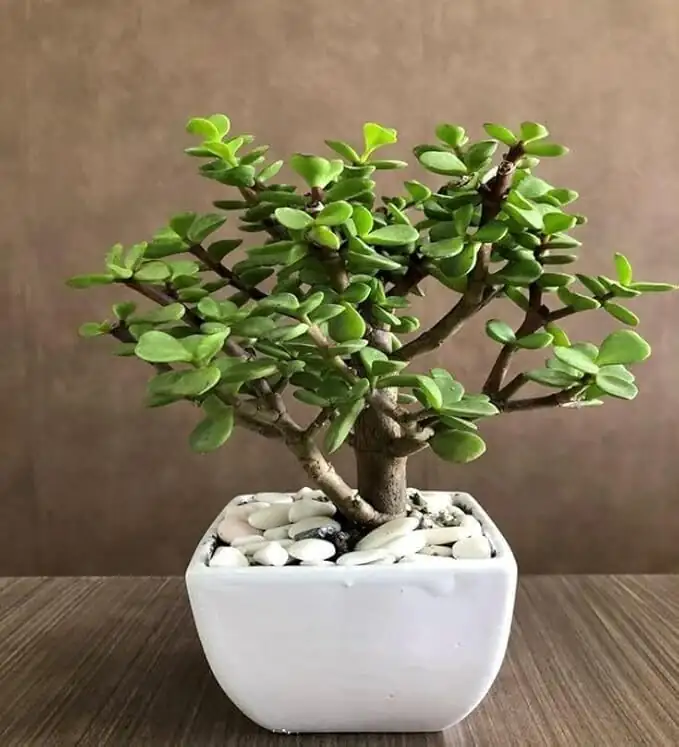
Think of a jade plant as a living sculpture: glossy, oval leaves perched on branching, woody arms that age into a miniature tree. With a few styling decisions—right pot, clever pruning, smart light, and a curated mix of cultivars—you can turn Crassula ovata into the calm, sculptural anchor every room deserves.
Meet the plant you’re styling
- Botanical identity: Crassula ovata, a shrubby succulent in the Crassulaceae family; often called Jade Plant, Money Plant, Lucky Plant, or Friendship Tree.
- Personality: Easygoing and drought-tolerant with thick, glossy leaves that can blush red at the edges in strong light. Over time it forms a bonsai-like, treey silhouette.
- Bonus: Mature plants may reward you with dainty clusters of starry white to pale pink flowers in winter to early spring, though indoor bloom is delightfully unpredictable.
Pot pairings that flatter the form
Material matters
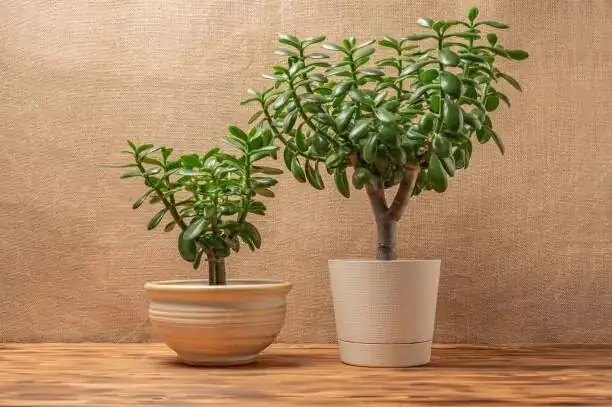
- Terracotta: Breathable and classic; wicks moisture from the mix, helpful if you’re a generous waterer. Warms the foliage’s green and red edges.
- Glazed ceramic: A sleek, gallery finish that holds moisture a touch longer—great for hot, bright interiors. Choose a drainage hole every time.
- Concrete/stoneware: Heavy, stable, and sculptural—perfect for top-heavy, older jades with woody trunks.
- Metal sleeves: Use only as outer cachepots. Always keep the plant in a draining inner pot so roots never sit in water.
Pro tip: Jade’s main weakness is overwatering. Whichever pot you choose, prioritize a drainage hole and a saucer you can empty.
Shape and scale
- Shallow bonsai pot: Emphasizes the tree-like trunk and branching silhouette; choose a wider footprint to balance the plant’s canopy.
- Low, footed bowls: Airy and modern; the negative space under the pot lightens the composition.
- Wide cylinder or oval: Good for bushier or multi-stem plants; avoid deep, narrow pots that visually “stretch” the plant upward.
- Size guide: For small–medium jades, a 6–8 in (15–20 cm) wide pot feels proportionate; repot every 2–3 years or when rootbound.
Color stories
- Minimal gallery: Matte white or charcoal emphasizes architecture and leaf shine.
- Earthy modern: Warm terracotta paired with pale gravel top-dressing.
- Jewel tone accent: Teal, bottle green, or midnight blue deepen the greens and make red leaf margins glow.
- Soft contrast: Sand, linen, and putty neutrals keep the focus on branching lines.
Finishing touches
- Top-dressing: A skim of pumice, crushed lava, or pale gravel reads clean and reduces soil splash.
- Risers and trays: Elevate with a slim plinth, wood block, or footed saucer to frame the silhouette.
- The right mix: Use a fast-draining cactus/succulent blend. A simple, effective recipe is potting substrate with sharp sand at about 3:1, or amend with perlite/pumice for extra drainage.
Prune for silhouette, not size
Best timing
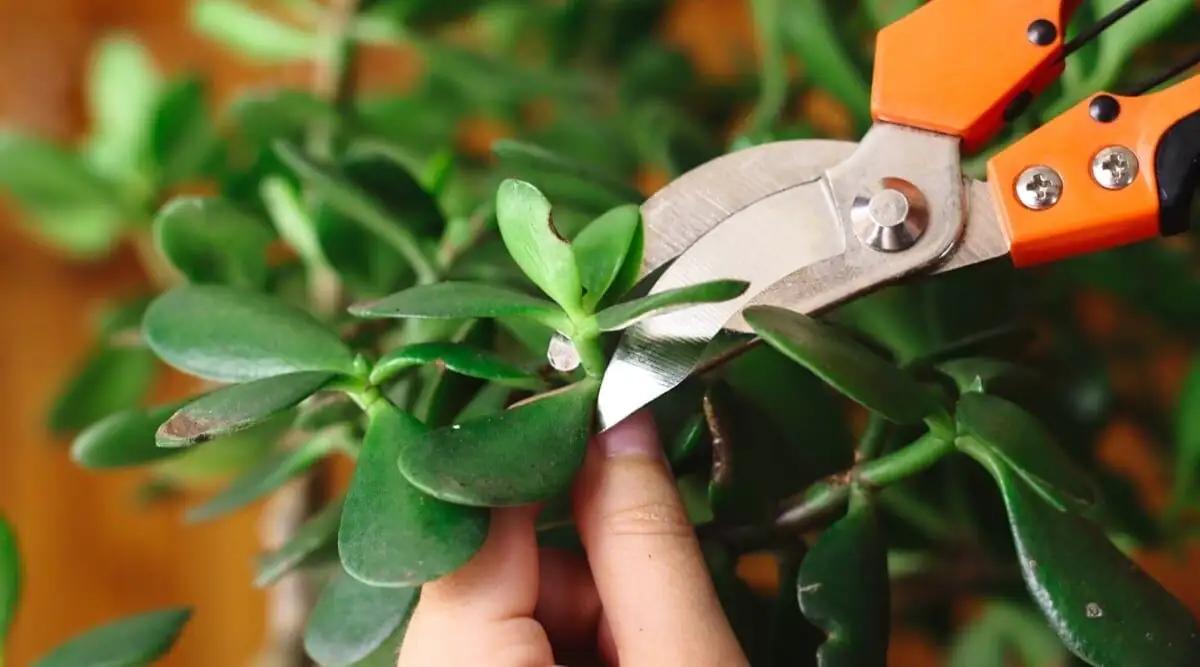
- Prune in spring or summer to shape and encourage branching. Let cut surfaces dry and callus before watering again.
Clip-and-grow (the jade-friendly method)
Jade stems are succulent and can be brittle—go easy on heavy wiring. Try this approach:
- Define the vision: Single-trunk “informal upright,” airy “broom,” or light “slanting” tree all suit jade’s character.
- Establish the trunk line: Remove low, weak, or crossing shoots that blur the main structure.
- Encourage branching: Make heading cuts just above a node or small branchlet. This prompts a fork and builds a layered canopy.
- Thin, don’t shear: Keep interior light by removing a few inward-facing shoots rather than shearing the outline.
- Pinch with purpose: After a spring growth flush, pinch soft tips to keep internodes short and the silhouette tight.
Safety note: Jade sap can be irritating—wear gloves if you have sensitive skin.
Simple styles to try
- Informal upright: A gentle, naturalistic S-curve trunk; balanced pads of foliage stepping up the tree.
- Broom style: Multi-branching from a higher point, forming a rounded crown—great for plants with several equal branches.
- Light slant: The trunk leans 10–20 degrees with branches balanced opposite the lean; dynamic but serene.
Reshaping a leggy jade
- Stage it: Reduce length in sections across a few months rather than one severe cut.
- Backbud support: Place in your brightest window to encourage compact new growth after pruning.
- Bonus plants: Root pruned trimmings—jade is famously easy from stem or even single-leaf cuttings. Let pieces callus for several days, then place into dry, gritty mix; water lightly once roots begin forming.
Light-aware placement: glow, don’t stretch
What jade wants
- Bright light is best—full sun to partial sun. Indoors, give it the sunniest window you have to prevent stretching and to keep growth compact.
Room-by-room cues
- South or west window: Ideal. Expect tight spacing and red-edged leaves. Use a sheer at midday if leaves show scorch.
- East window: Lovely morning sun; growth remains compact if you keep the plant close to glass.
- North window or interiors: Often too dim—expect longer internodes and leaning. Supplement with a grow light or move to a brighter aspect.

Smart habits
- Rotate a quarter turn every week for even branching.
- Summer vacation: In warm seasons, a bright balcony or patio toughens growth and deepens color. Acclimate over 1–2 weeks and protect from frost.
- Winter routine: Keep cool and bright; water sparingly. A slightly drier, cooler rest on a luminous sill can encourage mature plants to bloom in winter to early spring.
Telltales:
- Too little light: Stretched stems, flat green leaves with little red edge, floppy habit.
- Too much, too fast: Leaf scorch or sudden wrinkling; step back slightly and acclimate.
Mix cultivars for color and texture—without clutter
Start with a palette and a plan
- Pick a theme—sunset golds and reds; cool variegated greens; sculptural tubes and ovals.
- Work in odd numbers and honor negative space. Your eye needs breathing room between silhouettes.
A cultivars menu to style with
- Hummel’s Sunset: Golden-green leaves with red rims in strong light; lights up neutral rooms.
- Variegata (also sold as ‘Tricolor’): Cream and green marbling; fresh, luminous texture.
- Gollum: Tubular, trumpet-like leaves for high-contrast form; great as a focal accent.
- Hobbit: Spoonier cousin to ‘Gollum’; softer lines in the same tubular family.
- Crosby’s Compact: Smaller leaves and tight spacing—perfect for a mini “forest” effect.
- Harbour Lights: Known for rich red tones in cool, bright conditions.
All are Crassula ovata forms—so care stays consistent across your display.
Ready-made vignette recipes
- Sunny-sill trio: Center a mid-sized informal-upright jade in a shallow charcoal bonsai pot. Flank with ‘Hummel’s Sunset’ in warm terracotta and ‘Gollum’ in matte white. Top-dress all with pale gravel for cohesion.
- Entry console duet: Pair a sculptural ‘Gollum’ on a low stoneware pedestal with a compact ‘Variegata’ in a slim oval pot. Keep 15–20 cm of empty space between for a gallery feel.
- Coffee table statement: One older, woody jade in a footed bowl with lava top-dress. Add a slender book stack and a small stone—then stop. Negative space is luxury.
Keep the mix tidy
- Edit monthly: Remove one or two crowding shoots rather than “haircutting” everything.
- Sync care: Same exposure, watering rhythm, and potting mix across the grouping prevent uneven growth.
- Scale discipline: Let only one plant be the “hero.” The others should whisper, not shout.
Care that supports the style
- Watering
- Spring–autumn: Water thoroughly only after the surface and much of the mix has dried.
- Winter: Water sparingly—just enough to prevent severe shriveling.
- Never let the pot sit in water; soggy roots lead quickly to rot.
- Feeding
- In active growth, feed 2–3 times with a balanced liquid fertilizer at half strength. Skip feeding in winter.
- Temperature and humidity
- Ideal 15–25°C (59–77°F). Protect from frost; keep above 5°C (41°F).
- Low to average indoor humidity is fine; avoid constantly damp, stagnant spots.
- Pests and quick fixes
- Watch for mealybugs, scale, and spider mites. Improve light and airflow, isolate affected plants, and treat with insecticidal soap or horticultural oil as needed.
- Safety note
- The sap is irritating/toxic if ingested. Keep away from pets and children; wear gloves when pruning if your skin is sensitive.
Symbolism and “flower language”
Jade plants are long associated with wealth, prosperity, and good fortune—especially in parts of Asia—hence the “money plant” and “lucky plant” nicknames. In feng shui, placing a jade near an entry or on a work desk symbolizes an open welcome to opportunity. While this is cultural symbolism rather than science, it adds a poetic layer to styling: a gracefully pruned jade by the door reads like an evergreen invitation to abundance. And if your mature plant gifts you with tiny white-to-pale-pink starry blooms in winter, consider it a seasonal nod to longevity and renewal.
Quick styling checklists
For your first jade vignette
- Choose: One healthy plant with firm, plump leaves and a sturdy base (avoid mushy, blackened stems or sour-smelling soil).
- Pot: Wide, shallow, well-draining container in a color that complements your palette.
- Mix: Gritty succulent blend (potting substrate with sharp sand around 3:1, or amended with perlite/pumice).
- Place: Sunniest window in your home; rotate weekly.
- Finish: Clean top-dress, a slim riser, and a simple companion object for scale.
Ten-minute monthly refresh
- Dust leaves with a soft brush or cloth to restore gloss.
- Rotate the pot and check for pests.
- Pinch a wayward tip; edit one crossing shoot.
- Empty saucer; confirm the mix is drying as expected.
- Step back two meters—does the silhouette read clearly? Remove visual clutter around it.
With the right pot, a confident silhouette, and light that coaxes those elegant red leaf edges, Crassula ovata becomes more than a plant—it’s your room’s quiet, sculptural signature. Keep the styling intentional and the care minimalist, and your jade will return the favor with decades of steady, grounded beauty.