


On a rocky hillside where aloes spear the light and euphorbias sketch thorny silhouettes, a small, glossy-leaved shrub tightens its pores against the noon heat. Night is when it truly breathes. This is Crassula ovata—the jade plant, friendship tree, lucky plant, the so-called money plant—native to the valley thickets of South Africa’s Eastern Cape and KwaZulu-Natal, and to neighboring Mozambique. From these sun-baked slopes, it has journeyed into windowsills around the world, a living souvenir of drought-driven ingenuity and a century-spanning horticultural trade.
Born of Thicket and Sun
Picture the Eastern Cape’s stony ridges after a brief winter rain: the air rinsed clean, the soil already thinking of thirst again. Here, jade plants grow as compact, woody shrubs, their branches gnarled like miniature baobabs, their leaves plump and oval, sometimes edged in red when light is intense and nights tip cool. This is a landscape where “tough” isn’t a compliment; it’s survival.
- Native range: South Africa (KwaZulu-Natal and Eastern Cape) and Mozambique
- Wild company: aloes, euphorbias, Portulacaria afra, and other succulents in valley thicket vegetation
- Outdoor stature in habitat: a rounded, strongly branched shrub, often over 1 m tall
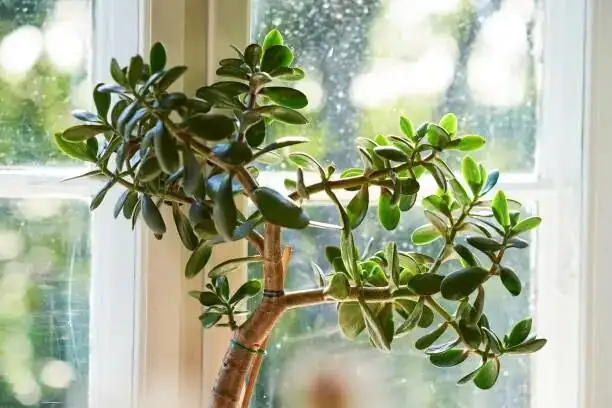
- In containers: typically 60–100 cm tall and wide, easily shaped into a bonsai-like form
The Night-Breather: Drought Survival Tricks
Jade’s secret weapons are elegantly simple.
- Water-storing leaves: Each glossy, fleshy leaf is a reservoir. In drought, the plant draws down these savings, allowing safe intervals between waterings.
- CAM photosynthesis: This time-shifting strategy opens stomata at night to take in CO2 when it’s cooler and drier. By day—when evaporation would be costly—stomata stay mostly closed while stored CO2 fuels photosynthesis. Result: less water lost, more life lived through drought.
- Sun-kissed margins: In bright light and with cooler nights, leaf edges blush red—a protective “sunscreen” effect that also happens to be incredibly handsome.
These tricks are why jade has a reputation for thriving on benign neglect—and why too much water, not too little, is its undoing.
From Karoo Doorstep to Global Favorite
By the late 18th century, botanists were noting Crassula ovata in European collections. Its good manners indoors—tolerance of low humidity, forgiving nature, sculptural silhouette—did the rest. Nurseries spread it far and wide, and by the 20th century it had become a perennial best-seller from Cape Town to California, from Tokyo to London.
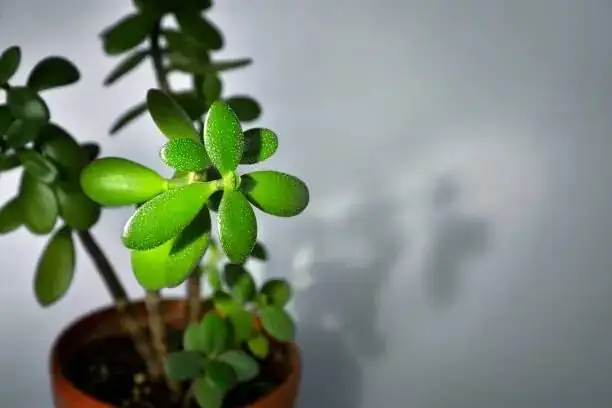
- The gift plant: In parts of Asia, jade became entwined with ideas of wealth and prosperity, its coin-like leaves and vigorous growth seen as auspicious. It’s still a quintessential housewarming or New Year’s present.
- The nickname knot: “Money plant” is also used for other species (notably Pachira aquatica). Jade’s long history of the name in global trade can blur that line, but the charm—and the sales—persist.
A Portrait in Gloss and Wood
- Habit: Upright, shrubby succulent with thick, branching stems that turn woody in look and feel with age
- Leaves: Thick, oval, glossy green; margins can redden with strong light/cooler nights
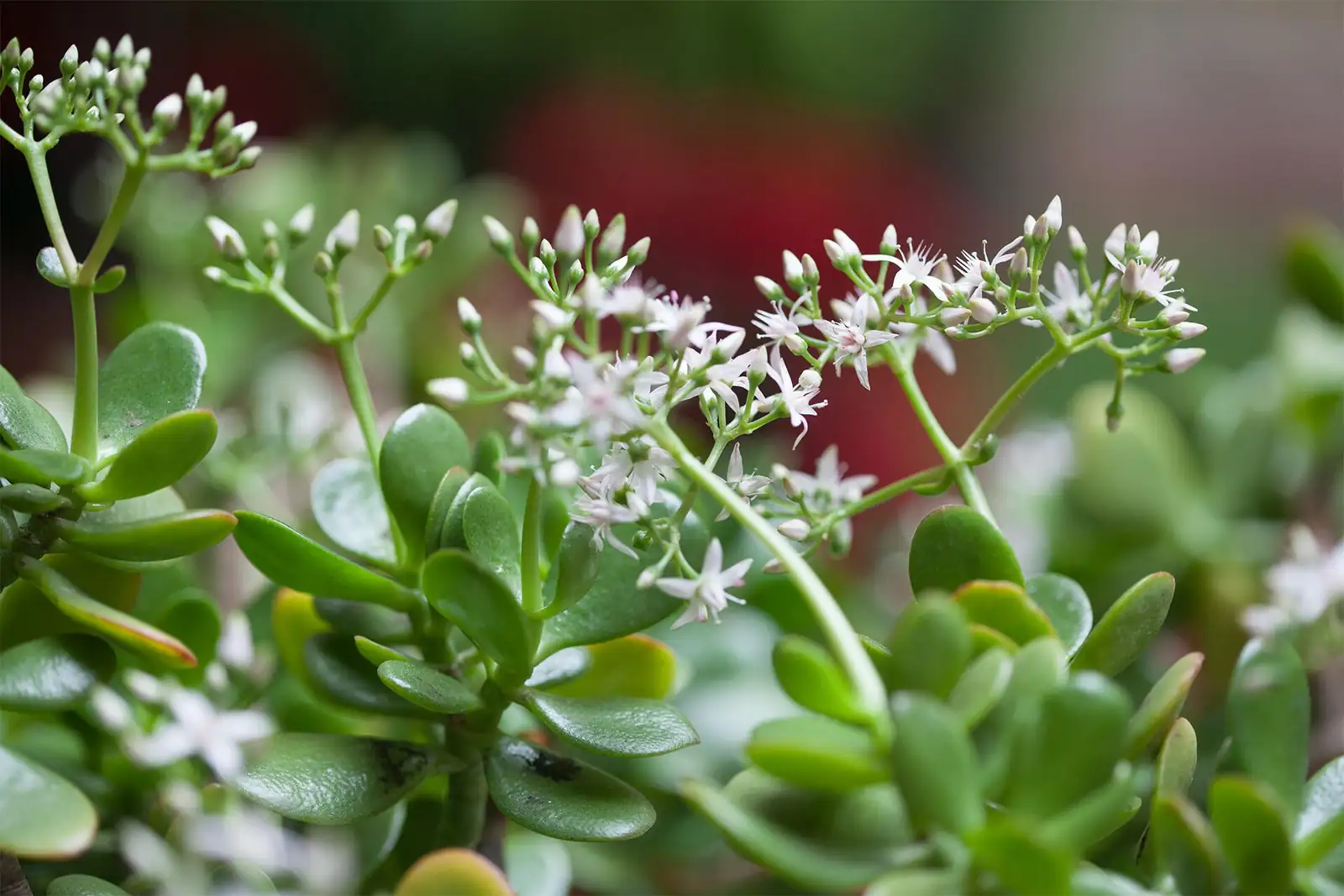
- Flowers: Clusters of small, starry blooms, white to pale pink
- Season: Most likely in winter to early spring on mature plants, especially with bright light and a cool, drier rest
Indoors, flowering is a delightful bonus rather than a promise. But even without blooms, the plant’s bonsai-like poise and decades-long lifespan make it an heirloom in the making.
The Cultivar Parade: Color, Curves, and Collectors
Global demand stoked a fresh wave of selections and hybrids—some whimsical, some downright luminous.
- Hummel’s Sunset (RHS Award of Garden Merit): Green leaves rimmed in gold and flushed red in bright light, especially striking in winter; compact and branching.
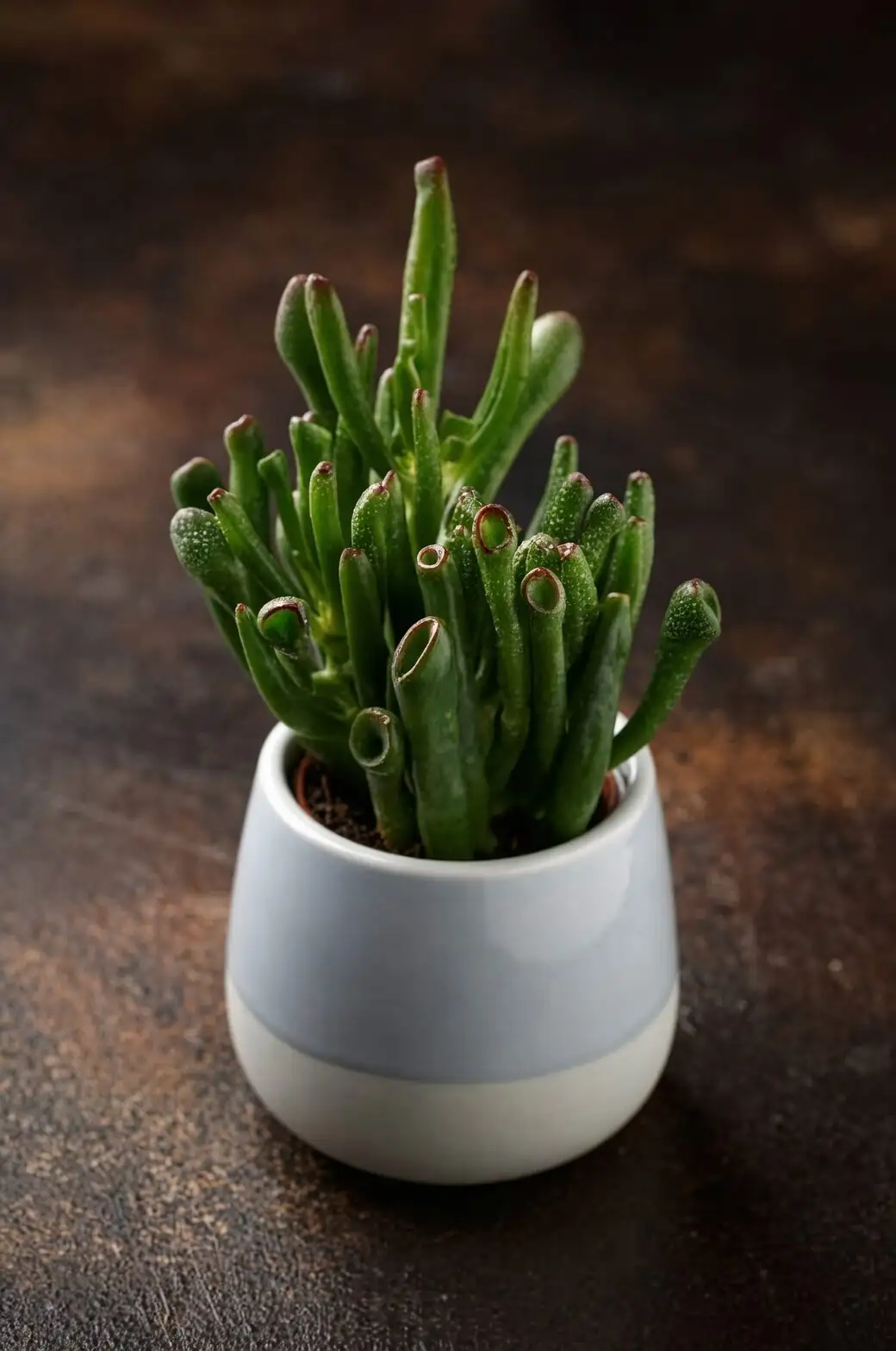
- Gollum: Nearly tubular leaves with a cupped tip—playful, sculptural, a staple among succulent collectors.
- Hobbit: Short, curved “finger” leaves that curl back toward the stem; dense and tidy in pots.
- Lemon & Lime (variegated): Cream-and-green striping with pinkish edges in strong light.
From office desk to patio tray garden, these forms turned jade plants into a modern collector’s canvas—easy, durable, and endlessly photogenic.
Flower Language, Luck, and the Stories We Tell
Jade’s association with prosperity is cultural rather than botanical. Merchants and home decorators in Asia leaned into visual symbolism—coin-like leaves, evergreen vigor, and the resonant wordplay of “jade” itself—to frame the plant as a magnet for wealth and good fortune. In feng shui-inspired interiors, it’s often placed near a doorway or in the “wealth corner.”
Does the plant change our fortunes? Not in any measurable botanical way. But as a shared story—a wish for abundance, a reminder to nurture and be patient—it thrives. And that symbolism is a good part of why millions of jade plants have crossed oceans and generations.
How to Keep Your Jade Thriving (Without Fuss)
Think “bright, airy, and dry between sips.”
- Light: Full sun to bright, indirect light. Indoors, give it your sunniest window to keep growth compact and prevent stretching.
- Water: Spring to autumn, water thoroughly only after the mix has dried well; in winter, water sparingly—just enough to prevent deep shriveling. Never leave pots standing in water.
- Soil: A fast-draining cactus/succulent mix. Aim for roughly 3 parts potting mix to 1 part sharp sand, or amend with perlite/pumice for extra drainage.
- Temperature: Ideal 15–25°C (59–77°F). Protect from frost; keep above 5°C (41°F).
- Humidity: Low to average suits it fine; avoid stagnant, overly damp conditions.
- Feeding: 2–3 light feeds in spring to autumn with a balanced, half-strength liquid fertilizer; none in winter.
- Pruning: Shape in spring or summer to encourage branching. Let cut surfaces dry/callus.
- Propagation: Almost too easy. Take a stem cutting (or even a single leaf), let it callus for a few days, then place on/in a dry, gritty mix. Mist very lightly until roots form, then water modestly.
- Repotting: Every 2–3 years in spring into a gritty mix. Choose stable pots; jade crowns get heavy as they woody-up.
Seasonal rhythm:
- Spring–Summer: Maximize light; water when dry; optional shaping prune.
- Autumn: Ease off watering as days shorten.
- Winter: Keep cool, bright, and on the dry side to discourage rot and, on mature plants, to nudge blooming.
Pests, Pitfalls, and Safety
- Pests: Watch for mealybugs, scale, and spider mites. Improve light and airflow; treat with insecticidal soap or horticultural oil if needed.
- Overwatering: The quickest route to failure. If leaves turn mushy or stems blacken at the base, act fast—dry the root zone, prune rot, and repot into a gritty mix.
- Toxic sap: The milky sap can irritate skin; wear gloves if sensitive. Keep away from pets and children—ingestion can cause gastrointestinal upset.
Why We Keep Coming Back to Jade
Perhaps it’s the way those stubby, woody arms hold years of care in their curves. Perhaps it’s the reassuring weight of water in each leaf—the literal savings account your plant keeps for a dry day. Or perhaps it’s the simple pleasure of a plant that forgives, thrives, and sometimes, on a clear winter morning, crowns itself with a constellation of tiny, pink-white stars.
From South African thickets to a sill near you, Crassula ovata is a story of resilience turned into beauty—and of a humble succulent that made the world believe in a little botanical good luck.