

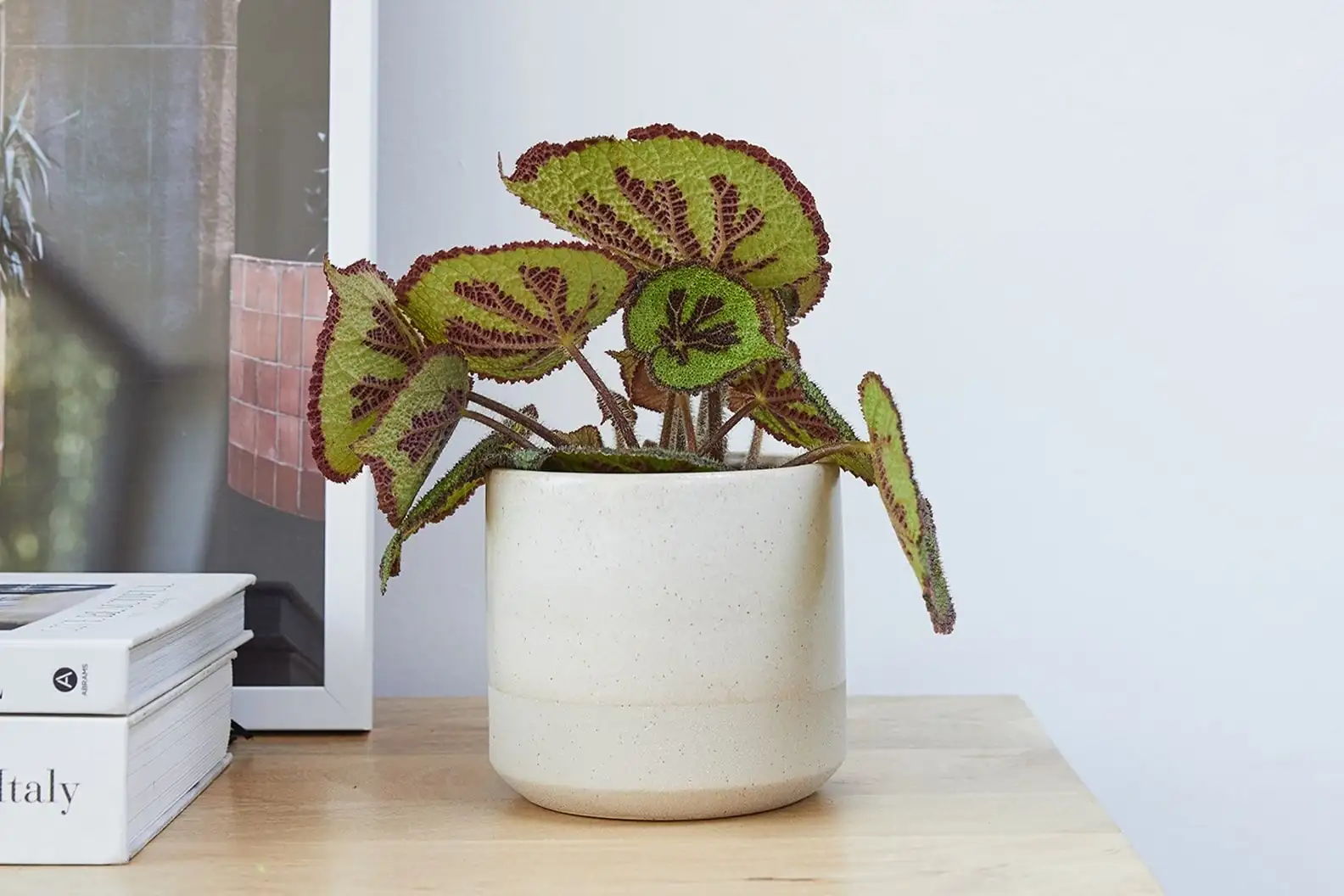
Think of Iron Cross Begonia as living textile—velvet-green leaves stamped with a wine-red cross, all puckered and tactile like artisanal paper. Under the soft, steady glow of an east- or north-facing window, those heart-shaped leaves don’t just look good; they set the mood. Here’s how to design with Begonia masoniana so every glance feels curated.
Meet Begonia masoniana (Iron Cross Begonia)
- Names: Iron Cross Begonia, Mason’s Begonia (sometimes sold as Brazilian Begonia)
- Origin: Southern China to Vietnam; now a global houseplant icon
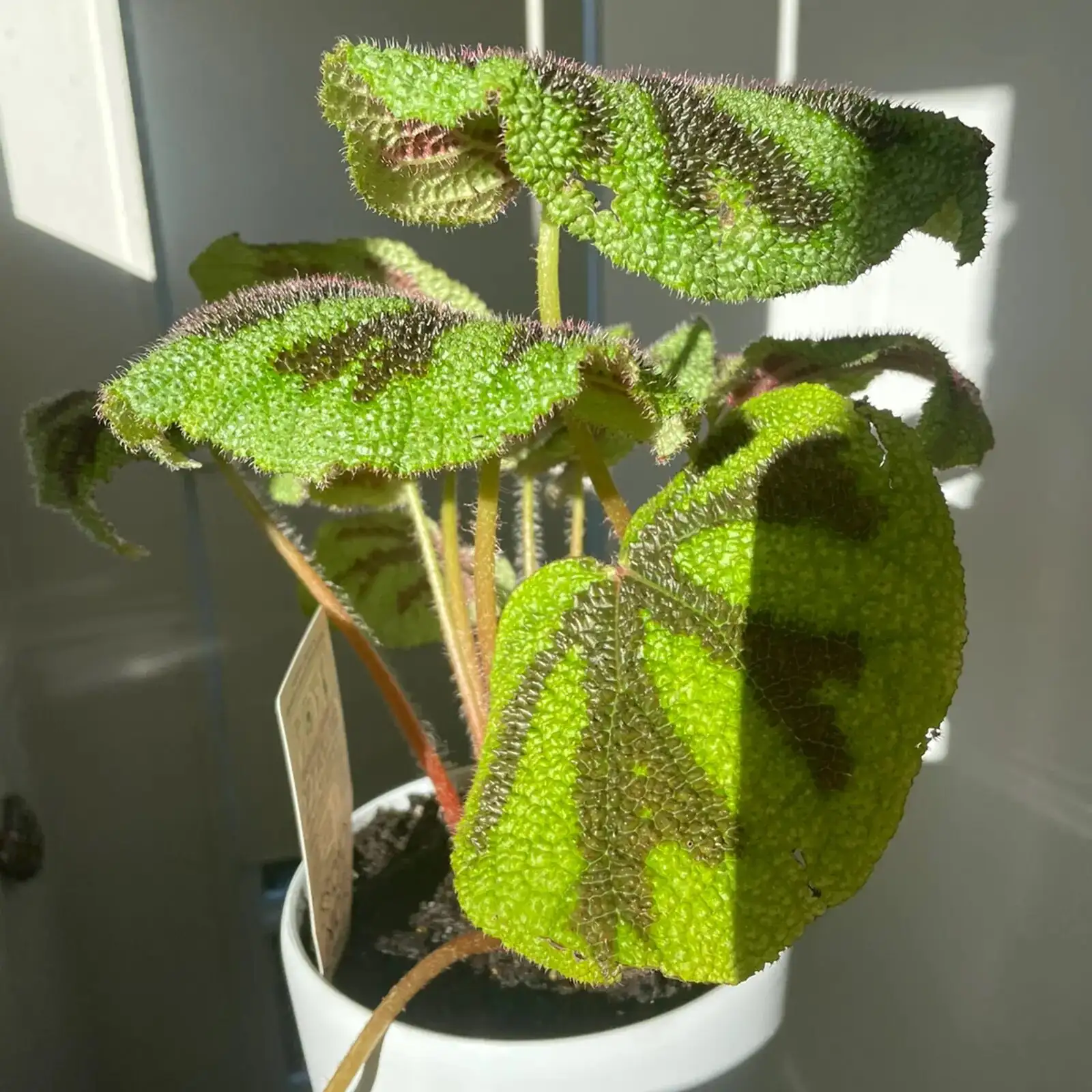
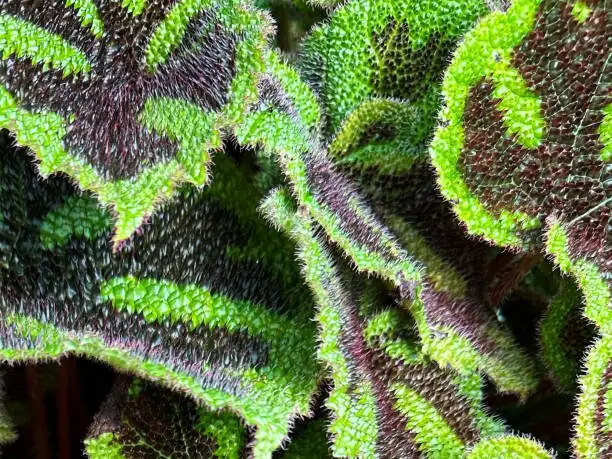
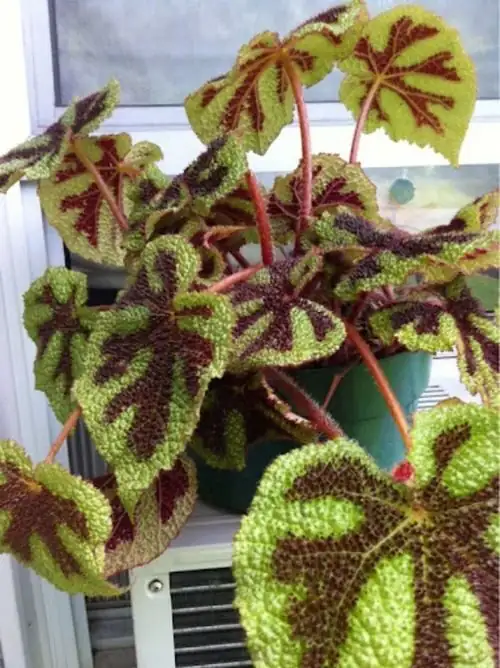
- Look: Bright green, rough, sandpapery leaves with a dark wine-red, cross-like marking; heart-shaped, compact, and supremely touchable
- Size: Typically 30–45 cm (12–18 in) tall and wide in a pot
- Flowers: Small, pale pink to whitish sprays—sweet, but secondary to the foliage
- Habit: A clump-forming, rhizomatous perennial that naturally spreads more than it climbs

Light-savvy styling under east or north windows
This plant glows in bright, indirect light and tolerates medium light—perfect for those gentle exposures.
Why these exposures work
- East windows: Morning sun is kinder and gives saturated color without scorch.
- North windows: Soft, consistent light keeps markings crisp if the plant sits close to the glass.
- Avoid harsh direct sun that can fade or scorch the leaves; think bright but filtered.
Pro moves:
- Place 30–90 cm (1–3 ft) from an east window with a sheer curtain, or right at a north window.
- Rotate a quarter turn weekly for even growth and patterning.
- Keep a bit of breathing room (good airflow) to sidestep powdery mildew.
Planter pairings that amplify the cross
Shape and scale
- Choose shallow and wide over deep and narrow. The spreading rhizomes prefer a low, broad footprint—think a 15–20 cm (6–8 in) diameter bowl for a mature plant.
- Footed bowls or pedestal planters elevate foliage to eye level and protect from chilly sills.
Material and finish
- Unglazed terracotta: Breathable and textural; you’ll water a bit more often.
- Satin or glossy ceramic: Sleek contrast to that sandpapery leaf; holds moisture longer—watch your watering rhythm.
- Lightweight fiber cement or matte stoneware: Contemporary silhouettes with subtle texture that echoes the leaf puckering without stealing the show.
Tip: Always use a pot with a drainage hole. If you love a cachepot, keep the plant in a nursery pot inside and empty any collected water a few hours after watering.
Color palettes that make the cross pop
- Monochrome mood: Charcoal, graphite, or deep forest green glazes intensify the wine-red cross and make the greens glow.
- Warm heritage: Rose terra cotta, oxblood, or burgundy glazes echo the leaf markings for a rich, museum-quality vignette.
- Modern punch: Mustard, indigo, or sage accents pull the green brighter—great for airy, design-forward shelves.
- Soft neutrals: Almond, cream, or pebble gray emphasize texture over color, ideal when you’re layering materials.
Texture dialogue
- Contrast the leaf’s roughness with smooth or lightly ribbed planters.
- Rattan or cane cachepots bring warmth; keep the actual plant in a draining liner pot so roots stay airy.
- Top-dress with airy materials—orchid bark, chunky pumice, or large perlite—to finish the look without suffocating the rhizome. Avoid dense fine gravel that seals in moisture.
Companion plants that flatter (and thrive together)
Groupings raise humidity, but give each plant its own pot and a little space for airflow.
Foliage-with-foliage pairings
- Rex begonias: A perfect match—varied color and pattern, same love for bright, indirect light.
- Peperomia caperata (Ripple Peperomia): Matte corrugation complements the begonia’s texture; likes similar light and moderate watering.
- Pilea involucrata (Friendship Plant): Velvet-ish, quilted look; thrives in the same soft light and humidity.
- Fittonia (Nerve Plant): Veined leaves bring graphic contrast; keep in its own pot to accommodate its thirstier habits.
Upright foils and cascades
- Bird’s nest fern (Asplenium nidus): Sculptural and glossy against the begonia’s rough surface; keep soils separate.
- Hoya linearis or Hoya bella: Draping softness and dainty blooms in the same light; slightly drier potting style works well nearby.
- Small trailing peperomias (e.g., P. prostrata): A delicate cascade that won’t overwhelm your star plant.
Ventilated glass moments
- A wardian-style case or cloche with vents ajar creates that 50–70% humidity sweet spot without locking in stagnant air. Keep leaves dry late in the day and ensure excellent drainage.
Layout recipes for east and north windows
East-window vignette: Rough + refined
- Shallow footed bowl in satin charcoal
- Iron Cross Begonia centered; airy bark-and-pumice top-dress
- Flank with a small rex begonia in a matte stoneware cylinder and a trailing peperomia on a low stand
- Sheer curtain to temper morning rays and a gentle, hidden fan for airflow
North-window shelf: Gallery-green
- Low rose terra-cotta saucer planter for your begonia, elevated on a slim oak riser
- Two slim, glossy cylinders (indigo and cream) with Peperomia caperata and Hoya bella
- White wall as a reflector; plant sits close to the glass for brightness without scorch
Care-in-disguise: keep the style crisp
- Watering: Water when the top 2–3 cm (about 1 in) of mix is dry. Drench, then drain fully—no water left in the cachepot. Ease up a bit in winter.
- Light: Bright, indirect is ideal; medium is fine. Avoid harsh direct sun.
- Humidity: Aim for 50–70%. Use a pebble tray or humidifier; light, occasional misting is fine, but keep leaves dry late in the day to curb spotting or mildew.
- Airflow: Good ventilation prevents powdery mildew—avoid crowding and hot/cold drafts.
- Temperature: 18–27°C (64–81°F); protect from dips below 13°C (55°F).
- Feeding: Spring to early autumn, use a balanced fertilizer at 1/4–1/2 strength every 2–4 weeks. Little to no feeding in winter.
- Grooming and form: Remove tired leaves at the base. Pinch leggy growth to keep it compact and bushy.
- Repotting: Every 1–2 years in spring. A wider, shallower pot suits its rhizomes; don’t bury them deeply.
- Propagation: Rhizome division or leaf cuttings in a moist, airy medium with warmth (around 21–24°C / 70–75°F) and high humidity.
- Pests: Watch for spider mites, mealybugs, thrips, and fungus gnats. Treat early with insecticidal soap or horticultural oil.
- Safety: Toxic to pets if chewed (insoluble calcium oxalates). Display out of reach.
Common styling dilemmas—solved
- Brown, crispy edges: Usually low humidity, letting it get too dry, or a brush with hot sun. Raise humidity, resume even moisture, and pull it back from direct rays.
- Mushy base or leaf drop: Overwatering and/or cold stress. Let the mix dry a touch more, ensure fast drainage, and keep it warm.
- Faded cross or leggy look: Not enough light. Move closer to that east or north window and rotate weekly.
The meaning behind the cross
In the loose “language of plants,” Iron Cross Begonia often symbolizes individuality and the appreciation of unique beauty—apt for a leaf that wears a bold insignia. While not a traditional bloom of floriography, collectors have long treated its dark cross as a quiet emblem of strength and personal style. Display it where it can command attention, and it becomes more than a houseplant—it’s a signature.
Bring Begonia masoniana into the soft light of your east or north window, pair it with deliberate textures and thoughtful companions, and you’ll have a living composition that’s graphic, tactile, and irresistibly modern.