

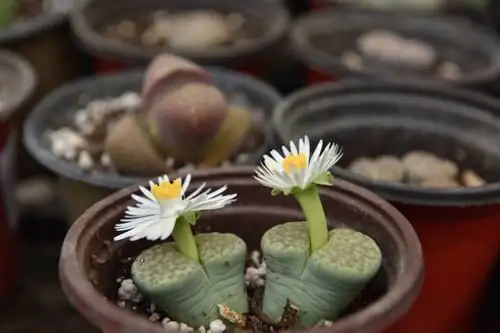
If you’ve ever worried you might vacuum up your plant, Lithops are your people. These pebble-mimics barely peek above the soil, spend months doing “nothing,” and then—whoosh—pop a chrysanthemum-like bloom out of their middle. The secret to thriving Living Stones is timing: match your care to their growth stages and your local seasons. Here’s a clear, month‑by‑month checklist that decodes their signals, keeps watering stress-free, and points to the best repot window.
Meet the cast: Living Stones (Lithops spp.)
- Origin: Southern Africa (especially South Africa and Namibia)
- Form: One tiny “head” made of two fused leaves with a central slit; tops patterned with mottles and translucent windows
- Size: Usually 1–4 cm across per head; very low-growing; slowly clumps over time
- Light: Bright light to full sun—aim for 6+ hours daily
- Temperatures: Best around 15–26°C (59–79°F); protect from frost; many keep them above ~12°C (54°F) in winter
- Soil: Very fast-draining, gritty cactus/succulent mix with a high mineral component
- Golden rules: Bright light, dry spells between waterings, and near-dry winters—especially during leaf replacement
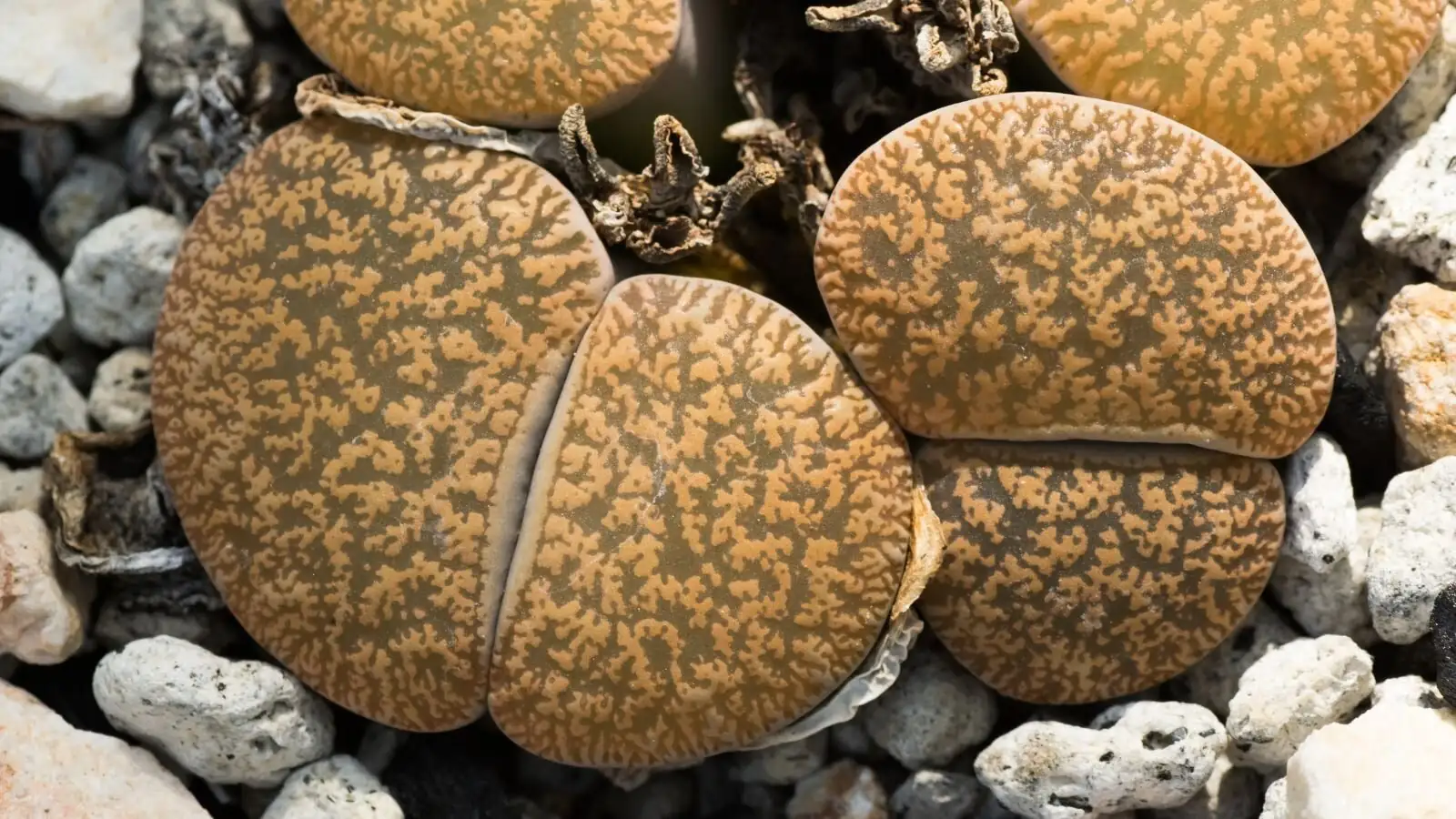
The annual rhythm at a glance (what your plant is doing)
- Late summer to autumn: Active growth and flowering. Buds and daisy-like blooms (white most often, sometimes yellow) open from the center.
- Winter: Invisible action. A new leaf-pair grows inside as the old pair slowly gives up its water. Keep it dry.
- Early to mid spring: Leaf replacement finishes. New leaves emerge; the old pair turns papery. Only resume watering when the old leaves have mostly dried.
- Summer: Heat pause. Many Lithops partially rest in hot weather; watering drops to almost nothing.
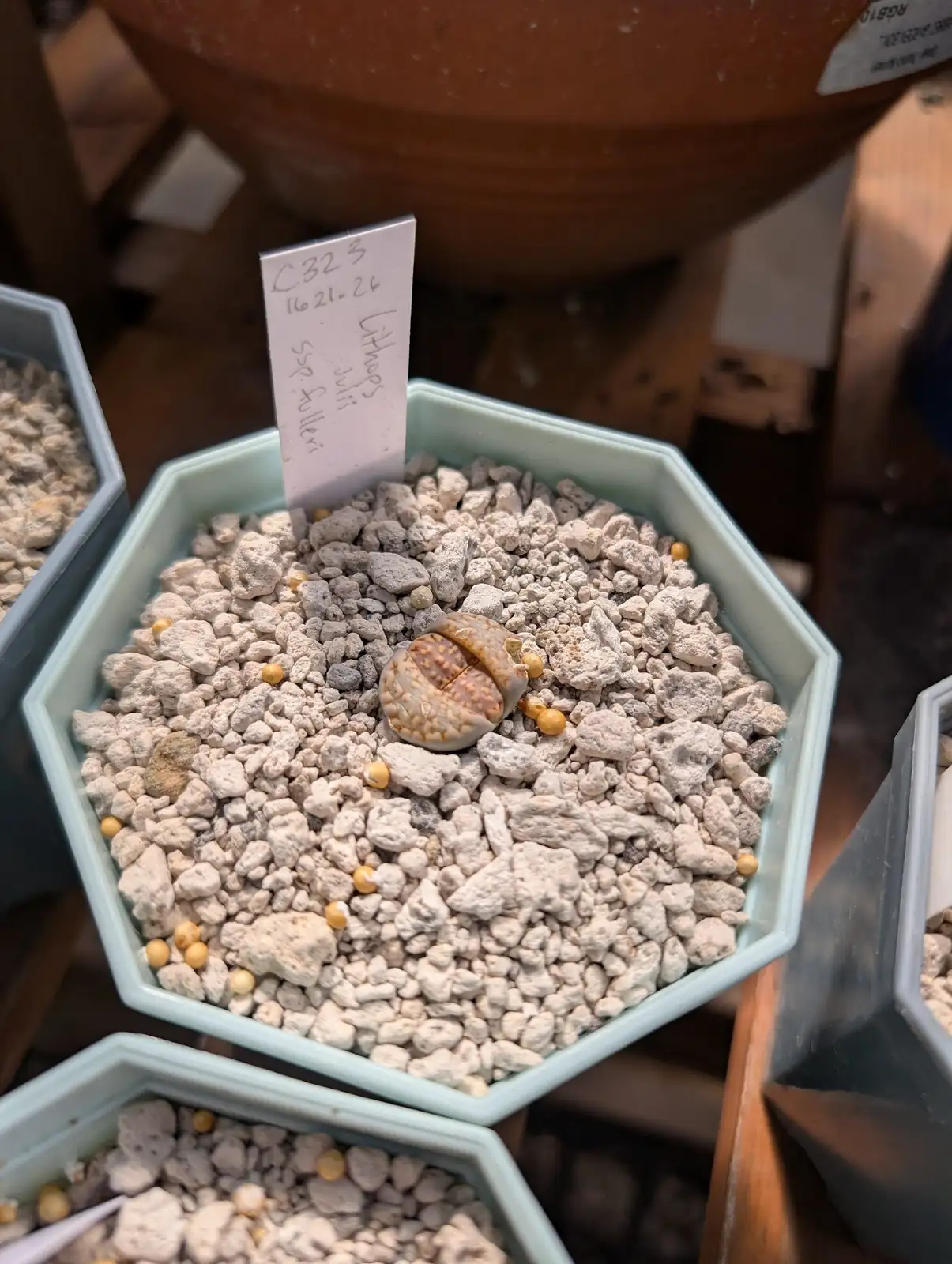
Month‑by‑month checklist
Northern Hemisphere months shown; in the Southern Hemisphere, shift this calendar by about six months. Indoors, always trust the plant’s signals more than the calendar.
January
- Stage: Deep winter; new leaves forming inside; old leaves slowly shrinking
- Water: Do not water
- Light/Temp: Max out sun; keep above ~12°C (54°F). Good airflow, low humidity
- Task: Practice patience; inspect for pests
February
- Stage: Still internal growth
- Water: Do not water
- Light/Temp: Bright light; protect from cold snaps
- Task: Plan repotting supplies if you’ll refresh the gritty mix soon
March
- Stage: Split season; new leaves may begin to show
- Water: Still withhold until old leaves are mostly dry and papery
- Light/Temp: Bright light; acclimate gradually to stronger sun
- Task: Low‑stress repot window opens late winter to early spring if needed; handle roots gently and keep the mix gritty and fast-draining
April
- Stage: New leaves emerging and firming; old skins drying
- Water: When the old leaves are largely spent and the mix is bone-dry, give a modest drink; then let dry quickly again
- Light/Temp: 6+ hours of sun; provide light midday shade if behind hot glass
- Task: Remove only fully papery old leaves; don’t tug at anything still fleshy
May
- Stage: Active, compact growth
- Water: Light, infrequent waterings only after a full dry-down; never keep the pot wet
- Feeding (optional): Either skip, or begin very dilute, low‑nitrogen cactus fertilizer during active growth; stop if heat spikes
- Task: Great time for photos—patterns are crisp
June
- Stage: Approaching summer rest in many areas
- Water: Reduce frequency; water only when you see slight wrinkling and the mix is completely dry
- Light/Temp: Strong light with airflow; provide light midday shade in intense heat
- Task: Double‑check pots aren’t sitting in saucers of water
July
- Stage: Summer rest for many plants
- Water: Often none; at most a small sip only if bodies wrinkle noticeably
- Light/Temp: Guard against scorching heat; prioritize ventilation
- Task: Keep the crown dry; don’t mist
August
- Stage: Late summer; activity may resume as nights cool
- Water: If temps ease and bodies show slight wrinkling, resume cautious watering after full dry-downs
- Light/Temp: Bright light; avoid stagnant, humid air
- Task: Clear away any fully dry leaf husks; prep for possible buds
September
- Stage: Autumn growth and budding; many species bloom now
- Water: Water when completely dry; still on the light side
- Feeding (choose one approach):
- One-time autumn feed at 1/4 strength, or
- Very dilute, low‑nitrogen feed during active growth only (then stop for winter)
- Task: Stake your seat for the show—flowers often open afternoons
October
- Stage: Peak flowering for many; seed pods form if pollinated
- Water: Similar to September—cautious, thorough dry-downs between light waterings
- Light/Temp: Bright and airy; avoid cold, wet soil
- Task: Enjoy blooms; don’t splash water or fertilizer onto the plant body
November
- Stage: Growth slows; the next leaf-pair initiates inside
- Water: Taper sharply; many growers stop by late month
- Light/Temp: Keep bright, above ~12°C (54°F)
- Task: Clean up spent flower remains gently; no pruning needed otherwise
December
- Stage: Quiet on the outside; new leaves forming within
- Water: Keep dry
- Light/Temp: Maximize winter sun; ensure excellent drainage
- Task: Pest check; resist the urge to “holiday water”
Watering cues you can trust
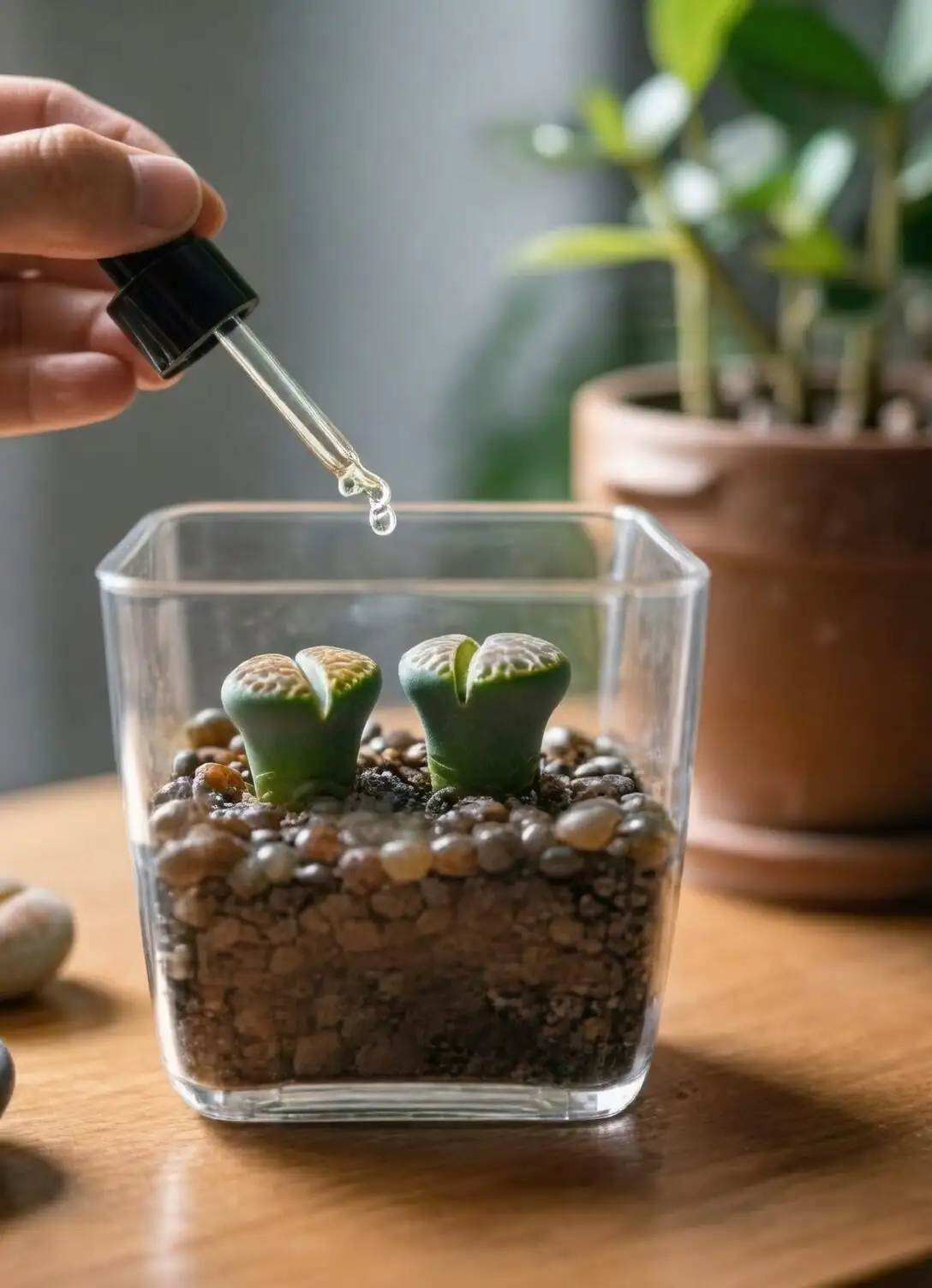
- The mix is truly bone-dry from top to bottom. Confirm by touch or by pot weight.
- Bodies show mild, even wrinkling or slight softness—then you may water lightly.
- After repotting or during leaf replacement, delay watering until roots reestablish and/or old leaves are mostly papery.
- Never water:
- When the old leaves are still feeding the new pair (winter through early spring)
- If the plant looks glassy, swollen, or is splitting from overwatering
- In prolonged cool, dim weather
Low‑stress repotting (and when to do it)
Best timing: Late winter to early spring, around the start of active growth—when the old leaves are nearly spent and the new pair is firm. Repot only every ~2 years (or even less often) if the gritty mix stays open and fast-draining.
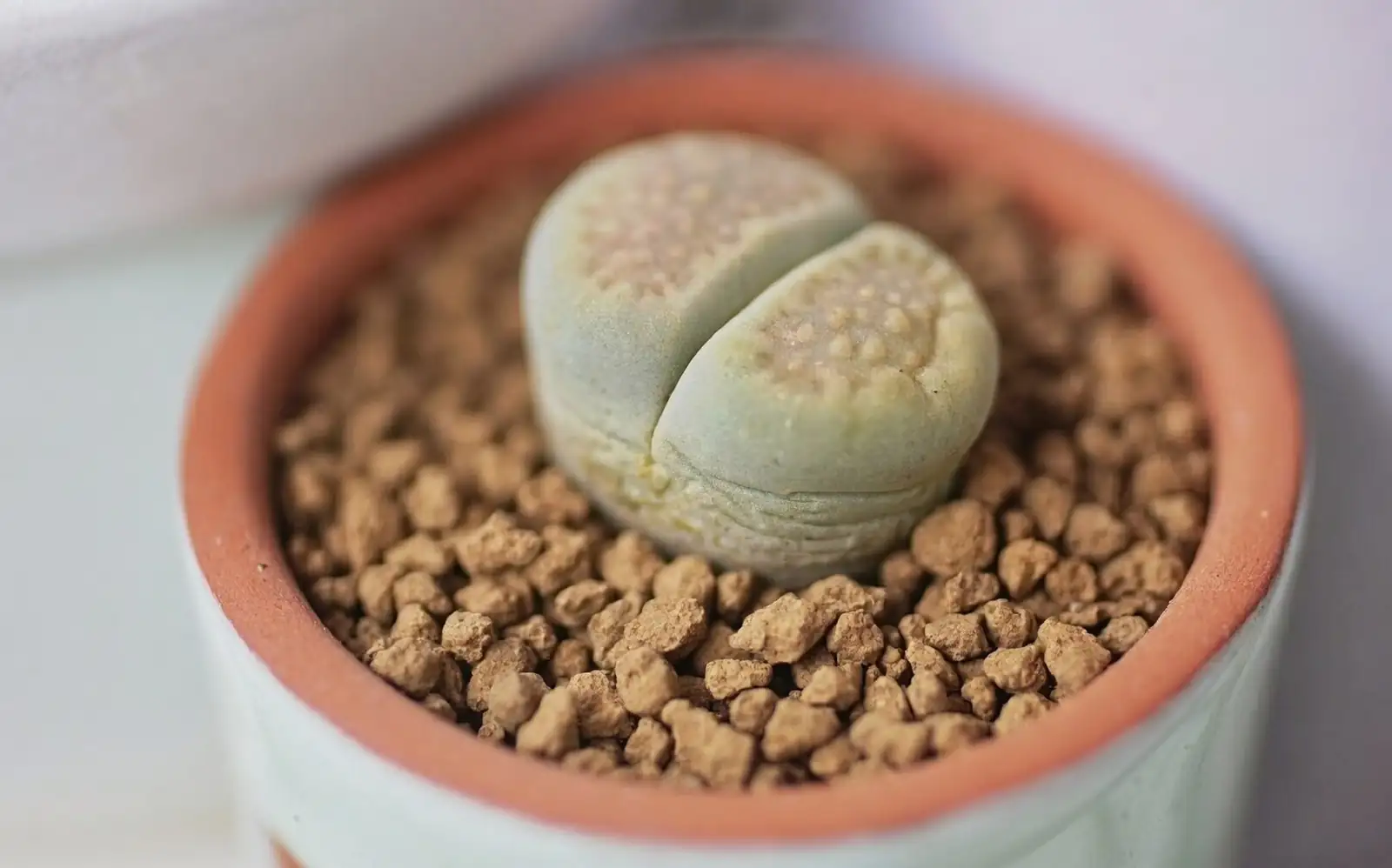
Step‑by‑step
1) Withhold water for 1–2 weeks so the root zone is dry and crumbly.
2) Gently lift; shake away old mix. Inspect for root mealybugs; trim dead roots only.
3) Pot shallowly: a 7.5–10 cm (3–4 in) pot for one plant; 10–12 cm (4–4.7 in) often holds 3–5.
4) Use a very gritty, fast-draining mix. A practical DIY start is potting soil with coarse grit/sand at about 2:1 by volume; increase the mineral fraction if drying is still slow.
5) Add a thin mineral top-dressing (pebbles/grit) for stability—don’t bury the crown.
6) Wait 7–10 days before the first light watering, then let dry fully again. Hold fertilizer for a month.
Light, temperature, airflow: the sweet spot
- Sun: Aim for 6+ hours of direct sun. Indoors, south or west windows are ideal; east can work with enough hours. Acclimate new plants gradually.
- Heat: In very hot summers or behind glass, give light midday shade and strong airflow to prevent scorching.
- Cold: Keep warm, bright, and frost-free; prolonged cold below ~5°C (41°F) is risky.
- Humidity: Low is best. Avoid misting and stagnant, damp rooms.
Troubleshooting quick guide
- Rot or mushy base: Almost always overwatering or slow-draining soil. Unpot, remove rot, dry, and replant in a grittier mix; water far less.
- Stretching (etiolation): Not enough light. Move to a brighter window and acclimate.
- Puckering in winter: Normal while old leaves feed the new pair—do not water.
- Pests: Mealybugs (including root mealies), aphids, and fungus gnats in wet mixes. Quarantine newcomers, keep soil dry between waterings, and improve airflow.
Buying smart
- Choose firm, plump heads with crisp patterns and an intact central slit.
- Avoid plants with soggy soil, soft/mushy spots, blackened tissue, or obvious pests.
Safety and symbolism
- Non-toxic to people and pets, but not a snack. Keep out of reach of curious chewers.
- Symbolism: Resilience and “beauty in disguise.” Lithops survive by blending into bare stone, saving water inside translucent windowed leaves that quietly power photosynthesis—proof that toughness and subtlety can coexist.
At-a-glance care calendar (summary)
- Spring: Resume very light watering only after old leaves dry; bright light; repot window
- Summer: Rest in heat; water rarely; provide airflow and light shade during the hottest hours
- Late summer–autumn: Cautious watering supports growth and blooms; optional light feeding
- Winter: Keep bright and mostly dry while the new leaf-pair develops within
Once you start reading your Living Stones’ body language, the calendar stops being a mystery. Let the plant set the pace, keep the soil fast and the light strong, and you’ll be rewarded each year with that delightful split-and-bloom magic.