

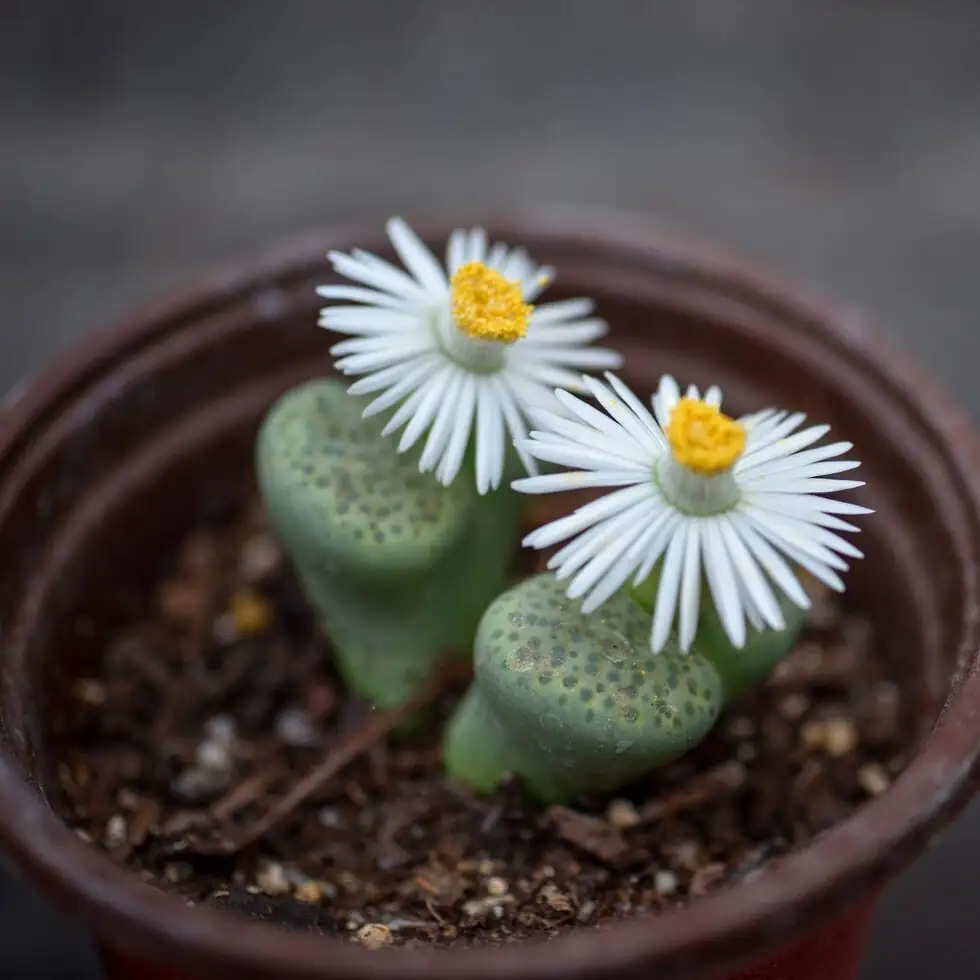
If a pot of “rocks” has ever winked at you from a windowsill, you’ve met Lithops—the tiniest shapeshifters of the succulent world. These desert jewels are easy once you understand their rhythm. This guide shows you how to choose a great plant, repot into a gritty mix that won’t betray you, and dial up the light carefully so your newcomers don’t scorch behind glass.
Meet the Living Stones (Lithops spp.)
- Origin: Southern Africa, especially South Africa and Namibia.
- Look: Two thick, fused leaves form a single “head” with a central slit. Tops are patterned like pebbles—grey-green, tan, or brown, often speckled or marbled with translucent “windows.”
- Size: Individual heads usually 1–4 cm across; plants may slowly clump over time. Shallow pots are preferred.
- Flowers: Dazzling, daisy-like blooms appear late summer through autumn—most are white, some yellow. Seed-grown plants usually need 2–3 years to flower.
- Golden rule: Bright light and very careful watering.
The Smart Buyer’s Checklist
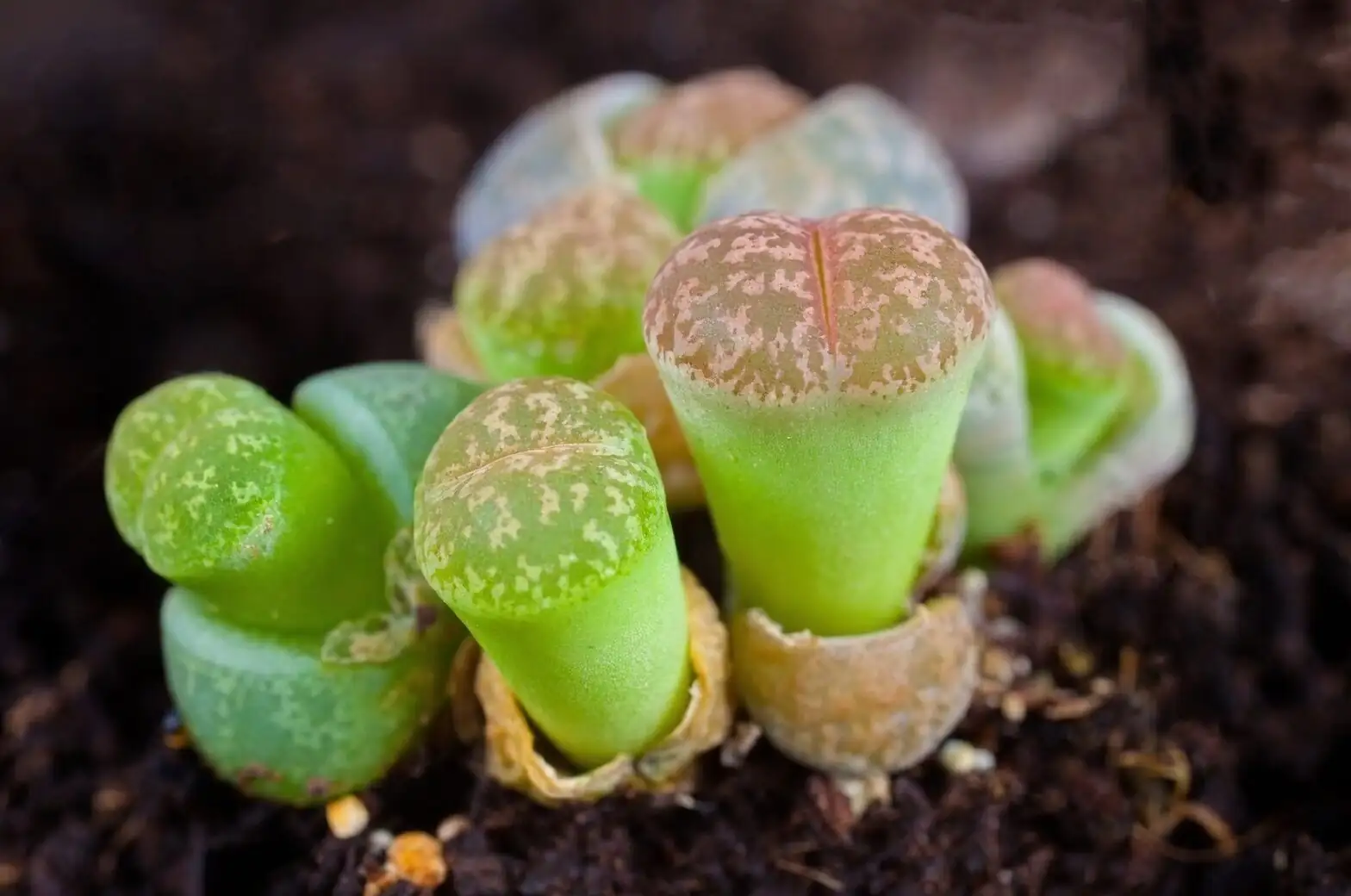
Choose plants that look like polished pebbles—firm, compact, and blemish-free.
What to look for
- Firm, plump bodies with crisp patterns and a clear central slit.
- Heads at least about 1 cm across; beginners do well with slightly larger specimens.
- Dry or barely moist substrate; avoid pots sitting in wet soil.
- Natural “paper” skins from last year’s leaves are fine if fully dried and loose.
What to avoid
- Mushy bases, soft spots, blackened tissue, or a collapsing look.
- Deep splits caused by recent overwatering.
- Persistent wet soil or a sour smell.
- Pests: cottony mealybugs (including at the leaf base), honeydew, tiny gnats in damp mix, or webbing.
Pro tip for online orders
- A little wrinkling from shipping is normal. Mushiness is not. Photograph plants on arrival and contact the seller promptly if rot or severe damage is evident.
Your First 30 Days: The Acclimation Roadmap
Behind glass, sun can be intense—think greenhouse magnifying effects. This phased plan prevents shock, rot, and sunburn.
Days 0–2: Park and Inspect
- Placement: Bright, indirect light near a south or west window; no direct sun yet. Ensure airflow.
- Quarantine: Keep new plants away from your collection for at least a week.
- Dryness check: If the soil is even slightly damp, do not water.
- Pest sweep: Look for white fluff (mealybugs), sticky residue (aphids), or gnats emerging from the pot.
Days 3–7: Bare-Root and Repot into a Gritty Mix
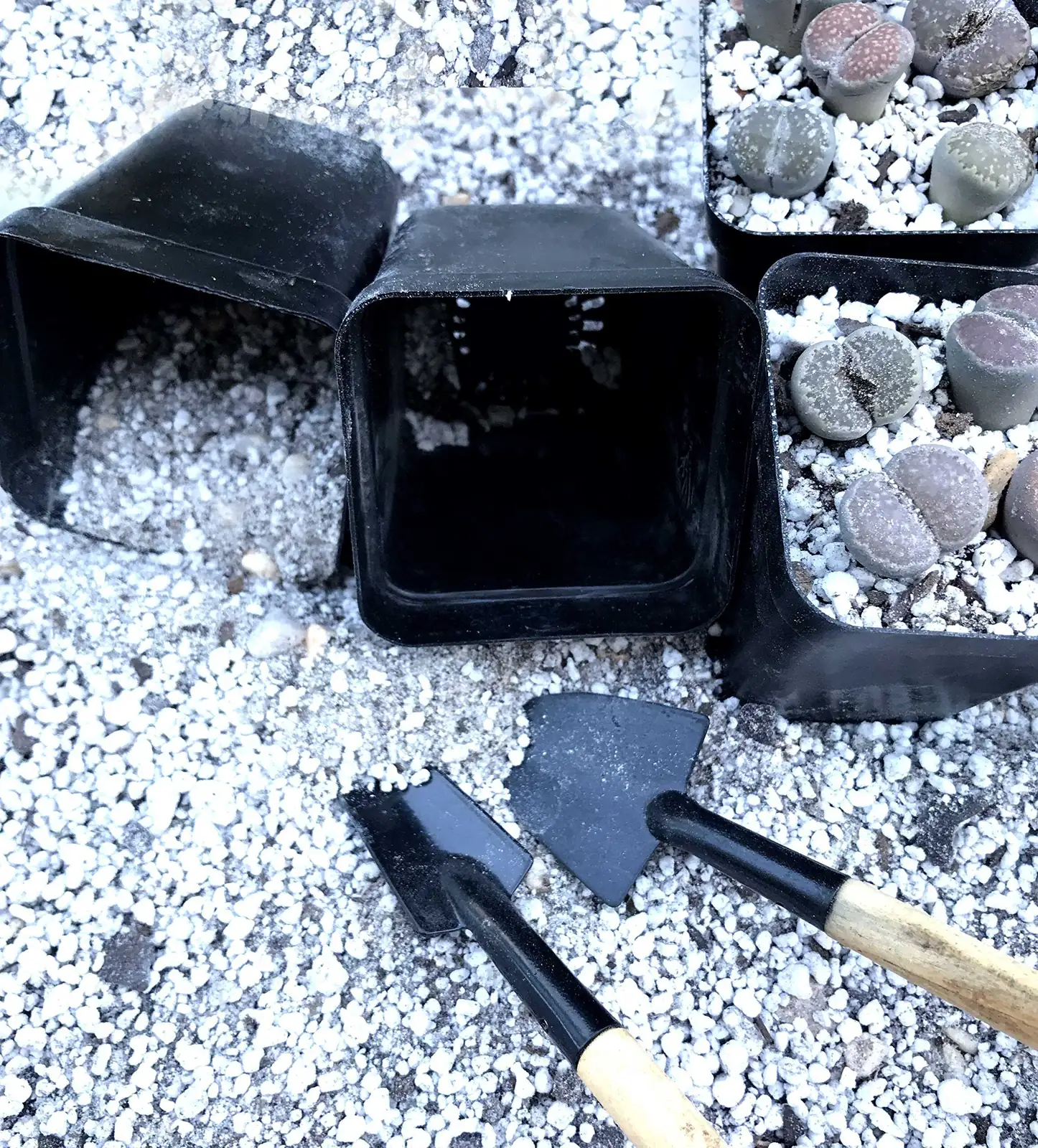
- Why repot now: Nursery mixes often hold too much water and can hide root mealybugs.
- Unpot gently: Tease away old soil. Trim dead roots. If you rinse, let the roots dry overnight.
- Pot choice:
- Shallow pot with excellent drainage.
- Size guide: 7.5–10 cm (3–4 in) for a single plant; 10–12 cm (4–4.7 in) can hold about 3–5 plants.
- Mix: A very fast-draining, mineral-rich cactus/succulent blend.
- Practical starting point: Mix potting soil with coarse grit/pumice/coarse sand at about 2:1 by volume; then increase the mineral content if drying is still slow.
- Aim for a mix that dries quickly and doesn’t compact.
- Set the plant: Keep the top of the body above the soil line; don’t bury the central slit.
- Top-dress: A thin pebble layer adds stability and style, but don’t trap moisture against the crown.
Days 7–10: First Sip (Maybe)
- Water only when the mix is completely dry and the body just begins to wrinkle. Start with a light drink and let it dry fast.
- Critical exception: If a new pair of leaves is forming and the old pair hasn’t dried into papery skins yet, hold off. Watering during this “leaf replacement” phase can cause splitting and rot.
- Never leave water in a saucer.
Weeks 2–4: Gradually Increase Sunlight
Target: 6+ hours of direct sun once fully acclimated, with protection from harsh midday heat behind glass.
A simple ramp-up
- Days 14–16: 1–2 hours of gentle morning sun.
- Add 30–60 minutes every 2–3 days if there’s no bleaching or blistering.
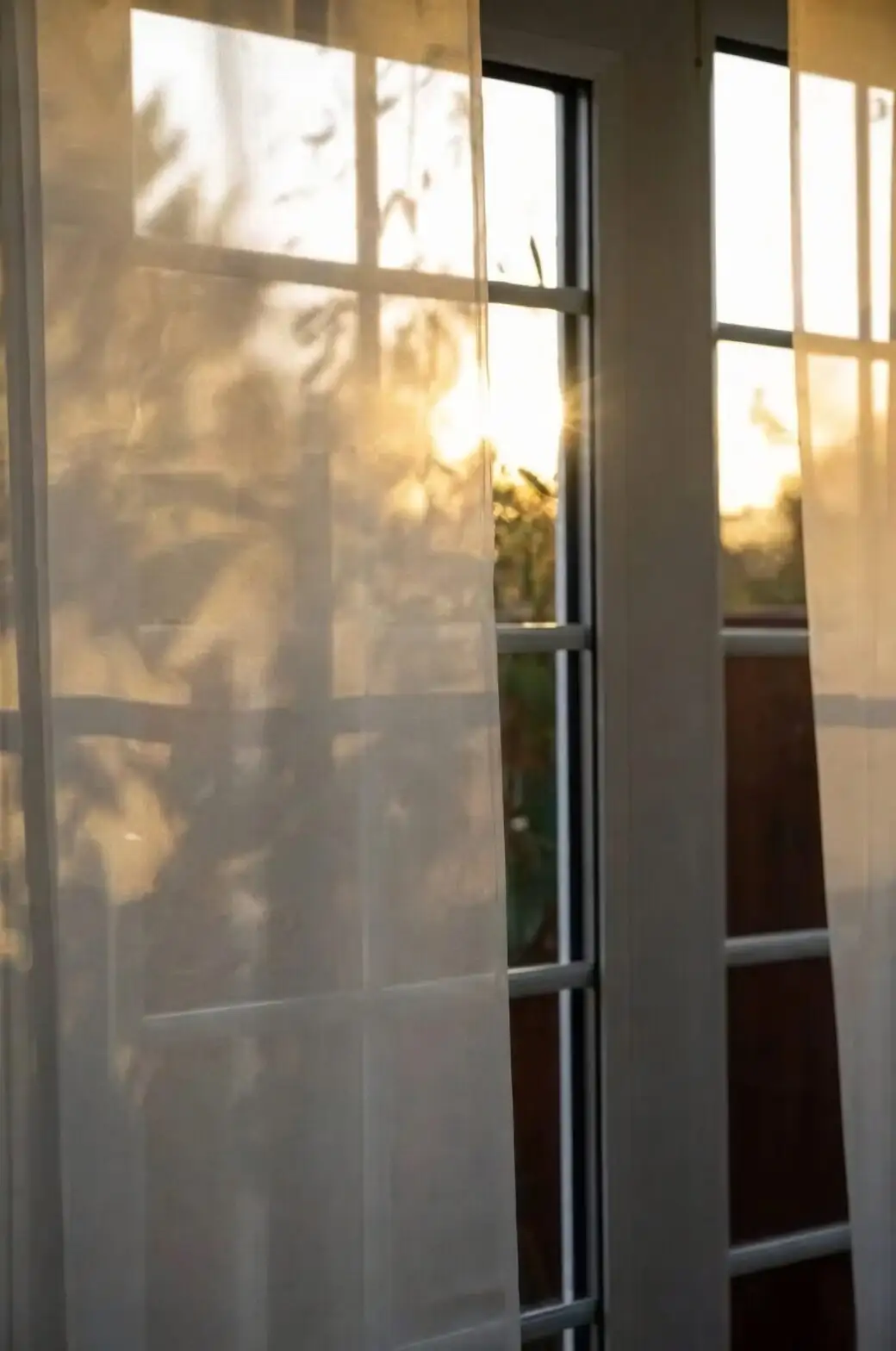
- Use a sheer curtain for midday if the window gets fierce summer sun.
- Keep air moving. A small fan or cracked window helps prevent heat build-up.
Sunburn signs to watch
- Sudden fading or whitening, translucent blisters, or crispy patches on the top surface. If seen, back down a step, give bright indirect light for a week, then resume more slowly.
Ongoing Care, Made Simple
- Light: Bright light to full sun. Indoors, south or west windows are best; east can work with more hours. In extreme heat or intense midday sun behind glass, give light midday shade and airflow to prevent scorch.
- Temperature: Happy at 15–26°C (59–79°F). Protect from frost; try to keep above about 12°C (54°F) in winter. Prolonged dips below about 5°C (41°F) are risky.
- Humidity: Low is best, with excellent ventilation. Damp, stagnant air + wet soil = rot and fungus gnats.
- Watering rhythm:
- Spring: Light watering only after a full dry-down. If leaf replacement is underway, hold back until old leaves are mostly papery.
- Summer heat: Many Lithops rest—water sharply less and provide light shade/airflow.
- Late summer to autumn: If actively growing and flowering, you can water a bit more frequently (still cautious, never keep wet).
- Winter: Keep bright and mostly dry.
- Fertilizer: Keep it light and rare. Choose one approach:
- One feeding in autumn with a balanced liquid fertilizer at 1/4 strength; or
- During active growth only, a very dilute low-nitrogen cactus feed about every 2 weeks—then stop during summer rest and in winter.
- Repotting: Infrequent. About every 2 years to refresh the mix, or longer if it remains fast-draining and the plant is stable.
Common Pitfalls to Dodge
- Overwatering in a slow mix: The number one way to lose Lithops. Let the mix dry completely.
- Watering during leaf replacement: Wait until old leaves have mostly dried away.
- Deep, organic-heavy pots: Use shallow containers and a gritty, mineral-rich mix that dries fast.
- Saucers of water: Never. Empty immediately.
- Terrariums or high humidity: These are desert plants; stale, damp air invites rot.
- Rapid sun exposure: Behind glass, sun can cook them. Increase light gradually.
Pest Patrol: Catch Issues Early
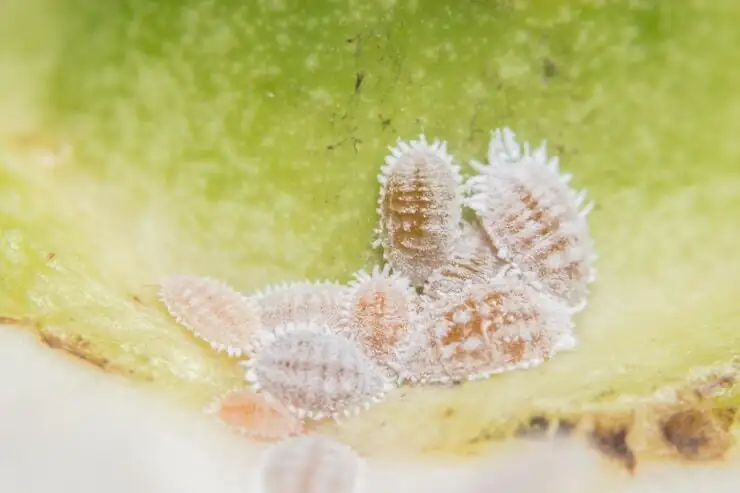
- Mealybugs (including root mealies): Look for white cottony clusters at the leaf base or around roots. Isolate, bare-root, and repot into clean, gritty mix. Dab visible mealies with alcohol on a cotton swab.
- Aphids: Can appear around flower buds; rinse gently and improve airflow.
- Fungus gnats: A sign the mix stays wet too long. Dry out thoroughly and switch to a grittier substrate.
- Outdoors or near open windows: Birds or rodents may peck—place out of reach.
What to Expect Through the Year
- Late summer–autumn: Peak season. Careful watering supports growth and those surprise daisy-like flowers.
- Winter to spring: New leaves form inside; the old pair dries into papery skins. Keep bright and mostly dry until the old leaves have largely withered.
- Summer heat: Many plants rest. Shade lightly at midday, maximize airflow, and water far less.
Quick Answers for Shoppers
- How do I water without killing them? Wait for a fully dry mix and slight wrinkling, then water lightly. Keep mostly dry in winter and during leaf replacement.
- What pot and soil should I use? A shallow pot with superb drainage and a very gritty mix. A practical start is potting soil with coarse grit/sand at about 2:1 by volume—then increase mineral content if drying is still slow.
- How can I tell Lithops from Conophytum? Lithops look like two fused lobes with a distinct central slit. Conophytum often has a single rounded body with a small top “mouth,” and shapes vary widely.
- Are they pet-safe? Generally considered non-toxic to humans and pets, but they’re not food and can be a choking hazard—display out of reach.
A Note on Meaning and Myth
Lithops are often seen as emblems of resilience and “beauty in disguise”—plants that survive harsh deserts by blending in with stone. It’s less a traditional flower language than a modern admiration for their quiet toughness and astonishing mimicry.
Final Take
Buy firm, pest-free “pebbles.” Repot into a shallow pot with a gritty, rapid-drying mix. Then take the slow road to sunshine—add light in measured steps, especially behind glass. With bright light, dry feet, and patience, your Living Stones will flourish, flower, and maybe even fool you into thinking they’re rocks again.