

Step into a steamy morning shower or a sun-splashed breakfast nook, and picture a plant that dresses the space as well as any tile or tapware. Aphelandra squarrosa—better known as Zebra Plant—brings graphic foliage, glossy texture, and golden bracts that feel downright couture. Styled right, it turns bathrooms and bright kitchens into tropical galleries: humid, warm, and full of contrast.
Here’s how to design with this showstopper—down to pot textures, shelf heights, east-window finesse, and plant pairings that crank up humidity and drama.
Meet the Zebra Plant
- Botanical: Aphelandra squarrosa (Acanthaceae), native to Brazil’s Atlantic Forest
- Look: Deep-green, glossy leaves boldly veined creamy white—true “zebra” stripes
- Flowers: Upright spikes with bright yellow bracts; the real flowers are small, orange, and tucked between the bracts. The display can last for weeks.
- Size indoors: Typically around 60 × 60 cm (24 × 24 in) in a pot; easily kept compact with pinching and post-bloom pruning
- Vibe: Loves bright, indirect light and high humidity—exactly what a well-lit bathroom or kitchen delivers
Light choreography: East-window perfection
Zebra Plant’s sweet spot is bright, indirect light. Gentle morning sun is welcome; harsh midday sun is not.
East-facing setups that sing
- Distance: Place 20–90 cm (8–36 in) from an east window so it catches mild morning rays but avoids midday scorch. In very bright homes, a sheer curtain keeps the light soft and even.
- Winter shuffle: As days shorten, move closer to the glass—just keep leaves off cold panes and away from drafts.
- Other exposures: A north window works in bright summers; near south/west windows, set it a bit back or diffuse with sheers.
Shelf height, sightlines, and comfort
- Aim for eye level or just below so you can admire the veining and catch early signs of thirst. Floating shelves over an east-facing sink are prime real estate.
- Avoid top-of-cabinet perches where heat and dry air collect.
- Keep clear of vents, exterior door drafts, and the heat plume of ovens, radiators, or towel warmers.
Pots, textures, and palettes that make it pop
Think of your pot as part of the outfit: texture and finish amplify the plant’s drama and support its care needs.
- Best materials for moisture stability:
- Glazed ceramic or high-quality plastic nursery pot slipped into a decorative cachepot keeps the mix evenly moist without drying too fast.
- If you love terracotta’s look, use it as a cachepot or be ready to water more often—it wicks moisture quickly, which this plant dislikes.
- Forms and finishes that flatter:
- Ribbed or fluted ceramics echo the leaf striping.
- Matte black or chalky white frames the foliage like a gallery piece.
- Brass or brushed gold warms bathrooms and nods to those yellow bracts.
- Terrazzo or softly speckled stoneware adds contemporary texture.
- Right size, right now:
- Most mature plants look tailored in 15–20 cm (6–8 in) pots. Always ensure excellent drainage and avoid oversizing.
Bathroom and bright kitchen styling
- Bathrooms: Place near an east or bright north window, or add a sleek grow light if the space lacks natural light. Keep out of direct shower spray; moisture on leaves late in the day can invite leaf spots.
- Kitchens: Style on a floating shelf or counter near an east window. Keep a buffer from stovetops, ovens, and sinks’ splash zones.
- Mirrors: Position so a mirror doubles the foliage and bracts without reflecting excess sun directly onto leaves.
- Pebble trays: Disguise a humidity-boosting pebble tray beneath a footed planter or slim metal riser to elevate the look and airflow.
Companions that raise humidity and drama
Groupings create a lush microclimate—each plant’s transpiration boosts humidity for the whole vignette. Pair Zebra Plant with equally moisture-loving allies:

- Texture-rich, humidity lovers:
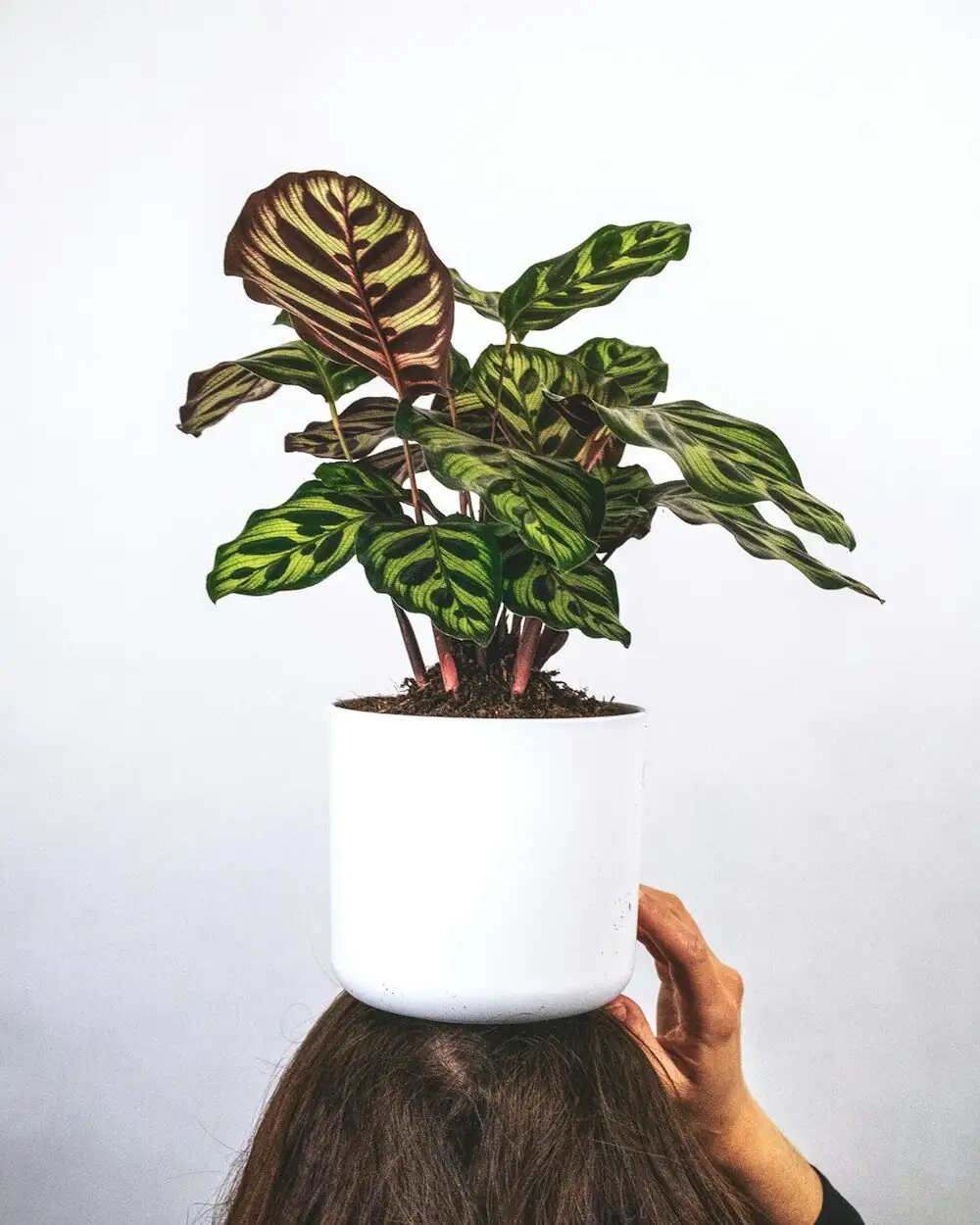
- Goeppertia/Calathea and Maranta (prayer plants): patterned foliage that plays beautifully with zebra stripes
- Ferns (Boston fern, bird’s nest fern): feathery contrast and steady humidity
- Fittonia (nerve plant): underplant or front-layer color pop
- Neoregelia and other bromeliads: sculptural rosettes; their “tanks” hold water and gently moisten the air
- Phalaenopsis orchids: elegant spires for vertical balance in bright, indirect light
- Dramatic trailers to soften edges:
- Philodendron micans or Monstera adansonii to cascade from a higher shelf
- Skip: Cacti and desert succulents—they prefer drier air and brighter direct sun, clashing with Zebra Plant’s needs.
Layer heights like a still life: fern behind, Zebra Plant centered, Fittonia at the base, and a trailing accent spilling forward. A small, quiet fan nearby keeps air fresh without chilling the leaves.
Care, quietly built into your design
Zebra Plant isn’t difficult once its preferences are baked into your setup—but it’s unforgiving of drought, cold drafts, and low humidity.
Watering rhythm
- Growing season: Keep evenly moist, not soggy. Water when the top layer just begins to dry—often about twice a week in warm months, depending on light and pot size.
- Winter: Allow the surface to become nearly dry before watering again—commonly every 7–14 days. Never let the root ball fully dry out.
- Pro tips:
- Use rainwater or distilled if possible; this plant can be sensitive to mineral salts.
- Flush the pot monthly to prevent salt buildup.
- Avoid water sitting in saucers.
Humidity and temperature
- Humidity target: 50–60% baseline; 60–80% is bliss. Humidifiers, pebble trays, and groupings work wonders. Misting is occasional seasoning, not the whole recipe—avoid wetting leaves late in the day.
- Temperature: 15–27°C (59–81°F) is comfortable; flowering is often best with steady warmth above about 20°C (68°F). Protect from drafts and cold glass.
Light and food
- Light: Bright, indirect light; gentle morning sun is fine. Too little light causes leggy growth and skimpy blooms.
- Feeding: Spring–summer, feed every 2 weeks with a balanced liquid fertilizer (half strength is a safe, gentle cadence). Reduce or pause in autumn–winter unless growth stays strong in warm, bright conditions.
Soil, pruning, and repotting
- Soil recipe: A rich, moisture-retentive yet airy mix—think peat/coco base with perlite and a bit of fine bark. Aim for even moisture and excellent drainage.
- Pruning: After flowering, remove spent spikes and cut stems back to just above lower leaves (often leaving about two leaf sets) to encourage branching and keep it compact. Tip-pinching prevents legginess.
- Repotting: Refresh annually in spring, moving up only one pot size if rootbound.
Propagation (and a built-in refresh)
- Take 8–15 cm (3–6 in) stem tip cuttings in spring to early summer. Remove lower leaves and root in a warm, humid setup (around 25–27°C / 77–81°F). Expect roots in roughly 4–5 weeks. Use these to renew your display or share with friends.
Troubleshooting with a stylist’s eye
- Sudden leaf drop? Most often from letting it dry out, cold drafts, or big temperature swings. Move away from vents/doors, raise humidity, and re-establish even moisture.
- Crispy edges or dull leaves? Usually low humidity or mineral-heavy water. Humidify and switch to rain/distilled.
- Scorched patches? Too much direct sun—pull back from the window or add a sheer.
- Leggy, stretched stems? Light is too low—bump closer to an east window or add a discreet grow light.
- Pests (spider mites, mealybugs, scale, aphids, occasional thrips): Catch early. Increase humidity, improve airflow, and treat with insecticidal soap or horticultural oil. Wipe leaves regularly to keep them glossy and pest-free.
Safety, symbolism, and little legends
- Safety: Not widely listed as seriously toxic to pets, but chewing any houseplant can cause mild stomach upset; the sap may irritate sensitive skin. Sensible placement is best.
- Symbolism: With bold veining and golden bracts, Zebra Plant is often linked with confidence and vibrant energy—an interior’s “statement accessory.” Unlike classic floriography staples (think roses or violets), its “flower language” is a contemporary reading born from houseplant culture: high-contrast leaves as decisiveness, radiant bracts as celebration. In design terms, it telegraphs “I’m intentional, and I’m here to glow.”
Quick placement recipes
Spa-bath vignette
- East-facing window ledge with a ribbed matte-white planter on a pebble tray
- Flanked by a bird’s nest fern and a small Fittonia underplant
- A thin sheer filters light; a mirror nearby doubles the foliage without adding glare
Bright kitchen shelf
- Floating shelf 30–60 cm from an east window; Zebra Plant in a glazed black footed pot
- Neoregelia to one side, Philodendron micans trailing softly
- Keep 60+ cm from stove and out of vent drafts; tuck a compact humidifier below
Sunny home, strong south light workaround
- Place Zebra Plant 1–2 m back from a south window or behind a sheer; pair with Calathea and a Boston fern on a shared extra-wide tray
- Rotate a quarter turn weekly for even growth; gentle fan for airflow
When you design for its comfort—bright but softened light, stable warmth, and breathable moisture—Aphelandra squarrosa delivers a look that rivals high-end finishes. In bathrooms and bright kitchens especially, the Zebra Plant doesn’t just live there; it styles the room.