

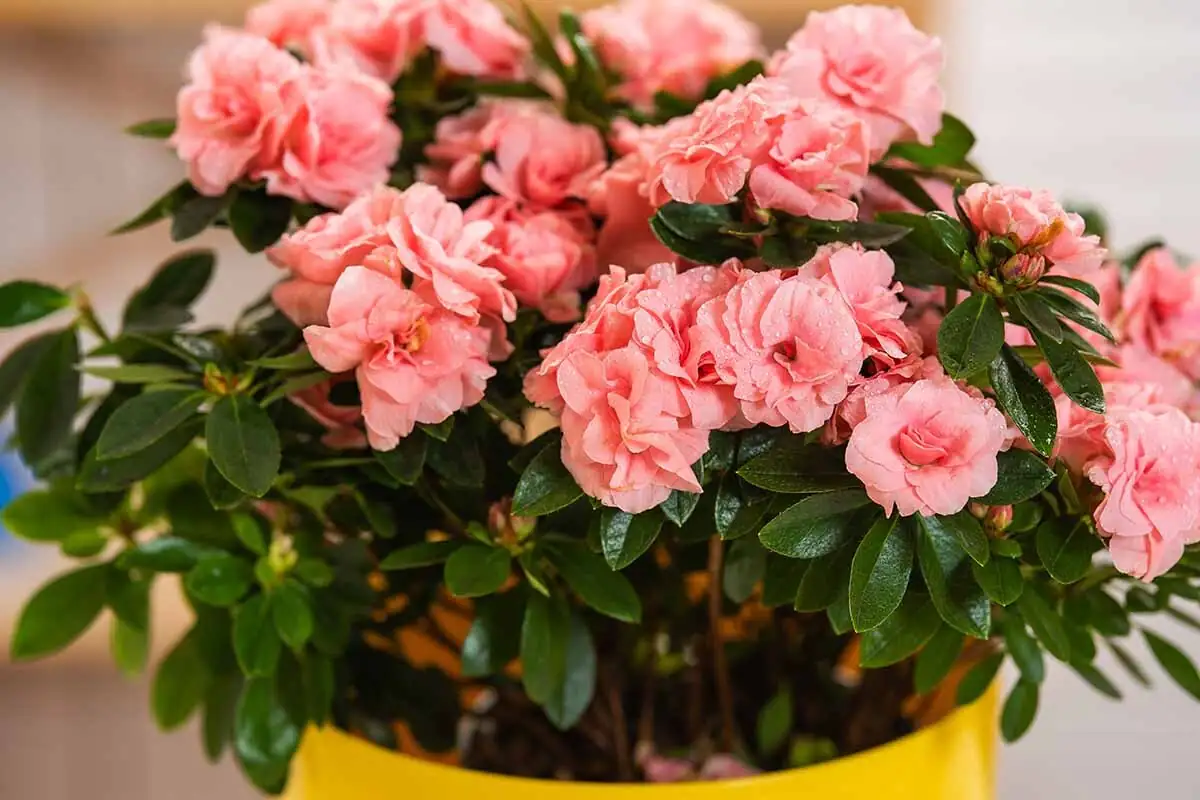
Think of Belgian Azaleas as little greenhouse divas trained for a winter runway show: compact, evergreen, and suddenly bursting with ruffled blooms just when the world looks gray. They’re also delightfully sciencey. Keep them cool and they age in slow motion; put them by a fruit bowl and ethylene gas will hustle those petals offstage; let their shallow roots dry and they flop, keep them soggy and they crash; water with hard, alkaline tap and you can lock up iron so leaves go lemony. Here’s how to choreograph a long, brilliant performance.
Meet the plant
- Proper name: Rhododendron Simsii Group — the classic Belgian/European florist azalea hybrids (often sold under Rhododendron indica in horticulture).
- Family: Ericaceae; Genus: Rhododendron.
- Habit and size: A compact, densely branched evergreen shrub, usually 30–60 cm tall and wide in pots (desktop plants often 30–40 cm). Common pot size: 15–20 cm diameter.
- Flowers: Dense clusters of funnel-shaped blooms in pinks, reds, whites, and bicolors, from simple to frilly forms.
- Prime season: Mostly winter to spring indoors; with excellent care, some plants can rebloom 2–3 times per year.
Why they’re special: Bred in Europe (famously Belgium) for greenhouse culture, these “florist’s azaleas” are designed to put on a heavy, cool-season show in your brightest, chillest room.
Light, temperature, and humidity: the “cool room” advantage
- Light: Bright light with gentle sun. An east-facing window is ideal; a bright south window works if you shield harsh midday rays. Outdoors in mild spells, give bright shade or morning sun.
- Temperature sweet spot: 12–25°C (54–77°F), with best performance in the mid-teens to low 20s °C. Keep above 10°C (50°F); growth slows around 5–10°C and again above 30°C (86°F).
- Humidity: Aim for 50%+. Dry air shortens bloom life and encourages bud and leaf troubles. Use a humidity tray or a room humidifier. Light misting is fine in hot, dry weather—but avoid leaving foliage wet overnight in cool rooms.
Sciencey tidbit: Cooler air slows respiration and petal senescence, so blossoms last longer. In other words, a pleasantly cool room is your built‑in bloom extender.
Water and soil: shallow roots, narrow margins
Belgian azaleas have fine, shallow roots that react quickly to extremes.
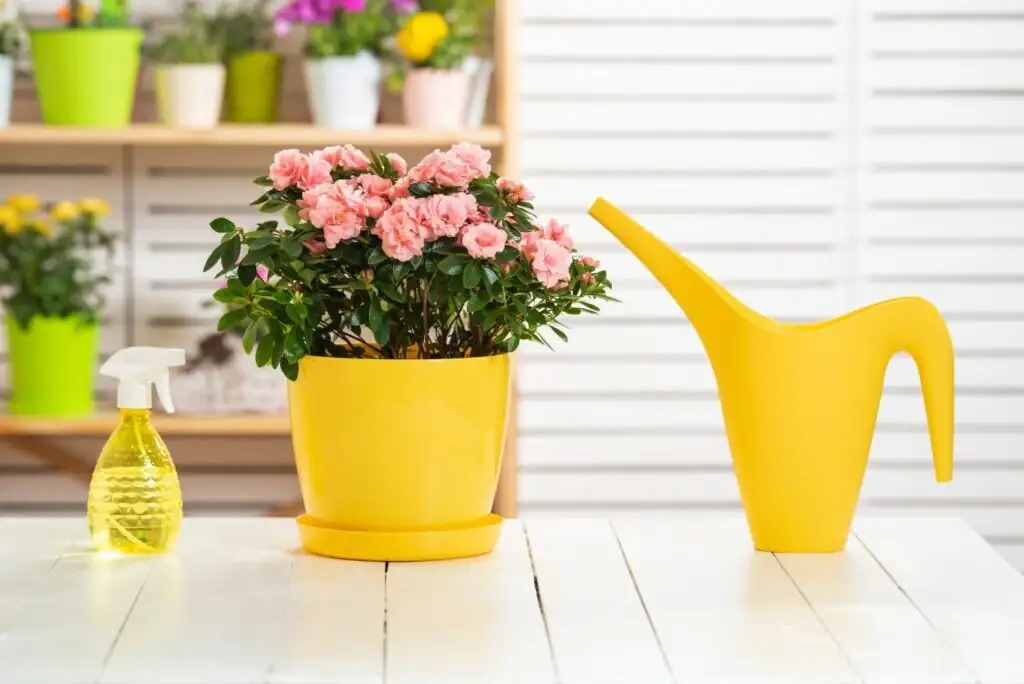
- The rule: Keep the rootball consistently moist, never bone‑dry—and never waterlogged.
- Soil: A fertile, loose, ericaceous (acidic) mix with excellent drainage, typically peat/leaf mold with perlite or coarse sand. Never let the pot sit in water.
Seasonal watering rhythm (adjust for your home’s light, heat, and pot size):
- Spring (after bloom/growth): roughly ~2 times per week.
- Summer: water thoroughly when the top 1–2 cm dries; keep the plant cooler and raise humidity.
- Autumn: gradually reduce; often ~2–3 times per week depending on indoor climate.
- Winter (typical flowering time): keep above 10°C (50°F); water about once per week, or use smaller, more frequent sips to maintain steady moisture.
Sciencey tidbit: Shallow roots wilt fast if dry—but crash just as fast if starved of oxygen in soggy media. Think “even keel” moisture and lots of air space in the mix.
Water quality matters: hard water and iron lock‑out
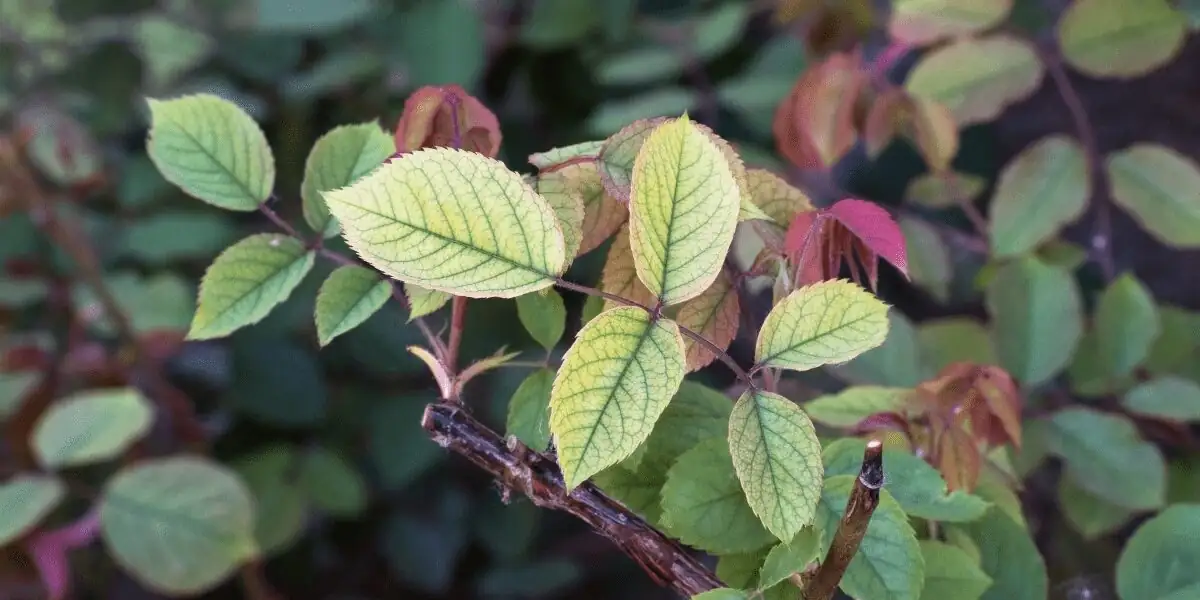
Azaleas are acid lovers. Hard, alkaline water can push the potting mix pH up and “lock up” iron, leading to chlorosis (yellowing leaves, often with greener veins).
- Prevention: Use rainwater, distilled, or reverse‑osmosis water if your tap is hard/alkaline.
- Correction: Feed lightly with an acid‑loving azalea/rhododendron fertilizer during active growth. If chlorosis appears, add chelated iron or, per label guidance, a very dilute iron sulfate solution (around 0.15%) to help restore leaf color.
The bloom lab: how to make flowers last
- Keep it cool: Mid‑teens °C are bloom heaven; avoid heater/AC blasts and hot drafts.
- Bright light, gentle sun: Fuel for buds without scorch.
- Moisture and humidity: Even moisture plus 50%+ humidity prolongs the show.
- Airflow: Fresh, gentle air discourages fungal issues and petal blight.
- Deadhead: Remove spent blooms promptly so the plant’s energy returns to fresh buds.
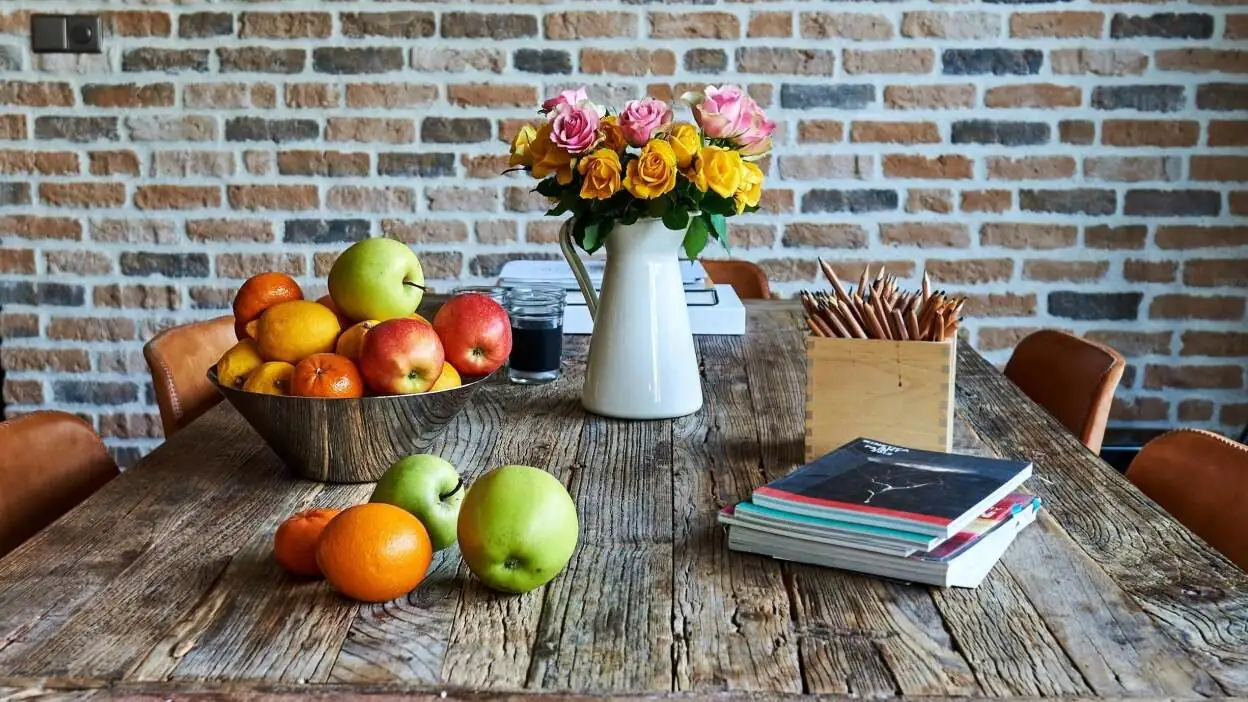
Sciencey tidbit: Ethylene gas—naturally released by ripening fruit like apples and bananas—accelerates petal aging and bud drop. Keep your azalea away from fruit bowls and compost caddies.
Where to put it (and when)
- Indoors: A bright, cool, well‑ventilated room near an east or bright south window, away from heaters and dry vents.
- Outdoors (mild seasons only): Bright shade or morning sun, protected from harsh afternoon rays, heat, and pounding rain.
- Hardiness: Florist azaleas are frost‑tender compared to garden azaleas. Some may cope outdoors in mild regions roughly USDA 8–11 (often cited 8–10), but freezing weather can damage or kill them. Treat as container plants unless you know your specific cultivar is landscape‑hardy.
Buying smart (and the first week at home)
- Choose a compact, well‑branched plant with glossy, deep‑green leaves and no spotting, sticky residue, webbing, or pests.
- For the longest display, pick one packed with tight, plump buds and about 20% of flowers just opening; avoid browning blooms or falling buds.
- Once home, give bright light and good airflow, keep above 10°C (50°F), and don’t exile it to a dim, stuffy corner.
Feeding and pruning
- Fertilization: During active growth, feed lightly every 2 weeks with a dilute acid‑loving formula. Avoid heavy feeding—salt buildup can burn the fine roots.
- Pruning: Right after flowering and through the growing season, pinch or prune to keep a dense, rounded canopy. Remove leggy shoots, basal suckers, congested stems, and any dead/diseased twigs.
Repotting and propagation
- Repotting: Annually in spring or right after flowering. Handle very gently—roots are brittle. Refresh into a well‑aerated acidic mix; many plants are happy long‑term in 15–20 cm pots, upsizing only if rootbound.
- Propagation:
- Semi‑ripe cuttings (late spring to early summer): 12–15 cm cuttings; strip lower leaves, keep a few at the tip; root in a warm, humid, free‑draining medium. Rooting often takes ~8–10 weeks.
- Air‑layering (spring): Usually roots in ~4–5 months.
- Grafting is used commercially in warm, humid conditions.
A simple year-round care calendar
- Spring: Keep evenly moist; repot after bloom; pinch for shape; begin light feeding.
- Summer: Shield from heat and harsh sun; water as the surface dries; raise humidity; scout for spider mites and scale.
- Autumn: Move to a bright, cooler spot; reduce water gradually; maintain airflow.
- Winter: Bright and cool (but above 10°C/50°F); steady moisture and higher humidity to prolong bloom; keep away from heaters and fruit.
Troubleshooting quick hits
- Sudden leaf drop, stippling, or fine webbing: Hot, dry air plus spider mites. Move to a cooler, brighter spot; raise humidity; treat early with insecticidal soap or horticultural oil.
- Sticky leaves or bumps on stems: Scale insects; improve airflow, wipe off, and treat with horticultural oil.
- Buds aborting before opening: Usually stress—low light, warmth, dry air, erratic watering, or stagnant air. Shift to bright, cool, airy conditions and even moisture.
- Leaf spots/sooty mold: Often poor ventilation or persistently wet foliage. Increase airflow; avoid wet leaves late in the day; remove affected leaves; consider an appropriate fungicide if it persists.
- Yellowing leaves with green veins: Likely iron chlorosis from alkaline conditions. Switch to softer, more acidic water and provide chelated iron.
Safety note
All parts are toxic if eaten (grayanotoxins). Keep out of reach of pets and children.
Names, history, and a note on labels
This beloved pot plant comes from European breeding—especially Belgium—where compact, heavy-flowering forms were perfected for winter and early-spring displays. In trade, you’ll often see it sold as “Indian Azalea” or under the name Rhododendron indica, but the more accurate umbrella for florist forms is Rhododendron Simsii Group.
Flower language (and what it really means)
Azaleas have long been gifted with messages of tender care—joyful love, elegance, and the gentle reminder “take care of yourself.” These meanings echo Victorian floriography and later gift‑culture traditions rather than strict botany. Color associations (like red for romance or white for healing) are culturally layered and vary by source; enjoy them as poetic add‑ons, not rules. The consistent, cross‑cultural thread is affection and thoughtfulness—exactly what a mid‑winter burst of blooms conveys.
Five science-backed habits for marathon bloom displays
- Keep it cool: Aim for the mid‑teens °C to slow petal aging.
- Bright, gentle light: Fuel buds without overheating.
- Even moisture in an airy, acidic mix: Pamper those shallow roots.
- Humidity and airflow: 50%+ humidity and fresh air reduce stress and disease.
- Fruit-free zone: Park it away from ripening produce to dodge ethylene.
With a cool perch, steady moisture, soft water, and a little curiosity about plant physiology, your Belgian Azalea can outlast the season and may even encore later in the year—proof that a splash of science is the best kind of plant magic.