

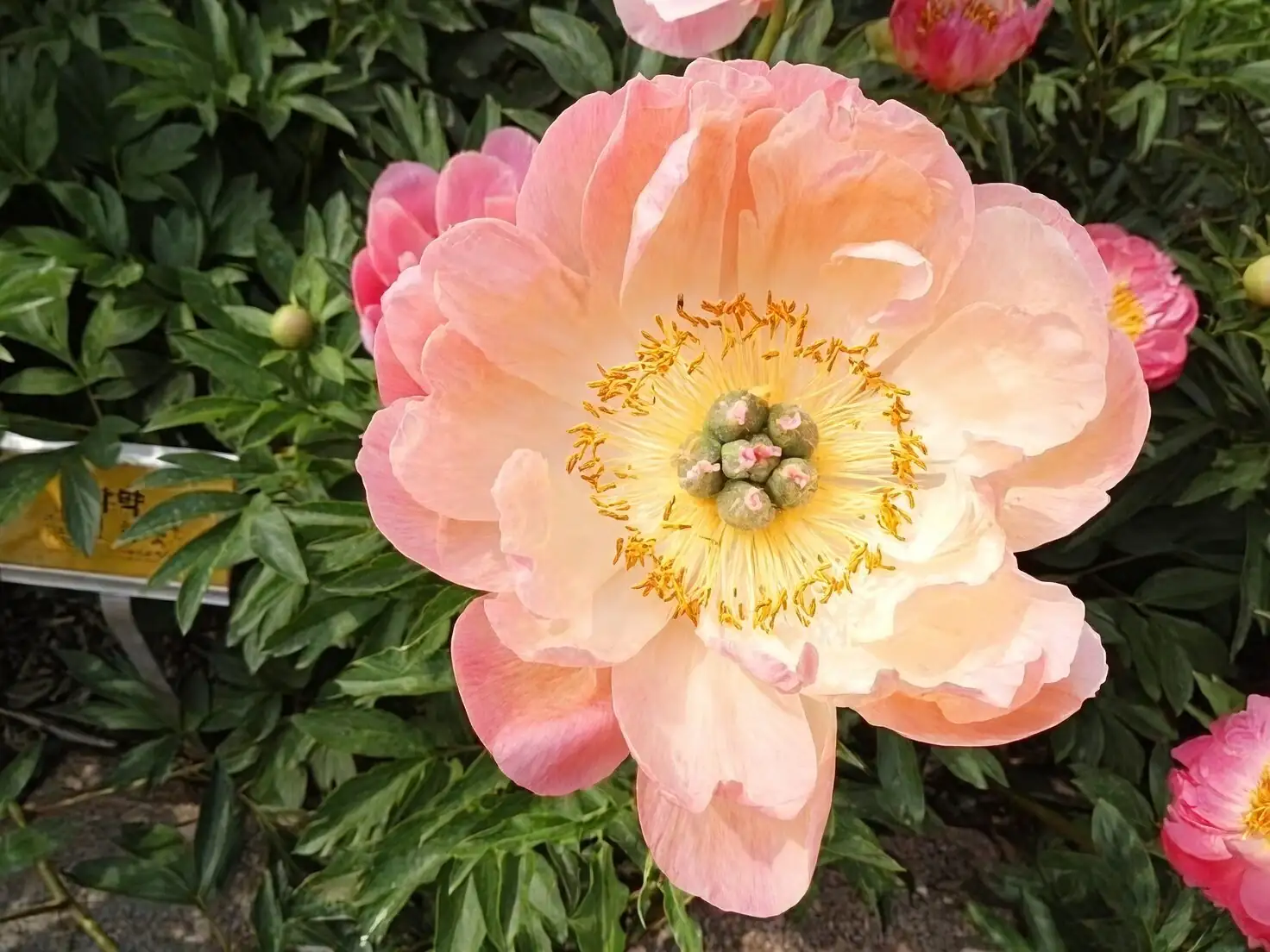
If your summers sizzle but your heart is set on those lush, rose-like peony blooms, take heart: the Chinese peony (Paeonia lactiflora) can thrive in warm regions with a few smart tweaks. Think morning sun instead of all-day scorch, soil that drains like a dream, steady airflow, a cool mulch “duvet,” and a watering rhythm that keeps roots happy without drowning the crown. Here’s your warm-climate survival guide—practical, gardener-tested, and flower-forward.
Meet the plant you’re coaxing through the heat
Paeonia lactiflora—also known as Chinese peony, Common/Garden peony—is an herbaceous perennial in the Paeoniaceae family. It’s winter-dormant, surging back each spring from a crown and fleshy storage roots. Expect:
- Habit and size: Upright, clump-forming mounds about 60–100 cm tall and 60–90 cm wide.
- Foliage: Divided, glossy green leaves; stems die back in winter.
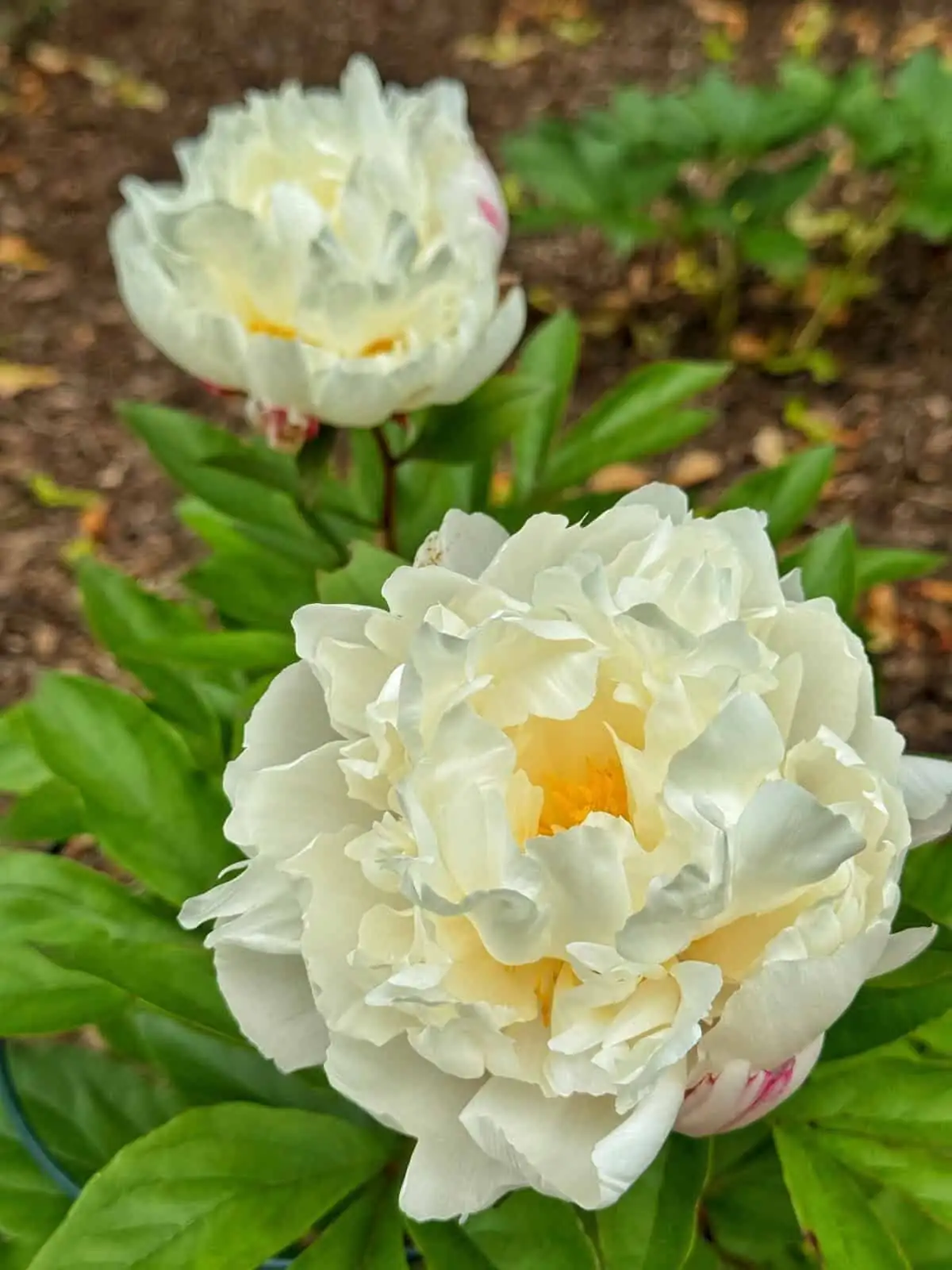
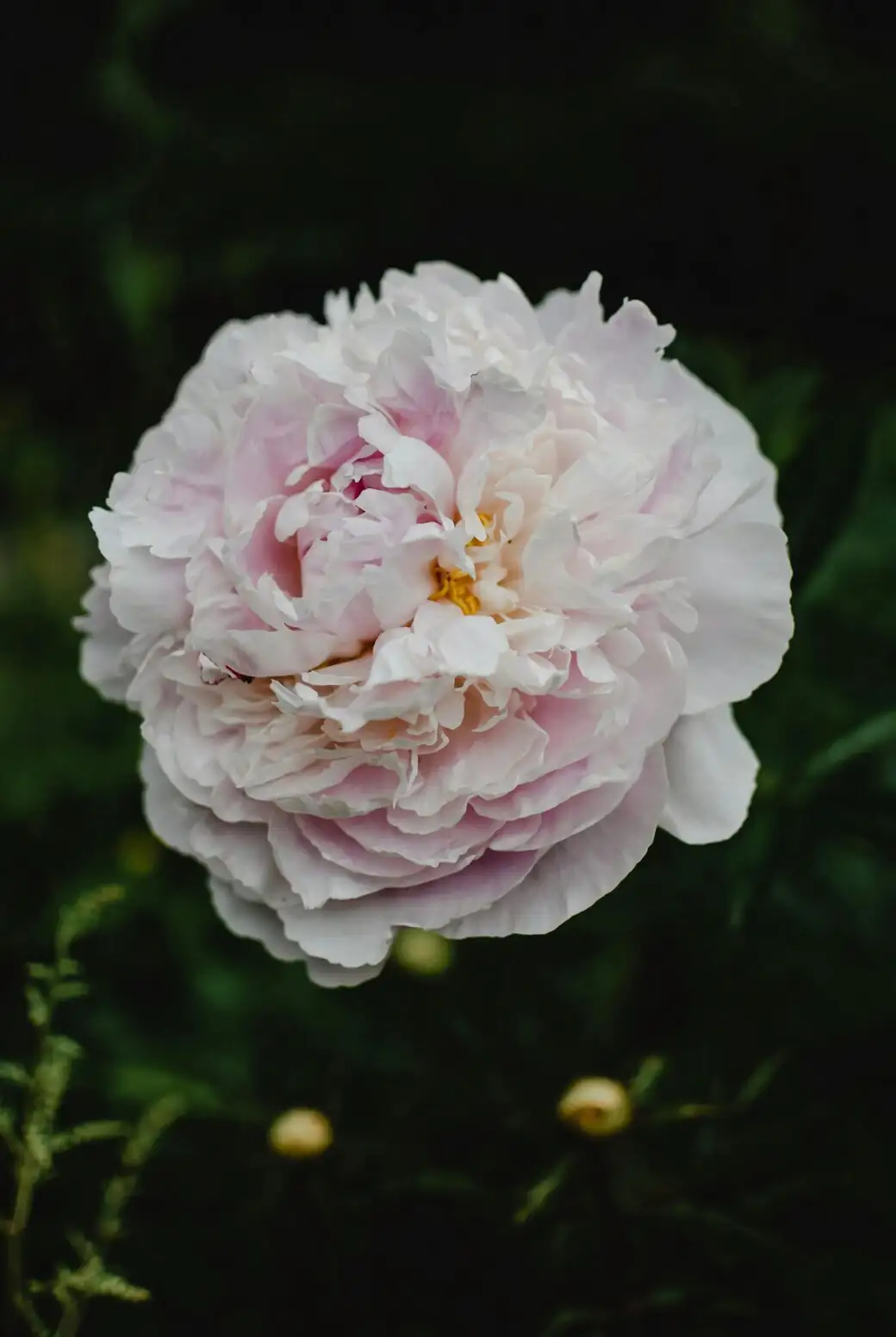
- Flowers: Large, often fragrant, from single to packed doubles; prime cut flowers.
- Bloom time: Typically late spring into early/mid-summer (often May–July, depending on climate and cultivar).
- Natural preferences: Cool to moderate summers and excellent drainage; it can struggle in prolonged, intense heat.
Warm places can still host gorgeous peonies—especially if you help them stay a little cooler, a little drier at the crown, and a lot better ventilated.
Choose the right site: morning sun, breezy bones
Chase the morning light
- Aim for at least 6 hours of sun, but let it be kinder sun: morning to early afternoon is perfect.
- Position on an east or northeast exposure, or under a high-canopy tree that gives dappled shade after lunch.
- Avoid heat traps: the base of south- or west-facing walls, reflective gravel courtyards, or enclosed corners that bake and stagnate.
Build in airflow
- Space plants 60–90 cm apart so leaves dry quickly after dew or irrigation.
- Situate beds where breezes move—open borders, not cramped courtyards.
- Keep nearby shrubs pruned; still air + heat = fungal fiesta.
Plant shallow—and keep the crown dry
- Set buds (“eyes”) level with the soil surface (in very cold regions, barely below). Too deep = fewer flowers.
- In warm climates, resist burying the crown. A high, well-drained position keeps rot at bay.
Create drainage that saves peonies
Paeonia lactiflora loves “moist but well-drained.” In heat, “well-drained” becomes non-negotiable.
- Raised berms or beds: Elevate the planting zone 10–20 cm above grade to shed water fast.
- Soil recipe: Start with fertile loam, then blend in compost/leaf mold for structure and moisture-holding, plus coarse sand, grit, or expanded shale for percolation. Heavy clay? Double the grit.
- Quick drainage test: After a soak, water should disappear from a 15 cm–deep test hole within an hour. If not, add more grit or mound higher.
- Steer clear of strongly saline or alkaline soils; peonies often sulk in them. Amending with organic matter helps, and in high-pH soils, consider sulfur per soil test advice.
Light shade and mulch: the cool-down combo
Gentle afternoon shade that doesn’t rob flowers
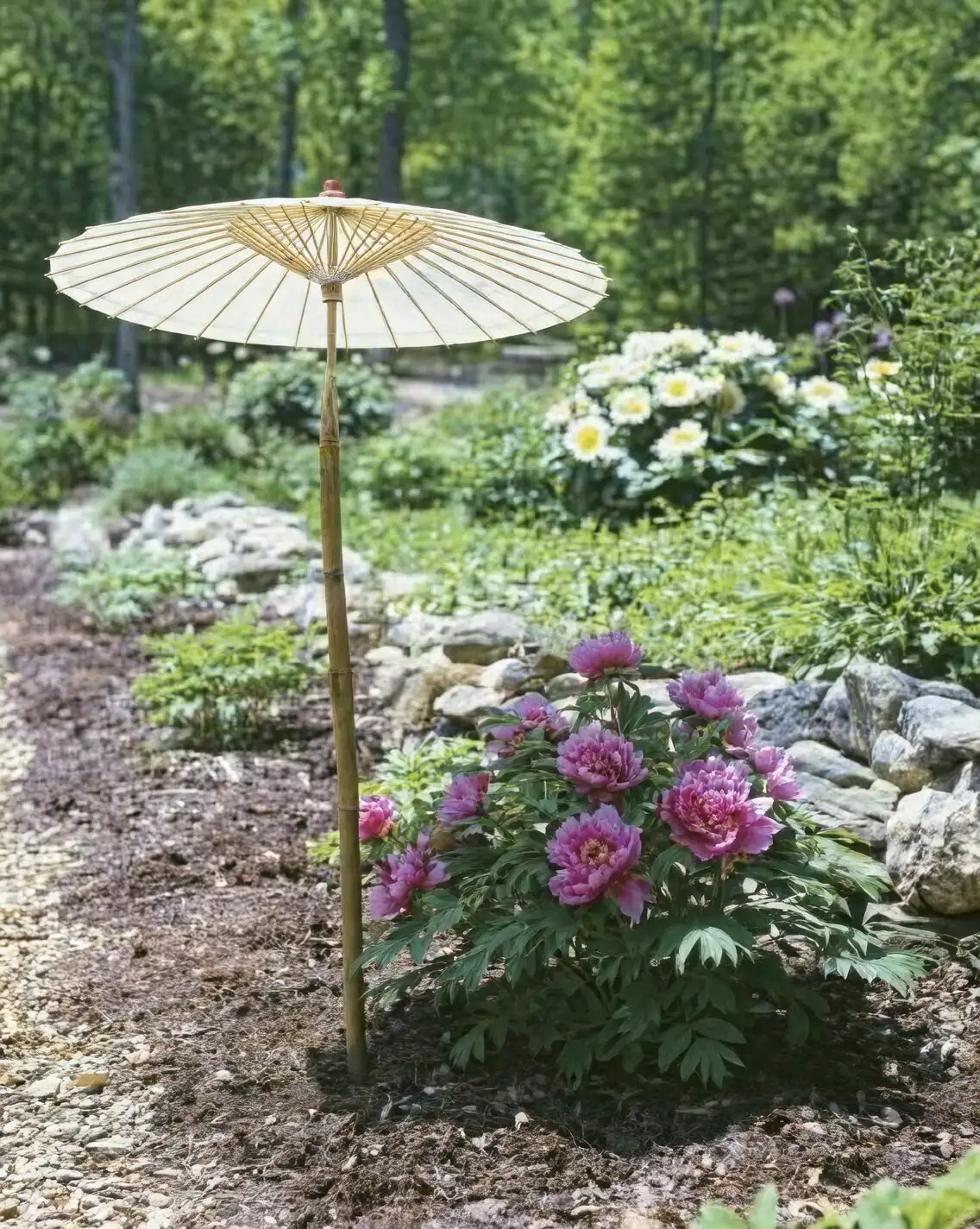
- Think “light veil,” not deep shade: filtered light or 20–30% shade cloth during peak heat spells.
- Benefits: better flower color and less stress; too much shade leads to lanky growth and weak stems.
Mulch to moderate temperatures (but don’t smother)
- Summer: 2–5 cm of airy mulch (shredded bark, leaf mold, pine straw) to cool the root zone and reduce evaporation.
- Winter in cold areas: mulch or lightly mound soil over crowns to buffer freeze–thaw, then pull back in spring.
- Always keep mulch a few centimeters away from the crown to prevent rot.
Watering that beats prolonged heat
Your mantra: evenly moist, never soggy—especially at the crown.
- Timing: Water early morning so foliage dries quickly.
- Method: Drip or soaker lines are ideal. If hand-watering, aim at the base, not over the leaves.
- Depth and frequency:
- Spring through bloom: Keep moisture steady—don’t let buds or young stems dry out.
- Hot spells (>32°C/90°F): Deeply soak the root zone 2–3 times a week in freely draining soil; sandy soils may need more frequent, lighter top-ups. Containers need daily checks.
- After heavy rain: Ensure water moves off and doesn’t pool around crowns.
- Container cue: Water when the top 3–5 cm of mix is dry; in heat, that may be daily. Always let excess drain.
Feeding and seasonal care (tuned for warm regions)
- Fertilize 2–3 times in the growing season with well-rotted organic fertilizer or diluted organic liquid feed.
- As buds form, switch to a bloom-leaning feed higher in phosphorus and potassium; avoid pushing lush, weak growth with heavy nitrogen.
- Disbud side buds for show-sized blooms (optional).
- Deadhead after flowering to refocus energy into roots and crown.
- Autumn: Keep moisture moderate so the plant rebuilds reserves.
- Late autumn: Once foliage yellows, cut stems to ground level and clear debris—key disease prevention.
- Winter: Dormant—water sparingly; keep the root zone from staying cold and wet.
Your warm-climate calendar
- Mid-October to mid-February: Best window to plant or repot while dormant. Keep buds level with the soil surface. Spring disturbance can delay or reduce flowering.
- Late winter to spring: Full morning sun, even moisture, great drainage; watch for aphids on tender shoots.
- Late spring–early summer: Bloom time—steady water, light afternoon shade during heat spikes.
- Mid–late summer: Survival mode—maintain mulch, deepen shade slightly if needed, and water thoughtfully.
- Autumn: Moderate moisture; divide clumps if needed September–December.
Note on winter chill: Peonies bloom best with a cool dormant period. Many gardeners in USDA Zones 3–8 grow them reliably; they may also perform in parts of Zone 9 where winter nights are cool enough. In marginal winters, microclimates (east sides of buildings, open breezy spots) can tip the balance. Some warm-winter enthusiasts report success with additional cooling tricks, but results vary.
Varieties and containers that cope better with heat
- Within Paeonia lactiflora: Many warm-climate growers favor earlier-flowering and single to semi-double forms, which often finish before the fiercest heat. Very heavy doubles can shatter quickly in hot, dry wind.
- Containers: A great option for patios and balconies with perfect morning sun.
- Use at least a 20–25 cm (8–10 in) diameter pot to start—bigger is better long-term—with a rich but free-draining mix (loam + compost + coarse grit/pumice).
- Keep the pot shaded on the west side (a cachepot or neighboring plant helps keep roots cooler).
- Repot/divide only during dormancy (Oct–Feb), keeping buds level with the surface.

Troubleshooting in hot climates
- Few or no flowers?
- Possible causes: Too little winter chill, buds planted too deep, too much shade, nutrient imbalance (too much N), or drought stress during bud formation.
- Fix: Check planting depth, increase morning light, shift feeding to bloom-supportive ratios, and lock in steady spring moisture.
- Leaf spotting or crown troubles:
- Prevention: Great airflow, base-watering, clean fall cutback, and never let water sit around the crown.
- Watch for southern blight and basal rots (white mycelium, mushy base). Remove affected material, improve drainage immediately, and avoid replanting peonies in the same infected spot.
- Pests: Aphids and spider mites love tender growth in warm, dry weather.
- Control: Strong water blast, horticultural soap or oil, and—if needed—label-directed controls.
Heat-wave playbook (clip and save)
- Add temporary light shade in the afternoon.
- Top up mulch (keeping it off the crown).
- Water at dawn; increase frequency in fast-draining soils.
- Skip foliar wetting; keep leaves dry.
- Ease off high-nitrogen feeds; keep nutrition balanced.
- After storms, check for pooling and clear it fast.
Cut flowers when the forecast blazes
- Harvest early in the day at the “marshmallow” bud stage (bud soft with visible color).
- Strip lower leaves, place stems immediately into cool water, and keep arrangements out of direct sun for longer vase life.
A short note on meaning and culture
The Chinese peony is steeped in East Asian art and garden history, symbolizing romance and affection, honor, prosperity, and a happy marriage. This reputation grew from centuries of imperial plantings, poetry, and painting. Modern “flower language” charts often simplify a rich tradition; the deeper meaning lives in how peonies were celebrated as emblems of refined beauty and good fortune—graceful, generous, and enduring when given the right place to grow.
Quick specs at a glance
- Botanical name: Paeonia lactiflora (Chinese Peony)
- Family: Paeoniaceae
- Origin: Northwest China, Mongolia, eastern Siberia
- Habit/size: Upright clumps, roughly 60–100 cm tall, 60–90 cm wide
- Sun: Full sun ideal; in hot climates, morning sun + light afternoon shade
- Soil: Fertile, deep, well-drained loam; dislikes waterlogging and strongly saline/alkaline soils
- Water: Evenly moist during growth and bloom; never soggy
- Hardiness: Commonly grown in USDA Zones 3–8; may perform in parts of Zone 9 with adequate winter chill
Warm summers don’t have to mean a peony-free garden. With morning light, sharp drainage, breezy spacing, a soft shade in the afternoon, and well-timed watering, Paeonia lactiflora can keep its cool—and gift you those unforgettable, perfumed blooms year after year.