

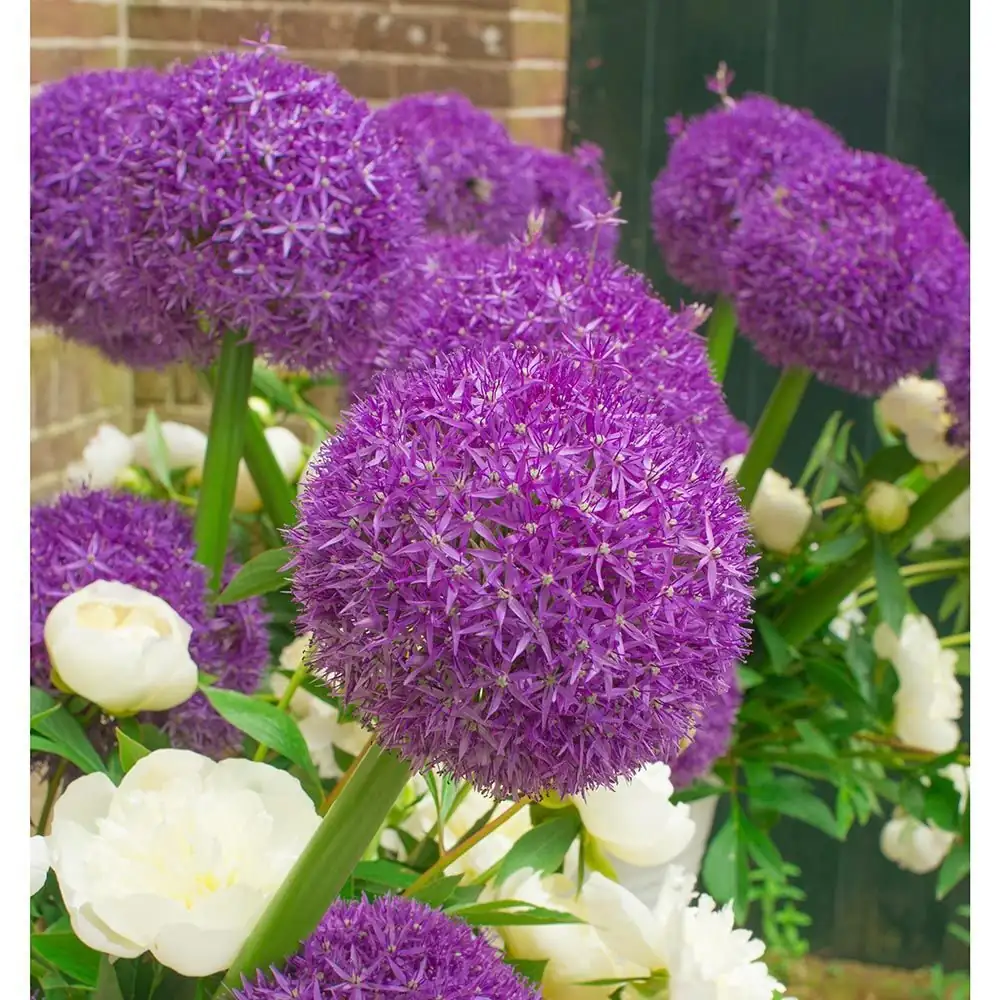
Think of Chinese peonies as couture gowns on sturdy hangers: sumptuous, structured, and at their best when surrounded by the right ensemble. The secret to a peony border that looks exquisite and stays healthy? Pair Paeonia lactiflora with plants that breathe with it, work for it, and flatter it—catmint, salvias, irises, and alliums top the list. These allies boost airflow, draw pollinators and beneficial insects, discreetly mask peony foliage as it fades, and even help steady stems—without ever crowding the crown.
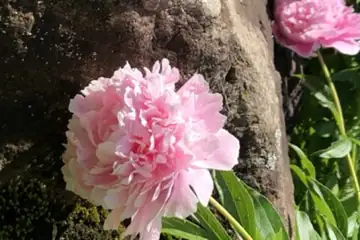
Meet Paeonia lactiflora (Chinese Peony), the star of the show
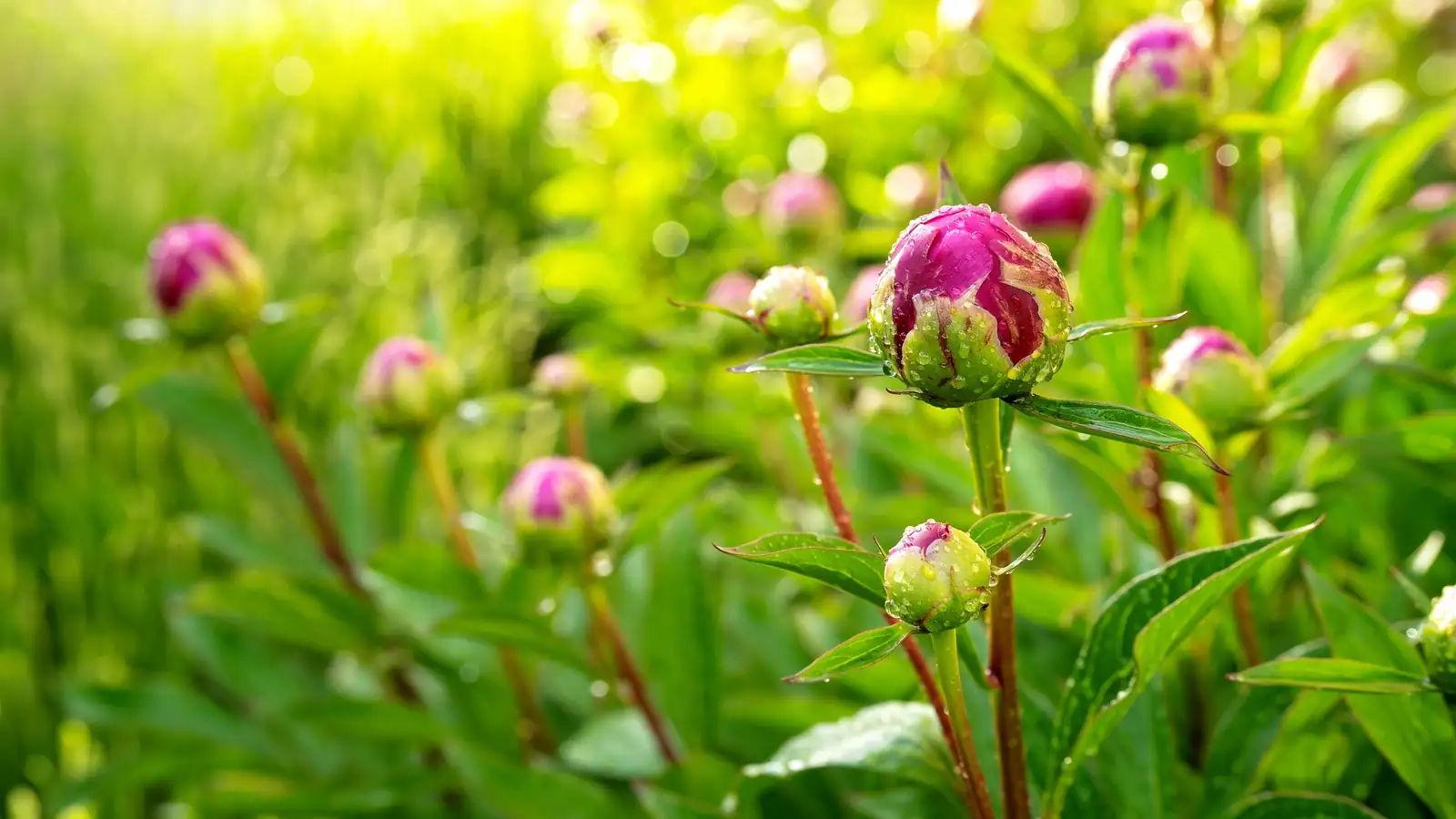
- Habit and look: An upright, clump-forming herbaceous perennial with glossy, divided green leaves. It dies back to ground level in winter and surges back from a crown with fleshy storage roots each spring.
- Flowers: Big, showy, often fragrant blooms—from elegant singles to plush doubles—typically late spring into early/mid-summer (often May–July, climate and cultivar dependent). Excellent as cut flowers.
- Size: About 60–100 cm tall and 60–90 cm wide, depending on cultivar and site.
- Where it thrives: Full sun (at least 6 hours/day) with fertile, deep, well-drained soil that holds moisture but never gets waterlogged. In hot-summer regions, give morning sun and light afternoon shade.
- Climate notes: Enjoys cool to moderate summers; prolonged, intense heat can reduce vigor and flowering. Widely grown in USDA Zones 3–8 (sometimes 9 with adequate winter chill).
- Longevity: Properly sited, a peony can flourish for decades in the same spot.
Why pairings matter: design meets plant science
Smart companions do more than “look pretty next to peonies.” They:
- Keep air moving: Open, vertical, or fine-textured neighbors reduce stagnant, muggy layers around foliage—key for minimizing leaf spots and basal rots that peonies can develop in damp, still conditions.
- Attract allies: Spire-blooming salvias and globe-flowering alliums are magnets for pollinators; aromatic catmints draw hoverflies and lacewings that help keep aphids in check.
- Mask the awkward stage: After flowering, peony foliage gradually loses polish before dormancy. A chorus of companions discreetly takes over the show.
- Gently steady stems: A loose matrix of surrounding perennials can break wind and provide light “elbow support,” reducing flopping—while still keeping the peony’s crown open and dry.
The A-team companions (and what each one does)
1) Catmint (Nepeta)
- Why it works: Airy, pollinator-rich blue-lavender clouds echo peony tones without competing. Its billowy habit softens the front of the clump and distracts from foliage fade later on.
- Science boost: Aromatic foliage can help draw beneficial insects; the open texture improves airflow around peony leaves.
- Planting notes:
- Position: In front and lightly to the sides of the peony—never over the crown.
- Spacing: Start companions about 30–45 cm from the peony’s crown, leaving a clear “breathing ring.”
- Care rhythm: Shear catmint after its first flush to keep a tidy dome that continues the show.
Great picks: Nepeta ‘Walker’s Low’, ‘Purrsian Blue’.
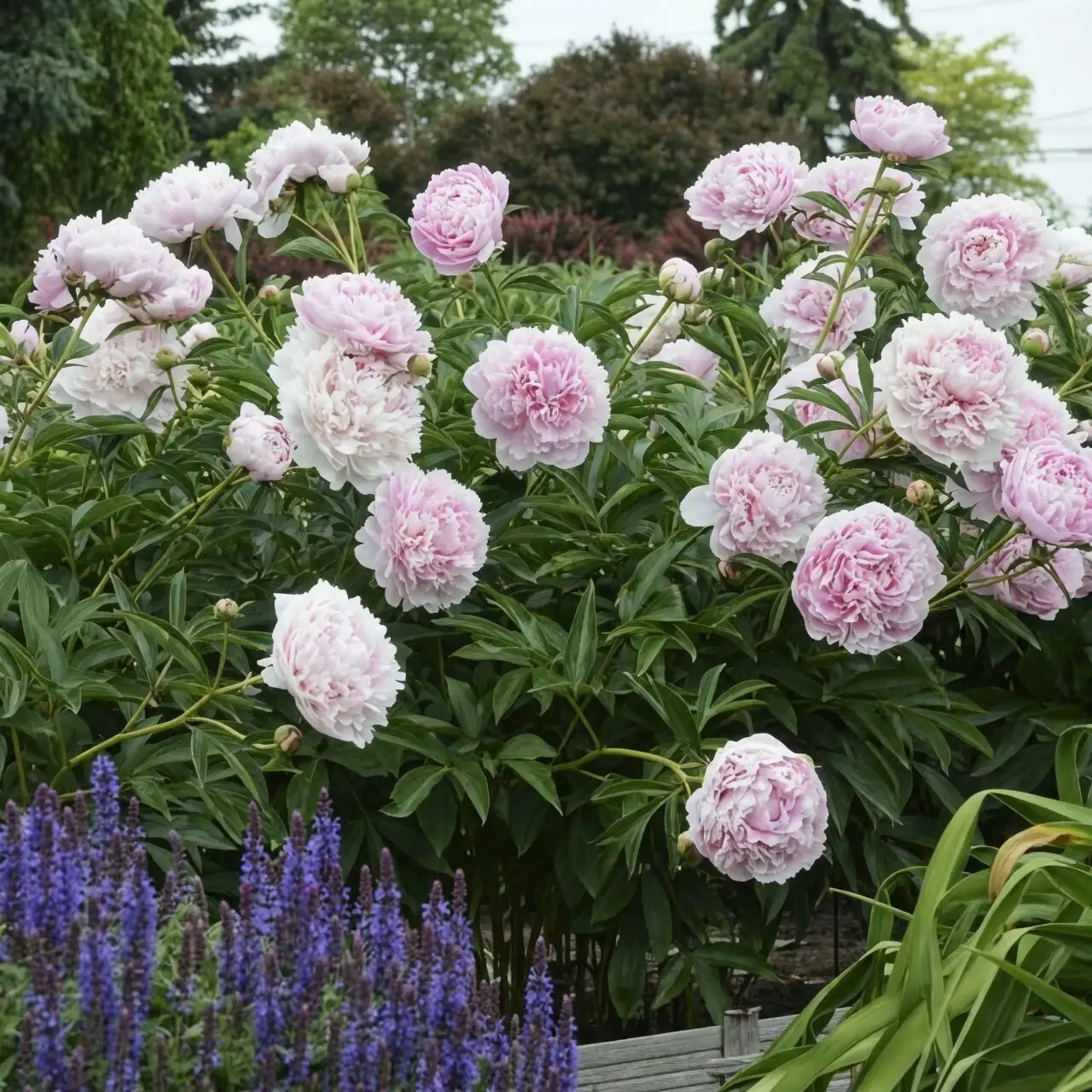
2) Salvias (Salvia nemorosa and kin)
- Why it works: Upright spires (violet, blue, pink) punctuate peonies’ rounded flowers and extend color well into summer.
- Science boost: Long-blooming nectar bar for bees; vertical habit promotes air circulation through the border.
- Planting notes:
- Position: Thread between or just behind peonies so the spires rise like exclamation points.
- Spacing: 30–45+ cm off the crown; avoid forming a dense ring that traps humidity.
- Care rhythm: Deadhead to keep the flower factory running.
Great picks: Salvia nemorosa ‘Caradonna’, ‘May Night’.
3) Irises (Bearded or Siberian)
- Why it works: Irises flower just before or with many peonies, offering contrast in form—strappy foliage and structured blooms that frame the peony show.
- Design bonus: Strappy leaves continue to look clean as peony foliage wanes, bridging the seasonal gap.
- Planting notes:
- Bearded iris (Iris germanica): Keep rhizomes near the soil surface; they prefer sun and excellent drainage—similar to peonies. Give both crowns open air.
- Siberian iris (Iris sibirica): Finer foliage makes a superb back-of-clump screen.
- Spacing: 30–45+ cm from the peony crown; don’t interlock rhizomes with peony roots.
Great picks: Bearded iris in smokey purples near pink peonies; Siberian iris ‘Caesar’s Brother’ for a refined backdrop.
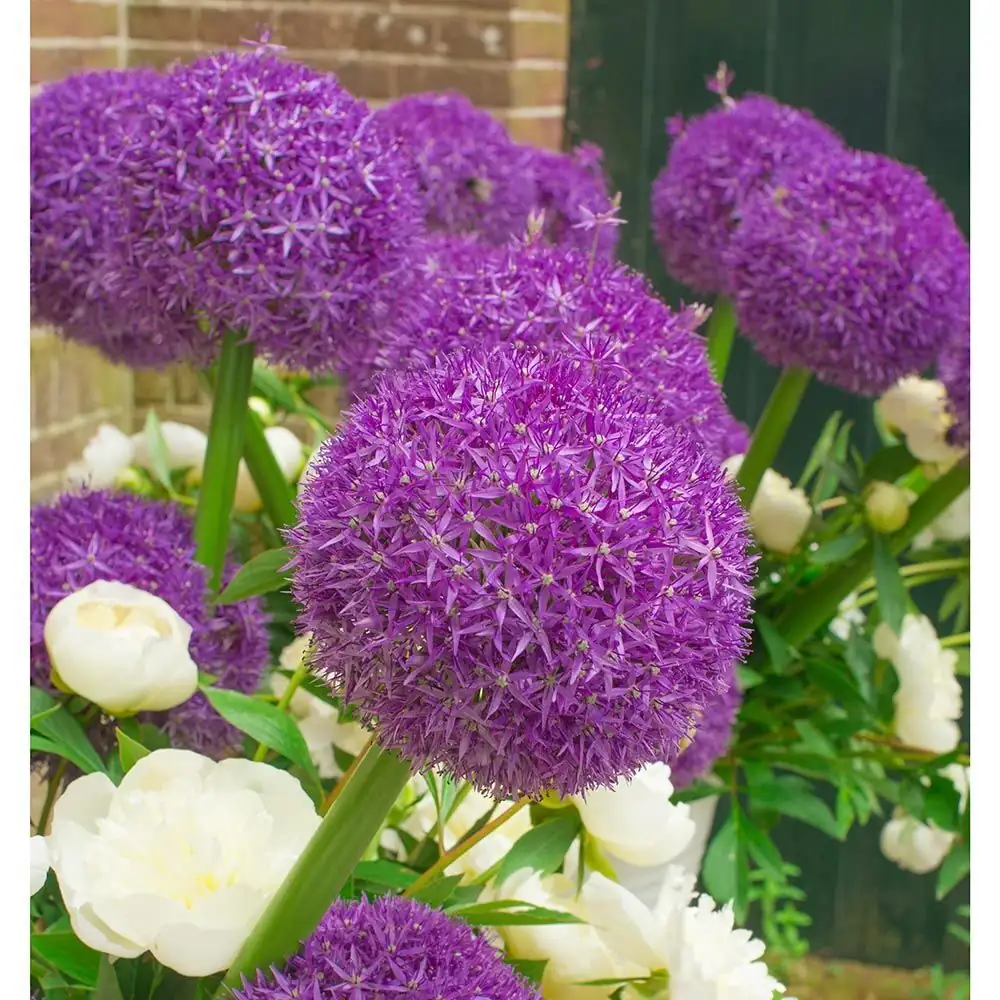
4) Alliums (ornamental onions)
- Why it works: Architectural globes float above peonies in late spring, adding height and rhythm.
- Science boost: Alliums are pollinator magnets; their foliage fades early and is neatly veiled by peony leaves.
- Planting notes:
- Position: Tuck bulbs behind or between peonies in autumn so globes hover without crowding crowns the following spring.
- Spacing: Bulbs placed 20–30 cm away work well if they’re not massed directly over the crown.
Great picks: ‘Purple Sensation’ for a light sprinkle; ‘Globemaster’ for a few strategic statements.
A few excellent “supporting actors”
- Cranesbill geraniums (non-running types like Geranium ‘Rozanne’): Loose mounds to skirt peonies and carry color.
- Baptisia: Upright, airy foliage that terraces the border and adds late spring bloom.
- Yarrow (Achillea): Flat-topped umbels and feathery foliage for sunny, well-drained sites.
- Late-season extenders: Coneflowers and asters pick up the show long after the peonies bow out.
Avoid aggressive groundcovers and vines near the crown—anything that mats, sprawls, or suckers can trap moisture, smother buds, or hog resources.
Layout recipes that breathe and perform
The breezy classic (front-of-border)
- Front: Catmint “ribbon” in soft arcs.
- Middle: A trio of peonies, spaced 75–90 cm apart.
- Threaded: Salvias interplanted between peony clumps.
- Back: A light line of Siberian iris.
- Accent: Scatter allium bulbs through the middle and back for floating spheres.
Why it works: Blue-lavender repetition calms the composition; vertical spikes and spheres keep air moving and eyes dancing. Catmint cloaks fading foliage; iris and salvias carry bloom into summer.
The pollinator promenade (path edge)
- Path edge: Catmint and compact geraniums as a welcoming nectar way.
- Just behind: Peony clumps, each with a “clear crown” ring.
- Punctuations: Salvias every meter, plus clusters of alliums.
Why it works: Constant color and insect traffic; companions break wind and provide gentle stem support without touching the crown.
Container-friendly styling
- For single peonies in large containers (20–25 cm diameter minimum; bigger is better long-term), group companion plants in their own pots nearby instead of cramming into one planter. You’ll keep the peony’s buds at soil level, drainage optimal, and the crown dry—while still creating a lush, layered look.
Planting and care keys for peak performance
- Sunlight: Full sun for strong stems and max flowering. In hot-summer climates, aim for morning sun with light afternoon shade.
- Soil: Fertile, deep, well-drained loam. Improve with compost or leaf mold; add coarse sand or grit if drainage lags. Peonies dislike waterlogging and often falter in strongly saline or alkaline soils.
- Planting depth: Set the peony’s buds (“eyes”) level with the soil surface (or just slightly below in very cold regions). Planting too deep = poor bloom.
- Watering: Evenly moist, never soggy.
- Spring: Steady moisture as shoots/buds form.
- Bloom: Don’t let it dry out; water at the base and shield from extreme heat where needed.
- Autumn: Moderate moisture to rebuild reserves.
- Winter: Go sparingly; keep cold soil on the drier side.
- Feeding: 2–3 light feeds during active growth with well-rotted organic fertilizer or a diluted organic liquid feed; shift to bloom-leaning (higher P and K) around bud time.
- Grooming:
- For show blooms: Disbud side buds so each stem carries one flower.
- After bloom: Deadhead unless saving seed.
- Late autumn: Cut stems to ground level; clear debris for hygiene.
- Division/repotting: Best during dormancy (roughly mid-October to mid-February, climate-dependent). Aim for divisions with 3–5 healthy eyes. Avoid spring disturbance—it often delays flowering.
Airflow, spacing, and “clear-crown” rules
- Space peony clumps 75–90 cm apart to match their mature width.
- Keep a 30–45 cm “no-crowd” ring around each peony crown—no dense companions, no mulch piled against the crown.
- Layer companions in arcs or clusters offset from the crown so breezes can slip through.
- Water at the base; avoid routinely wetting foliage.
Common pitfalls (and the fixes)
- Floppy stems on double blooms: Install discreet peony hoops early, or use a low, airy “matrix” of neighbors (catmint/salvia) to reduce wind stress—still keeping that crown ring open.
- Leaf spots or soft rot at the base: Improve drainage, increase spacing, water early in the day at soil level, and remove infected debris. Good airflow is prevention number one.
- Few or no blooms: Check planting depth (too deep is a classic culprit), sun hours, and avoid excessive spring disturbance.
Cut-flower insider tips
- Harvest when buds feel firm and just show color for premium vase life.
- Strip lower leaves and recut stems under water.
- For larger blooms in arrangements, disbud side buds on selected stems.
A quick succession calendar
- Early–mid spring: Alliums and bearded iris ramp up.
- Late spring–early summer: Peonies peak; salvias hit stride.
- Summer into fall: Salvias rebloom after deadheading; cranesbill geraniums, yarrow, and coneflowers extend interest while masking peony foliage fade.
Flower language and lore—beauty with depth
In East Asian flower culture, the peony symbolizes romance, prosperity, honor, and a happy marriage—a blend of courtly elegance and heartfelt affection. Historically, its petals graced sweets and porridges, while the root (notably in “white peony root” preparations) gained a prominent place in traditional herbal practice. The symbolism likely crystallized because peonies combine opulent display with reliability and longevity—grandeur that returns each year from a humbly hidden crown, echoing abundance grounded in resilience.
—
When design and plant science meet, Paeonia lactiflora becomes more than a moment—it’s a season-spanning performance. Give your peonies space to breathe, surround them with allies that work as hard as they bloom, and let the border sway like a well-rehearsed ensemble: graceful, healthy, and always on cue.