

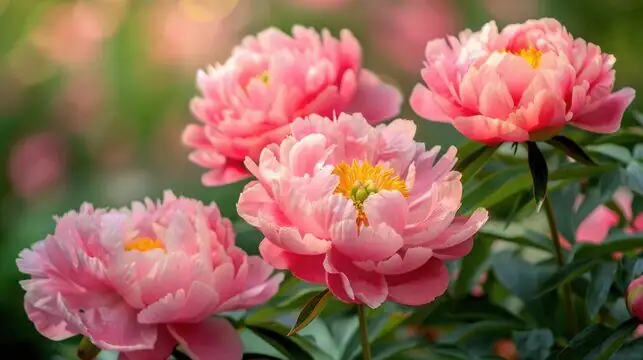
Imagine turning one beloved Chinese peony into a trio of future show-stoppers—without sacrificing next year’s bloom. Welcome to the hands-on, zero-guesswork way to propagate Paeonia lactiflora by division. We’ll lift, read the crown, split along natural cracks, target 3–5 eyes per division, replant at the right depth, and nurse the new plants into strong recovery. You’ll also learn why “I’ll just do it in spring” is the fast track to disappointment.
Before we start: meet the plant
- Botanical profile: Paeonia lactiflora (family Paeoniaceae), also called Chinese peony, common/garden peony, and herbaceous peony.
- Habit: A cold-hardy, long-lived herbaceous perennial that dies back to the ground in winter and re-sprouts from a crown with fleshy storage roots.
- Charm points: Big, lush, often fragrant late spring to early summer blooms on sturdy stems; a top-tier cut flower; happiest in full sun with well-drained, fertile soil.
- Origins: Northwest China, Mongolia, and eastern Siberia.
Why division, and when
- Why divide: To clone a favorite plant, share with friends, or rejuvenate an old clump that’s crowding itself. Division resets architecture and spreads vigor across multiple crowns.
- Best window: Autumn during dormancy—about September to December, depending on climate. This lets divisions re-root before deep winter while the top is resting.
- Avoid spring: Spring division interrupts active growth and flowering prep. Plants are mobilizing stored carbohydrates into shoots and buds; cutting now diverts energy to wound repair. Result: weak growth and flower delays (often skipping bloom altogether for a season or two). Summer division is even riskier in hot climates because heat plus root disturbance invites stress and rot.
Tools and hygiene (small habits, big results)
- Clean, sharp spade and a sturdy, sanitized knife or pruning saw
- Disinfectant: 70% isopropyl alcohol or a 10% bleach solution (rinse and dry metal after bleach)
- A bucket of clean water and disposable cloths/paper towels
- Labels for each division
- Optional: garden fork, tarp for soil, and a container with damp burlap to keep divisions shaded while you work
Step-by-step division workshop
H3: 1) Prep the plant and site
- Choose a still, dry day in autumn.
- Water lightly the day before if soil is dry—moist soil is easier to dig than hard, dusty ground.
- Reduce top growth: Cut stems down to just above ground level once foliage yellows and tired-looking leaves signal dormancy.
- Pre-dig new planting holes so divisions can go straight back into the ground.
H3: 2) Lift the clump carefully
- Start a generous circle 20–30 cm (8–12 in) beyond the crown to protect thick storage roots.
- Slide the spade or fork under the root mass, gently prying the clump up in stages. Lift it onto a tarp.
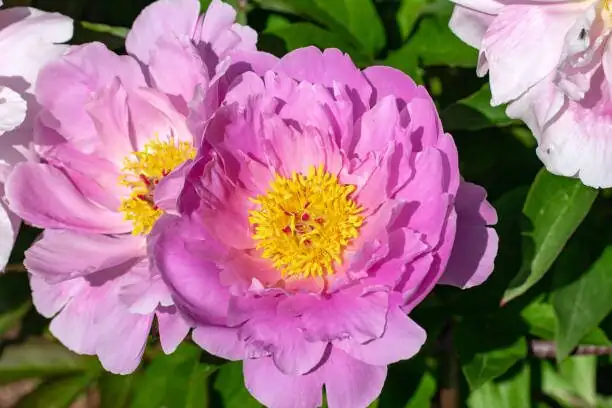
H3: 3) Expose the crown and “read” the eyes
- Gently shake or rinse off soil so you can see the crown—the firm, central hub from which roots and buds (eyes) arise.
- Identify the eyes: plump, pale pink or white buds clustered on the crown’s upper surface. These are next spring’s shoots.

H3: 4) Split along natural cracks
- Sanitize your blade. Examine the crown for natural fissures or seams; these are your safest splitting lines.
- Insert the blade along a natural crack and press steadily to separate. Avoid sawing across buds.
- Target size: Each division should carry about 3–5 healthy eyes plus a solid fan of thick, firm roots. Divisions with fewer eyes often need extra seasons to bloom well.
- Inspect roots. Trim away any blackened, mushy, or damaged tissues with a clean blade between cuts.

H3: 5) Keep divisions happy while you work
- Shade them. Fleshy roots dislike sun and wind. Tuck divisions under damp burlap or a light cloth.
- Don’t dawdle. Replant promptly to prevent desiccation—no need to “cure” cuts in peonies.
Replanting: depth is destiny
H3: Site and soil
- Sun: Aim for full sun (at least 6 hours/day). In hot-summer regions, morning sun with light afternoon shade prevents heat stress.
- Drainage: Peonies hate waterlogging. Plant in fertile, deep, well-drained loam. Improve heavy soil with compost or leaf mold, plus coarse sand/grit where drainage is slow.
- Spacing: Give each plant room—about 90–120 cm (3–4 ft) between crowns—to prevent crowding and encourage airflow.
H3: Planting depth (the golden rule)
- Set eyes level with the soil surface—or only slightly below in colder climates. Planting too deep is the most common cause of “lots of leaves, no flowers.”
- Practical cue: After backfilling and settling, buds should end up at the surface or at most just a whisper below. In regions with severe freeze–thaw, rely on a loose winter mulch rather than burying buds deeply.
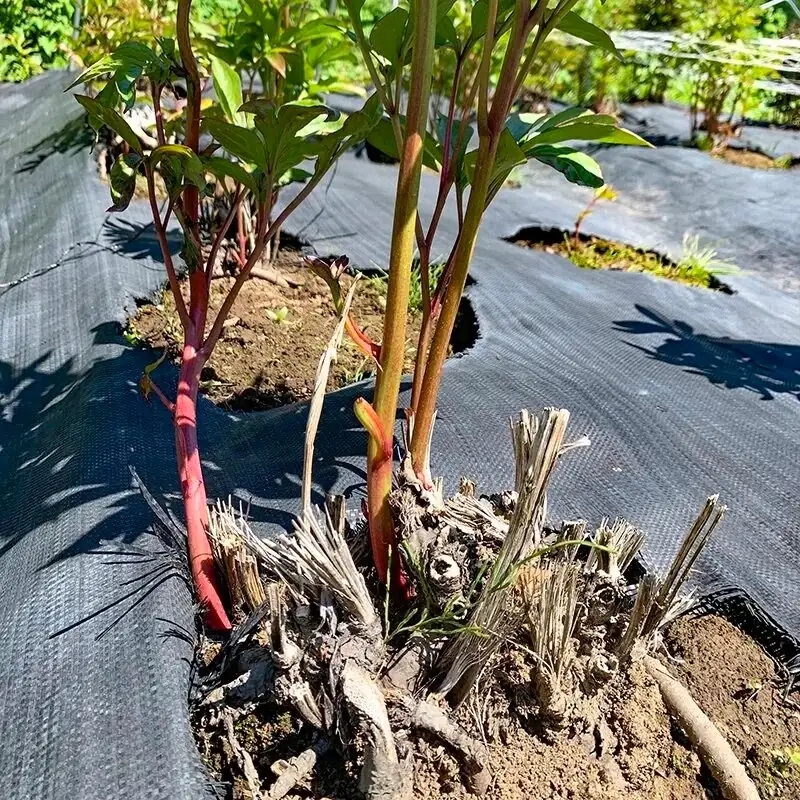
H3: How to plant a division
- Dig a hole wide enough for the whole root system to sit naturally, without bending thick roots into tight circles.
- Position eyes facing up. Backfill with improved native soil; avoid piling rich amendments directly on the crown.
- Firm gently and water in thoroughly to settle soil around roots.
- Mulch lightly to conserve moisture but keep mulch off the crown. In very cold areas, add a loose winter mulch (straw, shredded leaves) after the ground cools, then pull it back in early spring.
Recovery care: from transplant to triumph
- Watering: Keep soil evenly moist but never soggy during the establishment phase. In winter dormancy, go easy—cold + wet equals root trouble.
- Sun and heat: If a warm spell hits after planting, give temporary light shade during the hottest part of the day.
- Feeding: During the growing season, use well-rotted organic fertilizer 2–3 times. Around bud set, a bloom-leaning, phosphorus/potassium-rich feed supports flower quality. Avoid heavy nitrogen that drives floppy foliage.
- First spring disbudding (optional): Removing side buds the first year can push more energy into the crown and roots, priming spectacular performance in year two.
- Hygiene: Excellent airflow, clean cuts, and dry leaves help prevent fungal issues. In late autumn, cut stems to ground level and clear debris.
Why spring division backfires
- Energy mis-timing: In spring, the plant is burning stored carbohydrates to fuel shoots and flower buds. Division redirects that fuel to wound repair and re-rooting instead of bloom development.
- Fragile tissues: Actively elongating roots and brittle new shoots are easily damaged, leading to setbacks and sometimes rot in cool, wet spring soils.
- Bloom delay: Spring-divided peonies commonly skip flowering that year and may take another season to recover. Dividing during dormancy avoids that penalty.
Troubleshooting after division
- No flowers next season?
- Buds planted too deep—reset at surface level.
- Too much shade—move toward full sun.
- Heat stress or poor drainage—improve airflow, add grit, avoid waterlogged spots.
- The division had fewer than 3 eyes—patience; it often needs an extra year.
- Yellowing or collapse at the base:
- Suspect crown/root rots (including southern blight). Improve drainage, keep mulch off the crown, remove infected tissue during dormancy, and sanitize tools thoroughly.
- Sap-suckers on new shoots:
- Aphids and spider mites can appear. Start with strong water sprays and horticultural soap/oil as needed, following labels carefully.
Container notes
- Pot size: Minimum 20–25 cm (8–10 in) diameter, but bigger is better for long-term vigor.
- Mix: Rich yet free-draining (loam + compost/leaf mold with added grit).
- Timing: Repot or divide only while dormant—roughly mid-October to mid-February, climate-dependent.
- Depth: Keep eyes at the mix surface. Ensure excellent drainage and never let the pot sit in a saucer of water.
A quick nod to meaning—and why it lingers
- Symbolism: In East Asian flower culture, Chinese peonies are entwined with romance and affection, honor, prosperity, and a happy marriage. This symbolism grew from centuries of garden artistry, courtly paintings, and festival display, not botany itself—yet the plant’s luxurious, rose-like blooms make the associations feel inevitable.
- Safety note: Generally low toxicity, but discourage pets and people from nibbling; ingesting parts can cause mild stomach upset in sensitive individuals.
Your peony propagation checklist (at a glance)
- Time it for dormancy: September–December
- Lift wide, keep thick roots intact
- Split along natural cracks
- Target 3–5 eyes per division
- Sanitize tools between cuts
- Replant with eyes at soil level (or just a hair below in very cold regions)
- Keep evenly moist, never soggy
- Clean up in autumn; mulch for winter where needed
Handled this way, Paeonia lactiflora rewards you quickly: newly divided plants often settle in fast and bloom beautifully the very next season. Divide once, enjoy for decades—that’s the peony promise.