

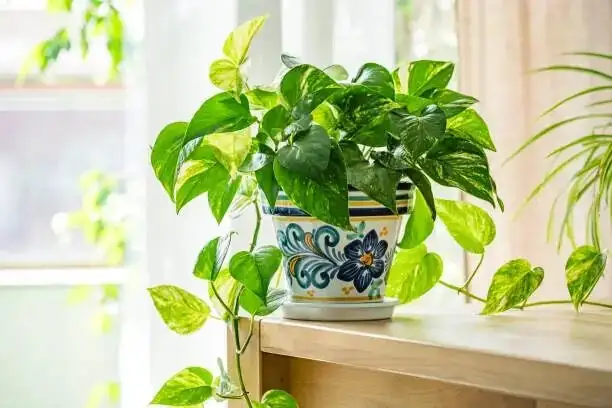
If you’ve ever wished a houseplant could do more than look pretty, meet Chinese brake fern (Pteris vittata). Graceful, fountain-like fronds? Check. Surprisingly forgiving as an indoor fern? Check. And the headline: it’s the poster child for arsenic hyperaccumulation—able to pull this toxic metalloid from soil and stash it in its leaves. That remarkable trick has made the species a star of phytoremediation research and, occasionally, a topic of confusion for home growers. Here’s a clear, engaging tour through what scientists know, where the debates are, and how to grow this fern safely at home.
Meet Pteris vittata at a glance
- Names: Chinese brake fern, Brake Fern, Ladder Brake (scientific: Pteris vittata; family Pteridaceae)
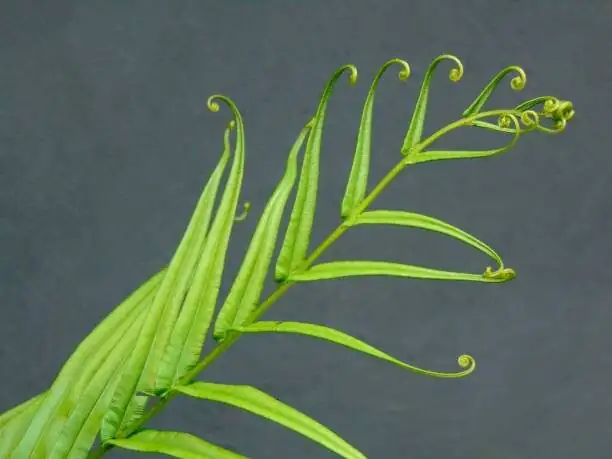
- Origin and habit: Native to tropical and subtropical Old World regions; now widely naturalized in warm areas. Clump-forming fern with narrow, feathered fronds on wiry, dark stems—elegant in pots or hanging baskets.
- Size indoors: Commonly 30–60 cm tall and wide, maturing around 60 × 60 cm in good conditions.
- Light and look: Bright, filtered light keeps the fronds lush; some cultivated forms carry a pale stripe down each leaflet.
The superpower: arsenic hyperaccumulation, explained
Arsenic naturally occurs in rocks and soils, but human activities (mining, wood preservatives, historical pesticides) have concentrated it in many places. Most plants avoid taking up much arsenic. Pteris vittata is different—it can absorb arsenic from soil or water, move it into its fronds, and tolerate levels that would cripple other species. That combination—high uptake, fast translocation, and strong tolerance—makes it valuable for phytoremediation: the use of plants to clean contaminated sites.

How scientists think the fern does it (the working model)
Research over the last two decades, including recent syntheses, points to a coordinated system spanning roots, shoots, and even the rhizosphere (the soil zone around roots):
- Uptake at the root surface
- Arsenate (AsV), the oxidized form of arsenic, often “sneaks in” through phosphate transport pathways (PHT family) because it chemically mimics phosphate.
- Arsenite (AsIII), the reduced form, can move through certain aquaporin-like channels (MIP/TIP family).
- Chemical “flip” inside the plant
- Arsenate (AsV) is rapidly reduced to arsenite (AsIII) by reductases (HAC/ACR2-type genes), a step that appears crucial to both tolerance and transport.
- Safe storage and shuttling
- Arsenite (AsIII) is sequestered into vacuoles—cellular “lockers”—with transporters such as ACR3 implicated in this step in ferns.
- Antioxidant defenses help the plant manage stress that would otherwise damage tissues.
- Rhizosphere teamwork
- Root exudates and associated microbes may change arsenic’s chemical form and mobility, often enhancing availability to the plant.
The net effect: arsenic moves swiftly from roots to fronds, where it accumulates primarily as arsenite—letting repeated harvests gradually lower soil arsenic.
What’s well-established vs. what’s still debated
What we’re confident about
- Pteris vittata is an arsenic hyperaccumulator, efficiently moving arsenic into fronds while staying healthy enough to keep growing.
- Repeated cutting/harvesting of fronds is essential for any remediation benefit; the plant must remove arsenic mass from the site via its biomass.
- Phosphate competes with arsenate for uptake; high soil phosphorus can suppress arsenic absorption.
- Key gene families are involved at each step (e.g., PHT for AsV uptake, HAC/ACR2 for reduction, MIP/TIP for AsIII movement, and ACR3-like transporters for vacuolar sequestration).
Where the science is active and nuanced
- Transporter identity and specificity: Which exact proteins do the heavy lifting in ferns (vs. better-studied flowering plants) is still being refined; some are fern-specific or fast-evolving.
- Microbe–plant partnerships: The degree to which associated microbes vs. the plant itself drive arsenic solubilization and speciation varies by site and remains an active research area.
- Field performance variability: Real-world outcomes can differ widely depending on soil pH, phosphate levels, co-contaminants (e.g., heavy metals), moisture, and climate.
- Timeframes and limits: Phytoremediation is not fast; years of growth and harvests are typical. Achievable endpoints for different site types remain a practical question.
- Biomass handling: Best practices for drying, containment, and disposal of arsenic-rich fronds are critical and site-specific; research and regulations continue to evolve.
Can you use Chinese brake fern to clean your yard?
Sometimes—but approach with eyes open and local guidance.
- When it can help
- Mild to moderate arsenic contamination in accessible topsoil, adequate moisture, and a climate warm enough to keep the fern growing vigorously (warm-temperate to subtropical).
- Sites without confounding extremes (very high phosphorus, highly alkaline conditions, or multiple toxic co-contaminants) tend to perform better.
- What can limit success
- High phosphate fertilizers or soils can reduce arsenic uptake.
- Very cold climates (the species is frost-tender) and drought slow growth and remediation potential.
- Co-contaminants and poor drainage complicate both plant health and outcomes.
- Non-negotiables
- Confirm contamination with proper testing first.
- Plan for repeated frond harvests and safe disposal as potentially hazardous waste.
- Avoid spreading spores in sensitive natural areas—this fern naturalizes readily in warm regions.
If a site is meaningfully contaminated, involve local environmental authorities or remediation professionals. Phytoremediation is a real tool—but it’s one piece of a larger, regulated process.
Safety essentials for home growers
Good news: growing Pteris vittata as an ornamental indoors is safe when you use clean potting mix and clean water.

- Do
- Use fresh, store-bought potting mix in containers with drainage.
- Place pots away from arsenic sources (e.g., old chromated copper arsenate–treated lumber, contaminated soil, well water with known arsenic issues).
- Wash hands after pruning; dispose of ordinary houseplant trimmings in household trash.
- Don’t
- Don’t irrigate with water of unknown quality in areas with arsenic concerns.
- Don’t compost fronds from any plant used for arsenic cleanup; bag and dispose per local hazardous-waste guidance.
- Don’t let pets or kids chew on fronds. The plant is generally regarded as low-toxicity, but if it has accumulated arsenic, the tissue itself can be hazardous.
Bottom line: In a typical home setup with clean inputs, the fern won’t accumulate harmful arsenic. Problems only arise if the plant is deliberately or accidentally exposed to arsenic.
Houseplant care that keeps the fronds feathery
Chinese brake fern is pleasantly forgiving—for a fern—when you meet a few basics.
Light and placement
- Bright, indirect light to part shade; avoid harsh midday sun.
- A sheer-curtained south or southeast window works; east/north windows or bright shelves also suit it.
- Great in bright bathrooms where humidity is naturally higher.
Water and humidity
- Keep the mix evenly moist, never soggy. In summer indoors, many growers water about three times weekly; in winter, often once weekly as the surface begins to dry.
- Prefers moderate to higher humidity; 60–70% is a sweet spot for pristine fronds.
- In dry rooms, mist regularly, group plants, or use a humidifier to prevent crispy tips.
Temperature and soil
- Comfortable in typical homes: best around 18–27°C, tolerates 13–24°C; protect below ~10°C.
- Use a moisture-retentive, free-draining mix—think fern mix with leaf mold and coarse sand, or 2 parts potting mix + 1 part barky medium + 1 part horticultural charcoal. Always use pots with drainage holes.
Feeding and grooming
- Feed monthly from spring to early autumn with a balanced liquid fertilizer at half strength. A higher-potassium option (around 15-15-30) also works when well-diluted.
- Rinse the pot occasionally with plain water to prevent salt buildup and try to keep fertilizer off fronds to avoid spotting.
- Snip yellow, brown, or overly tall fertile fronds at the base to keep the clump neat and airy.
Repotting and propagation
- Repot about every two years in spring; step up one pot size or divide the clump and replant sections into fresh mix.
- Division is the easiest way to get more plants; spore-growing is possible but slower and for the patient.
Common hiccups
- Yellowing or curling fronds: often underwatering, hot sun, or drafts. Trim, rehydrate, and move to bright filtered light.
- Brown tips: usually low humidity, inconsistent watering, or fertilizer salts—boost humidity and flush the mix.
- Pests: watch for scale, mealybugs, and spider mites (especially in dry air). Wipe off, then follow with horticultural oil or insecticidal soap; raise humidity for mites.
- Leaf spot: remove affected fronds; improve airflow and avoid wetting fronds late in the day.
How to spot fertile fronds (and what to do)
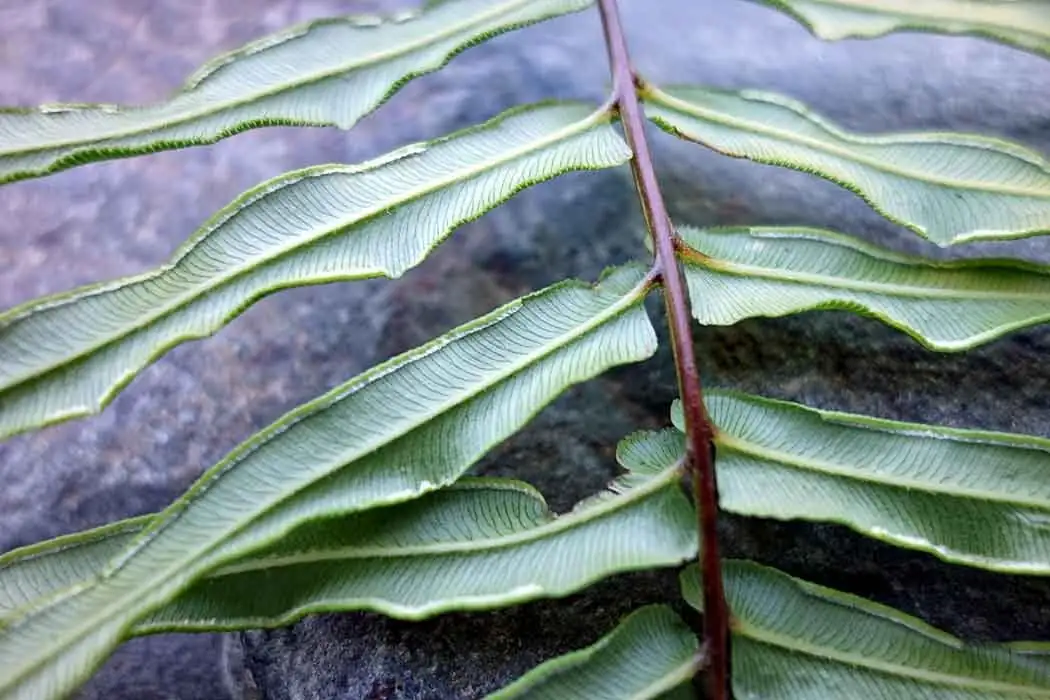
Ferns don’t flower—they bear spores. On mature fronds, look for neat lines or patches of spore clusters underneath. If the plant gets crowded or leggy, thinning a few of these fertile fronds improves airflow and helps maintain that elegant fountain shape.
Symbolism and “flower language”
Ferns are often linked with resilience and quiet elegance—verdant even without blossoms. Any “flower language” assigned to Pteris vittata is modern, metaphorical, and not rooted in traditional floral codes (it doesn’t flower, after all). Still, as a plant that stays poised while handling tough substrates, it’s an apt emblem of composure under pressure.
Final take
Pteris vittata is both a handsome, easygoing house fern and a scientific heavyweight in arsenic cleanup. As research sharpens the picture—from phosphate-mimicking uptake to vacuolar sequestration and the roles of PHT, HAC/ACR2, TIP/MIP, and ACR3-like players—its promise in phytoremediation remains real but nuanced. For the home grower, the path is simple: enjoy the airy fronds in clean potting mix, keep the light bright and gentle, and leave any arsenic-removal projects to carefully planned, safely managed efforts.