


Meet the Chinese brake fern (Pteris vittata), a lacy fountain of green that thrives on gentle light, steady moisture, and a touch of humidity. When it’s happy, it’s elegant and effortless. When it’s not, it tells you—through speckles, sticky patches, crispy tips, and webbing. Here’s your friendly, no-panic guide to diagnosing what’s wrong and fixing it fast.
First, set the stage for success
- Light: Bright, filtered light to part shade. Avoid hot, harsh midday sun. A sheer-curtained south/southeast window, or bright east/north exposure, is perfect.
- Temperature: Comfortable room temps; best around 18–27°C (64–81°F). Tolerates 13–24°C (55–75°F) well. Protect from cold drafts and anything below ~10°C (50°F).
- Humidity: Moderate is fine, but it looks best with 60–70%. In dry rooms, mist regularly, group plants, or move to a bright bathroom.
- Watering: Keep the mix evenly moist (never soggy). Water thoroughly and drain; don’t let it dry out. Expect more frequent watering in summer, less in winter.
- Soil: Moisture-retentive yet free-draining fern mix. Try 2 parts all-purpose potting mix + 1 part bark-based medium + 1 part horticultural charcoal.
- Size & habit: Clump-forming, typically 30–60 cm tall and wide in pots; arching, narrow fronds on wiry dark stems.
Now, let’s troubleshoot like a pro.
Fast diagnosis: what are the fronds telling you?
- Cottony tufts in crevices or on frond bases, sticky leaves, maybe ants: Mealybugs.
- Hard, dome-like brown/tan bumps that don’t scrape off easily; sticky honeydew or sooty mold: Scale insects.
- Fine webbing, sand-like dots that move, dull stippling on fronds—worse in dry air: Spider mites.
- Brown to black spots, sometimes with halos; spotting spreads on a few fronds: Leaf spot.
- Crispy tips/edges, especially after feeding; white crust on soil or pot rim: Fertilizer salt buildup.
- Yellowing, curling, or crispy fronds after hot sun or near a vent: Light scorch or dry drafts.
- Overall droop with fronds browning from tips after missed waterings: Underwatering/dry mix.
Pests, decoded—and how to beat them
Scale insects
- What you’ll see: Stuck-on bumps along stems and frond midribs, sticky residue, and sometimes sooty mold.
- Step-by-step fix:
- Isolate the plant.
- Gently wipe or scrape off visible scale with a soft cloth or a fingernail.
- Spray thoroughly with a ready-to-use horticultural oil or insecticidal soap, coating undersides and crevices.
- Repeat every 7–10 days for 3–4 rounds to catch new crawlers.
- Pro tips:
- Oils and soaps work on contact and have little residual effect; thorough coverage matters.
- Test-spray a small frond first and wait 48–72 hours to check for leaf spotting or scorch.
- Apply in the cool part of the day; avoid hot sun and heat-stressed plants.
Mealybugs
- What you’ll see: White, cottony clusters in joints and at frond bases, sticky honeydew.
- Step-by-step fix:
- Isolate and shower-rinse the plant, focusing on leaf undersides and crowns.
- Wipe away visible clusters.
- Follow with horticultural oil or insecticidal soap; repeat weekly until gone.
- Pro tips:
- Inspect nearby plants—mealybugs wander.
- Keep fronds dust-free; dust shelters pests.
Spider mites
- What you’ll see: Fine webbing between leaflets, stippled or dull fronds, worse in dry air.
- Step-by-step fix:
- Increase humidity (aim for 60–70%); avoid dry drafts from heaters/AC.
- Rinse fronds in the sink or shower, including undersides; allow to drain well.
- If needed, use insecticidal soap, repeating weekly until new growth is clean.
- Pro tips:
- Mites dislike moisture and moving air; a small fan nearby (not blasting) improves airflow.
- Keep the potting mix evenly moist—stressed ferns are easy targets.
Leaf spot

- What you’ll see: Discrete spots that may enlarge; a few fronds often bear the brunt.
- Step-by-step fix:
- Remove and discard affected fronds; sterilize shears between cuts.
- Water in the morning and avoid wetting fronds late in the day.
- Improve airflow by thinning very crowded or tall fertile fronds.
- If it persists, use a fungicide labeled for ferns and follow directions precisely.
- Pro tips:
- Don’t crowd the plant against glass or walls—stale air encourages spotting.
- Keep the crown free of soggy debris.
Quick wins for environmental hiccups
Salt buildup from fertilizer
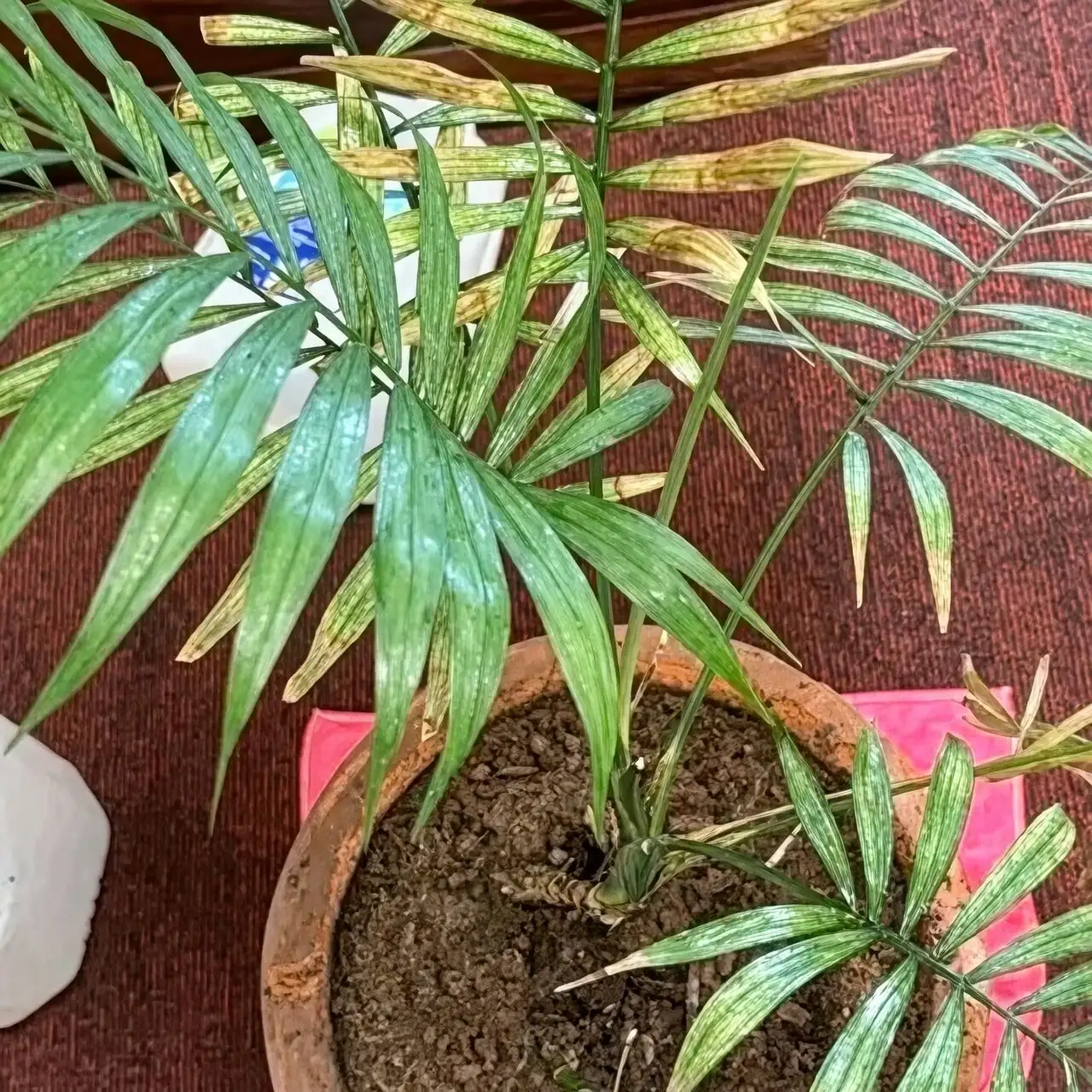
- Clues: Browned tips/edges, white crust on the soil or pot rim, slowed growth.
- Fix it fast:
- Leach the pot: Slowly pour 3–4 times the pot’s volume of plain water through the mix; let it drain completely.
- Feed lightly: Once a month in spring–early autumn at half strength. Keep fertilizer off fronds to reduce spotting.
- Make it routine: Flush with plain water every few feedings. Repot with fresh mix about every 2 years.
Dry drafts and humidity dips
- Clues: Crispy tips, yellowing, faster soil dry-down.
- Fix it fast:
- Move it away from heaters or AC vents by at least a meter or two.
- Boost humidity: regular misting in dry rooms, group with other plants, or park it in a bright bathroom. A humidifier is a sure win in winter.
- Ideal target: 60–70% RH keeps fronds sleek and green.
Light trouble
- Clues: Bleached or scorched patches = too much direct sun; stretched, sparse growth = too dim.
- Fix it fast:
- Use a sheer curtain for south/southeast windows, or shift to an east/north window or a bright shelf with filtered light.
Watering misses
- Clues: Crispy, curling fronds after missed waterings; droop with bone-dry soil.
- Fix it fast:
- Reset the rhythm: in active growth, aim for evenly moist—often about 3x weekly indoors in summer, depending on pot size, light, and temperature. In winter, water when the surface just begins to dry (often about weekly).
- Always water thoroughly, then drain. Never leave the pot standing in water.
Your gentle, low-impact toolkit
- Horticultural oils and insecticidal soaps are ideal first responders for scale, mealybugs, and mites.
- Keys to safe, effective use:
- Coverage counts; these products must touch the pests.
- Test a small area first; some plants are sensitive to soaps. Use only products labeled for plants; avoid homemade detergents, which can scorch foliage.
- Stick to label rates; higher concentrations can cause leaf injury.
- Apply during cooler hours and keep plants out of direct sun while wet.
A simple weekly routine (5–10 minutes)
- Scan undersides of fronds and stems for pests.
- Rinse or mist to support humidity, especially in dry rooms.
- Wipe dust from fronds so they can “breathe” and photosynthesize efficiently.
- Trim yellow or damaged fronds at the base.
- Rotate the pot a quarter turn for even growth and check that air can move around the clump.
Repotting, pruning, and propagation
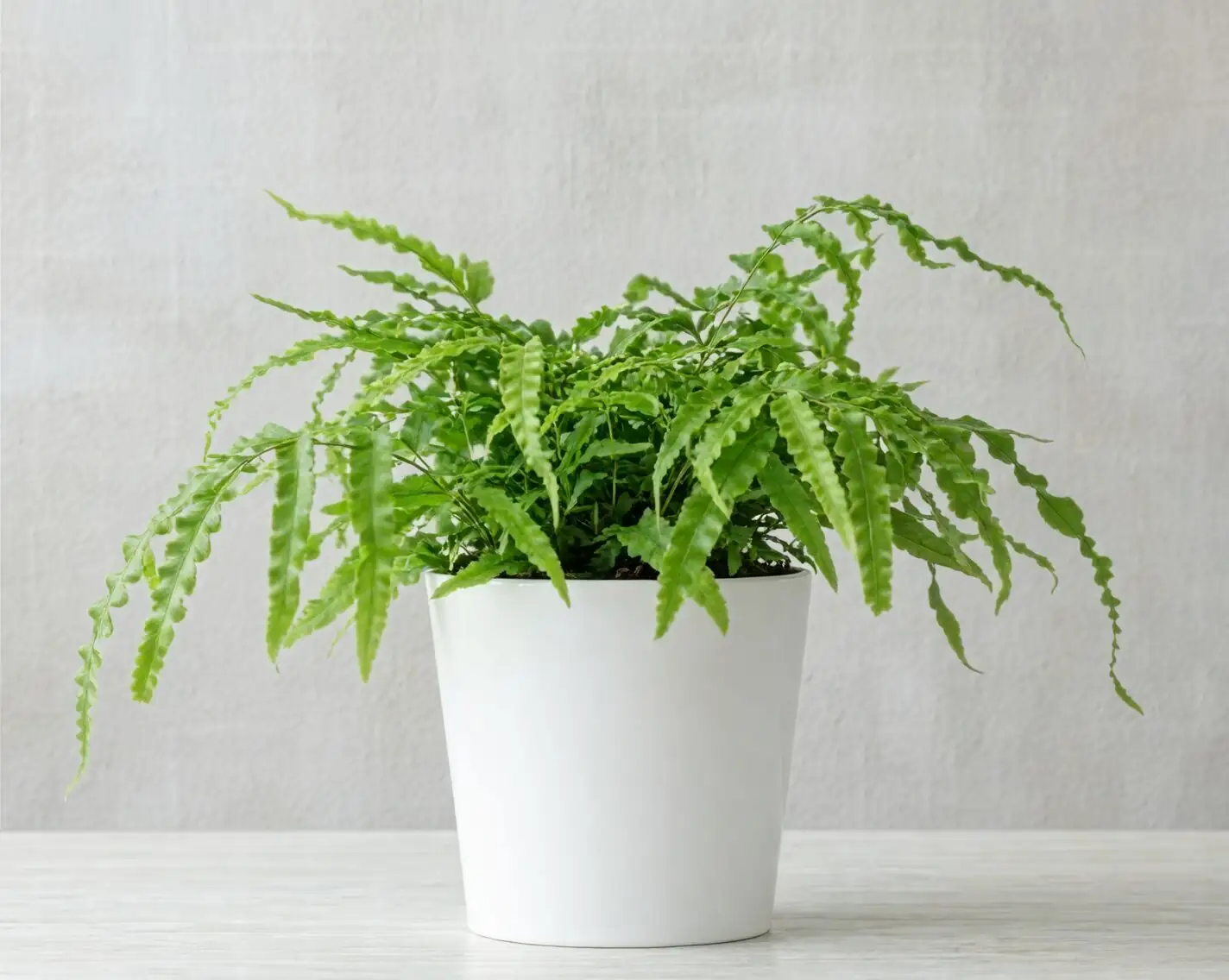
- Repot every ~2 years in spring, or sooner if roots crowd the pot. Step up only one size, or divide the clump to keep the same pot fresh and full.
- Prune anytime: remove brown, yellow, or messy fronds at the base; thin a few overly tall fertile fronds to improve airflow.
- Divide in early spring for new plants; keep divisions warm, evenly moist, and in filtered light until established.
Safety note
- Generally regarded as non-toxic or low-toxicity to people and pets, but nibbling can cause mild stomach upset. Keep out of reach of curious chewers.
A tiny grace note: meaning and marvels
- Symbolism: Ferns often stand for resilience and quiet elegance—grace without fanfare, staying green through the seasons.
- Fascinating fact: Pteris vittata is an arsenic “hyperaccumulator” studied for phytoremediation. Indoors, though, it’s simply a reliable, architectural beauty that’s tougher than many ferns when kept evenly moist and out of harsh sun.
With these quick diagnostics and fixes, your Chinese brake fern will bounce back from bugs and blips, staying lush, lacy, and serenely green—right where it belongs.