

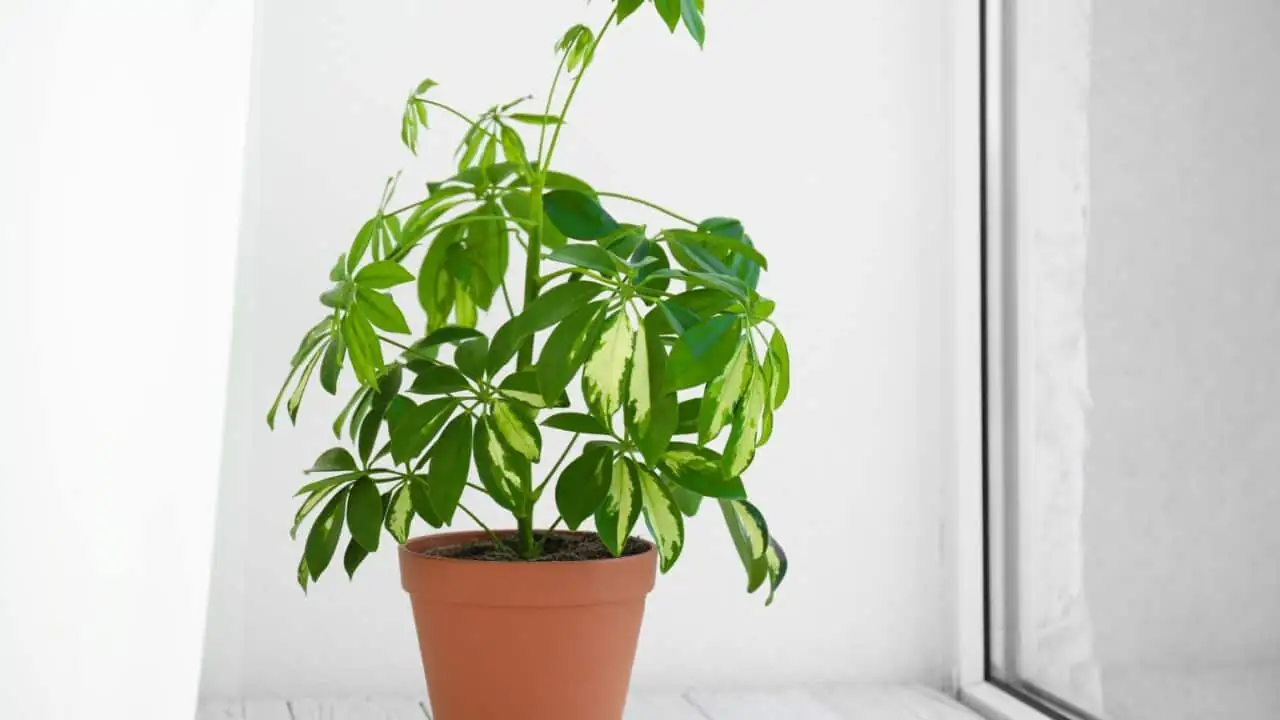
Think of your dwarf umbrella tree (Heptapleurum arboricola) as a steady, green metronome: give it the right seasonal cues, and it will keep time—pushing glossy palmate leaves in rhythm all year. This concise, do-and-done calendar lines up the big moves—repotting, feeding, pruning, summer sun smarts, and winter watering cutbacks—so growth stays calm, compact, and consistent.
Quick profile: what it likes best
- Light: Bright, indirect light; tolerates partial shade. Avoid harsh summer midday sun. East windows or filtered south windows are ideal. Variegated forms need brighter filtered light to keep their pattern.
- Water: Spring–autumn, water when the top 2–3 cm (about 1 in) dries. In winter, cut way back—often about once a month, and only when the mix is mostly dry. Never leave it sitting in water.
- Temperature: Warm suits it best, about 15–30°C (59–86°F). Avoid cold drafts. Prolonged chill below ~10°C (50°F) stresses it; ~5°C (41°F) risks injury.
- Humidity: Adaptable to typical homes; looks its best with moderate to higher humidity (around 60% if you can).
- Soil and pot: Free-draining mix. Try 2 parts quality potting mix to 1 part perlite/coarse sand, or add bark for extra air. A sturdy, heavier pot helps prevent tipping.
- Growth style: Upright, woody, fast, and eager to branch when pruned.
- Size indoors: Commonly 1–2 m (3–6.5 ft); can reach ~2.4 m × 1.2 m (8 × 4 ft) with age, strong light, and a bigger container.
- Safety: Toxic if ingested; sap can irritate. Keep away from pets and children.
The year-round care calendar
January–February: Hold steady, rest mode
- Water: Sparingly—often about once a month. Check that the potting mix is mostly dry before watering.
- Feeding: None.
- Light: Keep it bright but filtered; pull back from cold glass and away from drafts.
- Checkup: Dust leaves (better light capture), inspect for scale/mealybugs/mites, and improve airflow if the room is very still.
March–April: Spring reset and repot window

- Repot: This is prime time. Young, fast growers can be repotted yearly; large, established plants typically every 2 years or when rootbound. Step up just one pot size.
- Mix refresh: Use a free-draining blend (e.g., potting mix + perlite/bark). Choose a heavier pot for tall or top-heavy plants.
- Feeding restarts: Begin a balanced liquid feed monthly at half strength. If growth is vigorous and you’re attentive with watering, you can feed every 2 weeks at label strength.
- Watering: Switch from winter-light to active-mode—water when the top 2–3 cm dries, then drench and drain thoroughly.
- Light: Move toward the brightest indirect light you can offer. Rotate the plant weekly for even growth.
May–July: Prime pruning for shape and fullness
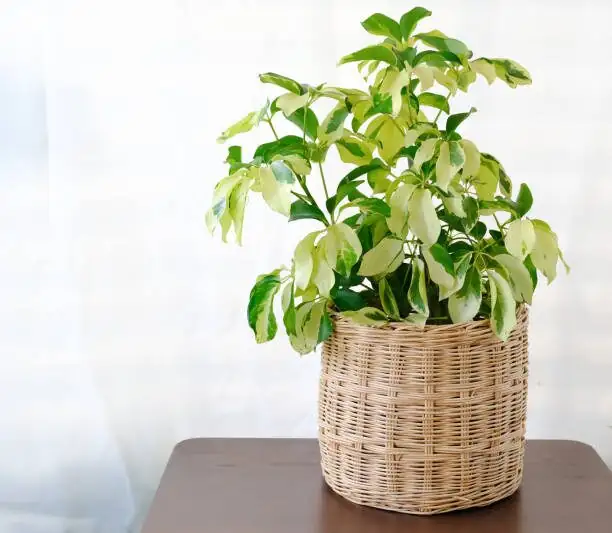
- Prune for branching: Cut back long stems by about one-third just above a node. This sparks side shoots and a denser canopy. Lightly refine after new shoots appear.
- Repeat shaping: 2–3 light trims across the growing season maintain a compact outline.
- Propagate: April–September is excellent for tip or semi-ripe cuttings (10–12 cm). Root in a very airy medium with warmth (~25°C / 77°F) and high humidity.
- Feeding: Continue your chosen rhythm—monthly at half strength, or every 2 weeks at label strength if growth is strong.
- Watering: Consistent—don’t swing from bone-dry to soaking-wet, which can trigger leaf drop.
July–August: Summer sun protection and steady hydration
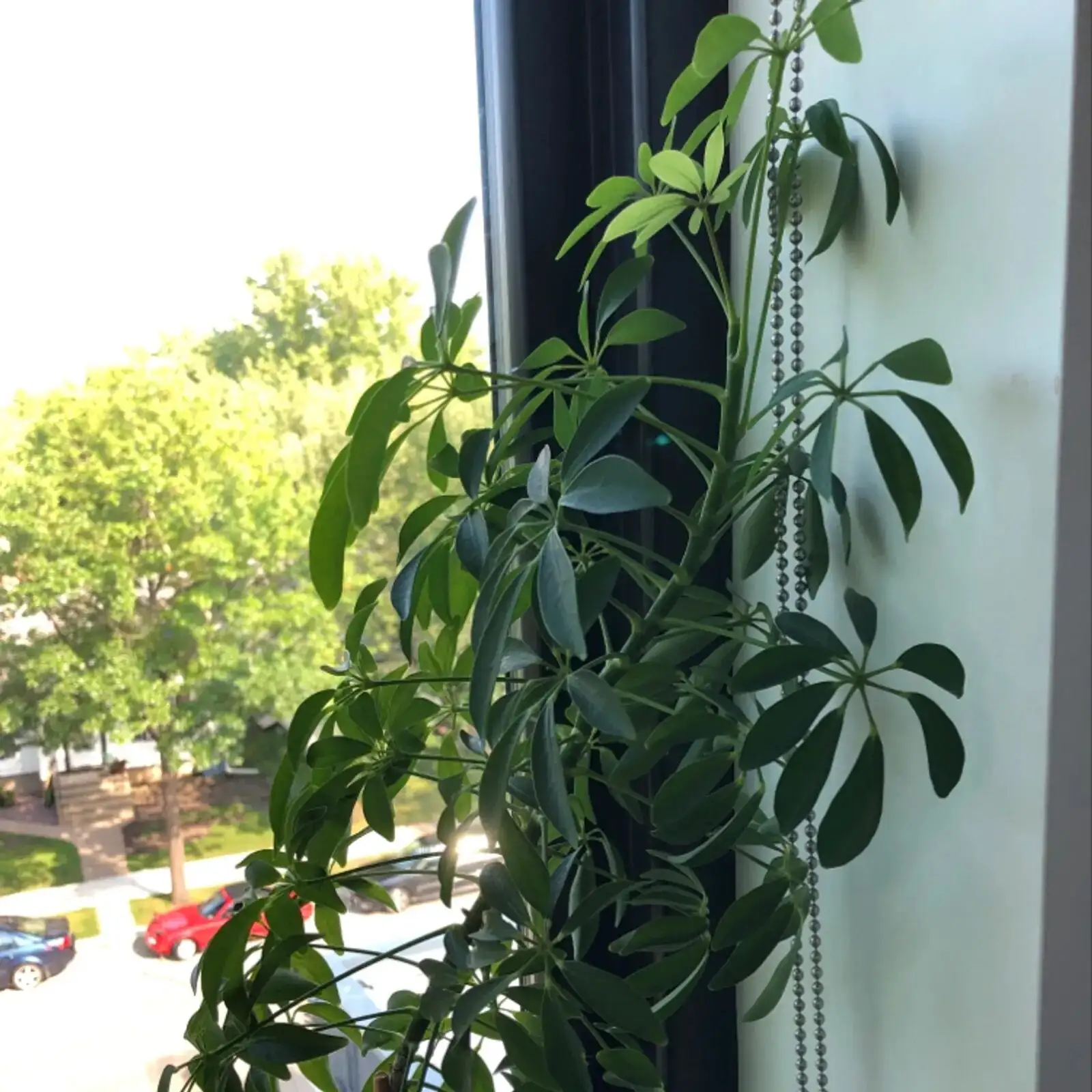
- Filter the light: Sheer curtains or a small pullback from intense windows prevent leaf scorch, especially at midday and for variegated types.
- Heat strategy: Keep warm but not stifling; maintain airflow. Water when the top layer dries, letting excess drain each time.
- Humidity help: Normal homes are fine, but 50–60% keeps foliage glossy. Use a pebble tray or humidifier; avoid over-misting in stagnant rooms—airflow matters.
- Pest watch: Spider mites love hot, dry air. Rinse foliage periodically, and act early with horticultural oil or insecticidal soap if you spot trouble.
September: Gentle taper
- Light trim: Do any final fine-tuning cuts early in the month as growth begins to slow.
- Feeding: This is often the last month of full feeding frequency. Prepare to reduce with shorter days.
- Watering: Begin easing intervals longer between waterings as dry-down times lengthen.
October–November: Wind-down
- Feeding: Pause or greatly reduce; most indoor plants won’t need fertilizer now.
- Watering: Less frequent; still water thoroughly when you do, then drain well.
- Indoor air shift: As heating starts, leaves may lose sheen. Focus on stable warmth and good airflow rather than heavy misting.
December: Low-key care
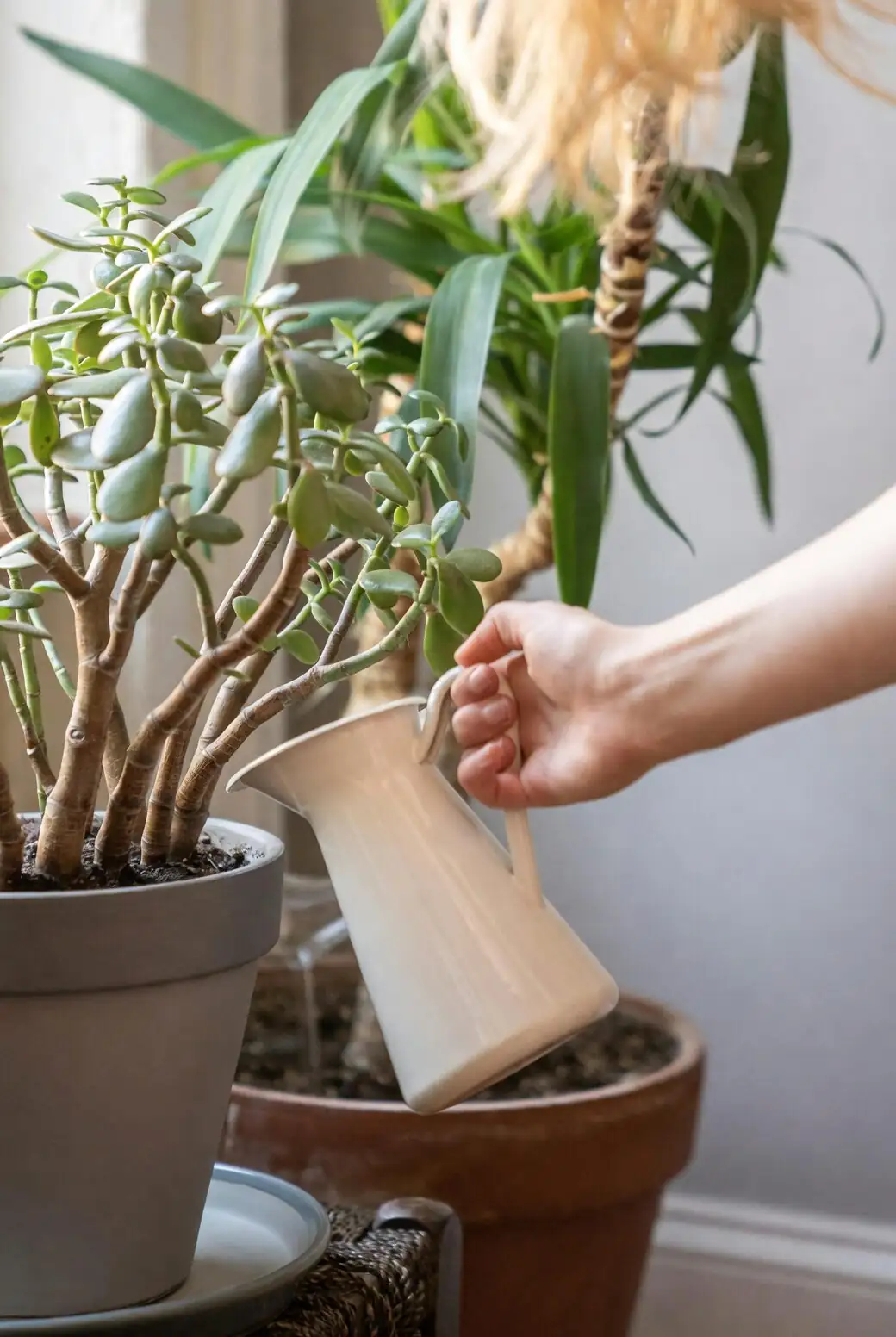
- Water: Minimal—often about monthly, only when the pot is mostly dry.
- No fertilizer: Let it rest.
- Placement: Bright, indirect light; away from drafts and cold panes.
- Patience: Some leaf drop can follow big light/temperature shifts. Keep conditions steady, and new growth will resume in spring.
Micro-adjustments by plant signals
- Leggy, stretched stems: Not enough light. Move closer to bright, filtered light and plan a shaping prune in spring.
- Variegation fading: Light is too low. Increase brightness (still filtered) to sharpen cream/yellow patterning.
- Sudden leaf drop: Often watering swings, overwatering, or a cold draft. Let the top 2–3 cm dry before rewatering, avoid chills, and stabilize placement.
- Sticky residue or stippled leaves: Check undersides for scale or mites. Isolate, wipe leaves, then use horticultural oil/soap and repeat as directed.
Kit and technique tips that pay off
- Watering technique: Soak thoroughly until excess drains; discard runoff. Do not let the pot sit in a saucer of water.
- Avoid extremes: Repeatedly going bone-dry then saturating encourages leaf drop and weak growth.
- Support: A stake or moss pole helps keep multi-stemmed plants upright and tidy in bright rooms.
- Mix matters: Airy substrate is your insurance policy—root rot is almost always a drainage problem.
Pruning, repotting, and feeding at a glance
- Repot: Spring. Annually when young; every ~2 years for large, established plants.
- Prune: Spring into early/midsummer (roughly May–July). Take stems back by about one-third above a node; refine after new shoots appear.
- Feed: Spring–autumn. Monthly at half strength is a safe baseline; or every 2 weeks at label strength if growth is vigorous. Stop for winter.
Safety and health
- Toxicity: Keep away from pets and children; sap can irritate skin and mouth. Wash hands after pruning.
- Pests/disease: Watch for spider mites, scale, and mealybugs. Treat early. Improve drainage if you suspect overwatering; increase ventilation to prevent leaf spot.
A quick note on symbolism
With its protective, umbrella-like canopy, this plant is often linked to shelter, resilience, and good fortune—an easygoing, evergreen “guardian” for living rooms and offices alike.
Follow this calendar, and your Heptapleurum arboricola will cruise through the seasons—no drama, just steady, glossy growth and the satisfying hush of a well-timed trim.