

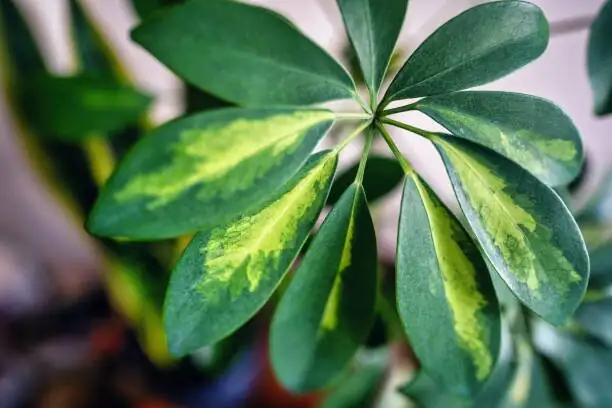
The first thing you notice about Heptapleurum arboricola is how it throws its leaves like a little parasol—smooth, glossy “fingers” splayed around a central hub, a living emblem of shelter. It’s no wonder modern Chinese flower language (花语) reads this plant as a talisman of protection, resilience, and abundance. Beneath that soothing canopy lies a story that stretches from folk observation to feng shui practice—and right into the heart of contemporary home culture.
Meet the plant behind the poetry
Heptapleurum arboricola—best known as the Dwarf Umbrella Tree and long traded under the name Schefflera—is an evergreen member of the Araliaceae family. Native to southern China (including Hainan) and Taiwan, it has become a global indoor classic because it’s:
- Easygoing and fast-growing
- Glossy and evergreen, with palmate leaves
- Happy as a compact bush or trained into a small indoor tree (often staked or on a moss pole)
- Available in lush green and eye-catching variegated cultivars
Indoors, it usually reaches 1–2 m, occasionally more with age, bright light, and a roomy container.
From sheltering leaves to “flower language”
What “flower language” really is
In China, modern “flower language” (花语) isn’t a single ancient canon. Much of what we see today is a 20th–21st century synthesis shaped by floristry, popular media, and feng shui writing. For houseplants like the Dwarf Umbrella Tree, meanings are distilled from:
- Visual metaphor (what the plant looks like)
- Folk associations (what people noticed and passed along)
- Placement traditions (how the plant is used in space and ritual)
In other words: the symbolism is living culture, not a fixed scripture.
How the umbrella became a promise
- Shelter: The leaf whorl suggests a protective canopy—an “umbrella” that covers the household. The form itself reads as a pledge of care.
- Resilience: It stays glossy and green year-round and remains forgiving in typical homes—an everyday parable of steady endurance.
- Abundance: Those many leaflets radiating from a center evoke fullness—like spokes on a wheel turning toward prosperity.
Together, these create a modern Chinese reading of the plant as protective, resilient, and generously life-affirming.
Why the Chinese name is goose-foot: 鹅掌藤
鹅掌藤, literally “goose-palm vine,” refers to the leaf shape: palmately arranged, oval “fingers” that resemble a goose’s foot. Despite the “藤” (vine) in the name, this plant is a woody shrub to small tree. The nickname is pure imagery—just as “umbrella tree” draws from the same leaf design. Two metaphors, one leaf.
Feng shui placement: where symbolism meets sunlight
The umbrella-like canopy doesn’t just look protective; in feng shui practice, it’s invited to cultivate growth, harmony, and prosperity—especially when placed with intention and good care.
Best placements to amplify meaning
- East-facing spaces: A classic spot for Wood element and Zhen (震) qi—energies of spring, vitality, and new beginnings. An east window with filtered light suits both feng shui symbolism and plant health.
- Living rooms and offices: Prominent, communal zones reinforce the “shelter” meaning and keep the plant’s lively presence where it supports conversation and focus.
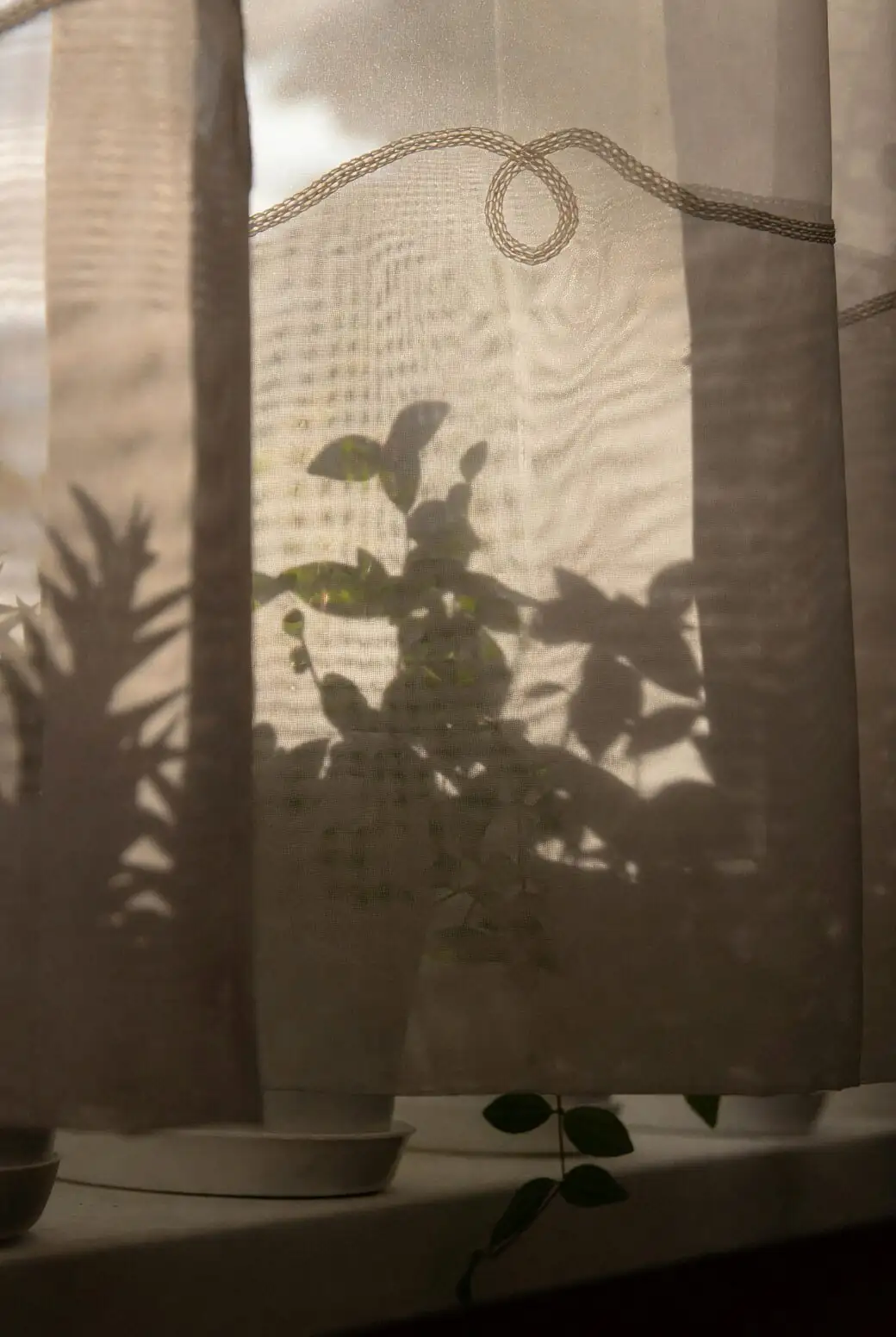
- Near bright windows, not in harsh sun: Think “dappled” or “sheer-curtained” light—especially for variegated forms that need brightness without scorch.
- Avoid dark corners and stagnant pockets: Both symbolism and horticulture suffer in low, stale spaces.
- Don’t block doors or pathways: Let the plant “welcome” rather than obstruct. Proportion matters; avoid overbearing specimens in tight rooms.
Optional feng shui refinements:
- Pot colors and shapes: Green or brown tones (Wood and Earth) in rectangular or organic shapes complement the plant’s energy while keeping rooms grounded.
- Keep it contained and curated: Overgrowth can tip the Wood element out of balance; aim for a rounded, umbrella-like canopy.
Horticultural care that supports the symbolism
Healthy qi begins with healthy leaves. A few essentials:
- Light: Bright, indirect light is ideal. An east window or filtered south window works well. Avoid intense midday sun that can scorch leaves.
- Temperature: Prefers warm, stable conditions—about 15–30°C (59–86°F). Avoid cold drafts; prolonged chill below ~10°C (50°F) stresses the plant, and ~5°C (41°F) risks injury.
- Humidity: Adaptable to homes, but looks best with moderate to higher humidity around 60% if you can manage it. In winter, favor steady warmth and airflow over heavy misting.
- Watering: In spring–autumn, water when the top 2–3 cm (about 1 in) of mix is dry; soak thoroughly, then drain. Never leave it sitting in water. In winter, reduce sharply—often monthly is enough, depending on your home.
- Soil and potting: Use a free-draining mix (e.g., potting substrate with added perlite/coarse sand). A sturdy, heavier pot helps prevent tipping as it grows top-heavy.
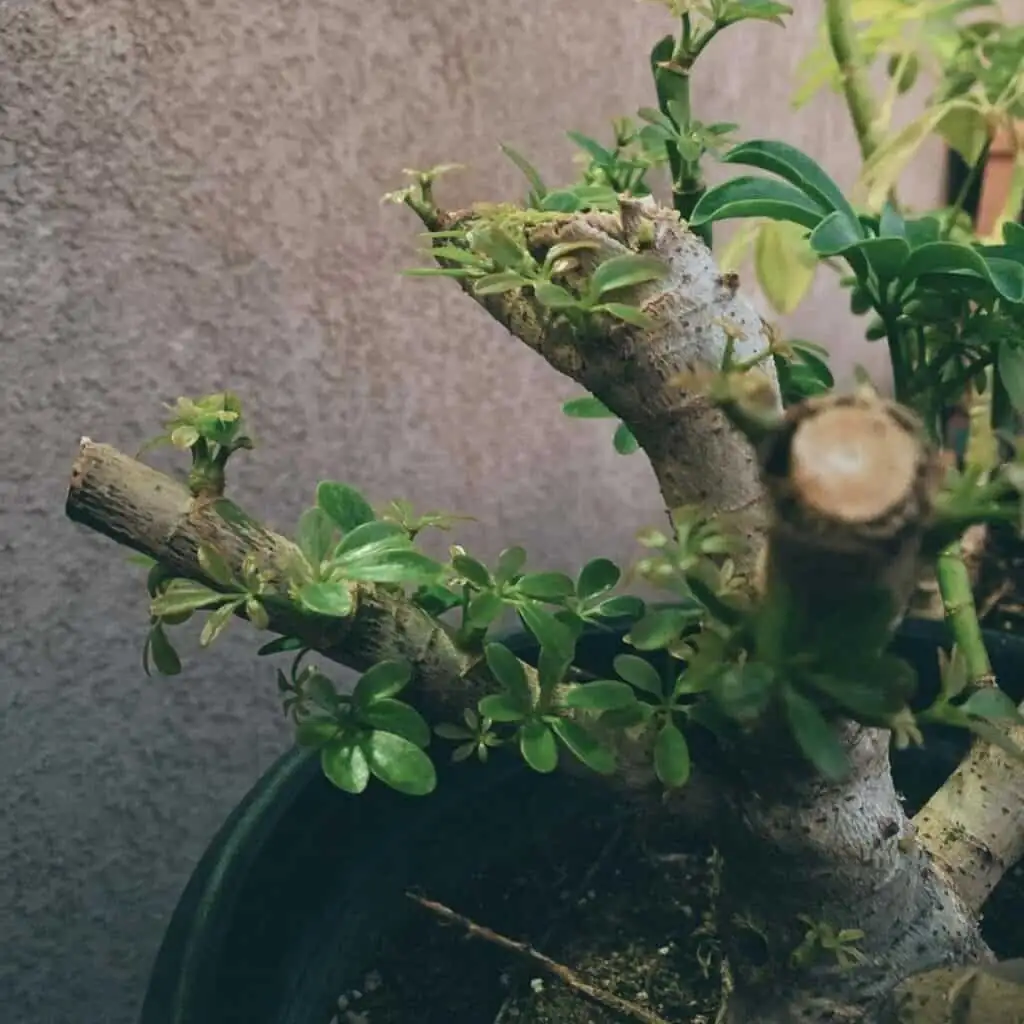
- Pruning for the canopy: In spring to early/midsummer (roughly May–July), cut back lanky stems by about one-third just above a node. Repeat light shaping 2–3 times to build a dense, protective “umbrella.”
- Repotting: Typically in spring. Young plants often appreciate yearly step-ups; larger, established ones are fine about every two years or when rootbound.
Tip: Variegated cultivars keep their creamy patterns best in brighter (still indirect) light.
Culture you can practice: quiet rituals of resilience
- “Polish the shield”: Wipe dust from the leaves to keep that glossy, sheltering surface reflective and vigorous.
- Share the shelter: Root a few stem cuttings in warm months and gift them—propagating the symbolism of protection and plenty.
- Intention at the threshold: Place a well-shaped specimen near (but not blocking) an entry to evoke welcome and cover.
- Seasonal renewal: A spring pruning becomes a ritual of resilience—cutting back to grow forward.
A quick cultural FAQ
Is 鹅掌藤 really a vine?
No. Despite the name ending in “藤,” Heptapleurum arboricola is a woody shrub/small tree. Many nursery plants are trained upright on stakes or moss poles.
Where should I place it for prosperity and growth?
East-facing rooms or walls are a classic feng shui choice for growth (Wood element). Ensure bright, indirect light and avoid cramped or stagnant corners so both energy and plant can thrive.
How do I keep that umbrella canopy full and shapely?
Give brighter indirect light and prune during late spring to early summer—cut back long stems just above a node to force branching, then lightly refine after new shoots appear. Repeating this 2–3 times builds a dense, rounded crown.
Safety, always
This plant is toxic if ingested; its sap can irritate skin and mouth and may cause mild gastrointestinal upset in people and pets. Keep it out of reach of children and animals, and wash hands after pruning.
Why it resonates now
In an age that longs for steady havens and quiet endurance, the Dwarf Umbrella Tree reads almost like a blessing you can water. With leaves arranged like a canopy, evergreen patience in its bones, and a cultural script that celebrates shelter, resilience, and abundance, Heptapleurum arboricola turns a bright corner or calm entryway into something gentler—a place where growth feels protected, and prosperity looks like many leaves cupped together, catching the light.