

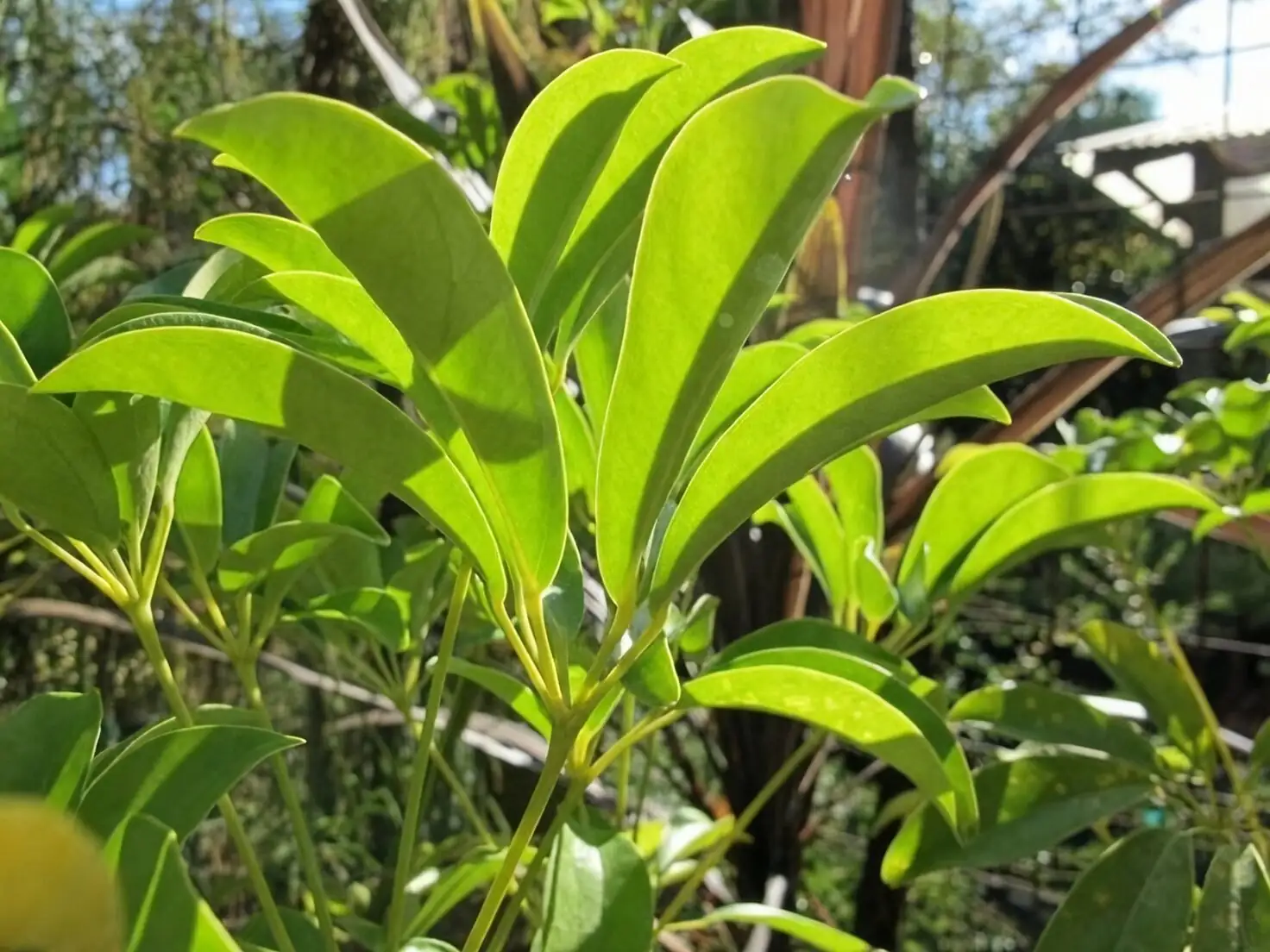
Imagine a glossy, many-fingered hand catching dapples of light in a forest understory—calm, bright, and a little theatrical. That same hand now waves from apartment windows in London and Lagos, softens office lobbies in Taipei, and leans companionably toward kitchen nooks in São Paulo. Heptapleurum arboricola—still widely sold under its older trade name Schefflera arboricola—made that journey with enviable grace, carrying the look of a tiny umbrella and the poise of a born survivor.
Rooted in the subtropics: southern China and Taiwan
Long before it was an interior-design staple, this evergreen shrub grew in the warm, humid landscapes of southern China (including Hainan) and Taiwan. There, it thrives in bright, filtered light along forest edges and understories—conditions that taught it two life skills modern homes prize: composure in shade and a fondness for good airflow.
Even its Chinese name, 鹅掌藤 (é zhǎng téng, “goose-foot vine”), nods to its leaf shape. Each leaf radiates several glossy, oval leaflets like outstretched toes—palmate, sculptural, and unmistakable. That iconic geometry would later help it conquer the world’s interiors, one bright living room at a time.
From mountain mist to office lobbies: the houseplant conquest
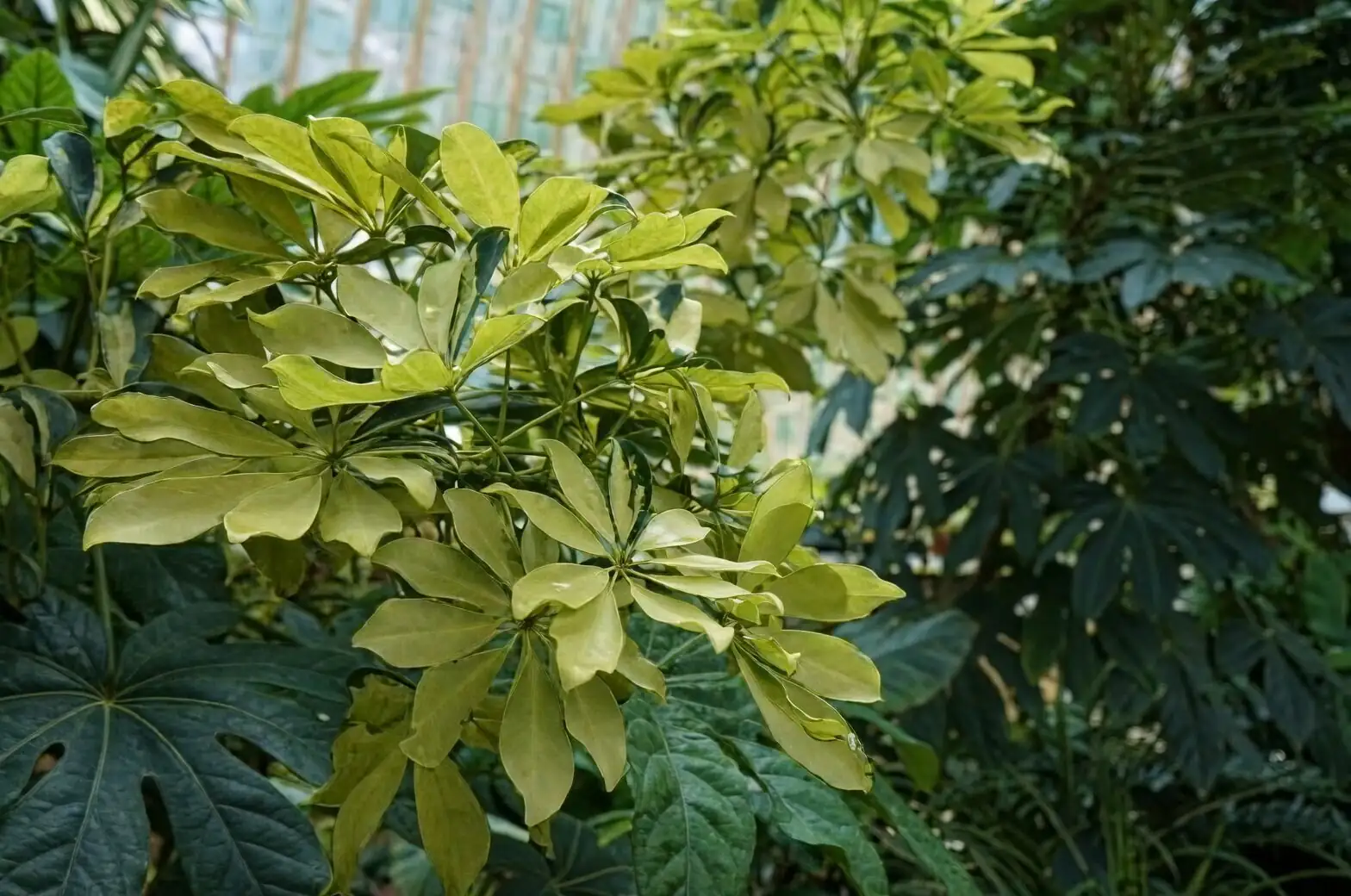
By the mid-to-late 20th century, growers realized this species could handle what many plants can’t: bright indirect light instead of full sun, ordinary household humidity, and the occasional lapse in watering. It also grows fast, responds brilliantly to pruning, and can be trained on a stake or moss pole—recipe enough to turn a forest understory shrub into a star of interior landscaping.
- It adapts to bright rooms with filtered sunlight (think an east window or a south window with a sheer).
- It can be kept as a dense, tabletop shrub or allowed to mature into a tidy indoor tree.
- It rarely flowers indoors—perfectly fine, because the foliage is the main event.
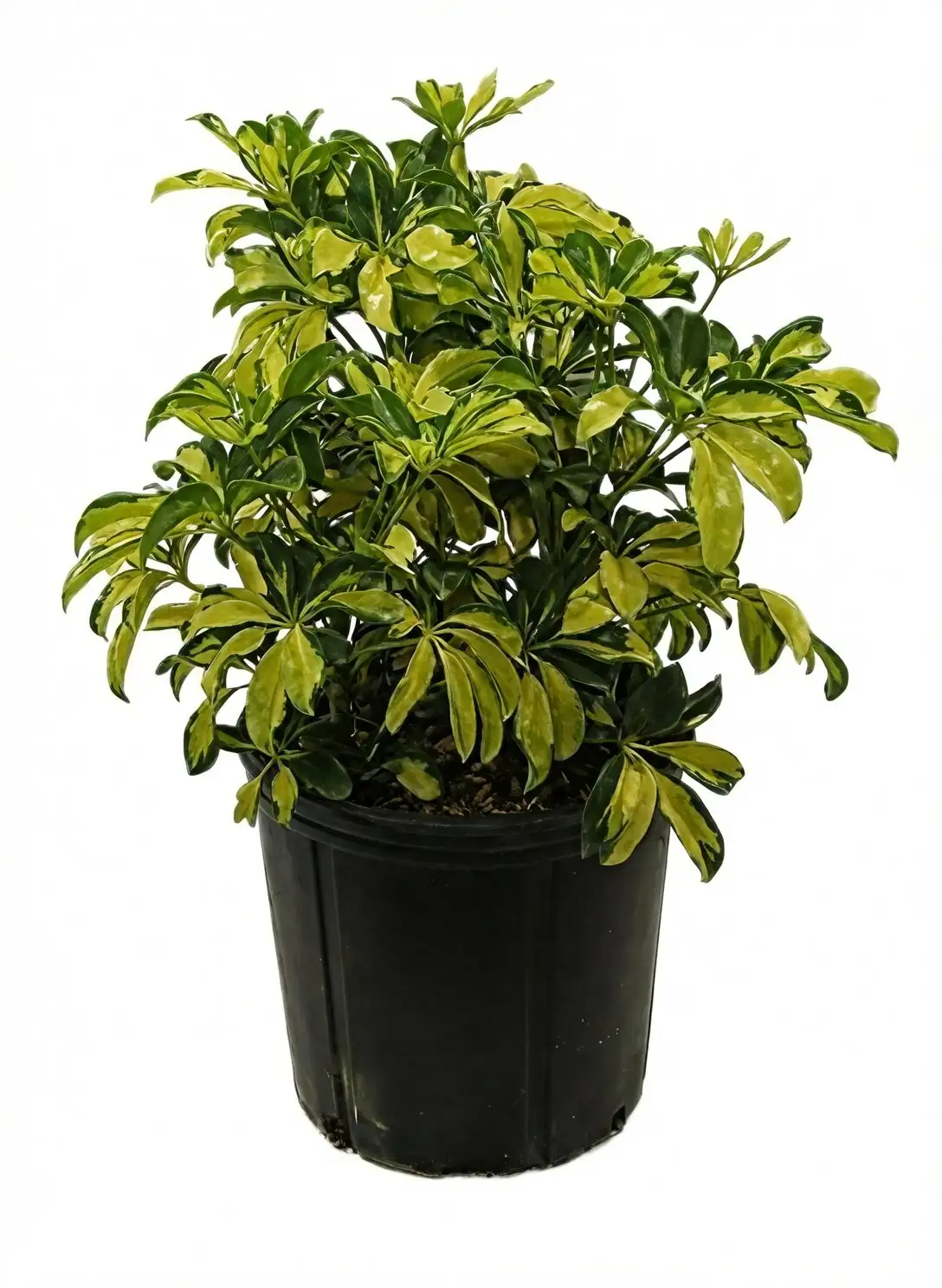
Variegated forms accelerated its fame, splashing cream and gold across those umbrella-like leaflets. You’ll meet names like ‘Dazzle’, ‘Compacta’, and the cream-marbling ‘Charlotte’ in shops—each a fresh take on the same reliable green architecture.
The indoor survival toolkit (quick care that actually works)
- Light: Bright, indirect light is ideal. Avoid harsh midday sun that can scorch leaves; variegated forms need brighter, filtered light to keep their pattern crisp.
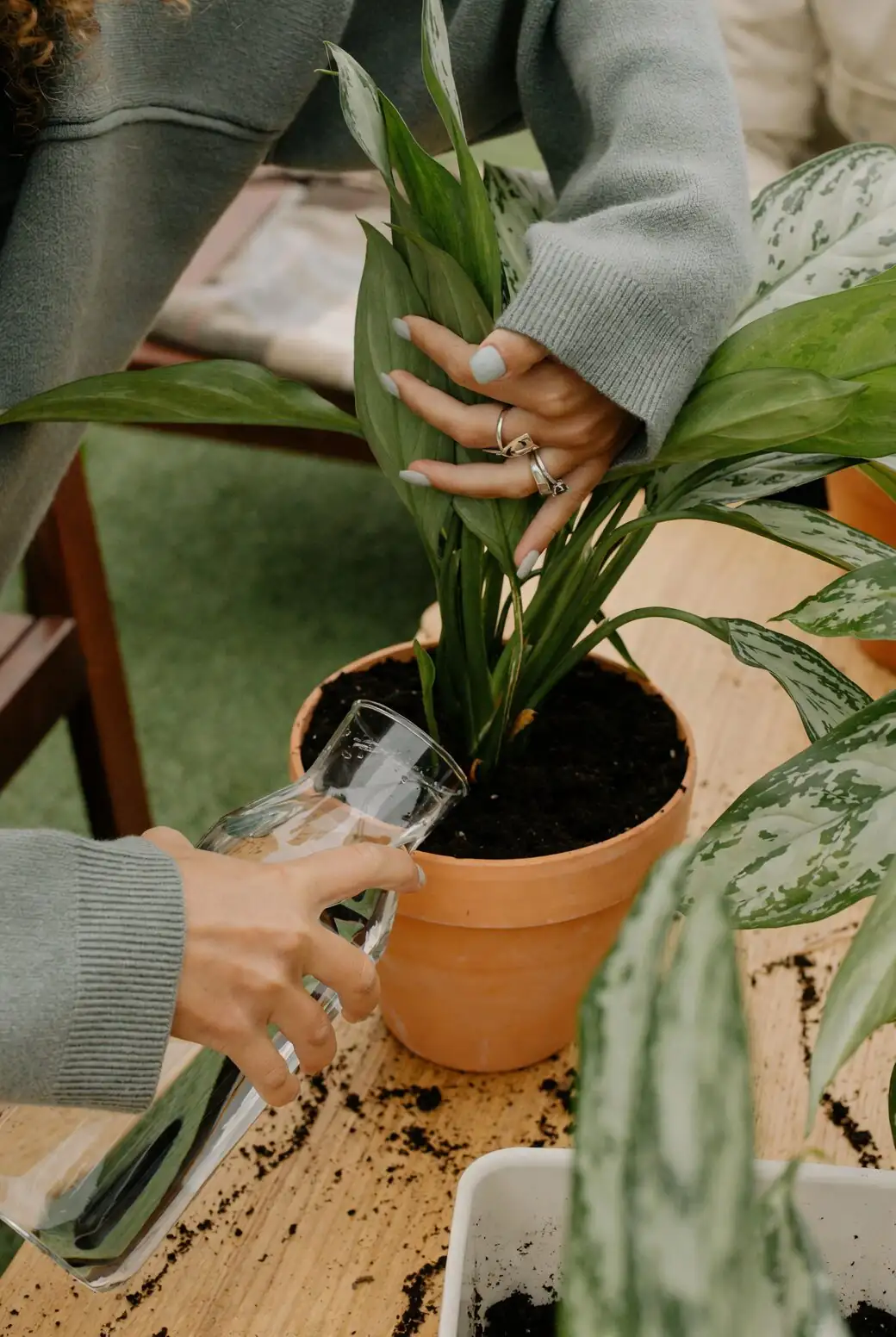
- Water: Spring–autumn, water when the top 2–3 cm (about 1 in) of mix is dry; drench, then let excess drain. Never leave it standing in water. In winter, reduce sharply—often about monthly in cool, low-light rooms.
- Temperature: Happy warm—roughly 15–30°C (59–86°F). Avoid prolonged chill below about 10°C (50°F); near 5°C (41°F) risks injury.
- Humidity: Adaptable to normal homes; looks best with moderate to higher humidity around 60%. Pebble trays, a humidifier, and steady warmth help in dry seasons.
- Soil and pot: Use a free-draining potting mix (add perlite or bark for air). A heavier pot helps prevent tipping as it gets taller.
- Pruning for shape: In spring to early/midsummer, cut back long stems by roughly one-third just above a node to spark branching. Lightly tidy again after new shoots appear.
- Pests: Spider mites (especially in dry air), scale, and mealybugs are the usual suspects. Wipe leaves, then treat early with horticultural oil or insecticidal soap as needed.
- Safety: Toxic if ingested; sap can irritate. Keep away from curious pets and kids and wash hands after pruning.
A familiar face with a new name: why Schefflera became Heptapleurum
For decades, the plant world called this species Schefflera arboricola. Then modern taxonomy stepped in—not to be fussy, but to be accurate. As botanists compared DNA and floral structures across the ginseng family (Araliaceae), they found that the old, catch‑all Schefflera wasn’t one true family branch but several distant ones grouped by looks rather than lineage.
To straighten the family tree, taxonomists revived Heptapleurum for a major Asian group that includes the “umbrella plants” so common indoors. Heptapleurum arboricola is the current, correct name; you’ll still see “Schefflera” on tags because the trade moves slower than science. The plant itself hasn’t changed—only our map of its relatives. In short: the new name better matches its real kin, while the care you give it remains exactly the same.
Anatomy of a crowd‑pleaser
- Form: Upright, woody, and fast-growing; easily trained on a stake or moss pole.
- Size indoors: Commonly 1–2 m (3–6.5 ft); with age, space, and light it can reach about 2.4 m × 1.2 m (8 ft × 4 ft).
- Foliage: Palmately compound leaves with multiple glossy, oval leaflets. Green forms are classic; variegated cultivars show cream/yellow patterns that shine brightest in good light.
- Flowers and fruit: Indoors, flowers are rare. Outdoors in warm climates, mature plants produce small greenish flowers in branched clusters, sometimes followed by small berries.
How it wins (and how to help it keep winning)
- Keep it bright but filtered. A sheer curtain over a sunny window is your plant’s best friend.
- Water with rhythm. Avoid the “bone-dry, then flood” cycle—this yo-yo often triggers leaf drop.
- Edit the architecture. Prune in growing season to curb legginess and build a fuller canopy; weak, stretched shoots can be removed to compact the silhouette.
- Repot with intent. Step up a size in spring when rootbound; young, vigorous plants often appreciate annual moves, while larger specimens usually need repotting every two years.
Troubleshooting tales you’ll actually use
- Leaves dropping? Most often it’s overwatering, a cold draft, or light that’s too low. Let the mix dry more between waterings, keep it above 15°C (59°F), and shift it to brighter indirect light.
- Leggy growth and small leaves? It’s asking for more light. Move closer to a bright window and prune to encourage branching.
- Sticky leaves or webbing? Check for scale, mealybugs, or mites. Wipe, then treat early; repeat treatments are usually needed to catch successive pest stages.
Culture, feng-shui flair, and the “flower language” question
People often link the dwarf umbrella tree with protection, resilience, and good fortune—an evergreen emblem of shelter and abundance. The symbolic logic is visual and immediate: a living umbrella that casts calm over a space. While you’ll see this framed as “flower language,” it’s less a classical, old-world system and more a modern, houseplant-era intuition shaped by feng‑shui‑style design. In practice, the plant’s generous canopy and steady growth simply make rooms feel buffered and alive.
Epilogue: the little umbrella that could
From the bright understories of southern China and Taiwan to your favorite reading chair, Heptapleurum arboricola has had a gentle kind of conquest—one glossy leaflet at a time. Its new name honors a sharper understanding of plant lineages; its old charms still do the heavy lifting. Give it filtered light, a free-draining mix, and a thoughtful spring haircut, and it will repay you with year‑round greenery shaped exactly to your space—tabletop shrub, braided trunk, or small indoor tree beneath your own, perfectly measured canopy.