

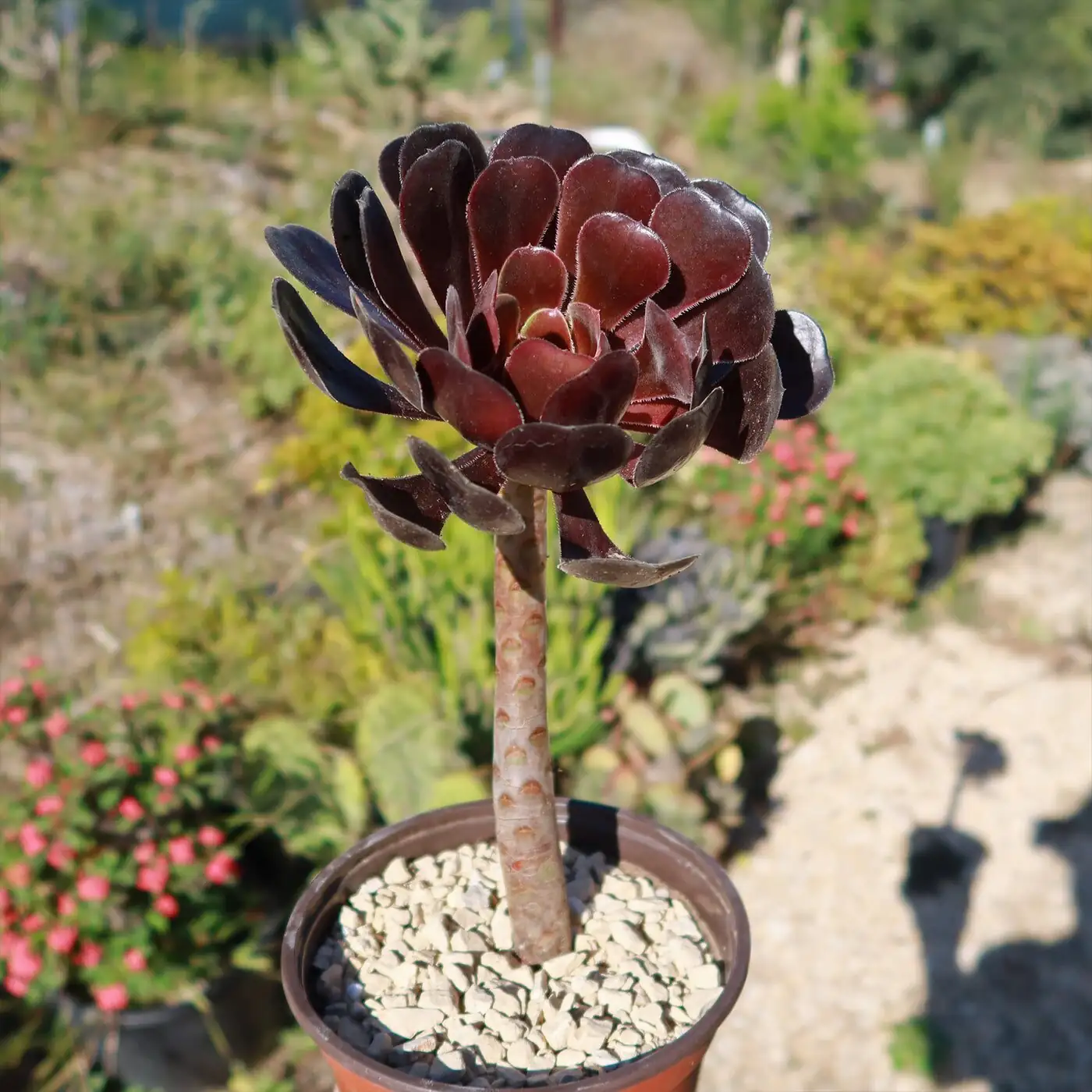
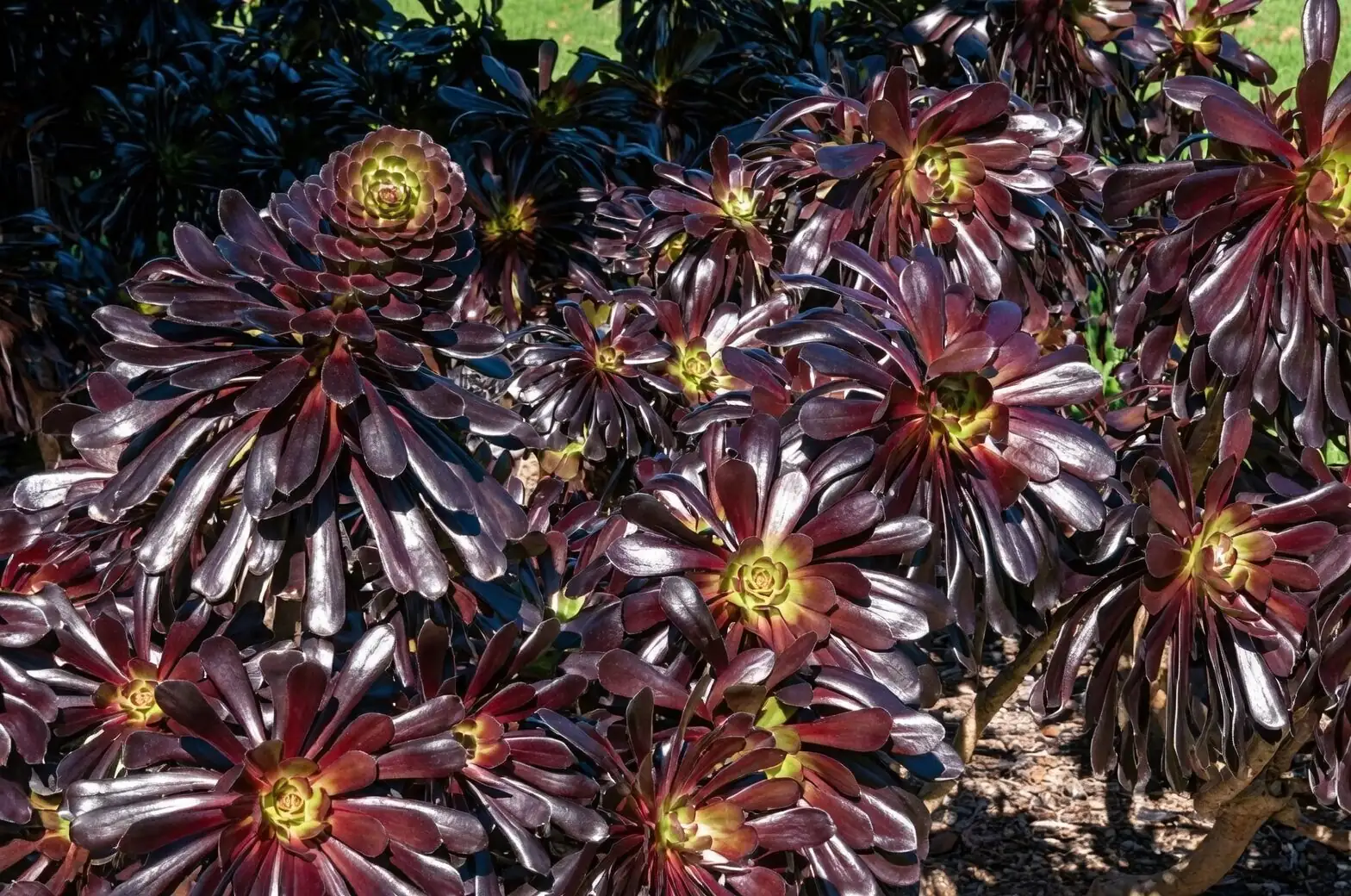
Forget “just another succulent.” Aeonium arboreum ‘Zwartkop’ is a drama piece—rosettes so deep burgundy-purple they read as black, lifted on woody stems like a bouquet of midnight roses. The trick? Treat it like the cool-season grower it is. Use this friendly, checklist-style calendar to align light, water, and pruning with its autumn–spring rhythm—and to nail those half-strength feeds, spring bloom clean-up, and gentle summer sips.
H2: Quick ID and vibe
- Common names: Black Rose Aeonium, Black Tree Aeonium, Aeonium ‘Zwartkop’
- Family: Crassulaceae; a dark-leaved cultivar of Aeonium arboreum (species native to the Canary Islands)
- Habit: Upright, branching succulent; tight, glossy rosettes that darken with strong light and cool seasons
- Size in pots: Often compact when young; with age and pruning, can reach around 60 × 60 cm (24 × 24 in)
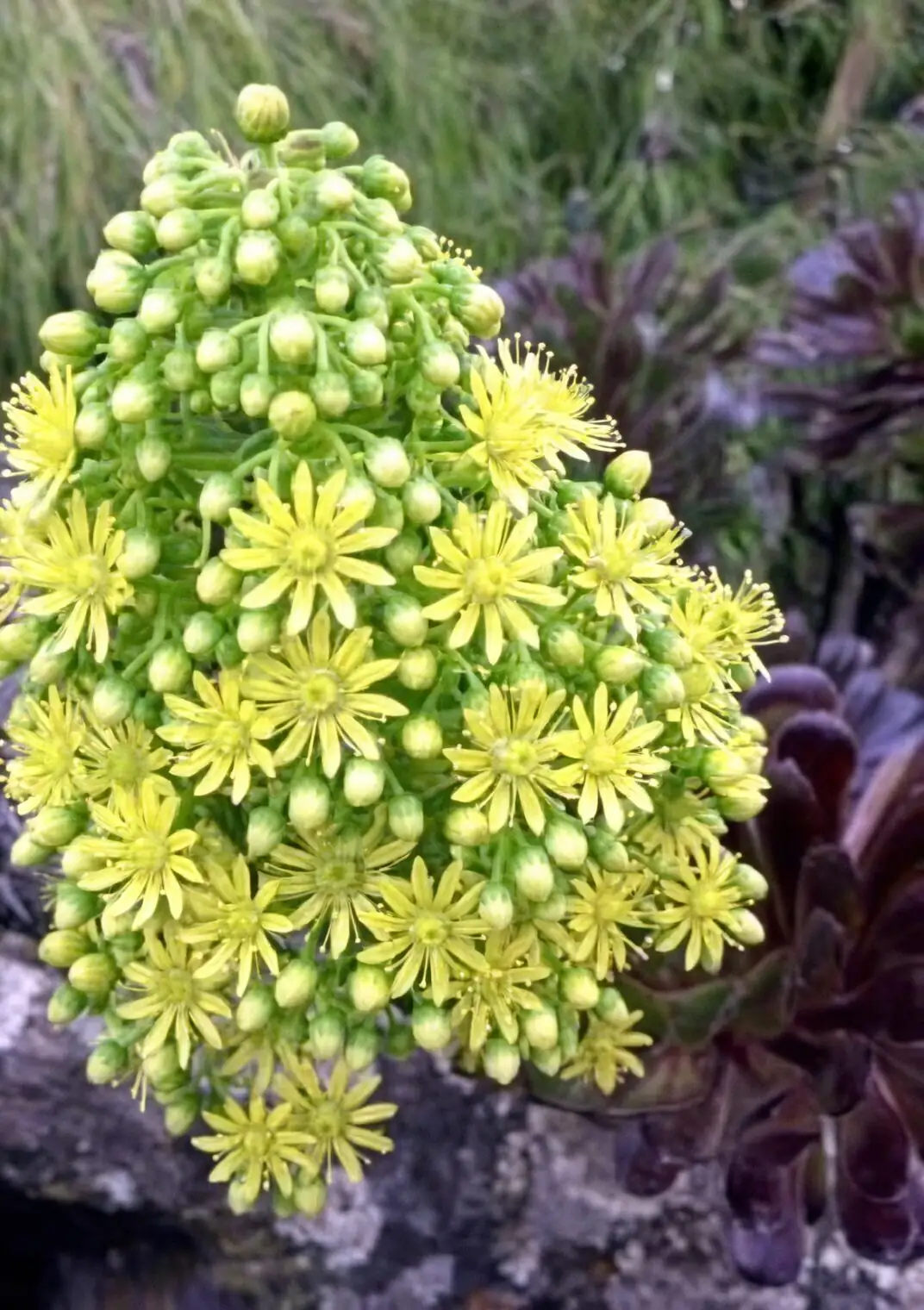
- Flowers: Clusters of small yellow stars in spring; the blooming rosette declines afterward, while side rosettes carry on
H2: Season-by-season checklist calendar
H3: Autumn (cooler days return: main growth resumes)
- Light
- Shift to the brightest spot you have (east or south exposure is great); add sheer at midday if it’s scorchy behind glass.
- Goal: strong light to keep those rosettes deep burgundy-to-near-black and compact.
- Water
- Water deeply, then drain fully. Rewater when the top layer dries. Never leave the pot sitting in water.
- Feeding (half strength)
- Start monthly feeding at 1/2 strength with a balanced or low-nitrogen succulent fertilizer.
- Air & temps
- Sweet spot: roughly 20–25°C (68–77°F). Good airflow; low-to-average humidity.
- Tidy
- Remove any shriveled basal leaves to improve airflow around the crown.
H3: Winter (cool and bright: steady growth, but mind the chill)
- Light
- Keep it in the brightest window or under strong grow lights; rotate the pot every few weeks to even out growth.
- Water
- Water when the surface dries, but lean drier in cool rooms to prevent rot.
- Feeding (half strength)
- If it’s actively growing, continue monthly 1/2-strength feeds. If growth slows due to lower light and cooler temps, you can skip a month.
- Temperature guardrails
- Keep frost-free. Aim to stay above about 6°C (43°F); protect carefully as temps approach 0°C (32°F).
- Check stability
- As stems elongate, the plant can get top-heavy. Use a weighty pot (with drainage) and consider a decorative top-dressing of stones for balance.
H3: Early spring (peak showtime: possible bloom + prime tune-up)
- Flowers
- Watch for upright clusters of yellow, starry blooms on mature rosettes.
- After blooming: let that rosette dry and decline naturally, then remove it cleanly to tidy and redirect energy to side rosettes.
- Water and feed
- Keep the deep-soak-then-dry cycle; continue monthly 1/2-strength feeding.
- Repotting window
- Best time to repot (every 2–3 years or if the mix stays wet too long). Move up just one pot size and refresh with a fast-draining succulent mix cut generously with grit/pumice.
- Pruning and shaping
- Best timing for structural pruning. Cut back leggy stems to just above a node to encourage branching and a fuller silhouette.
- Remove dried lower leaves and any spent bloom stalks.
H3: Late spring (still growing, heat on the horizon)
- Light
- Maintain strong light; introduce a touch of midday filtering if heat builds behind glass.
- Water and feed
- Continue the water-when-surface-dries rhythm.
- This is usually the last month for half-strength feeding before summer slowdown.
- Pest sweep
- Inspect flower stalks and leaf axils for aphids, mealybugs, scale, and whiteflies. Treat early with insecticidal soap or horticultural oil and repeat as needed.
H3: Summer (semi-dormant pause: “gentle sips” only)
- Water
- This is the “sip season.” Keep the mix almost dry. Give just a small drink if rosettes begin to wrinkle—no soaking.
- Light and heat
- Bright light is fine, but protect from harsh midday sun in heatwaves, especially indoors behind glass.
- Feeding
- Skip fertilizer entirely during summer dormancy.
- Airflow
- Keep air moving; avoid steamy, stagnant conditions that invite rot or leaf spot.
- Restraint
- Hold off on major pruning or repotting now—wait until autumn or next spring.
H2: Pruning, repotting, and bloom clean-up—best timing at a glance
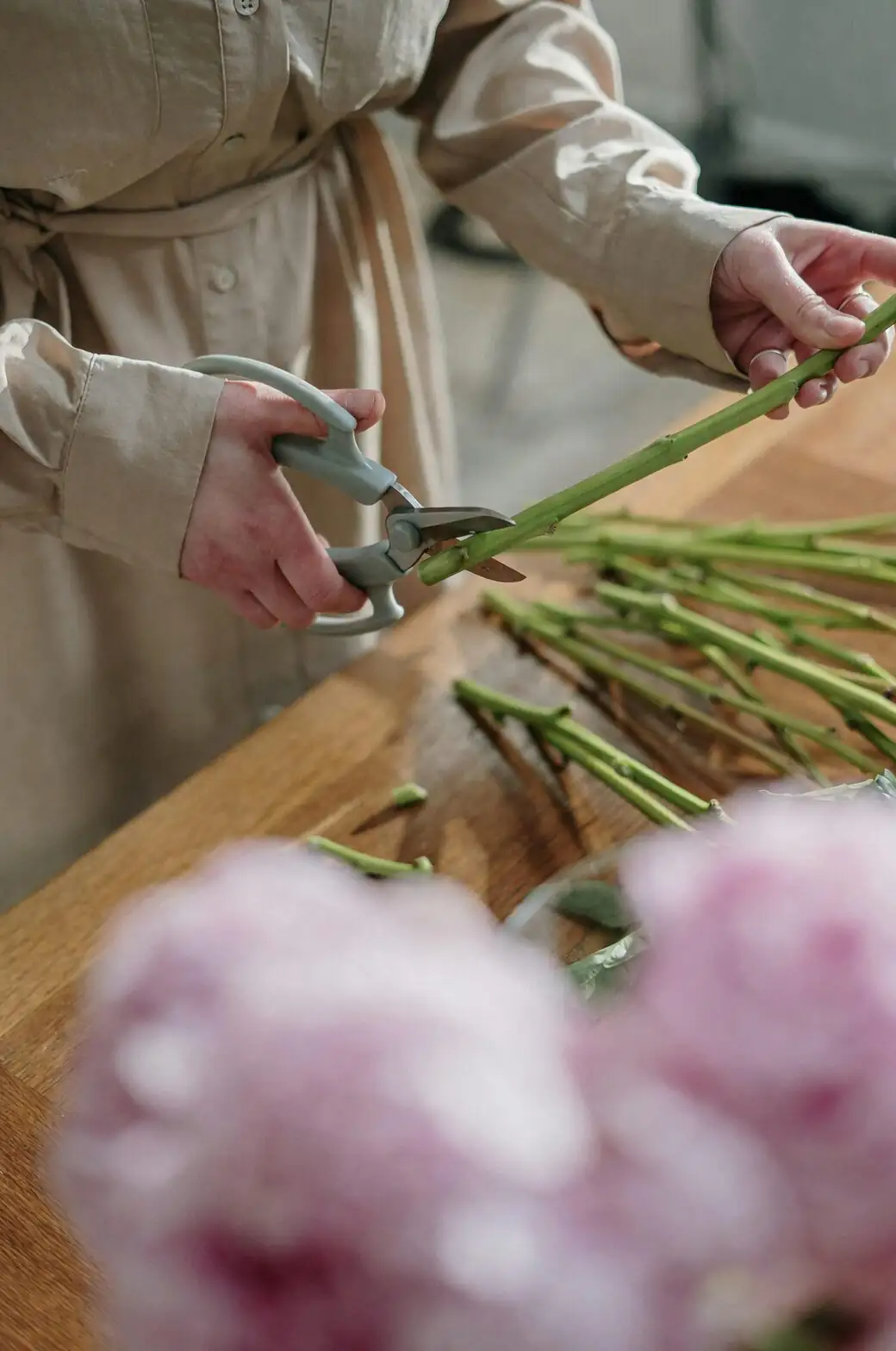
- Prune to shape: Late winter through spring (ideal), or in autumn. Avoid heavy cuts in peak summer heat.
- After flowering: Allow the blooming rosette to dry, then remove it. Side rosettes typically keep the plant going.
- Repot: Spring is best; young/fast growers may enjoy annual refreshes, otherwise every 2–3 years.
- Rejuvenation strategy: If the plant gets lanky, restart from cuttings every 2–3 years for a fresh, full look.
H2: Watering and feeding rules of thumb
- Watering
- Active growth (autumn–spring): Deeply water, drain well, and wait for the surface to dry before the next drink.
- Summer heat/dormancy: Keep almost dry; “gentle sips” only when rosettes wrinkle.
- Winter in cool rooms: Keep on the drier side to avoid rot.
- Feeding
- Half-strength, once monthly, only during the main growth windows.
- Good default: autumn through late spring at 1/2 strength; skip summer.
- Overfeeding = weak, stretched growth.
H2: Light, temperature, and placement cheat sheet
- Light
- Full sun to very bright light; brightest window indoors. Filter midday sun during extreme heat or behind glass to prevent scorch.
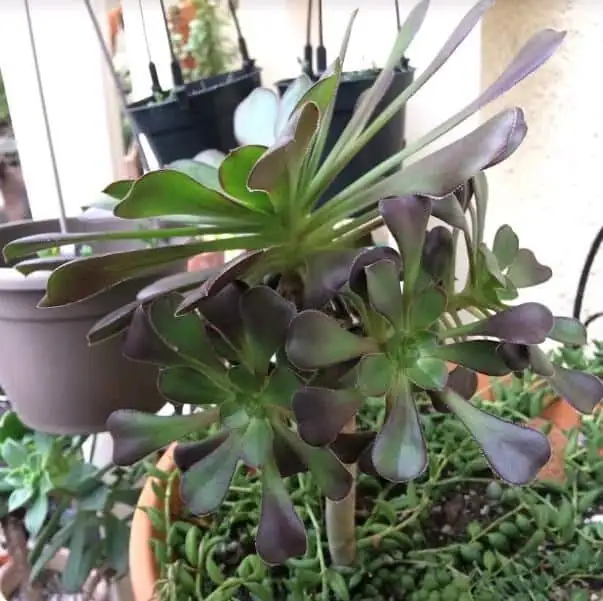
- Low light leads to greener, stretched rosettes; boost light or supplement with grow lights.
- Temperature
- Thrives around 20–25°C (68–77°F); generally happy at 10–24°C (50–75°F).
- Frost-free is essential; aim to keep it above ~6°C (43°F).
- Humidity and airflow
- Low to average household humidity; prioritize airflow. Damp, still air raises rot and leaf-spot risk.
- Placement
- Indoors: sunniest sill or under strong grow lights.
- Outdoors (mild climates): bright patio or balcony with midday protection during heatwaves.
- Not a closed-terrarium plant; it prefers open, airy displays.
H2: Potting mix and containers
- Mix
- Fast-draining cactus/succulent mix amended generously with grit, coarse sand, or pumice for airflow.
- Container
- Always use drainage holes. A slightly weighty pot helps prevent toppling as stems branch.
- Top-dressing
- A layer of gravel can improve stability and keep leaves clean and dry at the base.
H2: Propagation quick-start
- Stem cuttings (best)
- Take a healthy rosette with a short stem.
- Let the cut end callus for several days.
- Set into a dry, gritty mix; begin light watering only after roots form (often in 3–4 weeks).
- Offsets
- Pot up side rosettes similarly after a brief callus period.
- Seeds (patient growers)
- Surface-sow in spring or autumn at 20–22°C (68–72°F); keep steadily moist with ventilation. Germination often in ~9–14 days.
H2: Pests, diseases, and quick fixes
- Usual suspects
- Mealybugs, aphids (especially on flower stalks), scale, whiteflies.
- Treatments
- Start with insecticidal soap or horticultural oil. Repeat at intervals to catch life cycles. Improve airflow and light.
- Rot watch
- Biggest risk is root/stem rot from overwatering, poor drainage, or cool, wet conditions. Keep the mix airy, water only when appropriate, and avoid waterlogged pots.
- Leaf issues
- Leaf spot/rust in damp, stagnant air—don’t wet foliage late in the day; ventilate well.
H2: Safety note
- Generally not listed as highly toxic, but sap can irritate sensitive skin. Keep out of reach of pets and children; wash hands after pruning if you’re sensitive.
H2: Style and symbolism
- Symbolism
- Often associated with resilience and bold, modern elegance—those dark, architectural rosettes keep their poise through bright, dry conditions.
- About “flower language” (花语)
- In modern plant culture, the “language of flowers” for succulents is more poetic than historical. For ‘Zwartkop,’ the near-black rosette has come to symbolize strength under pressure and striking individuality—a living sculpture that thrives when given light, space, and a modest routine.
H2: One-page seasonal recap
- Autumn
- Increase light, resume regular watering when the surface dries, start monthly half-strength feeding, tidy lower leaves.
- Winter
- Bright and cool; water when the surface dries but keep slightly drier in cool rooms; continue half-strength feeding if actively growing; keep frost-free.
- Early to late spring
- Prime time: repot, prune to shape, remove spent bloom rosettes once dry, continue water/feeding, and watch for pests.
- Summer
- Semi-dormant: protect from harsh midday sun and heat behind glass, skip fertilizer, give only gentle sips if rosettes wrinkle, maximize airflow.
Follow this rhythm, and your Black Rose will repay you with sculptural poise and inky rosettes that turn heads all year—without drama from you.