

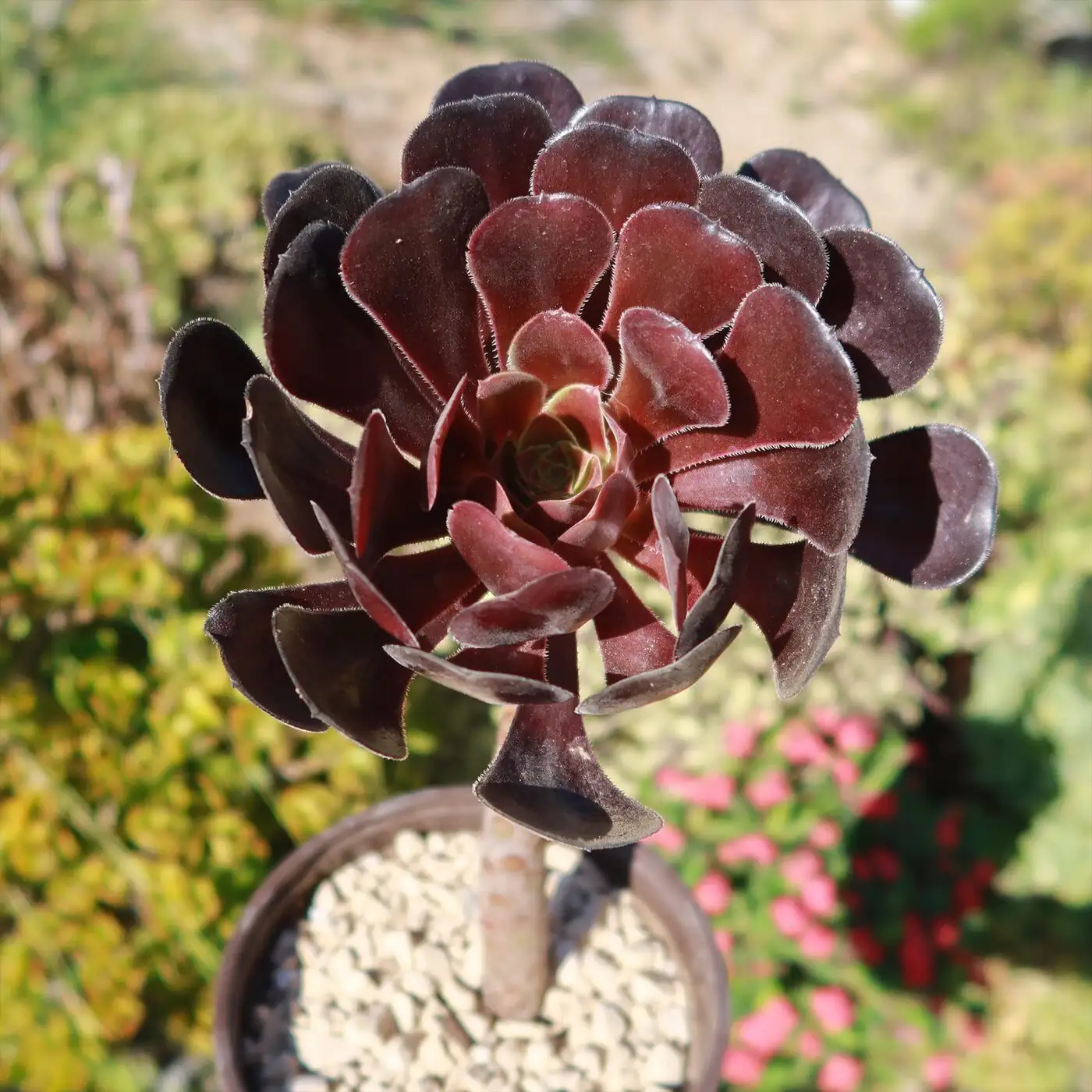
Picture a bouquet of velvet-black roses perched on sculptural stems—then imagine that drama holding its poise through bright sun, dry spells, and patio parties. That’s Aeonium arboreum ‘Zwartkop’ (Black Rose Aeonium): a living “architecture plant” that begs for bold partners. With the right companions—think icy-blue chalksticks, lemon-lime sedums, and silver spillers—you can build high-contrast bowls and patio planters that look curated, not cluttered, and that actually thrive together.
What makes ‘Zwartkop’ so irresistible
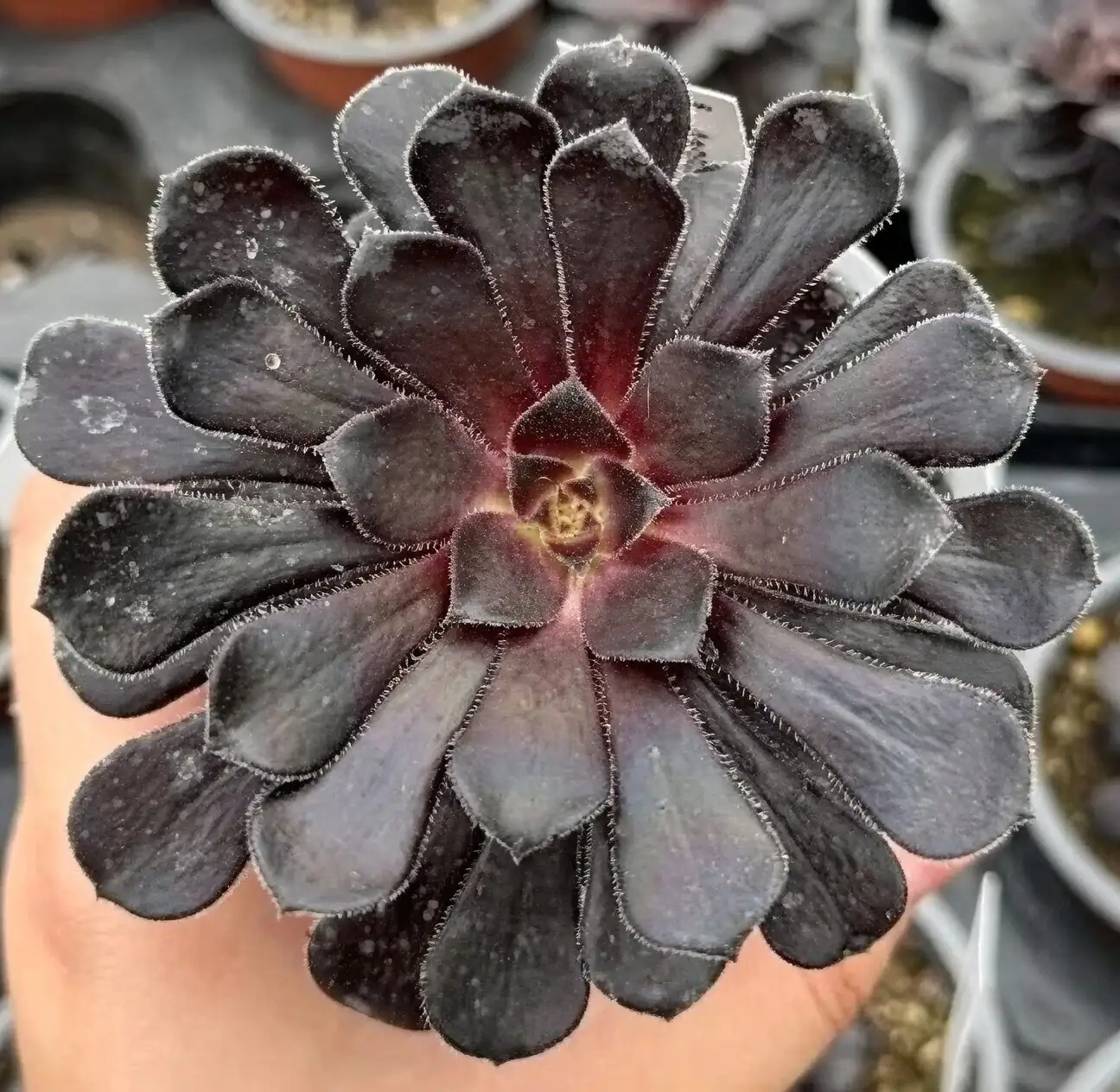
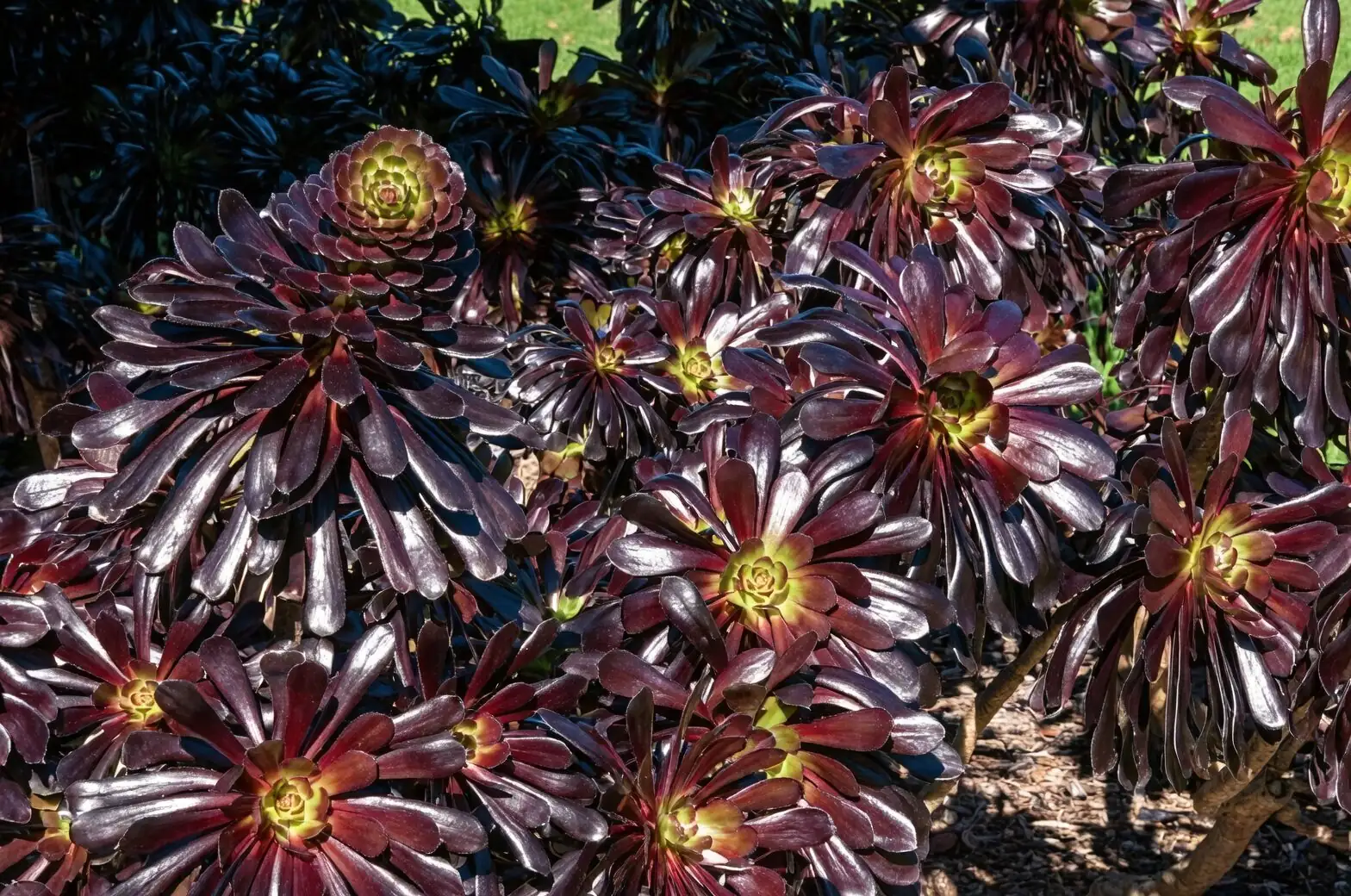
- Sculptural silhouette: Glossy, spoon-shaped leaves form tight, dark burgundy-to-near-black rosettes on branching, tree-like stems. In strong light and cooler seasons, the color deepens to near black; in lower light, it softens to burgundy with a greener center.
- Seasonal rhythm: Often grows hardest from autumn through spring, then slows or semi-rests during hot summer weather—perfect for fall-to-spring “show” containers.
- Spring surprise: Mature rosettes may send up cones of tiny, starry yellow flowers. That rosette usually declines afterward, but side rosettes carry on.
Design DNA: building bold contrast that’s also care-compatible
‘Zwartkop’ loves bright light, fast drainage, and modest water—especially in summer when it goes semi-dormant. To keep your planter easy to maintain, select companions with similar needs and a contrasting look.
High-contrast, compatible partners
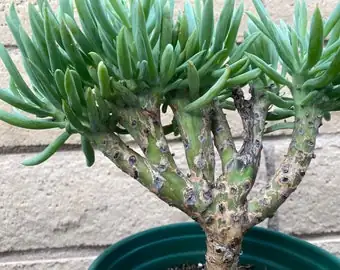
- Blue chalksticks (Senecio serpens or S. mandraliscae): Icy blue, upright-to-prostrate pencils sharpen the drama against black rosettes.
- Lemon sedums (Sedum mexicanum ‘Lemon Coral’, S. rupestre ‘Angelina’): Neon chartreuse mounds electrify the palette and tuck neatly around stems.
- Silver foliage accents:
- Dichondra argentea ‘Silver Falls’: Cascades of pewter coins soften edges and add movement.
- Helichrysum petiolare (licorice plant): Velvety silver-green that reads lush but remains drought tolerant in containers.
- Senecio cineraria (dusty miller): Lacy, frosted leaves give instant “moonlight” next to the dark rosettes.
Other excellent allies
- Compact echeverias (cool tones), Crassula ovata ‘Hobbit’ (upright accent), or additional aeoniums (variegated ‘Kiwi’ for a tricolor pop). Keep the mix airy and restrainted—contrast shines best with fewer, bolder choices.
Five ready-to-plant recipes (containers 30–40 cm wide)
1) Noir + Neon
- Thriller: 1 Aeonium ‘Zwartkop’ (center, 12–15 cm rosette)
- Filler: 3 Sedum ‘Lemon Coral’ tucked evenly around
- Filler: 3 Senecio serpens to punctuate with blue mounds
- Spiller: 2–3 Dichondra ‘Silver Falls’ at the rim
Why it works: Black, chartreuse, and ice-blue is a can’t-miss trio; silver ties it all together.
2) Black Sands Coastal
- Thriller: 1 ‘Zwartkop’
- Filler: 4 Senecio serpens for a carpet of blue
- Spiller: 2 Helichrysum petiolare to drape the edges
- Top-dress: Charcoal gravel to echo the foliage tones
Why it works: A serene, modern palette that reads coastal and contemporary.
3) Citrus Moon
- Thriller: 1 ‘Zwartkop’
- Filler: 3 Sedum rupestre ‘Angelina’ (gold-thread texture)
- Accent: 1 compact Echeveria (blue-gray rosette)
- Spiller: 2 Dichondra ‘Silver Falls’
Why it works: Thread-like gold plus silver and blue-gray amplifies the “near-black” center stage.
4) Silver Frame, Black Portrait
- Thriller: 1 ‘Zwartkop’
- Filler: 3–4 Dusty miller (small starts)
- Accent: 2 Senecio serpens
- Spiller: 1 Helichrysum petiolare
Why it works: Dusty miller’s lacy silver frames the black rosette like a gallery mat.
5) The Low, Lux Bowl (tabletop, 28–32 cm bowl)
- Thriller: 1 smaller ‘Zwartkop’ (8–10 cm rosette)
- Filler: 3 Sedum ‘Lemon Coral’
- Filler: 2 mini clusters of Senecio serpens
- Spiller: 1–2 Dichondra ‘Silver Falls’
Why it works: Keeps scale compact but still high-impact for dining or coffee tables.
Design tips from a stylist’s eye
- Pot color matters: Charcoal, matte black, or raw concrete looks luxe; white or pale stone makes the rosettes look inkier by contrast. Terracotta adds warm counterpoint.
- Edit for contrast: Limit the palette to 2–3 foliage colors plus a metallic/silver note.
- Height play: In deep pots, let ‘Zwartkop’ rise above a low drift of blue or chartreuse—think “tree over meadow.”
- Finish cleanly: Top-dress with pumice, granite chips, or black pebbles to spotlight rosette geometry and keep crowns dry.
Light, placement, and temperature
- Light: Full sun to very bright light; bright partial shade is fine, especially in hot regions. Indoors, give the brightest window you have. Behind glass during heatwaves, shield from harsh midday rays (sheer curtain or set back from the pane).
- Placement: Sunny windowsill, sunroom, or strong grow lights inside; bright patio or balcony outside. Morning sun (east) or filtered south light is ideal.
- Temperature: Happiest around 20–25°C (68–77°F); generally fine in 10–24°C (50–75°F). Keep frost-free. A practical minimum is above about 6°C (43°F); protect well as temperatures approach 0°C (32°F).
- Humidity: Low to average with good airflow. Avoid stagnant, damp air—rot and leaf-spot love it.
Watering rhythm: cool-season drinker, summer sipper
- Autumn–spring (main growth): Water deeply, then drain thoroughly. Rewater when the top layer of mix has dried. Aim for lightly moist—not soggy.
- Summer (often semi-dormant): Keep almost dry. Offer only small sips if rosettes begin to wrinkle.
- Winter in cool rooms: Go easy. Cool + wet = root risk.
Tip for mixed planters: Water the whole container thoroughly, then let it drain and dry at the surface before repeating. These companions all tolerate a brief dry-down.
Soil and pots
- Use a fast-draining cactus/succulent mix cut generously with mineral grit (pumice, coarse sand, or fine gravel) for airflow.
- Never allow the pot to sit in water. Drainage holes are non-negotiable.
- Size cues: A 12 cm pot typically holds a plant about 10 cm across; with age (and space), a branching specimen can reach roughly 60 × 60 cm in containers.
Feeding, pruning, repotting, propagation
- Feeding: During active growth, feed monthly at half strength with a balanced or low-nitrogen succulent fertilizer. Skip feeding in summer dormancy.
- Pruning: Pluck dry lower leaves. After flowering, let the blooming rosette dry, then remove it; the rest of the plant carries on. Cut back leggy stems to shape and encourage branching.
- Repotting: Best in spring; refresh annually for young, fast growers, otherwise every 2–3 years. Step up only one pot size; keep the mix mineral and free-draining.
- Propagation: Stem cuttings root easily. Take a rosette with a short stem, let it callus for several days, then set into dry, gritty mix; begin light watering only after roots form (about 3–4 weeks in good conditions).
Keeping the color near-black
- Give maximum brightness. The darkest color appears in strong light and cool seasons. In shade, expect burgundy with greener centers—and some stretching.
Pests, problems, and prevention
- Usual suspects: Mealybugs, aphids (especially on blooms), whiteflies, and scale. Treat early with insecticidal soap or horticultural oil; repeat as needed.
- Biggest health risk: Root/stem rot from soggy soil, poor drainage, or cool, wet conditions. Boost light and airflow; let the mix dry appropriately.
- Leaf spots/rust can appear in damp, stagnant air—avoid wetting foliage late in the day and increase ventilation.
Safety
- Generally not listed as highly toxic, but the sap can irritate sensitive skin. Best kept away from nibbling pets and curious kids; wash hands after pruning if you’re sensitive.
Seasonal care calendar (quick guide)
- Autumn–spring: Bright light; water when the surface dries; feed monthly at half strength. Prime time for display planters.
- Early spring: Possible bloom spikes; remove spent rosette after it dries.
- Spring: Repot, tidy, and prune to shape if needed.
- Summer: Shield from harsh midday sun behind glass; reduce watering sharply—keep nearly dry during semi-dormancy.
Where it comes from—and the “flower language” of a black rose
‘Zwartkop’ is a cultivated form of Aeonium arboreum, a species native to the Canary Islands. In modern symbolism, its near-black rosettes often stand for resilience and sleek, contemporary elegance—the kind of beauty that endures bright light and lean conditions. Though “black rose” legends swirl in literature and pop culture, here the message is botanical: strength through contrast, and grace under sun.
One last tip: not a terrarium plant
Those glossy rosettes love light and airflow. Skip closed terrariums and bottle gardens; open bowls and breezy patios are where ‘Zwartkop’ becomes unforgettable.
Put it all together
Choose a striking container, keep the palette tight (black + blue + lemon + silver), use a gritty mix, water deeply then let it breathe—and dial water way back in summer. Do that, and your Black Rose Aeonium will anchor containers that look as crisp and intentional in week twenty as they did on day one.