

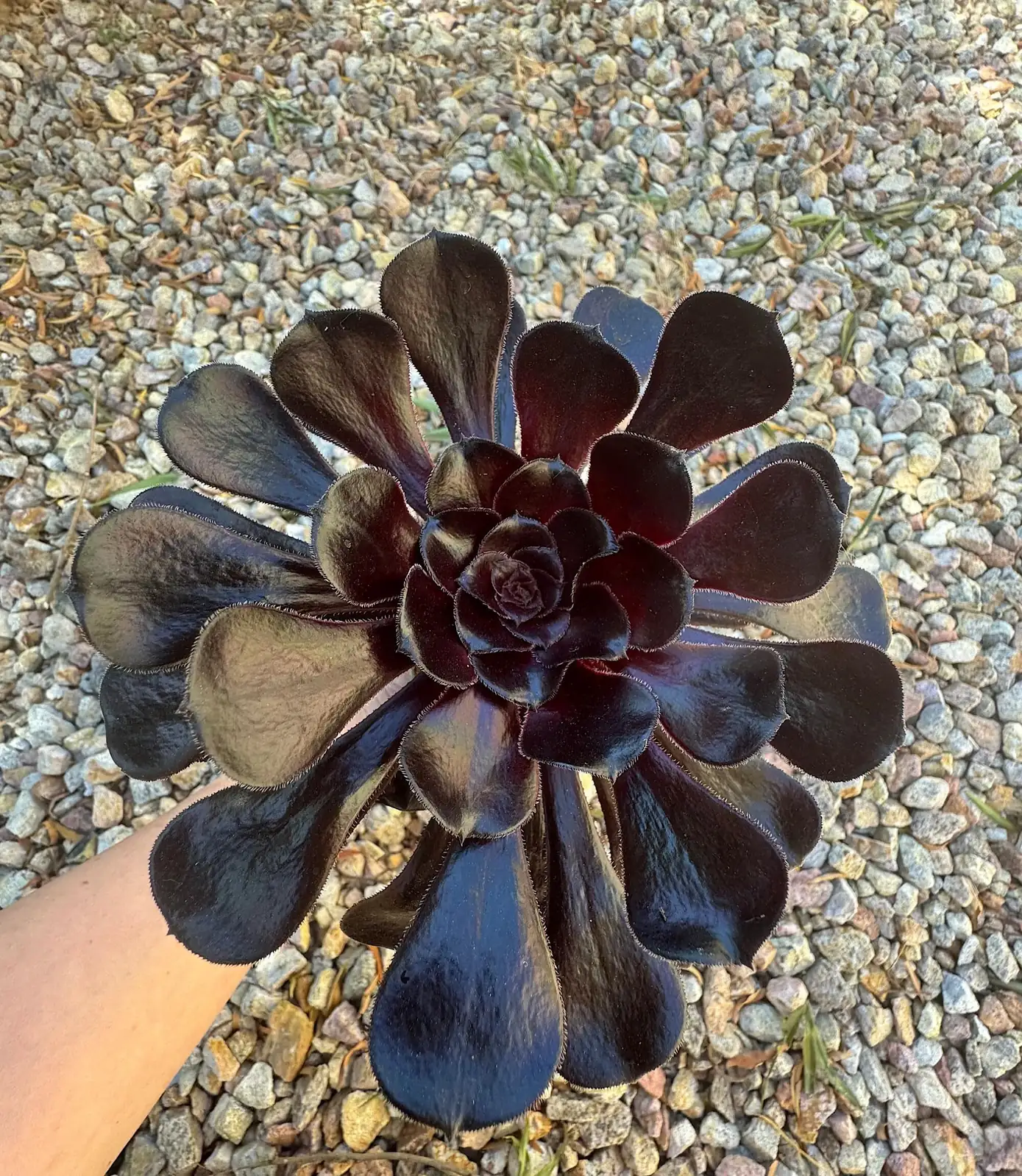
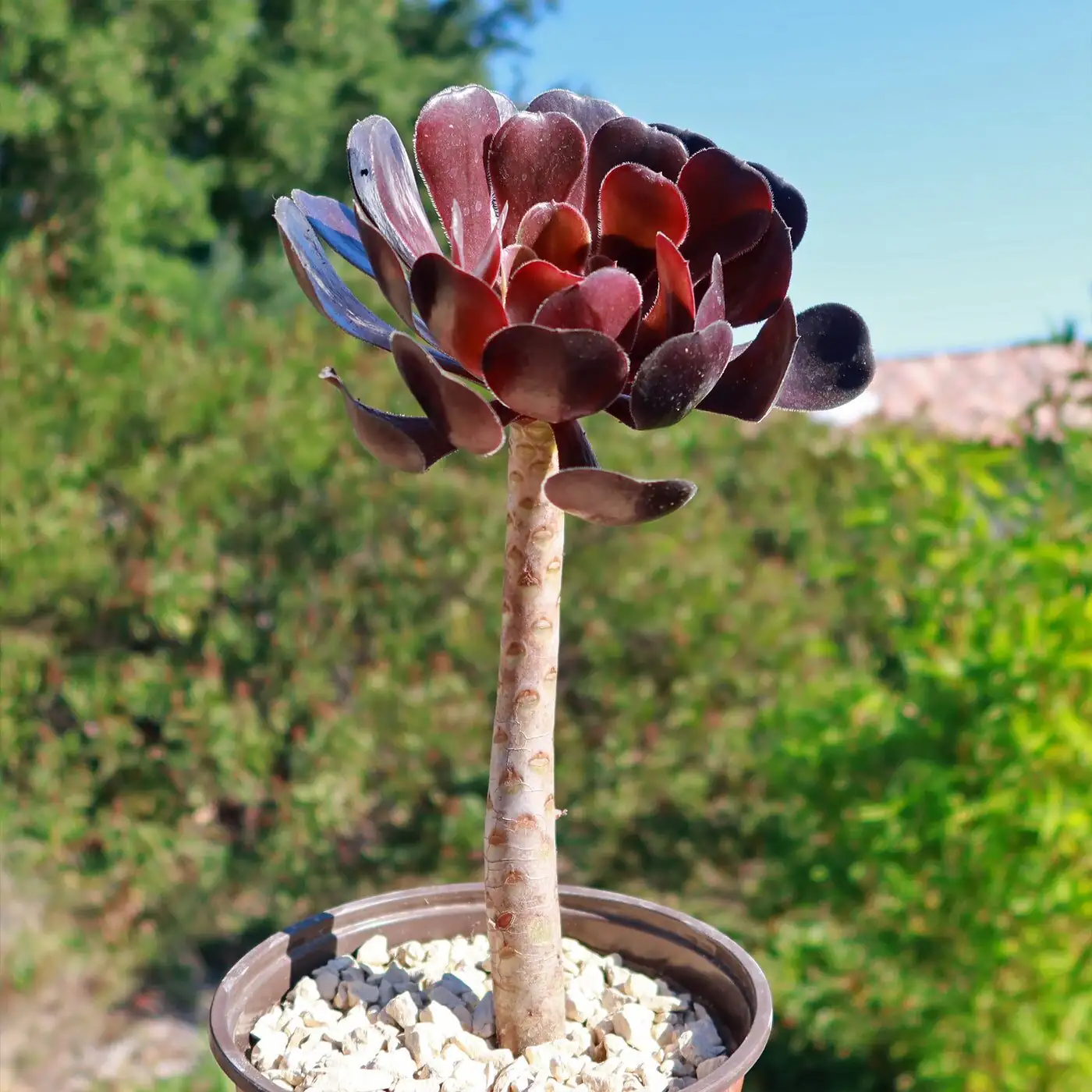
If a plant could wear couture, Aeonium arboreum ‘Zwartkop’ would strut the runway. Its glossy, near‑black rosettes perch on sculptural stems like a bouquet of dark roses—pure architecture in plant form. Treat it like a design object and it will reward you with saturated color, crisp geometry, and a surprisingly easy care rhythm that peaks in the cooler months and slows in summer.
Light like a designer: the best windows (and how to use them)
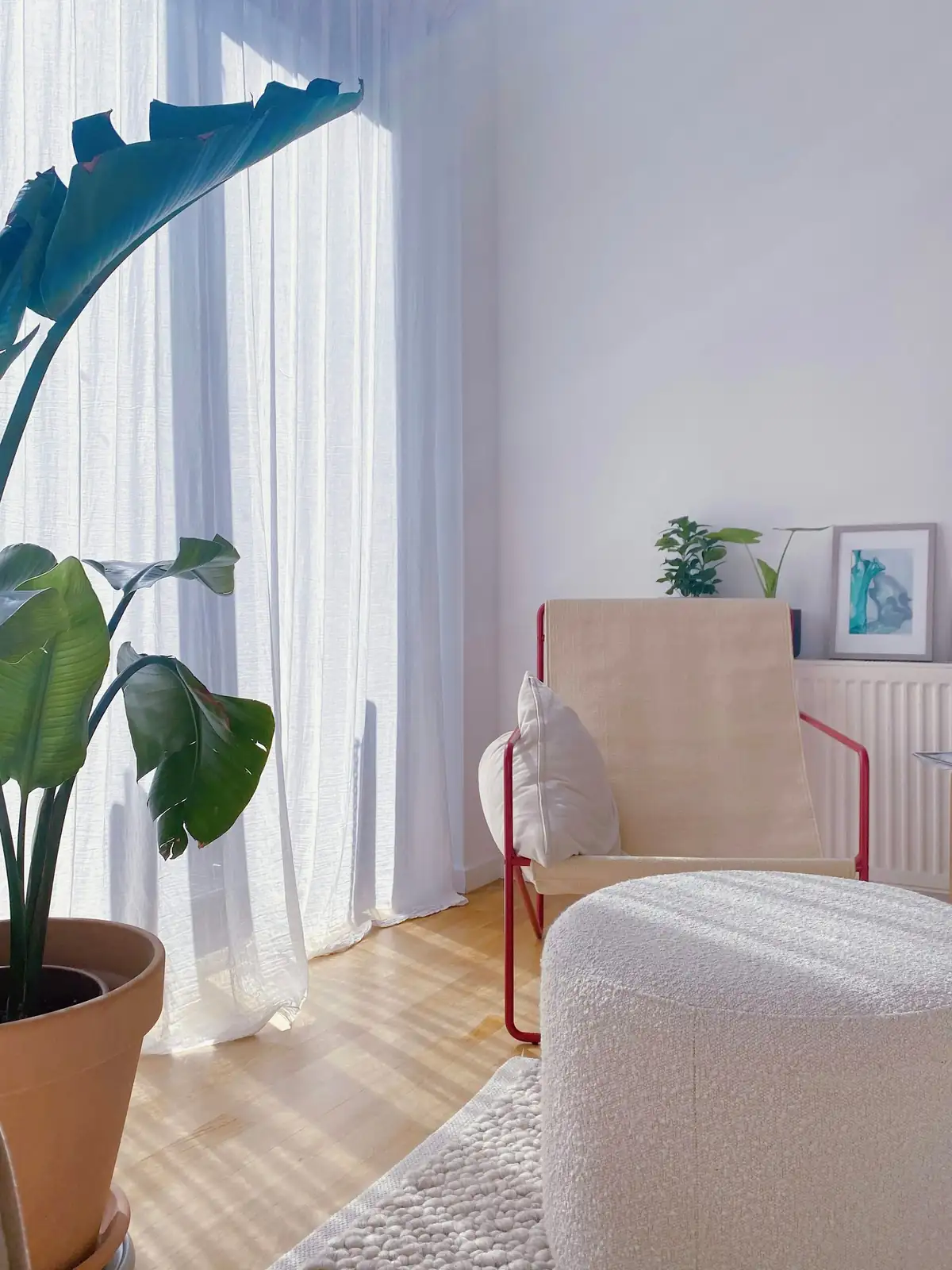
Zwartkop is a sun-lover that repays strong light with its deepest burgundy‑to‑black tones. Indoors, give it the brightest spot you can.
- East windows: Ideal. Generous morning sun with gentler heat keeps color rich and growth compact.
- South windows: Excellent with a little finesse. In very hot weather or behind intense glass, pull the plant back 30–60 cm or use sheer curtains at midday to prevent scorch.
- West windows: Good, but watch for late‑day heat spikes in summer. Add airflow and dial back watering.
- North windows: Generally too dim. Plan on a grow light assist to prevent stretching and green, loose rosettes.
Outdoors in mild weather, a bright patio, balcony, or sunroom works beautifully. Morning sun with bright light the rest of the day is perfect; during heatwaves, protect from harsh midday sun, especially behind glass.
Pro tip: Zwartkop often grows most strongly from autumn through spring. That’s when to turn the light dial up. In hot summer spells, it slows or semi‑rests—keep it bright but a touch gentler at midday.
Pots that make the rosettes pop
Think like a stylist: the container is your frame.
- Color pairings
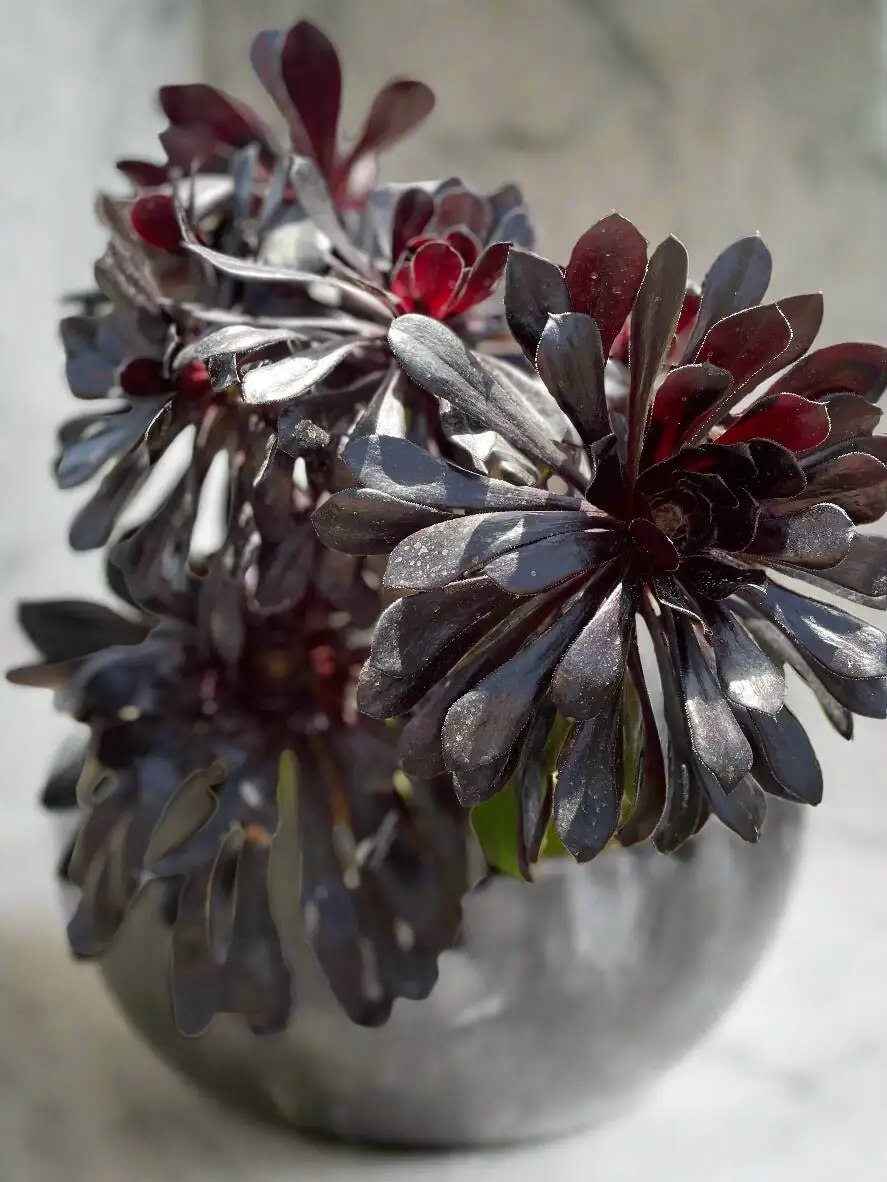
- Charcoal/black stone or matte graphite: amplifies the sultry, monochrome look.
- Pale stone, chalk, or greige: sharp contrast that makes the rosettes read even darker.
- Unglazed terracotta: warm counterpoint; classic with modern silhouettes.
- Antique brass or brushed metal stands: elevate without stealing the show.
- Shape and scale
- Low, wide bowls spotlight the rosette canopy; place plants near the rim to showcase patterned stems.
- Tall, footed planters add drama and lift the architecture to eye level.
- Choose a pot with weight—Zwartkop’s top can get head‑heavy as it branches.
- Practical sizing
- Small-to-medium plants often suit 12–15 cm (4.7–6 in) pots with drainage; move up just one size when repotting.
- Top‑dress with horticultural grit for a clean “dry garden” finish that also keeps crowns drier.
Soil, watering, and the cool‑season rhythm
This is a fast‑draining, bright‑light succulent. Soggy soil is its nemesis.
- Mix: A cactus/succulent base cut generously with grit/coarse sand/pumice for airflow. Think “light, airy, drains in seconds.”
- Watering cadence
- Autumn–spring (main growth): Water deeply, then let excess drain. Rewater when the top layer dries—lightly moist, never wet.
- Summer heat (semi‑dormancy): Keep almost dry. Offer small sips only if rosettes begin to wrinkle.
- Winter in cool rooms: Go dry‑leaning to avoid rot.
- Feeding: Monthly at half‑strength in the active season (winter through late spring and/or spring–autumn windows). Skip summer dormancy. Too much fertilizer = weak, stretchy growth.
- Temperature: Best around 20–25°C (68–77°F); generally happy at about 10–24°C (50–75°F). Keep frost‑free and above ~6°C (43°F).
Grow‑light hacks for inky rosettes
No bright window? A good LED makes ‘Zwartkop’ gallery‑ready.
- What to use: Full‑spectrum white LED panels or bars. Aim for moderate intensity (roughly 200–400 µmol/m²/s at canopy).
- Distance: Typically 20–35 cm (8–14 in) from rosette tips for most fixtures; adjust to avoid heat on leaves.
- Photoperiod:
- Autumn–spring: 10–12 hours/day to drive compact, dark growth.
- Summer semi‑rest: 8–10 hours/day; bright but not “blazing” conditions.
- Heat and airflow: Lights can build heat—add a small fan or ensure gentle air movement.
- Read the rosettes:
- Stretchy, greener, loose leaves = increase intensity or duration, or move the light closer.
- Crispy edges or dulling sheen = too hot/close; back off or add diffusion.
Rotate the pot a quarter‑turn weekly for symmetrical heads, or use a top‑light to keep those rosettes perfectly concentric.
Why open, airy displays beat closed terrariums
Zwartkop is marketed for “open terrariums” in some shops, but it performs best in open, ventilated arrangements. Here’s why:
- Airflow, not humidity: It prefers low to average household humidity with movement. Closed glass traps moisture and invites rot.
- Brightness: The darkest foliage needs strong light; closed vessels often shade and distort light.
- Heat and condensation: Sun on sealed glass creates sauna conditions—great for moss, not for a woody, rosette succulent.
- Room to branch: It wants to clump and elongate stems over time; cramped glass limits its architectural habit.
If you love the terrarium look, fake it with an open bowl, airy shelves, or a glass cylinder with no lid under strong light and excellent ventilation.
Styling moves and plant pairings
- Mediterranean bowl: Circle Zwartkop near the rim of a carved stone or concrete bowl; underplant with a tight carpet of echeverias and sempervivums. Top‑dress with grit for a dry‑garden vibe and to show off the patterned stems.
- Moody duet: Pair with dark‑flowered Pelargonium cultivars on a sun‑splashed terrace for a seasonal display. Bring Zwartkop indoors before frost and keep it bright and frost‑free.
- Minimalist vignette: One strong specimen in a pale cylindrical pot on a plinth or side table—spotlit by a grow bar—can anchor a whole room.
Pruning, propagation, and flowers
- Grooming: Strip away shriveled lower leaves to keep stems neat.
- Shaping: Cut back leggy stems in spring to encourage branching. Many growers refresh plants from cuttings every 2–3 years.
- Propagation: Take a rosette with a short stem, let the cut end callus for several days, then set it into a dry, gritty mix. Begin light watering only after roots form (about 3–4 weeks under good conditions).
- Flowering: Mature rosettes may send up clusters of tiny yellow, star‑shaped blooms in spring. The blooming rosette usually declines afterward, but side rosettes carry on—remove the spent head once it’s dry.
Quick troubleshooting
- Rosettes turning greener, stretching: Light is too low. Move to a brighter window or increase grow‑light intensity/duration.
- Leaves wrinkling: Time for a drink—unless it’s high summer heat, then give only a small sip.
- Mushy base or blackened center: Overwatering or poor drainage. Unpot, remove rot, refresh into a fast‑draining mix, and reduce watering.
- Scorched tips: Too-hot midday sun behind glass or lights too close. Add sheer, pull back, or diffuse.
- Pests: Mealybugs, aphids (on flower stalks), whiteflies, and scale can appear. Treat early with insecticidal soap or horticultural oil and repeat as needed.
Safety and symbolism
- Safety: Generally not listed as highly toxic, but the sap can irritate sensitive skin. Keep away from pets and children; wash hands after pruning if you’re reactive.
- Symbolism: Often associated with resilience and bold, modern elegance—its dark “rose” heads stay sharp through bright, dry spells and cooler seasons. This isn’t a traditional flower‑language plant; the meaning comes from contemporary design culture, where its sculptural calm and endurance embody quiet strength.
Care calendar at a glance
- Autumn–spring: Prime growth. Very bright light or sun; water when the surface dries; feed monthly at half strength.
- Early spring: Possible bloom on mature rosettes. Remove the spent rosette once it dries.
- Spring (as needed): Repot one size up into fresh, fast‑draining mix; prune to shape; tidy old leaves.
- Summer: Bright light with midday protection behind glass; sharply reduce water and keep nearly dry during semi‑dormancy.
A final note on climate: This tender succulent thrives frost‑free (roughly USDA 10–11). In cooler regions, treat it as a container star—summer outdoors in bright light, then back to your sunniest window or under grow lights well before frost. Keep the light strong, the soil fast, and the air moving, and ‘Zwartkop’ will deliver that moody, architectural drama all year.