

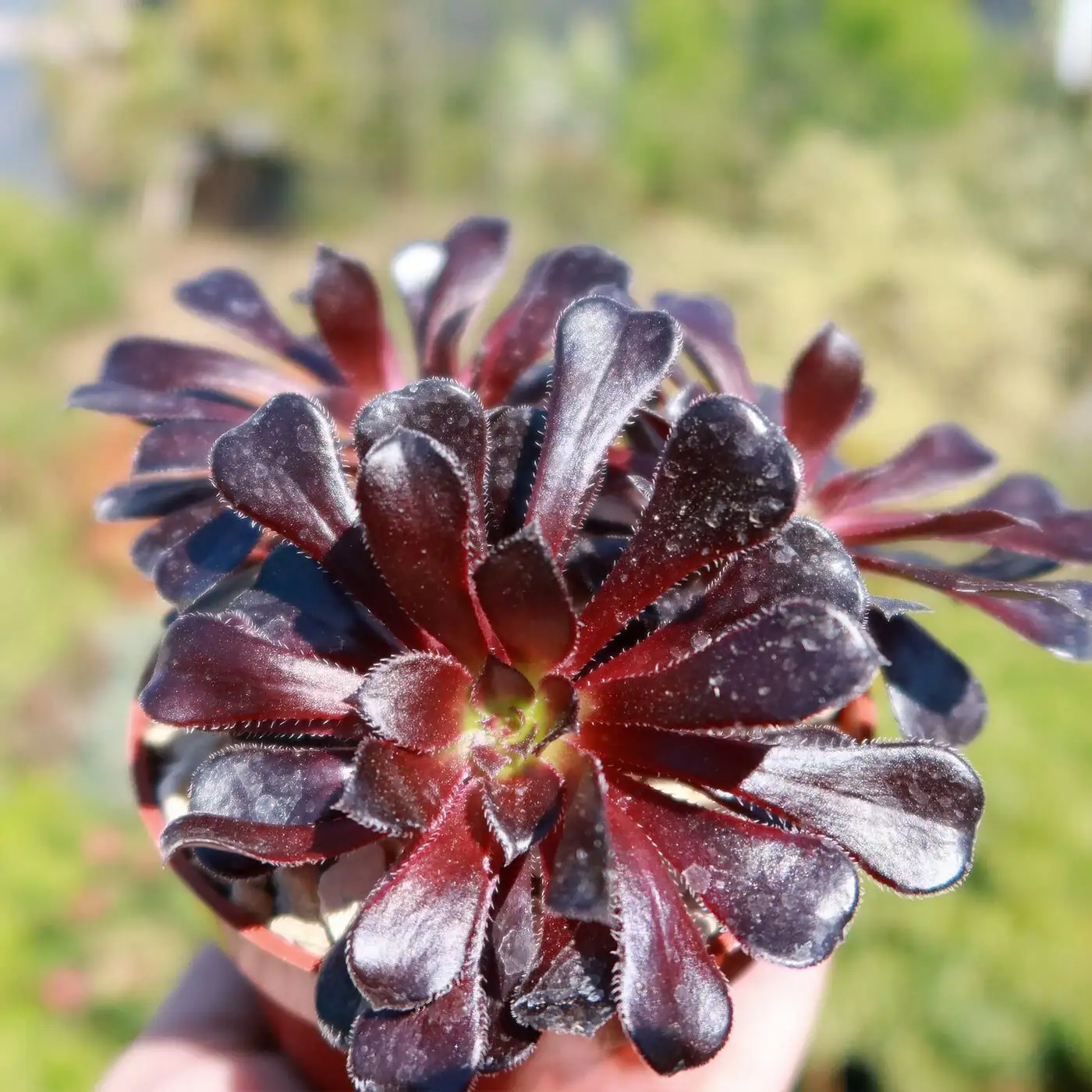
See something fuzzy, sticky, or… mushy? This is your fast, practical rescue guide to get Black Rose Aeonium (Aeonium arboreum ‘Zwartkop’) back to glossy, near‑black perfection. We’ll blitz mealybugs, aphids on bloom stalks, scale, whiteflies—and tackle the real villain: root/stem rot. Grab your kit; let’s triage, treat, and prevent like a pro.
Quick ID: What’s attacking your ‘Zwartkop’?
- Mealybugs: White, cottony tufts in leaf bases, along stems, or at roots; sticky honeydew may appear.
- Aphids (often on bloom stalks): Crowded green/black aphids clustering on flower stems and buds; sticky residue; ants may farm them.
- Scale: Hard, helmet‑like brown or off‑white bumps stuck to stems/leaves that don’t brush off easily.
- Whiteflies: Tiny white moth-like insects that flutter up in a cloud when disturbed; eggs and nymphs cling under leaves.
- Root/Stem rot (big threat): Leaves droop or detach easily despite damp soil; stem base darkens or turns mushy; soil may smell sour.
Tip: Aeonium ‘Zwartkop’ grows strongest from autumn through spring and slows or semi‑rests in hot summer. In summer heat, it prefers much less water. Overwatering during this period is the fastest route to rot and pests.

10‑Minute Triage
- Isolate the plant. Keep it away from your collection.
- Gear up. Nitrile gloves, cotton swabs, soft brush, sharp pruners, insecticidal soap, horticultural oil, 70% isopropyl alcohol, yellow sticky traps, a flashlight.
- Inspect thoroughly. Check undersides, leaf bases, stem nodes, and the pot’s drain holes. If rot is suspected, unpot to inspect roots.
- Decide your plan:
- Visible pests? Start with spot cleanup + contact sprays.
- Mushy base/blackened roots? Begin rot rescue immediately and consider taking a healthy cutting to save the plant.
Note on soaps and oils: These are contact killers—coverage matters, and repeats are essential. Apply in the cooler part of the day, water the plant the day/night before to reduce leaf stress, test on a small area first, and follow the product label.
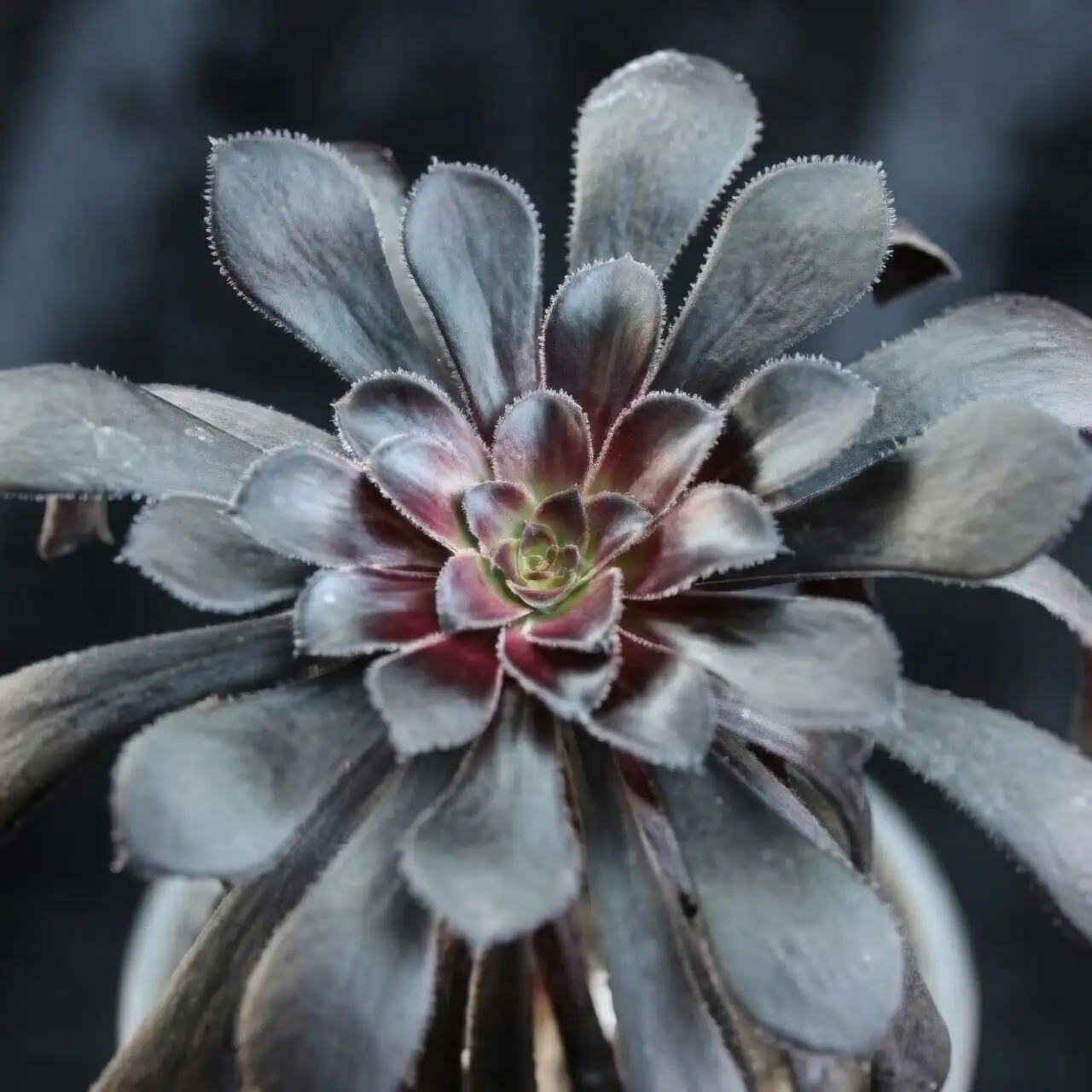
Pest Playbooks (fast, step‑by‑step)
Mealybugs
- Spot cleanup: Dab visible tufts with alcohol on a cotton swab to desiccate them.
- Spray: Thoroughly coat all sides of leaves, rosettes, and stems with insecticidal soap or horticultural oil. Lift rosettes to reach hidden crevices.
- Repeat: Every 5–7 days for 3–4 cycles (eggs/crawlers keep emerging).
- Heavy cases or root mealybugs: Unpot, discard all soil, wash roots well, prune dead roots, and repot into fresh, fast‑draining succulent mix. Clean the empty pot with hot soapy water before reusing.
- Aftercare: Improve light and airflow; keep soil on the dry side until vigor returns.
Aphids on Bloom Stalks
- Decide on the bloom: Aeonium rosettes that flower usually decline afterward. If aphids swarm the inflorescence and you don’t need the display, cut off the bloom stalk to remove most aphids in one go. The rosette typically won’t “recover” from blooming, but side rosettes carry on.
- Rinse: A strong, targeted water spray (outdoors/sink) to knock off remaining aphids.
- Spray: Follow with insecticidal soap to the stalk zone and surrounding rosettes. Thorough coverage is key.
- Repeat: Every 5–7 days until no new aphids appear.
- Cleanup: Wipe honeydew to prevent sooty mold; manage nearby ants that protect aphids.
Scale
- Manual removal: Flick off with a toothpick or your nail; for stubborn patches, wipe with alcohol.
- Smother: Apply horticultural oil with careful, even coverage, including stems and undersides. Be gentle with rosette leaves.
- Repeat: Every 7–10 days for 2–3 more rounds to catch “crawler” stages.
- Prune: Remove heavily infested stems and dispose of them sealed.
Whiteflies
- Disrupt adults: Gently vacuum flying adults in early morning when sluggish, or tap over a sink and capture them.
- Trap: Hang yellow sticky cards near the plant to monitor and reduce numbers.
- Spray nymphs/eggs: Insecticidal soap or horticultural oil on leaf undersides. Thorough coverage is non‑negotiable.
- Repeat: Every 5–7 days until traps show little to no activity.
- Cultural assist: Increase airflow and light; avoid crowding plants.
The Big Villain: Root/Stem Rot Rescue
Rot happens when water + cool temps + low light + poorly draining soil gang up on your plant—especially during summer semi‑dormancy.
How to spot it early
- Leaves collapse from the center downward; they feel limp though the soil is moist.
- Stem base darkens/softens; roots look brown/black, mushy, or threadbare.
- A sour, swampy smell from the pot.
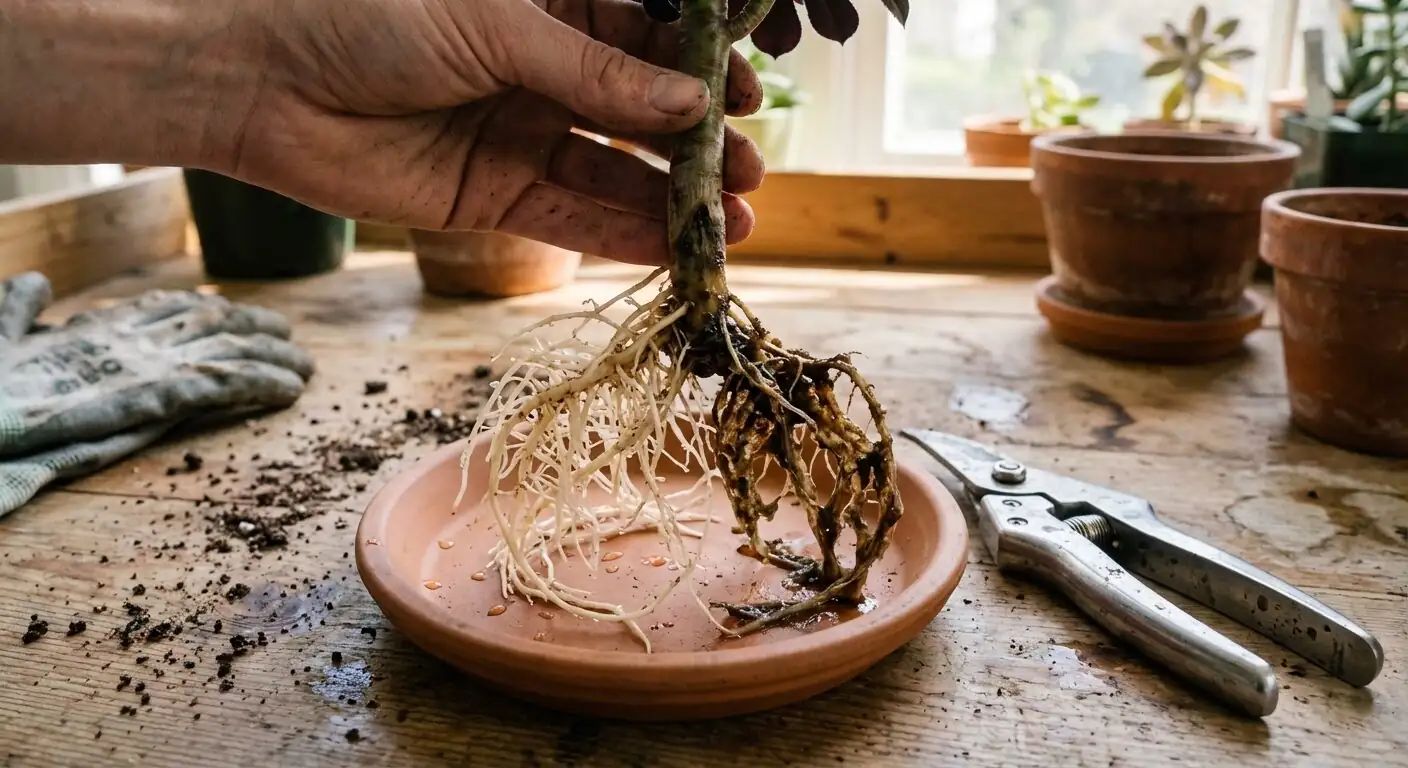
Step‑by‑step salvage
- Unpot immediately. Gently remove all soil and rinse roots so you can see what’s healthy (firm, pale/tan) vs. rotten (mushy, dark).
- Cut away all rot. Sterilize pruners. Trim back to firm tissue—no half‑measures.
- Option A: Save the plant as a cutting
- If the stem base is compromised, cut the rosette above any soft tissue.
- Let the cut end callus for several days in bright, airy shade.
- Pot into a dry, gritty succulent mix. Don’t water until roots form (usually 3–4 weeks in good light).
- Option B: Re‑root the original plant
- If some healthy roots/stem remain, dust cuts lightly with sulfur/cinnamon (optional) and let dry 1–2 days.
- Repot in fresh, fast‑draining mix and a pot with large drain holes. Do not water for 3–5 days; then give a small drink and allow the mix to dry thoroughly.
- Aftercare
- Light: Very bright light to sun, with midday protection in extreme heat.
- Airflow: Excellent ventilation reduces fungal risk.
- Watering: Resume cautiously; in cool rooms and during summer heat, keep soil on the dry side.
Prevention That Actually Works
Think in layers: strong light, fast drainage, smart watering, and regular checks.
Light and placement
- Aim for full sun to very bright light. Indoors, pick the brightest window; protect from scorching behind glass in heatwaves with sheer curtains.
- Bright light keeps rosettes compact and dark; low light leads to stretch and invites pests.

Watering rhythm
- Active growth (autumn–spring): Water deeply, then let the top layer dry before watering again. Never leave the pot sitting in water.
- Summer heat/dormancy: Keep mix almost dry; give only small sips if rosettes wrinkle.
- Winter in cool rooms: Go lighter—cold + wet = rot.
- Tip: If in doubt, wait. ‘Zwartkop’ forgives a missed watering; it won’t forgive soggy soil.
Soil and pot
- Use a fast‑draining succulent/cactus mix cut generously with grit/pumice.
- Choose a pot just one size up when repotting, always with drainage holes.
- Repot in spring every 2–3 years or sooner if the mix stays wet too long.
Airflow and humidity
- Prefers low to average household humidity with good airflow.
- Avoid misting foliage late in the day; damp, stagnant air encourages leaf spots and pests.
Cleanliness and scouting
- Quarantine new plants for two weeks.
- Inspect leaf undersides, rosette centers, and stem nodes weekly—especially during seasonal changes.
- Wipe honeydew and dust; sanitize shears between cuts.
- Use sticky traps to monitor whiteflies and other fliers.
Feeding
- Feed only during main growth windows with a balanced fertilizer at half strength, monthly.
- Skip feeding in summer dormancy; too much nitrogen = softer growth that pests love.
Recovery Timeline and What to Expect
- After pest treatment: Expect some cosmetic scarring; new leaves should emerge clean within a few weeks.
- After rot rescue/cuttings: Callus in days; rooting typically in 3–4 weeks under bright, gentle light. New growth follows soon after.
- Blooming note: The rosette that flowers typically declines afterward. Remove the spent rosette once dry—side rosettes will carry the show.
Safety Notes
- Sap may irritate sensitive skin. Wear gloves and wash up after pruning or spraying.
- Keep out of reach of pets and children; avoid ingestion.
- Always follow product labels for soaps/oils; apply in cooler hours and test on a small area to avoid leaf burn.
Symbolism and “Flower Language”
‘Zwartkop’ is often associated with resilience and bold, modern elegance—its near‑black rosettes read like sculptural bouquets that thrive where others fuss. If you see references to “flower language,” treat them as contemporary, ornamental interpretations rather than historical lore: the plant’s striking color and stay‑cool attitude under bright, dry conditions are what inspire meanings of endurance and sophisticated calm.
Fast Checklist: Keep It Glossy and Bug‑Free
- Brightest light you can offer; protect from harsh midday sun in extreme heat.
- Water deeply, then dry; almost dry in summer and in cool winters.
- Fast‑draining, gritty mix; pots with large drainage holes.
- Weekly inspections; treat early with insecticidal soap or horticultural oil and repeat.
- Great airflow, low to average humidity, clean tools, and clean leaves.
Handle these basics, and your Black Rose Aeonium will live up to its name: a bouquet of dark, glossy rosettes on tidy woody stems—no fuzz, no stickiness, no mush.