


Imagine a living bouquet of near-black roses that gleam like polished lacquer when you nail the care—then crisp at the edges if you miss the cues. That’s Aeonium arboreum ‘Zwartkop’: a sculptural, branching succulent that thrives on bright light, clever watering, and a seasonal rhythm. Here’s your lively, all-year playbook to keep those moody rosettes glossy, not crispy.
Meet your plant: the sleek, dark “tree” aeonium
- Names: Black Rose Aeonium, Aeonium ‘Zwartkop’, Black Tree Aeonium (Chinese: 黑法师)
- Family: Crassulaceae (succulents)
- Origin story: A cultivated dark-leaved form of Aeonium arboreum, a species native to the Canary Islands (Macaronesia)
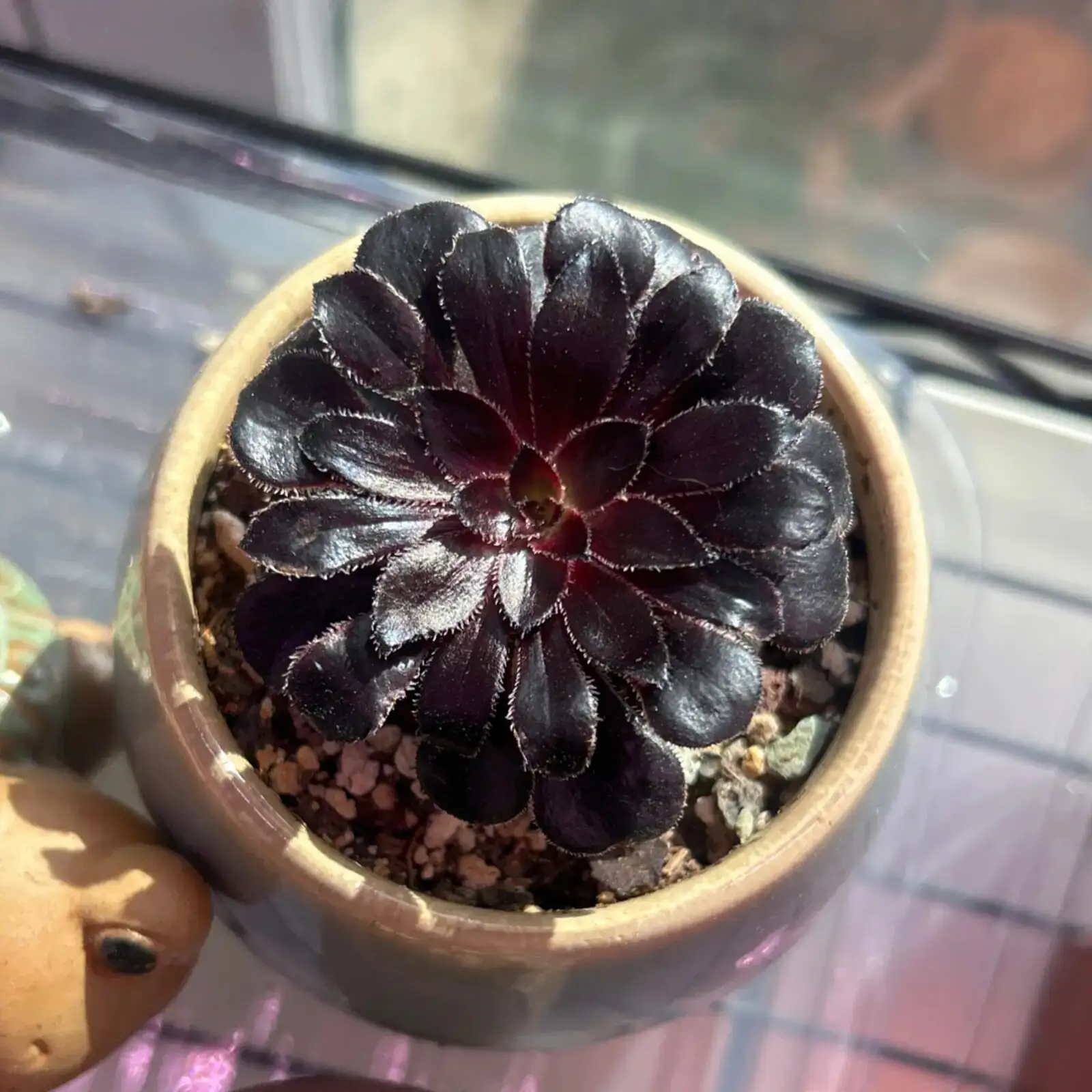
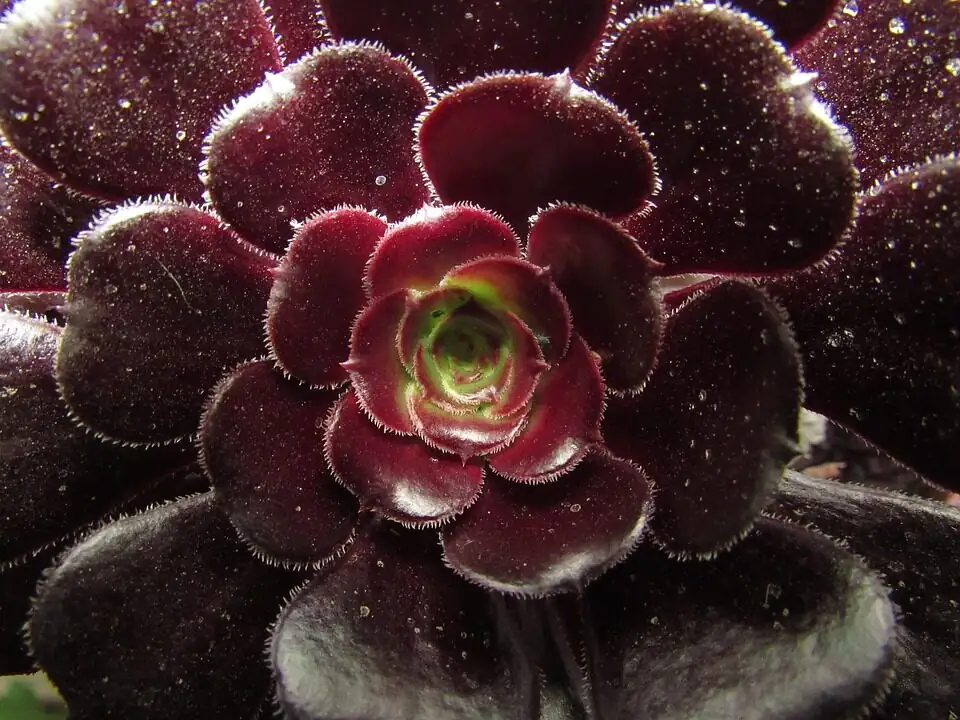
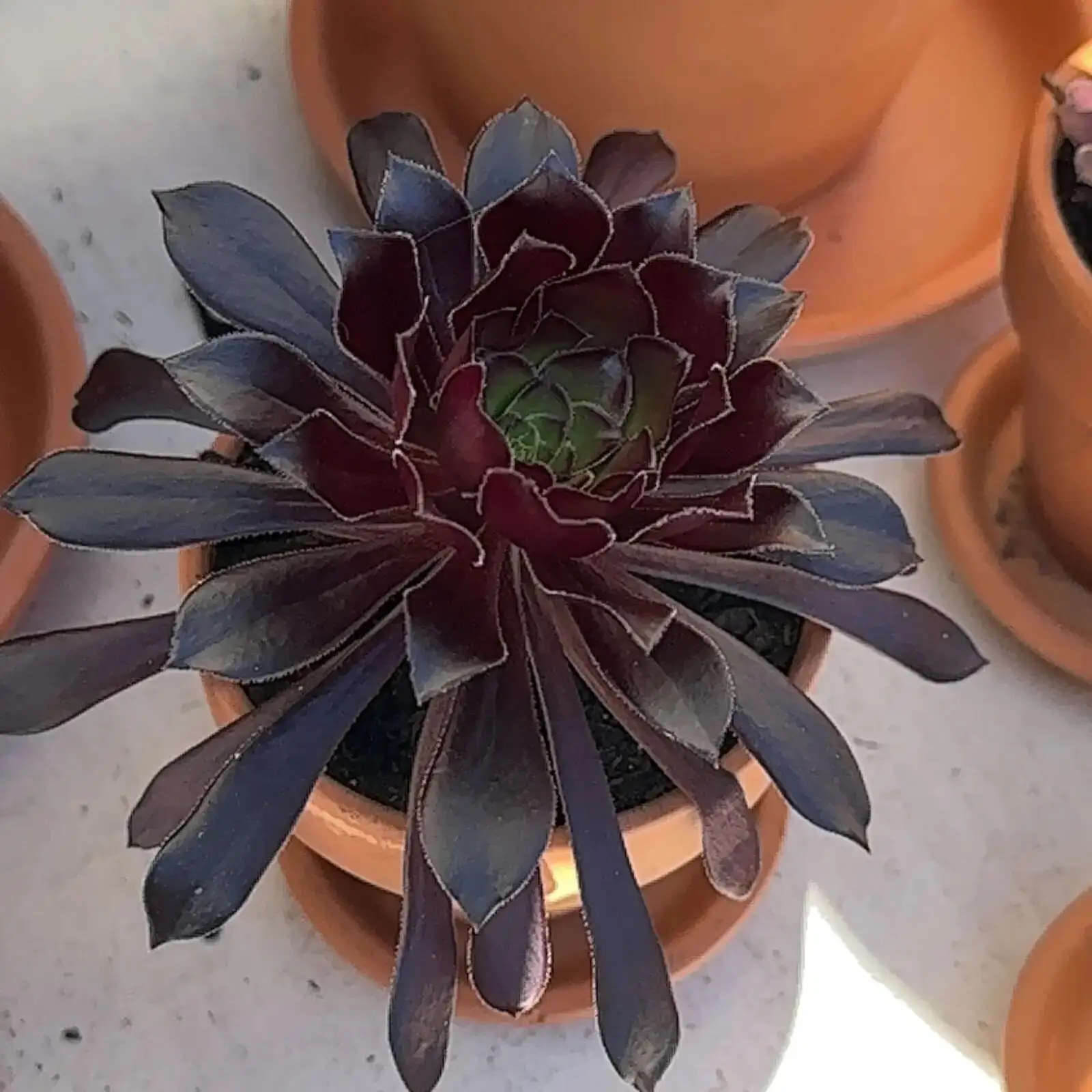
- Look and habit: Tight, spoon-shaped leaves forming rosettes on upright, branching, woody stems; color deepens from burgundy-purple to near-black in strong light and cooler seasons
- Size: Often compact in pots at first (around 10 cm/4 in across), but can mature to roughly 60 × 60 cm (24 × 24 in) with time and pruning
- Seasonal rhythm: Grows most strongly from autumn through spring; slows or semi-dorms in hot summer weather
- Flowers: Mature rosettes may produce starry yellow clusters in spring; the blooming rosette then declines, while side rosettes carry on
Light: the color-making machine
Your goal is strong light without scorch. Think “sun-kissed, not sun-baked.”
Indoors
- Best spot: The brightest window you own. East-facing (golden morning sun) or a filtered south window is ideal.
- Midday protection: In very hot weather, especially behind glass, sheer curtains or pulling the pot 30–60 cm (1–2 ft) back prevents leaf scorch.
- Grow lights: Strong, full-spectrum lights can keep rosettes dark and tight. Place 15–30 cm (6–12 in) above the canopy and run 12–14 hours daily.
- Acclimate: Increase light in steps over 10–14 days to avoid sunburn.
Outdoors (frost-free seasons only)
- Aim for bright sun with midday filtering in heatwaves. Morning sun plus bright afternoon shade = rich color minus crisping.
- Read the leaves:
- Too little light: Rosettes green up and stretch.
- Too much/too hot: Edges bronze or crisp; color looks “rusty” rather than glossy black.
Watering, by season (the cycle that keeps rosettes glossy)
Aeoniums like a deep drink followed by a proper dry-down—then very little when it’s hot.
Active growth (autumn through spring)
- Method: Water deeply until excess drains; never let the pot stand in water.
- Timing: Water when the top layer of mix is dry. In bright, temperate rooms, that’s often every 1–2 weeks—but always check the mix, not the calendar.
- Pro tip: Lift the pot. A light pot and matte, slightly flexible leaves signal it’s time.
Hot summer semi-dormancy
- Think “sips, not soaks.” Keep the mix almost dry. Only give a small drink if rosettes begin to wrinkle.
- Water early morning to avoid steamy soil and rot.
- Expect slower growth and slightly smaller rosettes—it’s resting, not dying.
Winter in cool rooms
- Keep on the dry side to prevent root issues. Strong light, modest water, and good airflow are your best friends.
Heat-wave playbook: glossy, not crispy
When the forecast screams, here’s how you shield those dark rosettes—especially behind glass.
- Shift and soften light:
- Pull the plant back from scorching windows.
- Add a sheer curtain or 30–40% shade cloth during midday.
- Boost airflow:
- A small fan on low reduces heat stress and leaf spot. Avoid stagnant, humid air.
- Watering tweaks:
- Offer small morning sips only if leaves start to wrinkle.
- Absolutely no standing water in saucers.
- Pause fertilizer—hot roots + feed = stress.
- Pot and mix advantages:
- Terracotta breathes and wicks moisture; pair with a gritty, fast-draining succulent mix (think standard potting base generously cut with pumice/perlite/coarse sand).
- A pale top-dressing (gravel) reflects heat and keeps the crown dry.
- Watch for scorch:
- Taco-curling and crispy rims mean the light/heat combo is too intense—add shade and let the plant recover.
Your seasonal care calendar
Autumn
- Growth ramps up: Increase watering frequency (still letting the surface dry first).
- Light: Maximize brightness for deeper color.
- Feeding: Start monthly at half strength with a balanced or succulent-specific fertilizer.
Winter
- Bright light, drier mix—especially in cool rooms.
- Keep frost-free (aim to stay above about 6°C/43°F).
- Expect some of the darkest coloration now.
Early spring
- Peak growth and possible flowering. After bloom, let the flowering rosette dry out before removing it; the side rosettes carry on.
- Repot and reshape now if needed; prune leggy stems to encourage branching.
Summer
- Semi-dormant: Drastically reduce watering—give occasional sips only if leaves wrinkle.
- Filter midday sun, especially behind glass. No heavy feeding or repotting.
Soil, pots, and repotting (the drainage trifecta)
- Soil: Fast-draining cactus/succulent mix. Improve standard potting mix by cutting generously with grit/coarse sand/pumice for airflow.
- Pot: Always use drainage holes. Terracotta is a great choice.
- Repot: Spring, every 2–3 years (or sooner if the mix stays wet too long). Move up just one size. Common pot sizes for small–medium plants: 12–15 cm (4.7–5.9 in).
Feeding for form and color
- When: During main growth windows (winter through late spring, and autumn if active).
- How: Monthly, half-strength balanced or low-nitrogen succulent fertilizer.
- Skip: Summer dormancy—feeding then encourages weak, stretched growth.
Grooming, pruning, and propagation
- Tidy: Gently remove shriveled lower leaves.
- After flowering: The blooming rosette is monocarpic—wait for it to dry, then remove it to tidy the clump.
- Shaping: Cut back leggy stems in spring to trigger branching; many growers refresh plants from cuttings every 2–3 years.
- Propagation (easy mode):
- Take a rosette with a short stem, let the cut end callus for several days.
- Set into a dry, gritty mix; begin light watering after roots form (often 3–4 weeks in good conditions).

Troubleshooting: fast diagnostics
- Crispy edges, dull sheen: Too much heat/sun with insufficient water. Add midday filtering and offer a measured drink.
- Mushy leaves or stems: Overwatering or cold, wet mix. Unpot to check roots; trim rot, repot into fresh, fast-draining soil, water sparingly.
- Rosettes greening and stretching: Not enough light. Increase brightness gradually; consider a grow light.
- Leaf spot or rust in damp air: Improve airflow; avoid wetting foliage late in the day.
- Pests: Mealybugs, aphids (especially on flower stalks), whiteflies, and scale. Treat early with insecticidal soap or horticultural oil and repeat as needed.
Where it shines (and where it doesn’t)
- Use it as a statement plant on sunny windowsills, in bright patio containers, or as a dramatic anchor in mixed succulent bowls.
- Avoid closed terrariums: Zwartkop wants strong light and airflow, not sealed humidity.
Safety, symbolism, and style notes
- Safety: Generally not listed as highly toxic, but sap can irritate sensitive skin. Keep out of reach of pets and children; wash hands after pruning if you’re sensitive.
- Symbolism: Often linked with resilience and bold, modern elegance—those dark, architectural rosettes look composed even when conditions are dry and bright. While not rooted in formal “flower language,” the near-black palette has come to signal strength, minimalism, and a touch of mystery in contemporary garden design.
Quick-hit specs
- Sunlight: Full sun to very bright light; protect from harsh midday sun in hot weather
- Temperature: Happiest roughly 20–25°C (68–77°F); keep frost-free and above about 6°C (43°F)
- Humidity: Low to average with good airflow
- Hardiness: Tender (best outdoors year-round only in mild, frost-free climates)
- Watering mantra: Deep soak, then dry—almost dry in summer dormancy
- Key to color: Strong light plus cool-to-mild temps, with midday protection during heat spikes
Nail the seasonal rhythm—bright, buffered light, thorough water-then-dry cycles, and summertime sips—and your Aeonium ‘Zwartkop’ will repay you with rosettes so dark and glossy they look lacquered. Keep it sunny, keep it airy, and keep it quick on the heat-wave tweaks.