

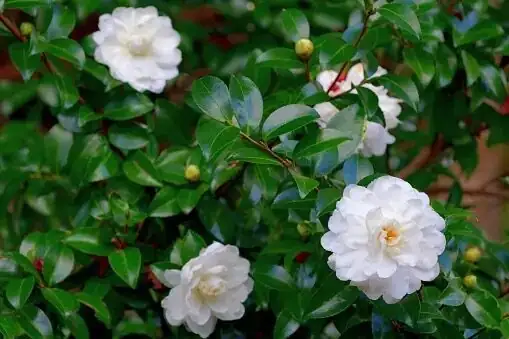
Imagine a hedge that stays glossy and green year-round, then bursts into cheerful, lightly fragrant blooms just when the garden grows quiet. That’s Camellia sasanqua: an elegant, easy-going evergreen that can be clipped into handsome lines or left a little looser for a natural look. Here’s your complete hedge blueprint—from spacing to shears—so you get dense screens, bigger blooms, and fewer disease headaches.
Meet the sasanqua camellia you’re hedging
- Botanical name: Camellia sasanqua (family Theaceae), native to Japan
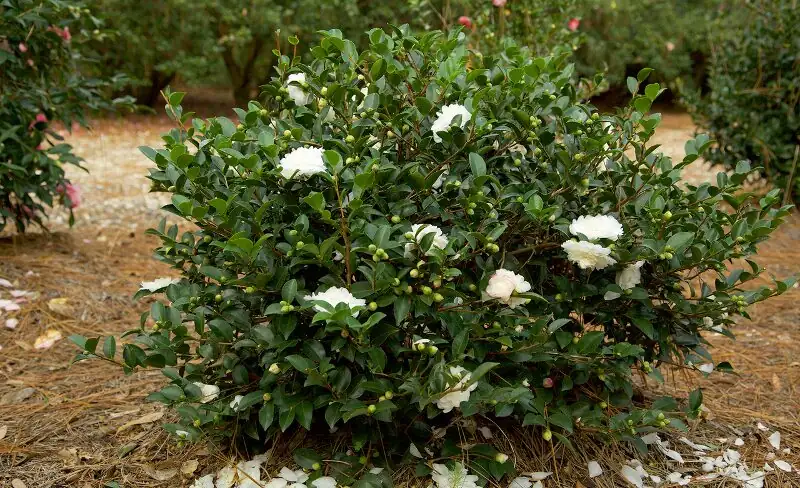
- Habit: Dense, evergreen shrub with naturally neat branching; rounded to upright
- Size: Typically 1.5–5 m tall and 1.5–4 m wide, depending on cultivar and pruning
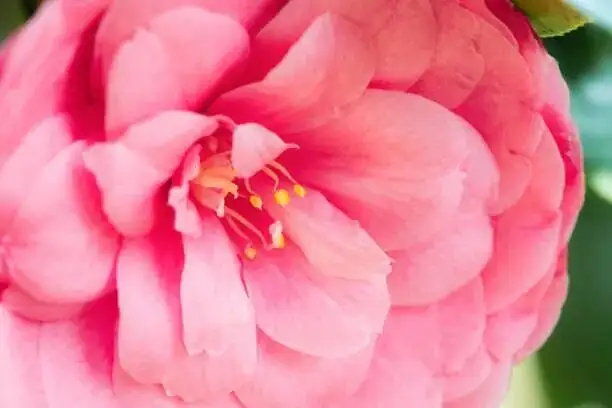
- Flowers: White, pink, or red, often lightly fragrant; single to semi-double
- Bloom season: Autumn into winter (roughly October to January in many climates)
- Best conditions: Bright light to full sun (with protection from harsh midday sun in hot regions), slightly acidic, well-drained soil, steady moisture without sogginess
- Hardiness: USDA Zones 7–9 (varies by cultivar)
The hedge blueprint, from spacing to shears
1) Choose the right cultivar for the job
- Low hedges (around 1 m): Consider dwarf sasanquas (e.g., compact Paradise series cultivars).
- Medium to tall hedges (2–4 m): Popular choices include ‘Plantation Pink’ (fast-growing, single pink), ‘Setsugekka’ (white, ruffled), and other named forms bred for hedging.
Tip: Buy well-shaped, 2–3-year-old plants with healthy, glossy foliage and a tidy framework. For seasonal display plants, aim for a 50/50 mix of buds and open flowers.
2) Space for quick fill-in—without sacrificing airflow
- Plant-to-plant spacing in a single row: 50–90 cm, depending on cultivar vigor and your target hedge height.
- Dwarf hedge: 45–60 cm
- Medium hedge: 60–75 cm
- Tall hedge: 75–100 cm
- From walls/fences: Set the row at least 60 cm out from solid structures so air can move around the backs of plants.
- Double-row privacy screen (only if needed): Two staggered rows, 60–75 cm apart; keep 75–100 cm between plants within each row.
- Shape to a slight taper (narrower at the top, wider at the base) so light and air reach the lower foliage—this is a simple, powerful disease deterrent.

3) Planting and first-year setup
- Soil: Slightly acidic, free-draining. Incorporate leaf mold/composted bark with peat (or a sustainable substitute) plus coarse sand/grit.
- Planting depth: Keep the top of the rootball at or just above the surrounding soil grade; don’t bury the crown.
- Mulch: 5–8 cm of pine bark/needles to conserve moisture and support acidity; keep mulch a few centimeters off the stems.
- Water: Keep evenly moist (never waterlogged). Install drip or micro-spray irrigation along the hedge line to keep foliage dry and disease pressure low.
- Stakes: Stake new plants for their first season; remove stakes as trunks thicken.
The pruning calendar that guarantees flowers
Sasanqua camellias bloom on mature wood formed earlier in the season. The secret is timing: make your structural cuts right after flowering, then keep later interventions gentle.
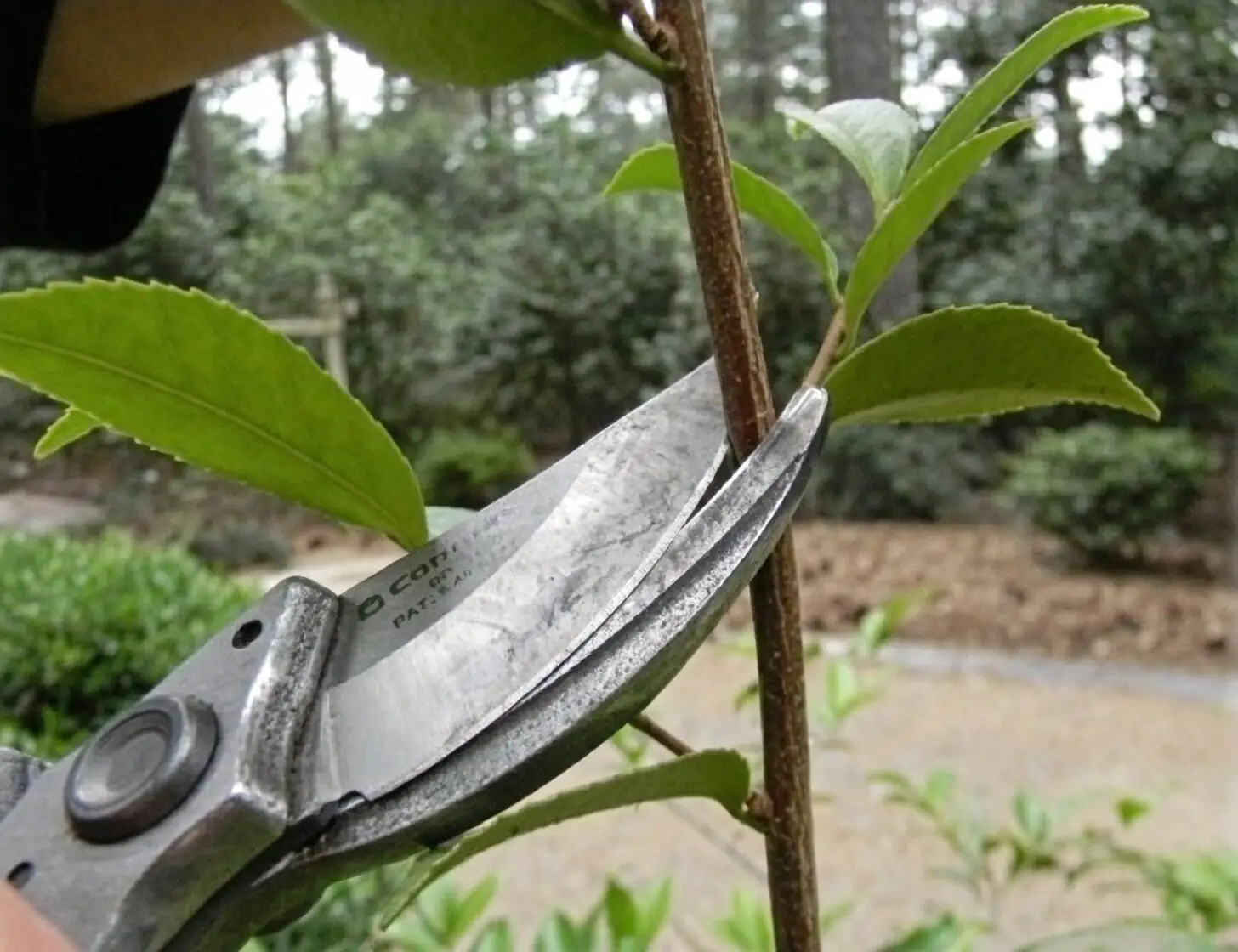
Step 1: Right after flowering (late winter to very early spring)
- What to do
- Remove spent blooms, dead/diseased wood, and any leggy or rubbing branches.
- Lightly thin congested interior twigs to “let the breeze in” and reduce leaf spot risk.
- Establish your hedge lines: clip to a clean silhouette with that light top-to-base taper.
- Why now
- You won’t be cutting off next season’s flower buds, and plants respond with a healthy spring flush.
Step 2: Early summer touch-up (stop by early June in many regions)
- What to do
- A light shape—tip-prune the fresh, soft growth to keep edges crisp.
- Avoid deep shearing into old wood; this is a finesse pass, not a reset.
- Why now
- You’ll refine form without sacrificing the buds that are beginning to initiate on new season’s wood.
Step 3: Late summer bud-thinning for a showier display
- What to do
- Hand-thin crowded clusters, often leaving about one bud per shoot.
- Why now
- Fewer buds mean larger, better-quality blooms and less strain on branches. Do not shear at this time; you’d remove the very buds you’re trying to improve.
Airflow tactics that actually reduce disease
Sasanquas appreciate humidity but dislike stagnant air. Build airflow into your hedge from day one.
- Hedge architecture
- Keep hedges slightly narrower at the top than at the base.
- Thin a few interior twigs after flowering to create “air windows” every 40–60 cm along the run.
- Spacing and siting
- Respect the 50–90 cm plant spacing; crowding invites leaf spots.
- Avoid planting flush to a solid wall or tight corner where air stagnates.
- Water wisely
- Favor drip or micro-spray at soil level; avoid routinely wetting foliage.
- In winter, water about every 3–5 days for containers, ideally around midday on a mild, bright day to keep roots happy without chilling them.
- Good hygiene
- Sweep up fallen petals/leaves during bloom to reduce fungal spore sources.
- Sterilize pruners between plants when removing diseased material.
- When issues appear
- Anthracnose: Look for gray-white spots starting at leaf margins. Remove affected foliage, improve airflow, avoid late-day wetting; use a suitable fungicide if severe.
- Scale/aphids: Tackle early with horticultural oil or insecticidal soap; boosting light and ventilation helps deter reinfestation and the sooty mold that follows honeydew.
Feeding and watering for hedge performance
- Watering
- Aim for evenly moist soil—thorough soaks with free drainage. Avoid drought stress and waterlogging at all times.
- In summer heat, containers may need daily watering; in-ground plants appreciate consistent moisture without standing water.
- Fertilizing
- March–September: Feed every 2 weeks with a balanced fertilizer or organic liquid feed to support growth and future flowering.
- May: One application of 0.2% monopotassium phosphate can encourage bud initiation.
- October: Add a phosphorus-forward feed to bolster the upcoming bloom season.
Where sasanqua hedges thrive
- Light: Bright light to full sun; in hot-summer climates, protect from harsh midday sun. In very warm regions, roughly 50% filtered light can help.
- Temperature: Best growth at 18–25°C. Brief dips near -10°C are often tolerated in the ground (depending on cultivar and exposure). Prolonged heat above 38°C can scorch buds and foliage.
- Humidity: Prefers moderately high humidity (around 70–80%) with good air movement.
- Placement: Outdoors is best for hedges—bright and sheltered from hot, drying winds.
Troubleshooting quick wins
- Bud or leaf drop on potted hedges and displays
- Usual culprits: uneven watering, dry air, low light, poor ventilation, pests, or temperature swings from nearby vents.
- Fix: Keep cool during bloom (around 8–10°C if indoors seasonally), very bright, evenly moist, and well ventilated.
- Sparse flowering
- Common causes: pruning too late, deep summer shearing, or insufficient light.
- Fix: Do structural pruning right after flowering; only a light shape in early summer; thin buds (don’t shear) in late summer; increase light.
Symbolism and cultural notes
Sasanqua camellias are widely linked with admiration, grace, and refined beauty—qualities celebrated in East Asian gardens where winter-blooming shrubs carry special cultural weight. The “flower language” tradition that assigns virtues to blooms grew from layered histories (including East Asian poetry and later Victorian floriography). While not a scientific lens, it captures why sasanquas feel so compelling in the quiet months: they stand for elegance that endures through the cold.
Your one-page hedge plan
- Autumn–Winter (flowering)
- Enjoy the show. Keep moisture steady; avoid waterlogging. Sweep spent petals.
- After flowering
- Structural prune: remove spent blooms, dead/diseased wood, and lightly open congested interiors. Establish the tapered hedge line.
- March–May
- Growth phase. Feed every 2 weeks; apply 0.2% monopotassium phosphate once in May if desired. Maintain even moisture.
- Early summer
- Light shaping only; stop by early June. Don’t cut into old wood.
- Late summer
- Hand-thin bud clusters (often one bud per shoot). Do not shear.
- October
- Phosphorus-forward feed ahead of bloom. Check irrigation and mulch; confirm good airflow before the cool season sets in.
Build it right, prune it on schedule, and give it room to breathe—your Camellia sasanqua hedge will repay you with polished foliage and a luminous autumn-to-winter display that turns a boundary into a centerpiece.