

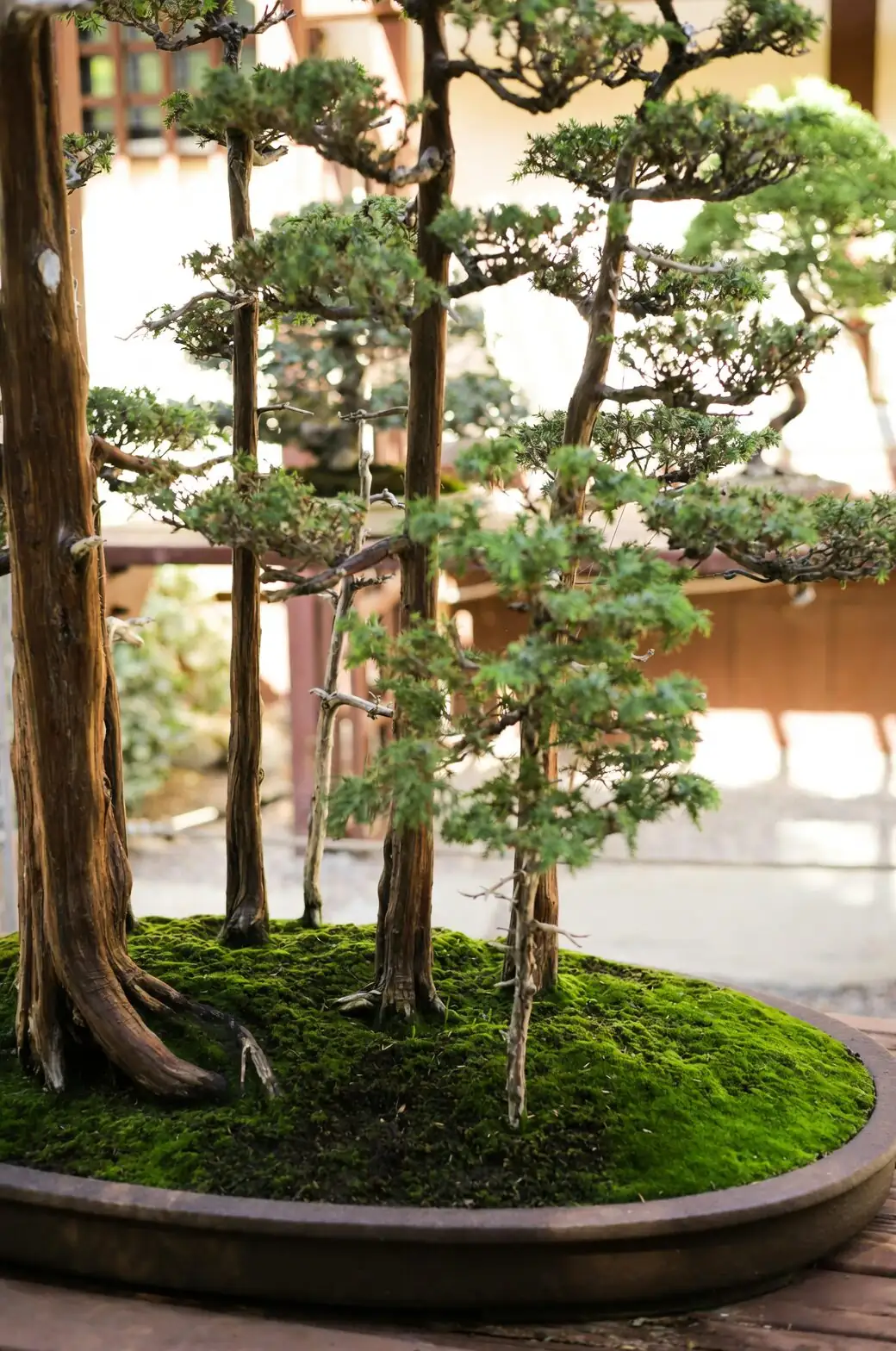
Buddhist Pine, Elevated: Companion Kusamono That Add Texture and Humidity—Without Stealing the Show
If your Podocarpus macrophyllus (Buddhist pine) already looks like a green meditation—cloud pads layered over a clean trunk—this guide is about what to place around it so the air feels cooler, the textures feel richer, and your tree remains the undisputed lead. Think curated kusamono and shitakusa accents that behave like stage lighting: they shape the mood, never the plot.
A quick portrait of the star
- Evergreen with dense, leathery, narrow leaves that stay deep green in good light.
- Loves bright light to partial shade; shelter it from scorching midday sun (an east-facing window or balcony is ideal).
- Thrives in warm, humid conditions (about 15–25°C/59–77°F); brief dips to ~-5°C/23°F are tolerable, but protect from hard freezes.
- Requires a free-draining, airy mix and resents waterlogging. Water thoroughly, then wait until the top of the mix is nearly dry. Slightly reduce water during spring flush to encourage shorter leaves (a bonsai trick).
- Takes pruning and wiring beautifully for those classic layered “cloud-pad” forms.
Why this matters for companions: your accents should increase local humidity and visual depth without turning the area into a swamp or a color riot. We’ll use separate small plantings (kusamono/shitakusa) that you can water and groom independently.
Kusamono vs. shitakusa—what belongs beside Buddhist pine?
- Shitakusa (accent, “under-grass”): a smaller, supporting planting displayed with a bonsai to echo season, place, and mood. This is your go-to beside Buddhist pine.
- Kusamono (“grass thing”): often a feature planting shown solo. For our purpose, use kusamono-sized pieces sparingly, scaled down so they don’t dominate.
- Key display principles:
- Seasonality: rotate accents to suggest the current season.
- Scale and story: keep accents visually “lighter” than the bonsai. Fine textures and modest height support the calm, upright character of Podocarpus.
- Contrast with restraint: since Buddhist pine has inconspicuous flowers, lean into texture and foliage contrast over bright blossoms.
- Shared origins: compositions feel most natural when species share ecological or geographic affinities (East Asian woodland and streamside plants pair well here).
The humidity halo: how accents quietly condition the air
Buddhist pine enjoys moderate to high humidity but hates wet feet. Create a “humidity halo” using separately potted companions:
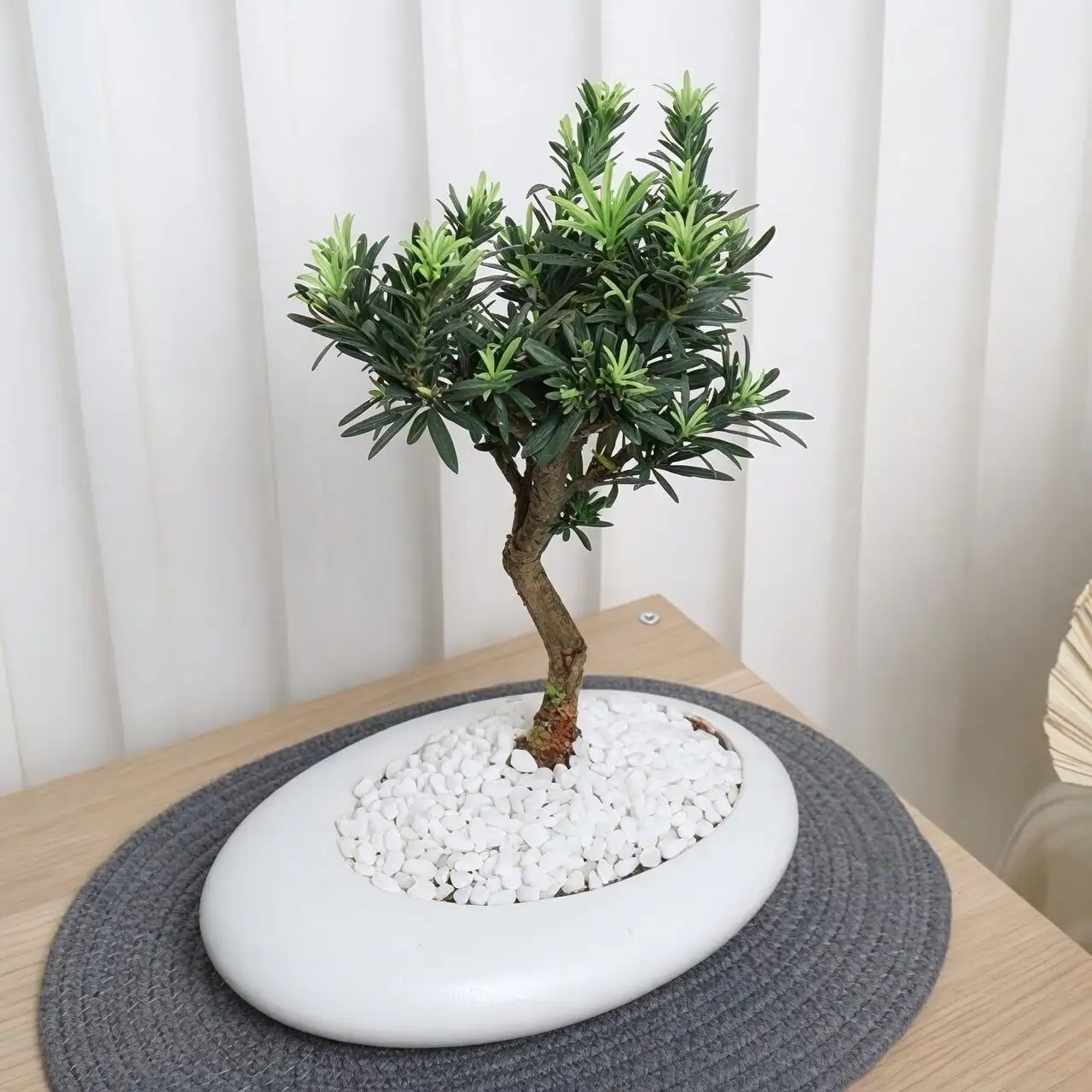
- Group 2–3 small accent pots or kokedama within 15–45 cm (6–18 in) of the bonsai. Water these accents more frequently than the tree; their evaporation lifts local humidity without soaking the Podocarpus.
- Place accents on shallow trays with pebbles and a thin film of water (beneath the accents only, not the bonsai).
- Mist in the morning during hot spells, prioritizing the accents and giving the Podocarpus a light pass only when airflow is excellent. Avoid constantly wet foliage to reduce leaf spot/anthracnose risk.
- Keep air moving. Humidity without stagnation is the sweet spot.
Curated plant pairings that flatter Podocarpus
Scaled for subtlety, selected for texture, and chosen to play well with bright light to partial shade.
Tactile low tufts (evergreen, disciplined)
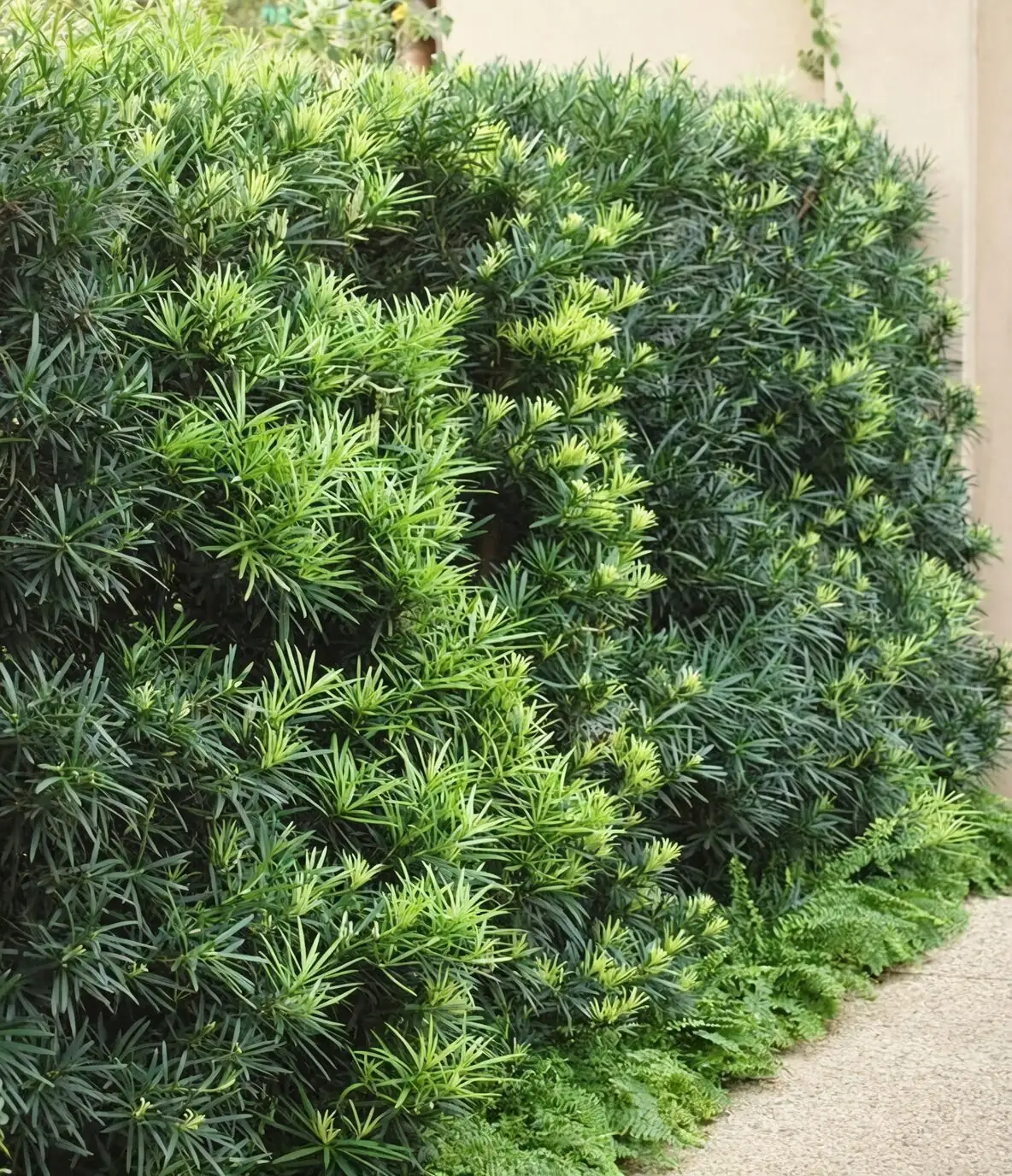
- Ophiopogon japonicus ‘Nana’ (dwarf mondo grass)
- Why: East Asian origin, fine strappy leaves echo needle-like foliage, thrives in bright shade, evergreen poise.
- Display: shallow glazed oval or a small stone tile with moss skirt.
- Ophiopogon planiscapus (green or charcoal cultivars)
- Why: deeper tone adds quiet contrast underneath Buddhist pine’s deep green.
- Tip: keep clumps small; black-leaf forms are dramatic—use a tiny division.
- Carex morrowii (compact forms)
- Why: arching blades add soft motion without height; choose restrained variegation.
- Care: bright shade, evenly moist soil in its own pot.
Moisture-loving “green humidifiers” (kept separate and slightly wetter)
- Acorus gramineus ‘Ogon’ (golden sweet flag)
- Why: soft, linear leaves and a luminous whisper of color; boosts humidity as it evaporates.
- Display: kokedama on a dish, or a tiny pot with a water-retentive mix—keep away from the Podocarpus’ drainage path.
- Juncus effusus ‘Spiralis’ (corkscrew rush)
- Why: sculptural curls punctuate cloud pads like a calligrapher’s flourish.
- Use sparingly and small; keep wetter than the bonsai in a separate pot or kokedama.
- Selaginella kraussiana (spikemoss, tiny forms)
- Why: feathery carpet that drinks humidity and gives it back.
- Placement: low, shady side of the display; never as a groundcover in the bonsai pot.
Ferns that feel like forest air
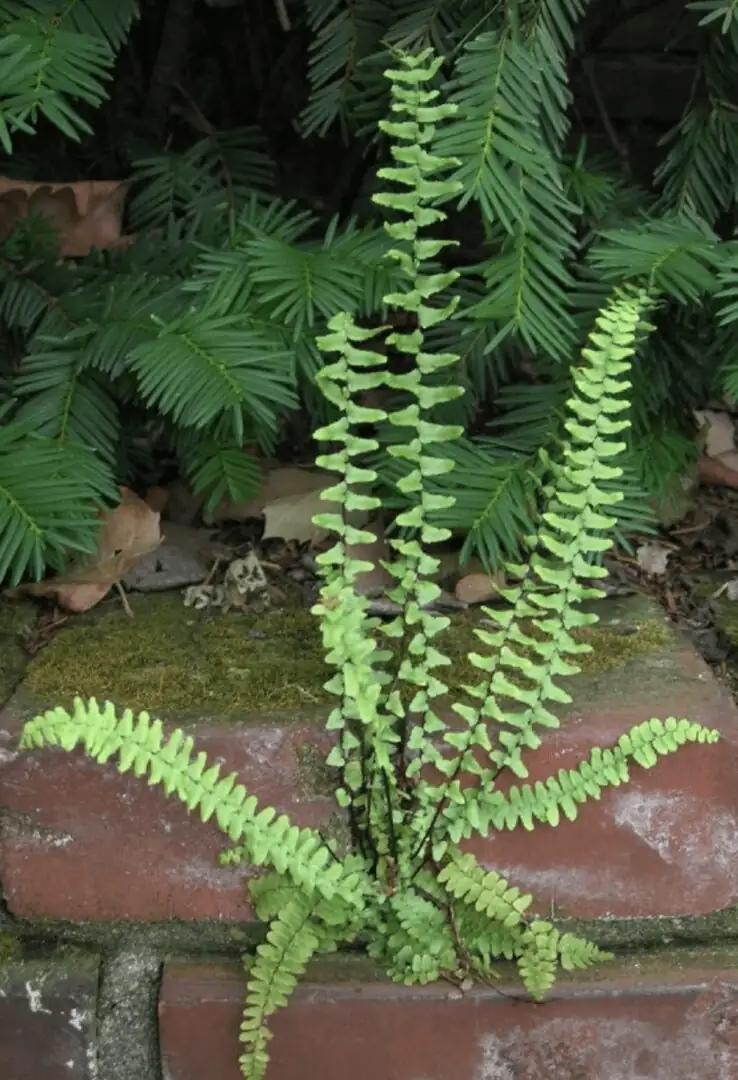
- Asplenium trichomanes (maidenhair spleenwort)
- Why: minute fronds, woodland vibe, elegant but understated.
- Display: slate or a tiny unglazed pot with a moss rim.
- Pellaea rotundifolia (button fern)
- Why: rounded leaflets add a new texture without bright color.
- Indoors near bright, indirect light; keep evenly moist.
- Davallia (small cultivars)
- Why: airy fronds, interesting rhizomes for a “forest floor” story on a stone slab.
Mosses to “finish the sentence”
- Leucobryum glaucum (cushion moss) and Hypnum spp. (sheet moss)
- Why: moss is the soft whisper in a display; it sets mood and scale.
- Use on tiles/slabs and around accent roots; keep it minimal on the bonsai’s soil so the Podocarpus mix stays airy.
What to avoid if humidity is your goal:
- Thick succulents (sedums, sempervivums) won’t raise humidity and can visually shift the story toward arid mountain scenes. Beautiful, but off-brief here.
Three ready-to-assemble accent “recipes”
Keep each piece small—roughly the footprint of your bonsai’s front pad—so they never upstage.
1) Mondo Islet on Slate
- Plants: Ophiopogon japonicus ‘Nana’, a button or cushion moss.
- Container: rough slate tile; mound a keto/akadama-pumice mix, top-dress with moss.
- Mood: evergreen quietude; mirrors Podocarpus’ disciplined silhouette.
2) Forest-Floor Fern Chip
- Plants: Asplenium trichomanes with Hypnum moss.
- Container: thin ceramic “chip” or concave stone; minimal soil, excellent drainage.
- Mood: cool woodland breath; increases local humidity with each watering.
3) Twisted Rush Kokedama (kept wetter)
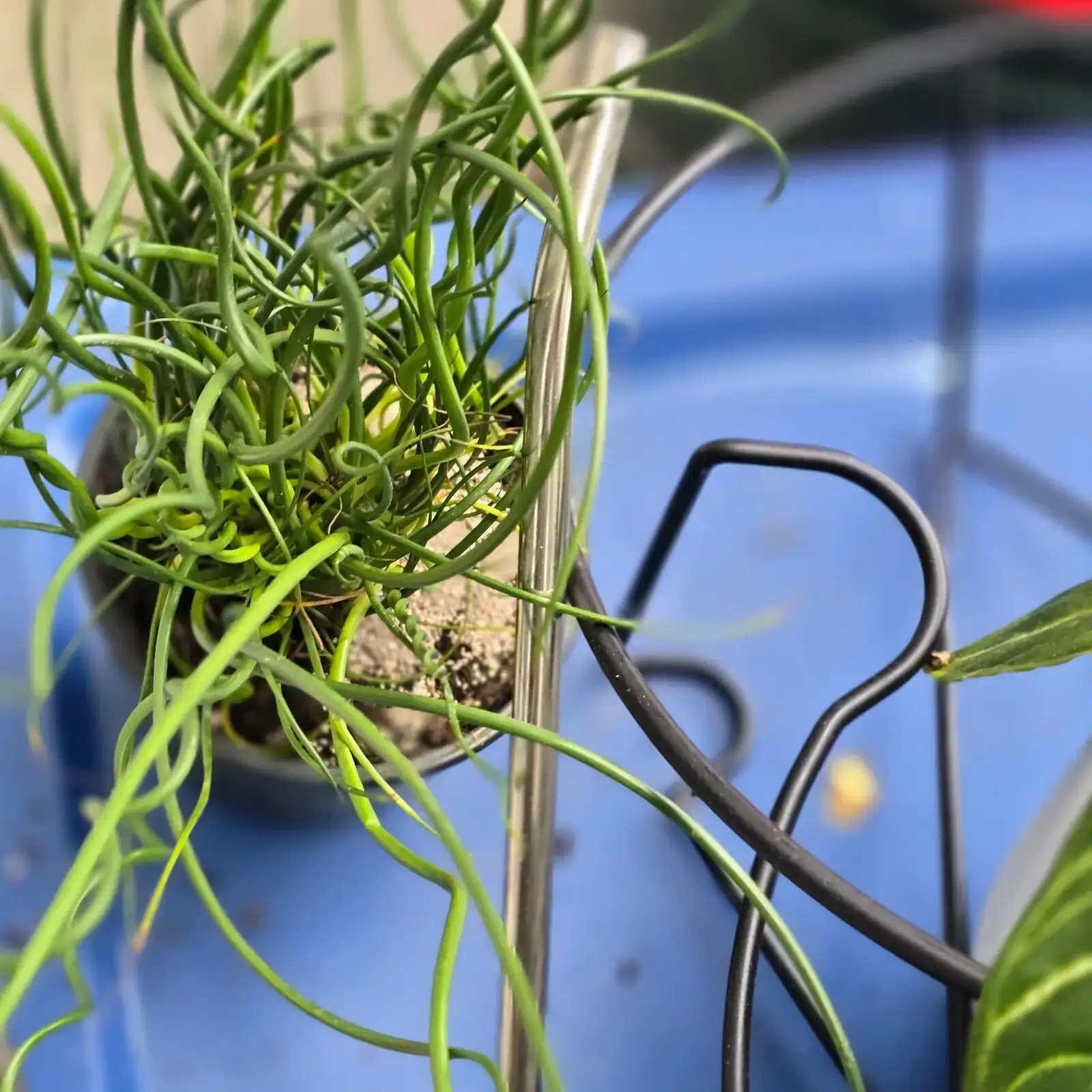
- Plants: Juncus effusus ‘Spiralis’.
- Container: moss-wrapped ball on a glazed saucer with a thin water film.
- Mood: a single calligraphic line; place off the tree’s visual center, on the outside of its movement.
Placement choreography: let the pine lead
- Direction: place the accent on the side the bonsai “looks” or leans toward, but slightly outside the tree’s visual apex.
- Height: accents should sit lower than the bonsai’s rim line; think foothills to a mountain.
- Distance: 1–1.5 pot-lengths from the bonsai is usually right; tighten in small tokonoma-style displays.
Care for the ensemble (so the pine stays pristine)
- Watering
- Buddhist pine: water thoroughly, then wait until the top of the mix is nearly dry; avoid schedules and avoid soggy soil. In spring flush, slightly reduce water for shorter leaves.
- Accents: water as their species demand—often more frequently. Don’t let runoff saturate the bonsai’s pot.
- Summer: light morning misting boosts humidity; keep airflow high to avoid leaf diseases.
- Feeding
- Bonsai/containers: monthly, light feeding in the growing season; stop in winter.
- Accent kusamono: very dilute feeding during active growth to keep them compact.
- Light and heat
- Bright light to partial shade; shelter from scorching midday sun.
- Ideal temperatures around 15–25°C (59–77°F).
- Repotting
- Buddhist pine: refresh the free-draining mix every 2–3 years; bonsai pots are often 20–40 cm (8–16 in) deep for stability.
- Accents: refresh yearly or as they outgrow their role—small is sophisticated.
- Health
- Watch for scale, spider mites, and thrips on Podocarpus; inspect leaf undersides. Treat early with suitable horticultural soap or oil.
- Prevent leaf spot/anthracnose with good airflow and by avoiding persistently wet foliage.
Seasonal rotations that read as “true to time”
- Spring: fresh Ophiopogon tufts with new moss tips; tiny fern croziers just unfurling.
- Summer: add a single Juncus kokedama to raise humidity during heat waves; keep it small.
- Autumn: lean, textural accents; allow a touch of straw tone in a Carex clump to suggest season without bright fruit or bloom.
- Winter: evergreen minis (Ophiopogon, cushion moss) to preserve stillness; keep displays spare.
Sourcing and selection tips
- Choose accents with fine texture and modest size; avoid broad, shiny, or variegated leaves that read as flashy.
- If possible, favor East Asian species (Ophiopogon, Acorus, Asplenium species common to the region) to harmonize with Buddhist pine’s origin story.
- Pots and surfaces: quiet glazes, soft earth tones, and natural stone or slate keep the bonsai front and center.
A note on “flower language” and symbolism
There isn’t a widely established traditional floriography for Podocarpus macrophyllus. In East Asian culture, pines broadly symbolize endurance and long life, but Buddhist pine is not a true pine—it simply shares the evergreen dignity. Modern labels that assign fixed “meanings” (success, steadfastness, etc.) are contemporary interpretations rather than historical truths. If you seek symbolism, let your display convey it: steady lines, evergreen textures, and a composed accent will read as longevity and calm without any caption.
Quick troubleshooting
- The pine’s leaves are losing depth of color: increase bright, indirect light and improve airflow; mist lightly in hot weather. Check feeding schedule during the growing season.
- Tips browning or dieback: reassess drainage—never let the bonsai sit in soggy soil. Water when the top of the mix is nearly dry.
- Fungal spots after misting: switch to morning-only misting, increase airflow, and avoid wetting foliage daily.
Curating accents for Podocarpus is like arranging stones in a Zen garden: remove anything that shouts, keep what breathes. A few well-chosen tufts, a cool fern, and a mossed slate can lift humidity, deepen texture, and allow the Buddhist pine to do what it does best—anchor the space with quiet grace.