

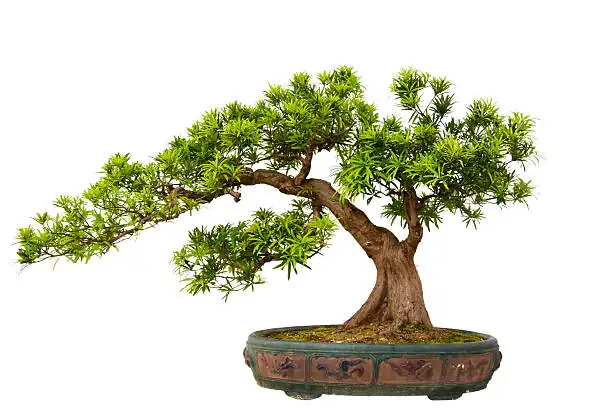
If you’ve ever admired those tranquil, layered “cloud pads” on a Buddhist pine, you already know why Podocarpus macrophyllus is a bonsai favorite. Native to China and Japan, this evergreen takes to shaping like a seasoned dancer takes to choreography—supple, resilient, and responsive. The secret to keeping its silhouette crisp isn’t a single trick; it’s a year-round rhythm of light pinching, timely hard pruning, smart wiring, and a few leaf-length hacks. Here’s a tactical, season-by-season plan you can follow.
The tactical pruning calendar (Northern Hemisphere; flip seasons for the South)
Late winter to very early spring (structure and reset)
- Goal: Set or correct the framework before vigorous growth.
- Actions:
- Hard-prune structural branches to create or refine the primary silhouette, just above a node or side shoot. Seal larger cuts.
- Thin crowded interior twigs to open light channels through future “cloud” pads.
- Light wiring is safe if temperatures are steady; avoid wiring during hard freezes. Check anchor stability because pots are often deeper (20–40 cm) and heavier.
Why now: Recovery is swift as growth resumes, and back-budding on Podocarpus is reliable when the sap rises. Avoid removing more than about one-third of the foliage in a single session.
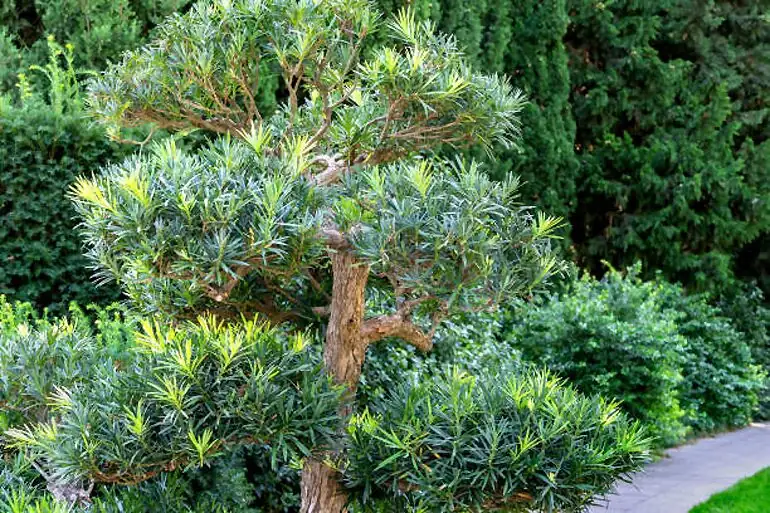
Mid to late spring (the first flush—precision pinching and leaf control)
- Goal: Control extension growth, shorten leaves, and build density.
- Actions:
- Pinch or clip new shoots as they extend to 4–6 leaves, cutting back to 1–2 leaf-pairs to keep pads tight.
- For leaf-length control, slightly reduce watering during the flush—let the mix approach “nearly dry” before watering again. Maintain bright light with protection from harsh midday sun.
- Balance energy: allow weaker interior shoots a bit more extension before pinching; reduce strong apical shoots earlier.
Why now: Spring is your main opportunity to set internode length and pad density. Slightly lean watering and quick pinches translate into shorter, stubbier leaves.
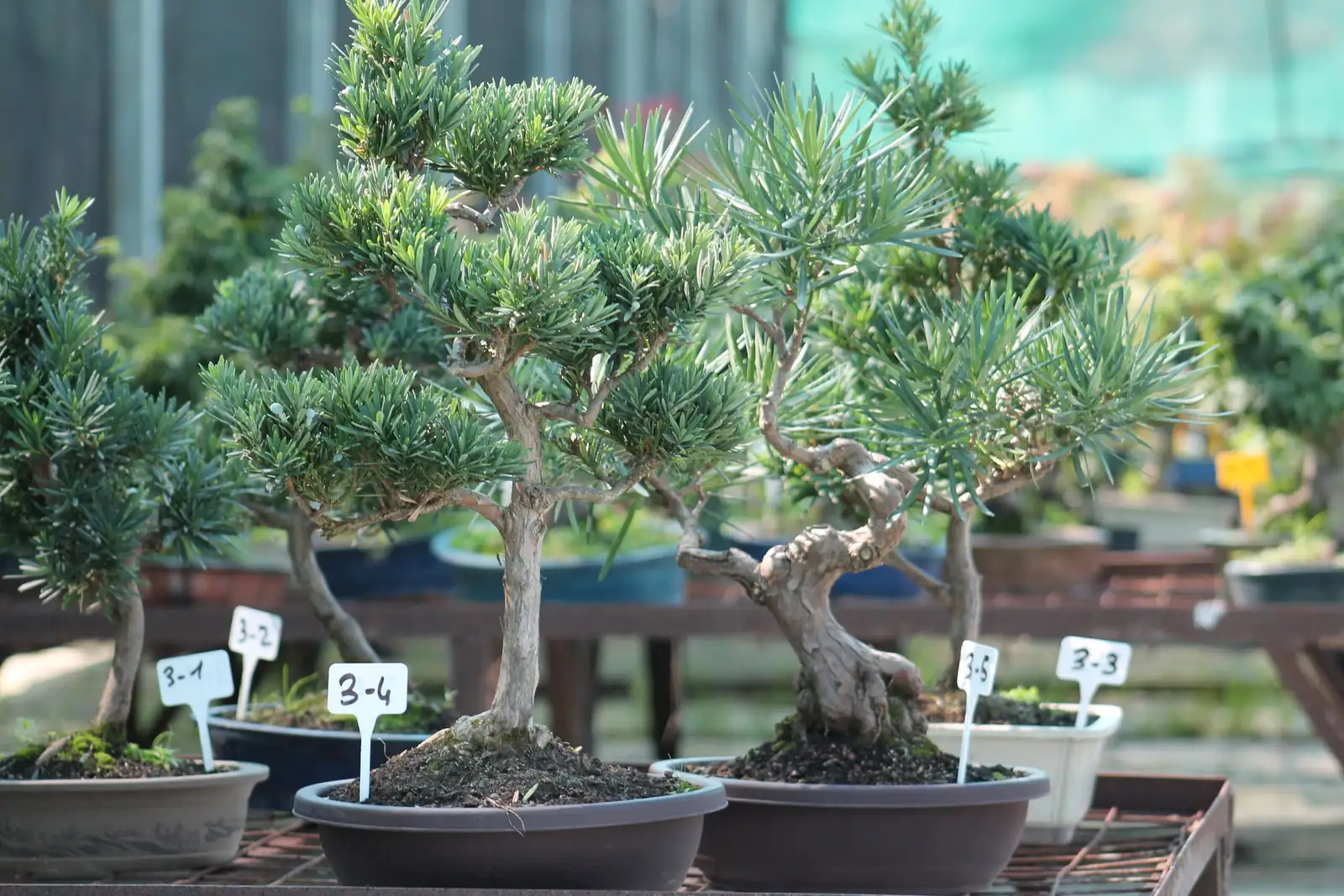
Early to mid-summer (refinement, selective wiring, and thirst management)
- Goal: Maintain pad outline and refine secondary movement.
- Actions:
- Continue tip pinching every 2–3 weeks to keep the outline crisp.
- Wire secondary and tertiary branches after new growth hardens (stems turn slightly woody). Avoid wiring tender, juicy tips—they kink.
- Shade during scorching midday sun; brief morning or late-afternoon sun is ideal on a bright, airy patio or an east-facing spot.
- Misting during hot spells keeps foliage fresh and helps you avoid overwatering; Podocarpus dislikes waterlogged roots.
Why now: Warmth speeds growth and wire bite. Inspect wires every 2–4 weeks and adjust before marks form.
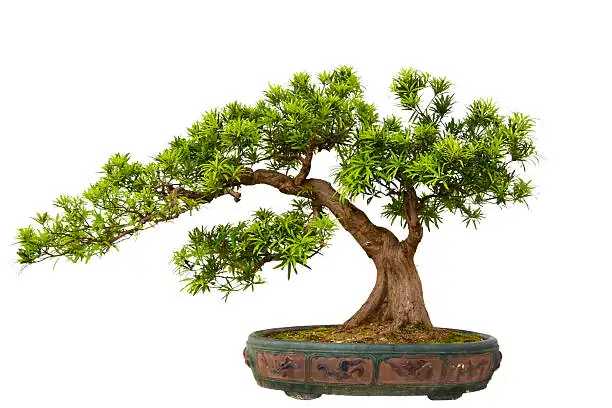
Late summer to early autumn (clean-up and consolidation)
- Goal: Lock in shape; prepare for slower growth.
- Actions:
- Light prune to re-establish pads and clean up leggy runners. This is a good time to remove or shorten “sacrifice” shoots used for thickening.
- Last safe window for moderate wiring; growth slows so wires can set without biting fast.
- Feed in-ground plants once; container bonsai can continue monthly feeding until temperatures begin to decline.
Why now: The tree still has energy to heal cuts, but extension growth is calming down—ideal for tidy silhouettes.
Late autumn to winter (pause, protect, and observe)
- Goal: Rest, protect, and plan.
- Actions:
- Stop fertilizing and avoid heavy pruning. Only remove dead or diseased bits.
- Protect from hard freezes; Podocarpus can tolerate brief dips to about -5°C (23°F), but don’t push it. Provide bright light indoors if you overwinter inside.
- Repot on a 2–3 year cycle as needed (often done at the edge of the dormant-to-active shift), using a free-draining mix: fertile loam + leaf mold/compost + coarse sand/grit.
Why now: Low metabolism means slower healing; structural work and heavy feeds are better saved for spring.
—
Pinch vs. prune hard: which, when, and how
Pinching (refinement)
- Use when:
- New shoots extend in spring and summer and you want compact pads.
- How:
- Let shoots reach 4–6 leaves (or 6–8 cm), then pinch or clip to 1–2 leaf-pairs.
- On strong apical regions, pinch earlier; on shaded interiors, delay to help them catch up.
- Result:
- Dense, layered foliage with short internodes and tidier leaf length.
Hard pruning (architecture)
- Use when:
- You’re setting trunk lines, removing bar branches, correcting leggy structure, or forcing back-budding.
- How:
- Cut to just above a node or side branch on lignified wood. Seal larger wounds.
- Avoid removing more than ~30–40% foliage in one go; stage major work across two seasons.
- Result:
- Vigorous back-budding and clear, readable structure ready for pad-building.
—
Safe wiring windows and technique
- Best seasons:
- Late winter through spring (as growth starts) and late summer into early autumn (after hardening). Avoid wiring during extreme heat or deep freezes.
- Technique tips:
- Use anodized aluminum for finer twig work; copper for heavier, well-lignified branches if you’re experienced.
- Wrap at about 45 degrees, secure anchors cleanly, and protect tender bark with raffia or paper tape on tighter bends.
- Check every 2–4 weeks in active growth; remove or adjust before marks form. Podocarpus swells quickly in warm, humid spells.
Pro move: Wire to create “cloud-pad” scaffolds—gentle horizontal planes with slightly upturned twig tips—then rely on pinching to fill and sharpen edges.
—
Leaf-length control without defoliation
You don’t need full defoliation to shrink leaves on Buddhist pine. Combine these levers during the spring flush:
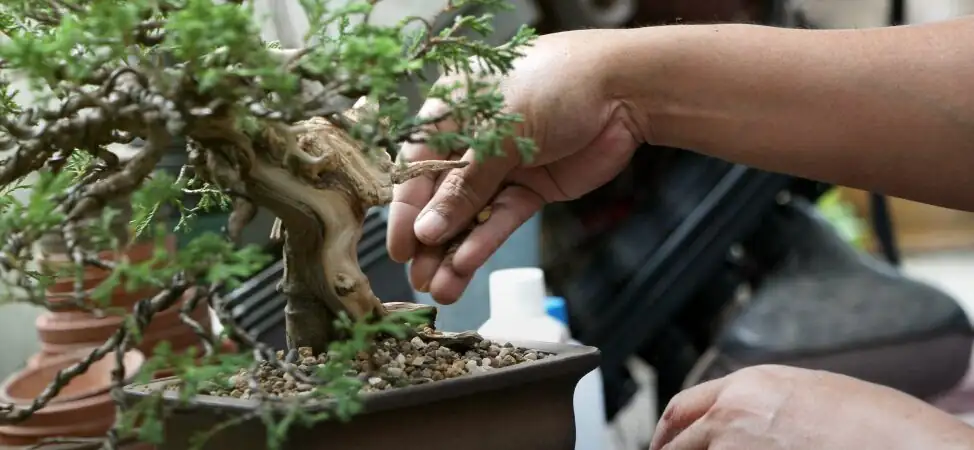
- Light management:
- Give bright light with protection from scorching midday sun. East-facing exposure is ideal; indoor plants need the brightest window and good airflow.
- Watering rhythm:
- Water thoroughly, then let the top of the mix approach “nearly dry” before watering again. In spring flush, slightly lean watering produces shorter leaves.
- Nutrition pacing:
- Feed container plants monthly in the growing season, but avoid heavy nitrogen at the start of the first flush. Resume steady, balanced feeding after your initial pinches.
- Energy balance:
- Early pinching on strong shoots, later pinching on weak ones evens vigor and reduces leaf size across the canopy.
- Pot and substrate:
- Use a free-draining, airy mix; avoid oversized containers that keep roots too wet—excess moisture and shade elongate leaves.
—
Maintenance rhythms that keep silhouettes crisp
Think in repeating beats, not singular cuts:
- Every 2–3 weeks (spring–summer):
- Pinch extensions; re-define pad edges; thin congested twigs to keep “light windows” between pads.
- Every 4–6 weeks (growing season):
- Inspect for wire bite; rotate the tree for even light to prevent one-sided elongation.
- Seasonally:
- Spring: structural checks, first pinches, leaf-size control, begin monthly feeds for potted trees.
- Summer: humidity support (misting), shade in harsh sun, refine wiring, monitor pests.
- Autumn: one last in-ground feed; lighten density for airflow; reduce watering frequency as temperatures drop.
- Winter: protect from hard freezes, hold fertilizer, plan rewiring/repotting if due.
Pad-shaping cue: Strive for scalloped negative spaces and layered trays of foliage. If you can “see into” the tree without seeing clutter, you’re on track.
—
Aftercare checklist following pruning and wiring
- Watering:
- After hard pruning, water normally but never let the root zone stay soggy. Consistent “well-watered, then nearly dry” cycles drive healthy back-budding.
- Light:
- Bright, indirect for a week post-hard prune; then ease back to normal bright conditions. Avoid sudden harsh sun on freshly opened canopies.
- Hygiene:
- Remove fallen leaves from soil surface; improve airflow to reduce leaf spot and anthracnose risk.
- Monitoring:
- Watch for scale, spider mites, and thrips on leaf undersides and along twigs. Treat early with horticultural soap or oil.
—
Environment and tools that support great styling
- Sunlight:
- Bright light to partial shade; protect from scorching midday sun. A bright indoor window works if airflow is good.
- Temperature and humidity:
- Sweet spot: 15–25°C (59–77°F). Brief dips to about -5°C (23°F) are tolerable, but protect from hard freezes. Moderate to high humidity is appreciated; occasional misting in hot weather helps.
- Soil and pot:
- Free-draining mix (leaf mold/compost + fertile loam + coarse sand/grit). Repot every 2–3 years; typical bonsai pots are 20–40 cm deep for stability and root development.
- Feeding:
- Containers: monthly in the growing season; stop in winter. In-ground: feed in spring and autumn.
—
Troubleshooting quick hits
- Leaves elongating, pads losing crispness:
- Too little light or too much water/nitrogen. Increase light, tighten watering intervals (without droughting), and pinch earlier.
- Wire bites appearing:
- Remove or reposition wire; choose cooler windows for heavy wiring; inspect more often during warm spells.
- Sparse interior growth:
- Open the canopy strategically in late winter/early spring, then reduce strong outer tips early in spring to push light and energy inward.
- Leaf spot or anthracnose:
- Improve airflow by thinning pads, avoid constantly wet foliage, remove affected leaves, and adjust watering.
—
Why Buddhist pine rewards the patient stylist
Podocarpus macrophyllus is forgiving once established, yet precise in its responses: pinch a day too late, and you’ll chase leggy tips all season; pinch on time, and the pads knit into refined, cloudlike shelves. Add in its willingness to back-bud after hard pruning and its tolerance for careful wiring, and you’ve got a tree that lets you edit and refine year after year.
Set the rhythm—pinch in spring, refine through summer, consolidate in autumn, rest in winter—and your Buddhist pine will wear its silhouette like a tailored suit: sharp lines, clean planes, and a calm, enduring presence.