

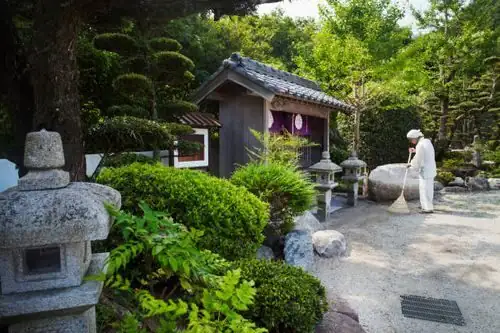
Picture a line of living clouds stepping up a temple path—each tiered cushion of green clipped with care, each trunk reading like a chapter of weather and time. That’s Podocarpus macrophyllus—the Buddhist Pine—an old soul of China and Japan that leapt from courtyards and coastal hedges into the spotlight of modern bonsai and cloud‑pad styling. A gymnosperm with glossy “leaves,” it thrives on pruning, wears wire with grace, and—after a few seasons of patient training—turns structure into poetry.
Roots across China and Japan
- Native home: China and Japan. In Chinese it’s luóhàn sōng (罗汉松, “arhat pine”), a nod to serene, enlightened figures in Buddhism. In Japan, you’ll hear inumaki or kusamaki.
- Old garden uses: In both countries, this evergreen was treasured for orderly, long‑lived greenery—temple courtyards, refined town gardens, and clipped hedges. Its steady character and tolerance for pruning made it ideal for formal silhouettes and wind‑tamed borders.
- A modern icon: Today it’s beloved as a container ornamental and as refined bonsai—particularly the layered, cloud‑pad forms that read like floating terraces of green.
A taxonomic tale with twists
Podocarpus macrophyllus belongs to Podocarpaceae—the southern-hemisphere‑leaning podocarp family—but it’s the northernmost species in its genus, a biogeographic outlier that found a perfect cultural home in East Asia.
- Shuffled names: Over the centuries it wore several scientific masks—Taxus macrophylla and Nageia macrophylla among them—before settling as Podocarpus macrophyllus. These name-swaps reflected botanists puzzling over a conifer that looks unexpectedly “broad‑leaved.”
- Varietal nuance: You’ll see references to var. macrophyllus and var. maki in horticulture; both fall under the same elegant umbrella we know as Buddhist Pine.
Meet the plant: a “broadleaf” conifer built for shaping
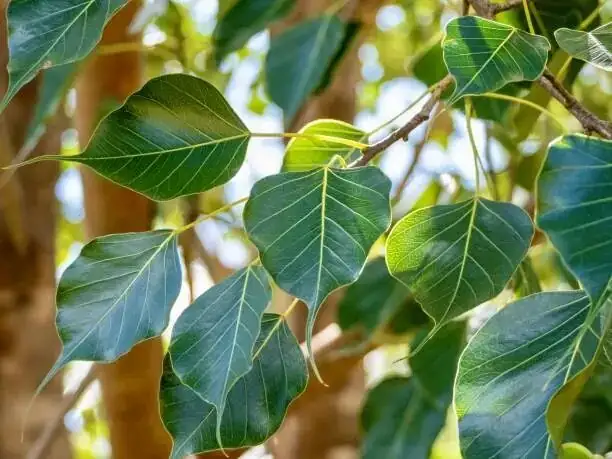
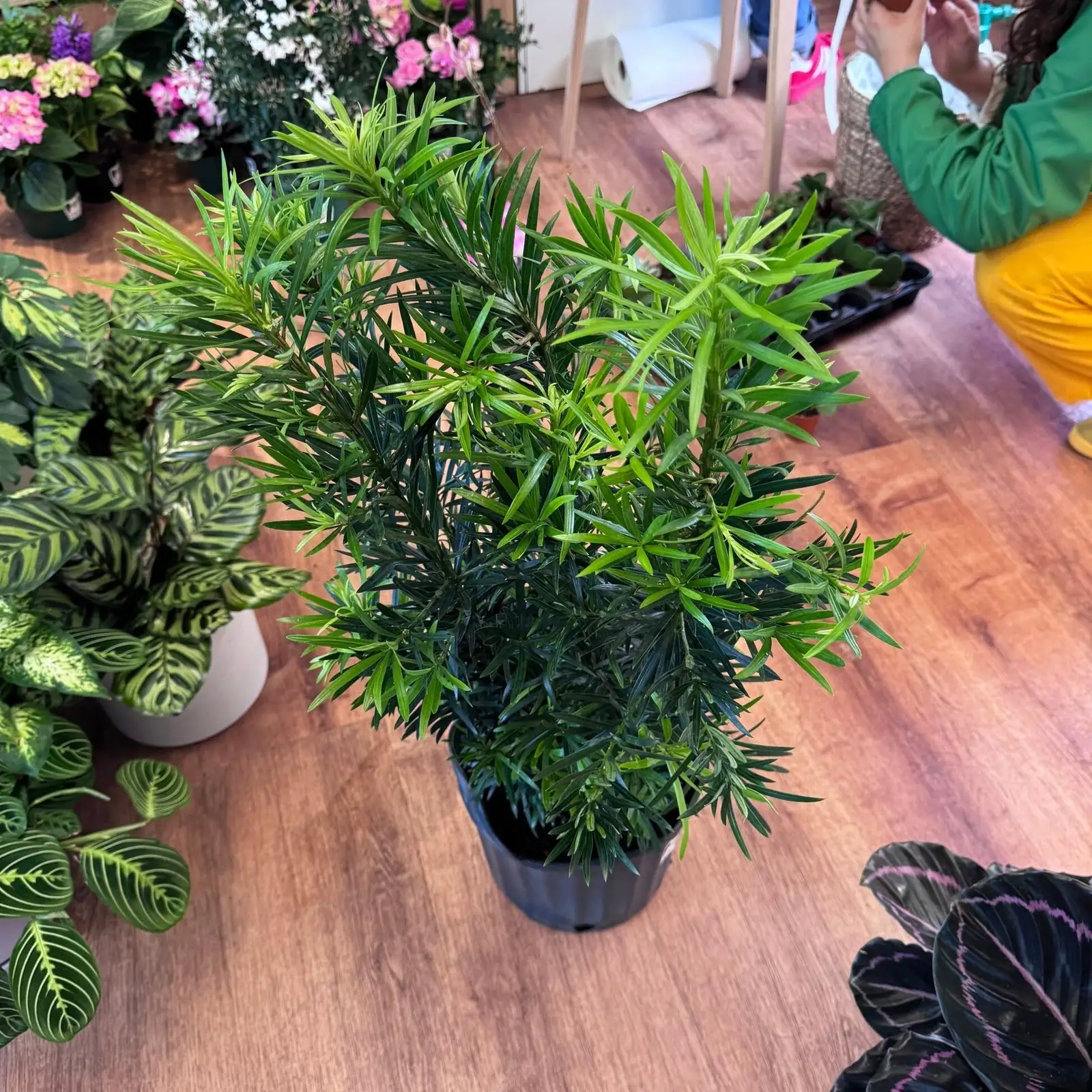
- Foliage: Dense, leathery, narrow lance-shaped leaves, deep green and handsome year‑round.
- Flowers and cones: Spring brings small, inconspicuous flowers. Plants are typically male or female. Female plants may develop decorative, fleshy structures around the seeds after pollination.
- Habit and temperament: An evergreen woody plant that takes pruning and wiring beautifully. It prefers warmth, humidity, and bright light but is perfectly content with partial shade—and it dislikes waterlogged feet and harsh, scorching sun.
In the ground it can mature into a full-sized tree; in a pot, it happily lives as a compact ornamental or refined bonsai. Many bonsai live in deeper containers (about 20–40 cm / 8–16 in) to anchor their refined silhouettes.
How cloud-pad styling made it a star
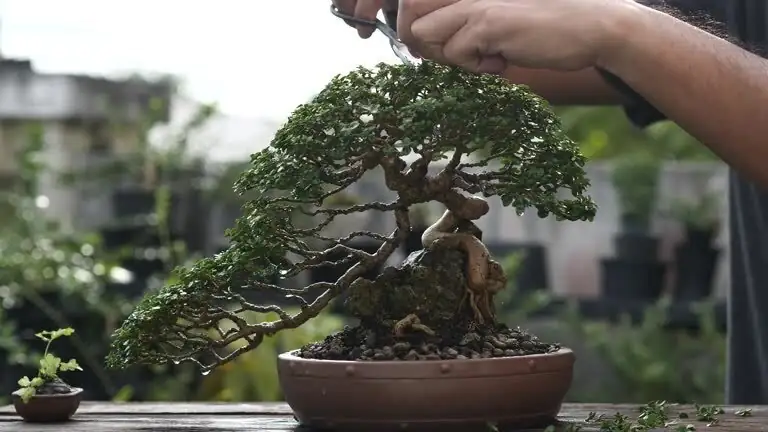
The species’ flexible young branches, dense growth, and calm leaf texture made it a natural for penjing (China) and bonsai (Japan), and later for niwaki and modern “cloud pruning.”
- The craft:
- Build the frame: Wire and bend primary/secondary branches, spacing them to suggest terraces of space and light.
- Form the pads: Repeated fine pruning and pinching create those crisp, layered “clouds.”
- Refine the leaf scale: During the spring growth flush, slightly easing back on water can encourage shorter leaves for tighter, more proportional pads.
- The effect: A living landscape in miniature—mountains and mist translated into trunk and tier.
Care, simplified (indoors by the brightest window, or outdoors in shelter)
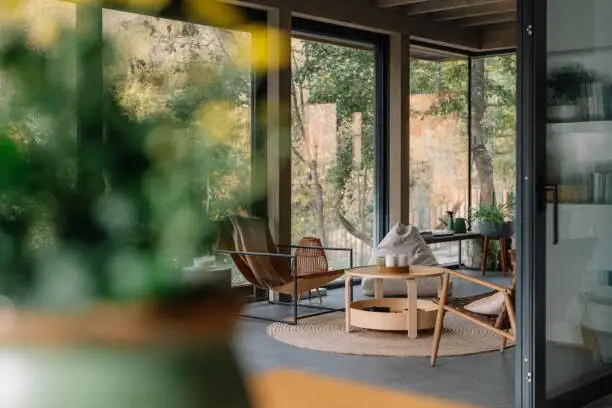
- Light: Bright light to partial shade; protect from scorching midday summer sun. An east-facing balcony or bright indoor spot with airflow is ideal.
- Temperature: Best at 15–25°C (59–77°F). Brief dips to about -5°C (23°F) are tolerable, but protect from hard freezes. Roughly USDA 8–11.
- Humidity: Moderate to high. In hot spells, occasional misting keeps foliage vivid and fresh.
- Soil: Free-draining and airy—think fertile loam with leaf mold/compost plus coarse sand or grit. Never let roots sit in soggy media.
- Water: Water thoroughly, then wait until the top of the mix is nearly dry before watering again. As a rough guide, about twice weekly in the growing season—adjust for heat, pot size, and soil. Avoid constantly wet conditions. Slightly reduce water during spring flushes to keep new leaves shorter on bonsai.
- Feeding:
- In-ground: Twice per year (spring and autumn) with a mild organic feed/tea.
- Containers/bonsai: About monthly during the growing season; stop in winter. You can mix in a small amount of organic fertilizer at repotting.
- Pruning and styling: In spring, pinch or prune tips to control extension growth. Wire and prune to build layered pads, then maintain with routine pinching.
- Repotting: Every 2–3 years, using a free-draining bonsai mix. Deeper bonsai pots (20–40 cm) help with stability and root vigor.
- Placement: Bright and airy indoors, or a sheltered outdoor spot with morning sun and afternoon shade. Excellent drainage is non-negotiable.
Propagation and choosing good stock
- From seed: Sow fresh in summer after collection, or store in moist sand and sow in spring; germination can occur in about two weeks under good conditions.
- From cuttings: Take dormant wood in spring or semi‑ripe tips in summer; rooting often takes 8–12 weeks.
- Buying guide:
- Look for a well-balanced crown, sturdy, compact branching, and rich green foliage with no yellowing or pest scars.
- For bonsai, favor trees with interesting trunk lines, taper, and branch placement that match the pot’s proportions.
- After purchase: Give it bright, ventilated light; shield from harsh sun; mist in hot weather; and water only when the mix begins to dry.
Season-by-season playbook
- Spring:
- Pinch/prune tips; resume regular watering and monthly feeding for potted trees.
- Sow stored seed; repot on your 2–3 year cycle as needed.
- Slightly ease watering during the growth flush for shorter leaves on bonsai.
- Summer:
- Shade from scorching sun; mist to boost humidity.
- Take semi‑ripe cuttings (expect 8–12 weeks to root).
- Collect seed; sow fresh or store in moist sand.
- Autumn:
- Feed in-ground plants once; begin reducing water as temperatures fall.
- Double-check drainage to prevent waterlogging.
- Winter:
- Stop fertilizing; protect from hard freezes (brief tolerance to about -5°C / 23°F).
Pests, diseases, and safety
- Watch for: Scale insects, spider mites, and thrips. Inspect leaf undersides regularly and treat early with horticultural soap/oil or locally recommended controls.
- Fungal troubles: Leaf spot or anthracnose can appear in wet, stagnant conditions. Improve airflow, avoid keeping foliage constantly wet, and remove affected leaves.
- Safety note: Specific toxicity data vary; as a precaution, prevent pets and children from chewing or ingesting any part, and seek local medical or veterinary advice if ingestion is suspected.
Symbolism and “flower language”
Buddhist Pine doesn’t showy-bloom its way into cultural meaning; it earns it. The Chinese name invokes the arhat—figures of discipline and clarity—so the tree suggests steadiness, composure, and cultivated longevity. In modern “flower language” lists, meanings like serenity and protection sometimes get attached to this species. These attributions are interpretive rather than historical scripture—but they fit the plant’s lived role: a green metronome of time in temples, townhouses, and today’s terraces.
FAQ
- How do I pick a good Buddhist Pine, and where should it live at home?
- Choose one with a balanced crown, compact branching, and deep green leaves with no dieback or pests. Place it in bright, well‑ventilated light (indoors or outdoors), shield from harsh summer sun, mist occasionally in hot weather, and water only when the mix begins to dry to avoid root rot.
- How is it trained into bonsai?
- Start with young seed‑ or cutting‑grown plants for flexible branches. Wire, bend, and prune to set the trunk and primary structure, then refine with repeated pinching to form layered “cloud” pads. Seasonal feeding and ongoing maintenance keep the silhouette compact and crisp.
Why it endures
From ancient courtyards in China and Japan to modern balconies and studio windowsills, Podocarpus macrophyllus has stayed itself: evergreen, orderly, and infinitely shapeable. Give it bright light, honest drainage, and thoughtful hands—and it will return the favor with living architecture, one cloud-pad at a time.