

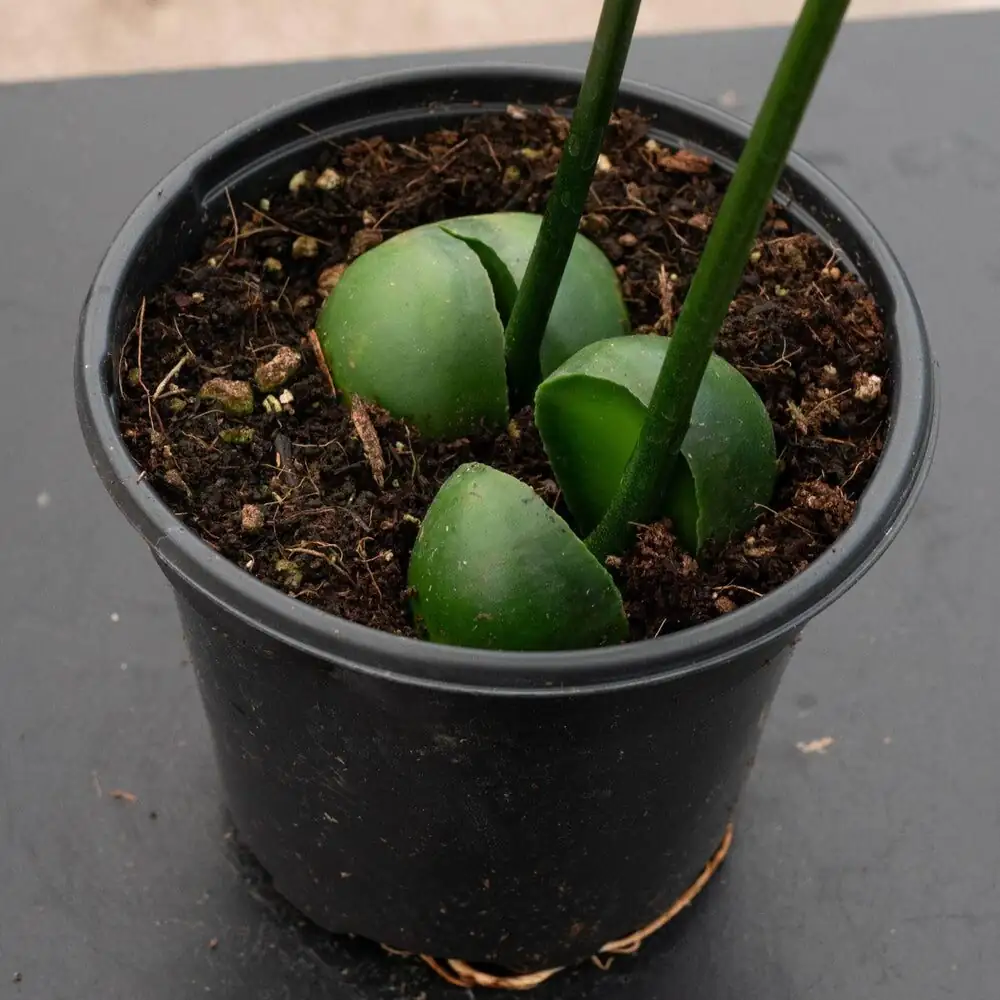
Meet the “other” money tree—the one with emerald ingots. Castanospermum australe (aka Australian chestnut, Moreton Bay chestnut, Black Bean Tree) is often sold as a tiny tabletop charmer because its thick green seed leaves pop open like a pair of little bullion bars. It’s also the plant most likely to be confused with the braided-stem Pachira “money tree.” Here’s how to tell them apart at a glance—and what to expect if you bring Castanospermum home.
The 10‑second ID: Castanospermum vs. the braided “money tree”
- Leaves
- Castanospermum australe: Pinnate leaves—each leaf is a central midrib lined with multiple glossy leaflets.
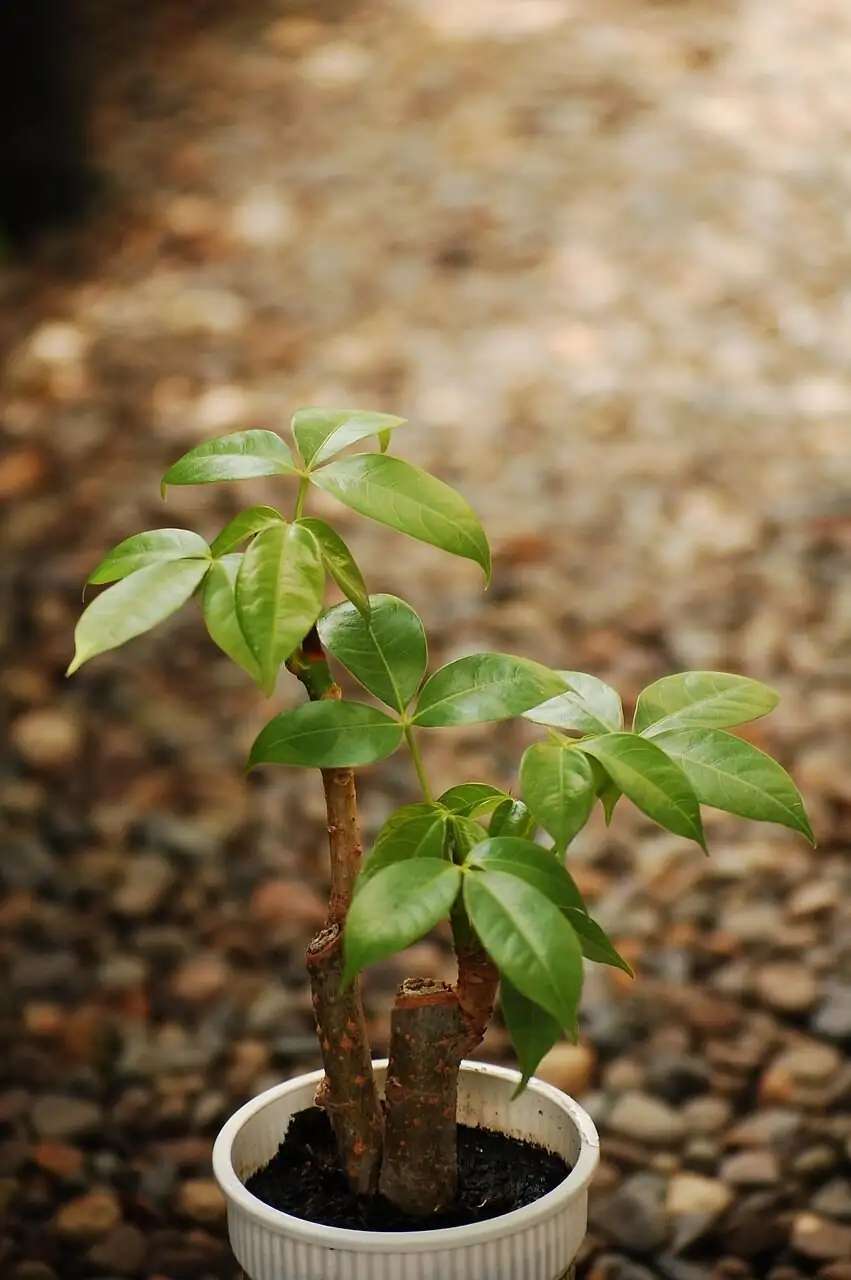
- Braided “money tree” (Pachira): Palmate leaves—5–9 leaflets spread like a hand from a single point.
- Seeds and cotyledons
- Castanospermum: Big, round, chestnut-like seeds; seedlings display two thick, fleshy green cotyledons that open wide above the soil and stay for months.
- Pachira: You almost never see the seeds; no prominent green cotyledon “ingots” on display.
- Stems and presentation
- Castanospermum: Usually one to several upright seedlings in a small pot (5–15 cm). Frequently sold as a desk plant; sometimes grown in water with the “chestnuts” visible.
- Pachira: Most often multiple stems braided, tied with ribbon or wire, sold as a larger floor or desktop plant.
- Overall vibe
- Castanospermum: Crisp, evenly spaced leaflets along a compound leaf; sculptural green cotyledons stealing the show.
- Pachira: Long petioles holding hand-shaped leaves; the braided trunk is the giveaway.
If you spot thick green “bean halves” perched above the soil, you’re looking at Castanospermum.
Castanospermum australe up close: what to look for
Leaves
- Glossy, pinnate leaves with multiple firm leaflets arranged along a central axis.
- New growth is fresh green; mature foliage deepens in tone.
Seeds and cotyledons (the signature look)
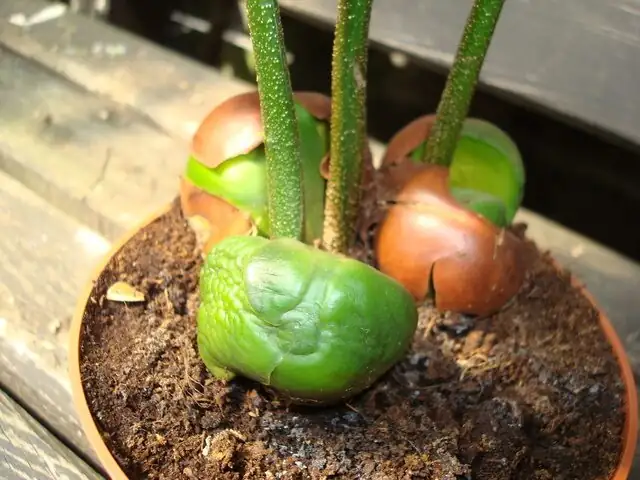
- Large, round, chestnut-like seeds.
- During germination, two thick, fleshy green cotyledons push upward and spread horizontally like a pair of ingots—this is the classic “money” moment.
- Healthy seedlings keep those cotyledons firm and green while true leaves expand above.
Growth habit
- Upright, evergreen tree by nature; indoors it stays compact for years and can be trained into a 1–2 m statement plant with time.
- Dense branching with a tidy, symmetrical presence when well lit.
- Loves warmth, moisture, and bright light; tolerates partial shade, especially when young.
Typical retail presentation (and how to pick a winner)
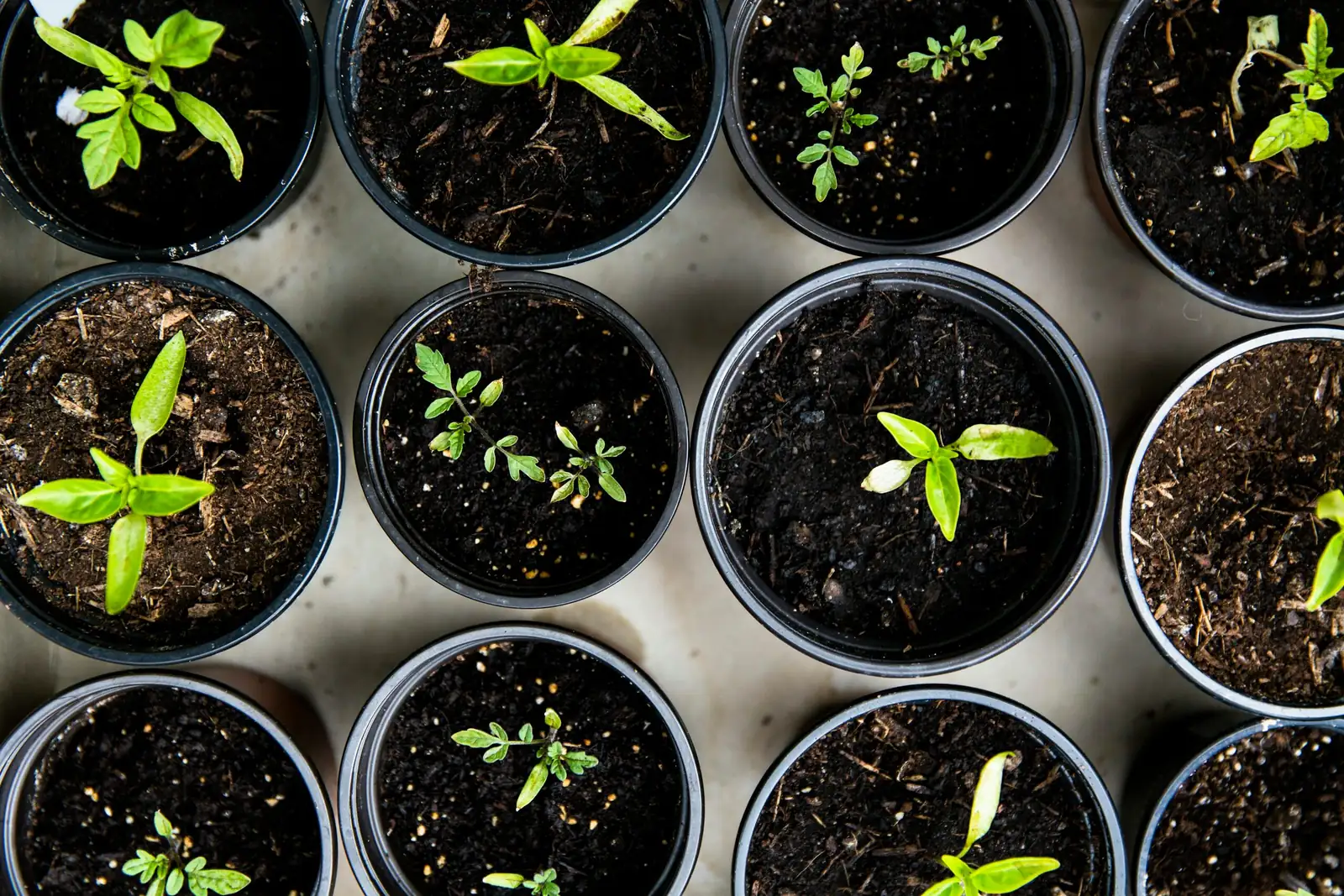
- Commonly sold in 5–15 cm pots (often 9–12 cm), sometimes as clumps; also popular in water culture for that “floating chestnut” look.
- Buying checklist:
- Cotyledons intact, thick, and fully green (no cracks, shriveling, or browning).
- Fresh, glossy new leaves forming cleanly.
- For fuller 12–15 cm pots, look for around 7–9 strong sprouts in a clump.
- After purchase: Bright, indirect light; keep evenly moist (not soggy), and boost humidity with light misting.
Care snapshot for Castanospermum (Australian chestnut)
- Light: Bright, indirect light to partial shade; protect from harsh summer midday sun that can scorch leaves and trigger drop. East or south window with a sheer curtain is ideal.
- Temperature: Best growth at 20–28°C (68–82°F). Keep above 7°C (45°F) in winter; below ~5°C (41°F) leaf drop is likely. Seeds germinate best at 13–18°C (55–64°F).
- Humidity: Prefers humid air. In dry summer/autumn conditions, mist about twice weekly; reduce watering in winter.
- Water: Keep the mix evenly moist during active growth; never waterlog. Good drainage is essential.
- Soil: Rich, well‑drained potting mix—think fertile loam or peat-based medium with some sand and a pinch of well‑rotted organic fertilizer.
- Feeding: During spring–summer, feed every 2–3 months with a balanced fertilizer (e.g., 20‑20‑20) or dilute organic feed. Don’t overdo it.
- Pruning: If it stretches too tall, pinch or cut back shoot tips in autumn to winter to control height and encourage branching.
- Repotting: Every ~2 years; trim old or rotten roots, refresh the mix, and give partial shade while it re-establishes.
- Propagation: Primarily from fresh seed. Soak 24 hours, place seam-down on clean, moist medium, and keep humidity high. Seedlings are also lovely in short-term water culture displays.
- Hardiness: Frost-tender; strictly an indoor/warm patio plant in cool climates.
Troubleshooting and health
- Leaf drop? Often from harsh direct sun, cold drafts, or erratic watering. Move to filtered light, stabilize temperatures, and keep the medium evenly moist.
- Pests: Spider mites and scale can occur; rinse foliage, improve humidity/airflow, and use horticultural oil/soap or a suitable miticide/insecticide as needed.
- Diseases: Can develop rust; avoid prolonged wet foliage, improve airflow, and treat early with an appropriate fungicide where permitted.
- Safety note: Household toxicity isn’t reliably established—keep seeds and plant parts out of reach of pets and children and avoid ingestion.
For contrast only: the braided “money tree” (Pachira) at a glance
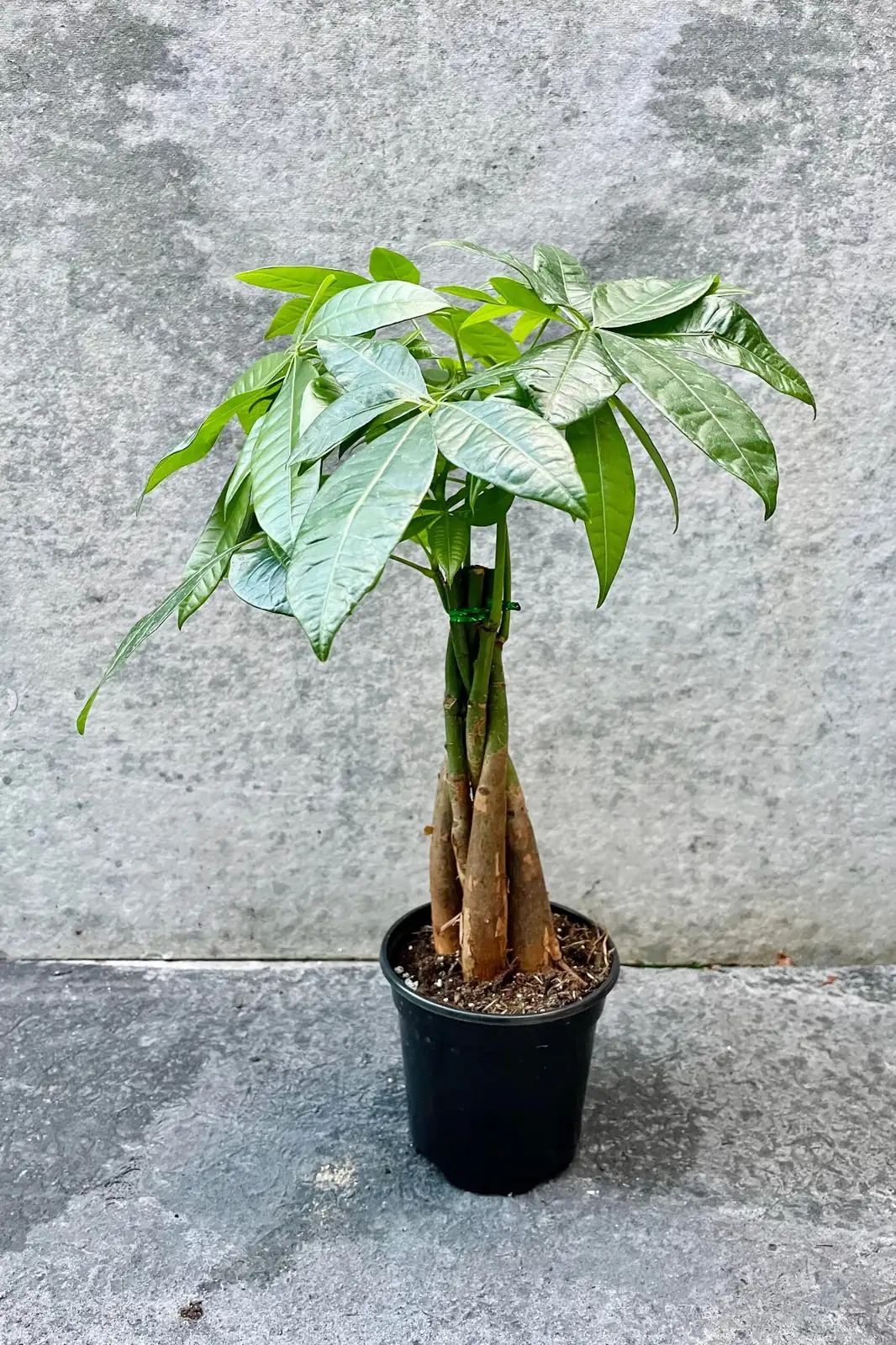
- Leaves: Palmate (hand-like) with 5–9 leaflets radiating from one point.
- Trunk: Commonly sold with multiple stems braided together; base may become swollen with age in some forms.
- Retail look: Larger pots, decorative braids, ribbons; seeds not visible.
- Confusion factor: Shares the nickname “money tree,” but lacks the big visible green cotyledons. If you don’t see the ingot-like seed leaves, it’s likely not Castanospermum.
Why the prosperity buzz? The symbolism decoded
The “money” moniker for Castanospermum springs from pure visual poetry: those two thick green cotyledons open like miniature ingots, so sellers began positioning it as a good‑luck charm for prosperity. Over time, that image stuck, just as it did with braided Pachira. The deeper takeaway is less about instant fortune and more about steady, healthy growth: provide warmth, bright filtered light, and consistent moisture, and you’ll be rewarded with glossy leaves and calm, sculptural form—an everyday reminder of patient, sustainable abundance.
Quick takeaways to end the mix-up
- Spot pinnate leaves and bold green cotyledons above the soil? That’s Castanospermum australe.
- See hand-shaped leaves on long petioles and braided stems, with no visible seeds? That’s the other “money tree.”
- For Castanospermum care: bright, indirect light; even moisture (never soggy); warm temps above 7°C; higher humidity; and a rich, well‑drained mix.
Bring home the right “money tree,” and those emerald ingots will make your desk or windowsill look richly alive—no superstition required.