

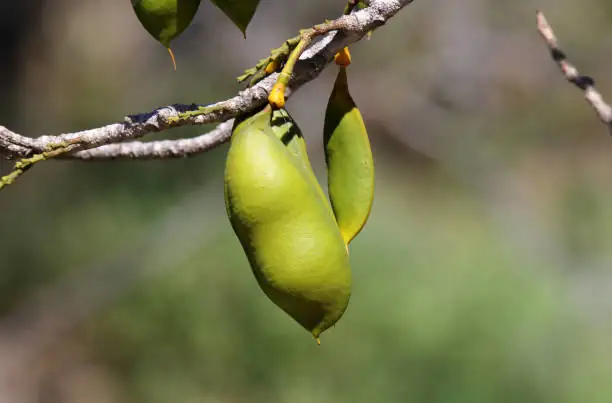
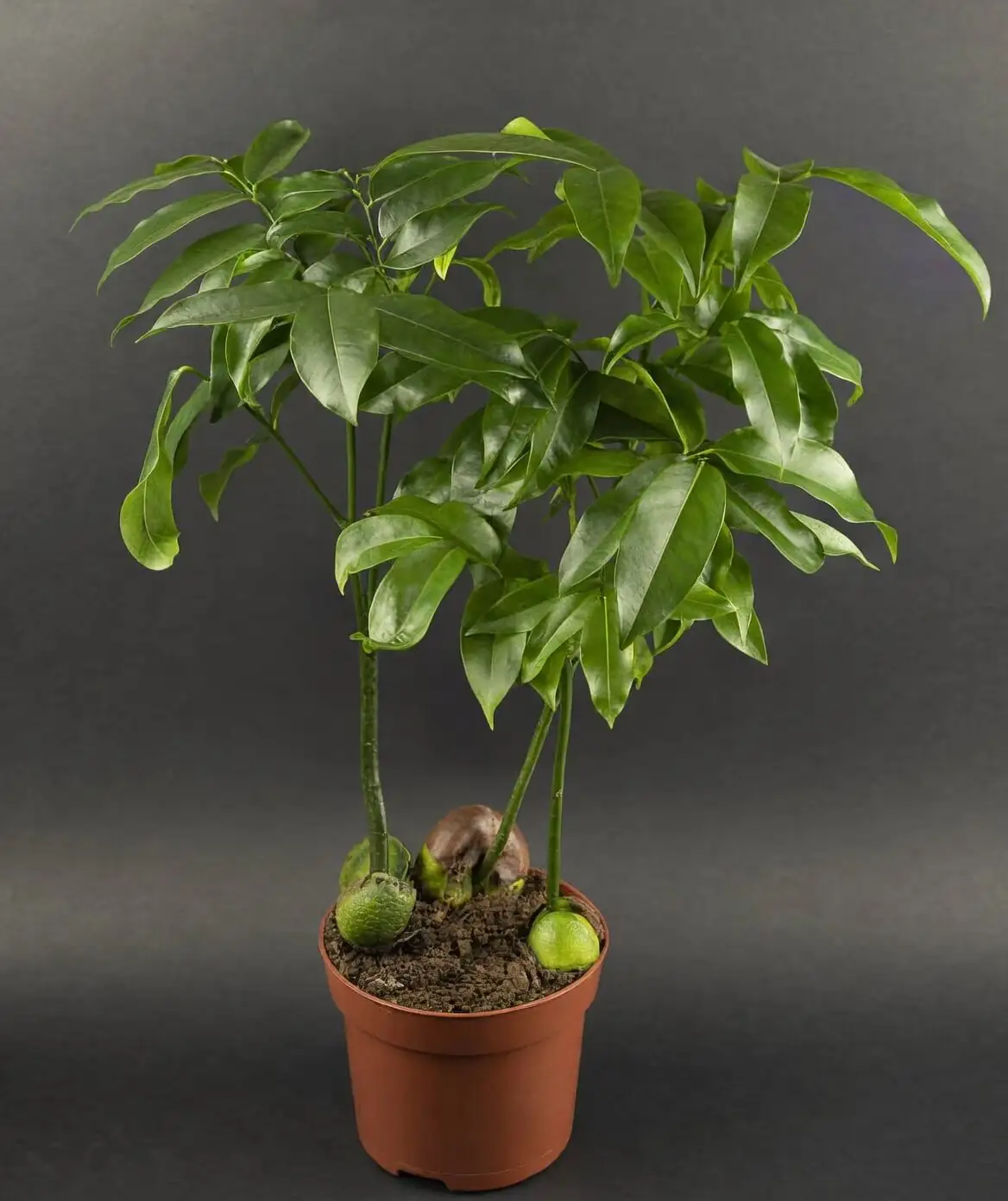
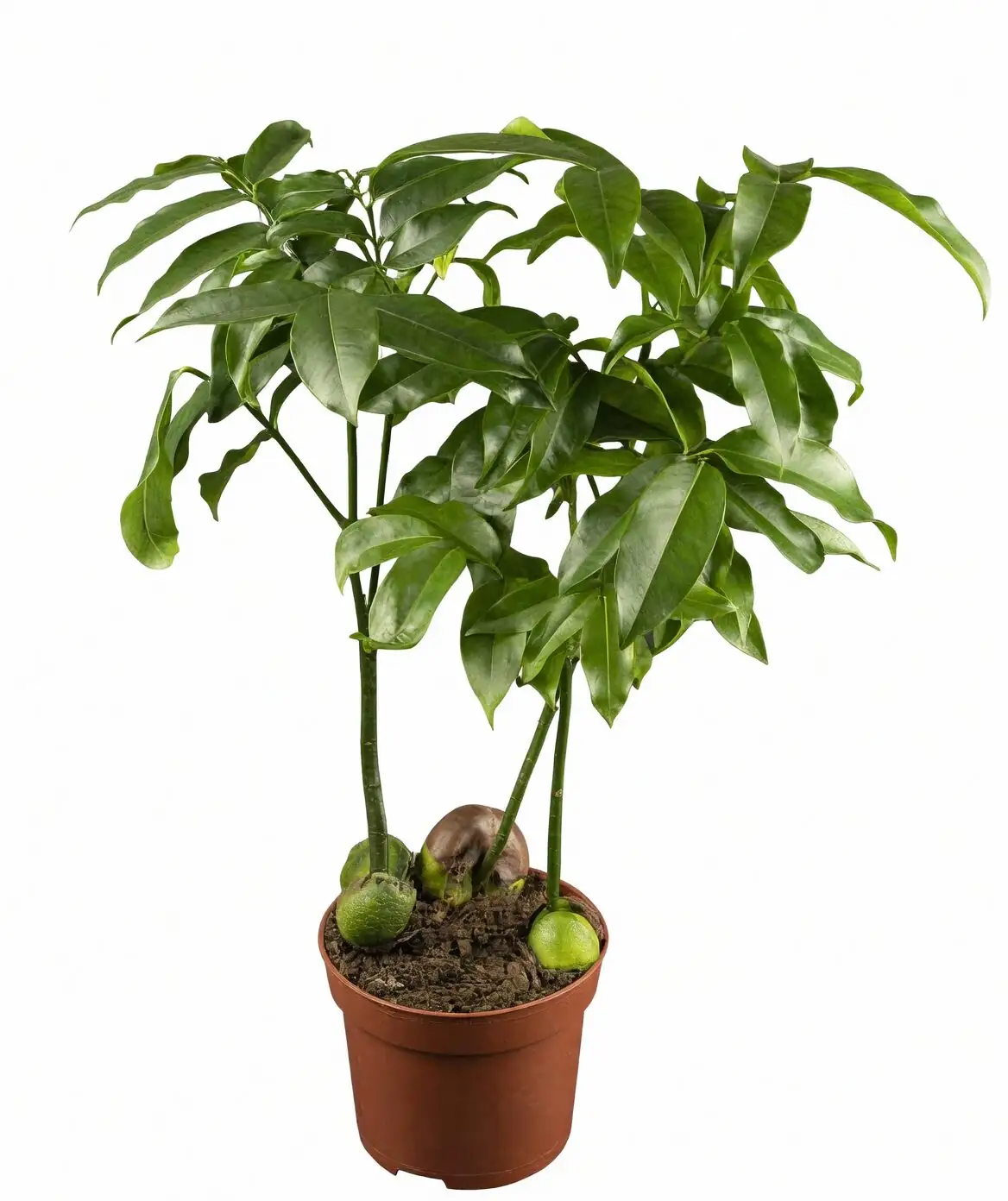
Think of Castanospermum australe as the “ingot sprouter.” Those thick, glossy green “coins” you see at the base aren’t stones or pods—they’re the plant’s seed leaves (cotyledons), opening like little bars of prosperity. That’s why this evergreen Australian tree is widely sold as a “Money Tree.” If you want a dense, photo-ready clump that keeps its leaves instead of dropping them the week after you bring it home, start with a sharp buyer’s eye—and follow through with a gentle acclimation.
Quick ID: What you’re buying
- Scientific name: Castanospermum australe (Fabaceae), aka Black Bean Tree, Moreton Bay Chestnut
- Native range: Northeastern Australia
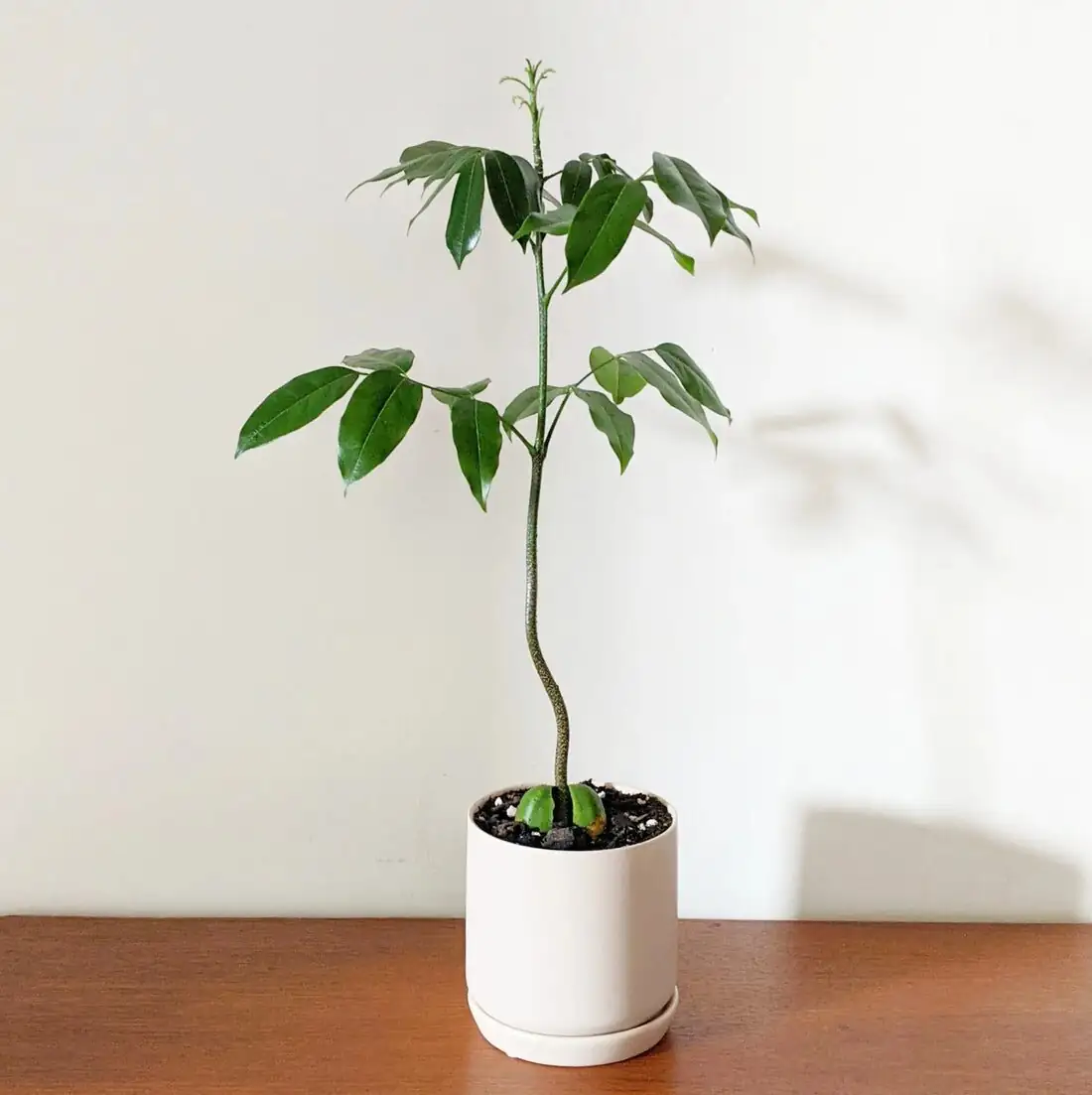
- Habit: Upright, evergreen tree with dense branching; commonly sold as compact clumps in small pots (5–15 cm/2–6 in)
- Foliage: Two thick, fleshy green cotyledons spread sideways; true leaves are glossy, pinnate, and fresh green when healthy
- Indoors: A tidy desk/tabletop plant now, trainable into a 1–2 m (3.3–6.6 ft) indoor specimen over time
The Buyer’s Checklist: How to pick a dense, healthy clump
Aim for a plant that looks like a miniature grove: sturdy, evenly spaced sprouts (stems) with glossy, feathered leaves. Use this checklist in the shop:
- Cotyledons (the “ingots”)
- Look for two intact, fully green cotyledons per sprout—firm, not shriveled, split, or blotchy.
- Avoid plants with brown, mushy, or missing cotyledons—these often struggle to establish new growth.
- Leaves
- Choose clumps with fresh, glossy, pinnate leaves and pale-green new growth at the tips.
- Pass on plants with crispy edges, yellowing, or scorch marks (tan patches), which signal stress.
- Fullness and count
- For 12–15 cm (4.7–6 in) pots, choose clumps with roughly 7–9 strong sprouts for a lush, full look.
- Stems and crown
- Sprouts should be upright and firm, not wobbly or collapsing at the base.
- Potting mix
- Should be evenly moist but never waterlogged; no sour or swampy smell.
- If roots are visible, they should be white to cream, not brown and mushy.
- Pests and disease
- Check leaf undersides and stems for spider mites (fine webbing) and scale (brown bumps).
- Reject plants with powdery rust-orange spotting—this can indicate rust disease.
- Label clarity
- Look for the scientific name (Castanospermum australe). It’s often sold as “Money Tree” because of those ingot-like cotyledons.
Bag-to-Bench: Post-purchase acclimation that prevents shock and leaf drop
A gentle landing is everything. This species loves warmth, bright filtered light, and steady moisture—no extremes.
First 48 hours
- Light
- Place in bright, indirect light or partial shade. An east- or south-facing window filtered by a sheer curtain is perfect.
- Avoid harsh midday sun that can scorch young leaves and trigger leaf drop.
- Temperature
- Target 20–28°C (68–82°F). Protect from chills; keep above 7°C (45°F). Leaf drop is likely below about 5°C (41°F).
- Watering
- Keep the mix evenly moist but never soggy. Water thoroughly, then let excess drain—no saucer puddles.
- Humidity
- Prefers humid air. In dry summer/autumn rooms, lightly mist about twice per week to support new growth.
- Hands off the roots
- Don’t repot immediately. Let it settle for 2–3 weeks before any root work; plan full repots about every 2 years.
Week 1–2: Light and routine, ramped carefully
- Gradually increase light over 7–10 days if you want it nearer a brighter window, but keep the midday sun filtered.
- Maintain even moisture; allow the top surface to lose its sheen before watering again—never let the root zone sit wet.
- Start a “check, don’t guess” habit: feel the mix, inspect leaf undersides, and look for new tips forming.
Your care rhythm after it settles
- Light: Bright, indirect; partial shade when young. Filter any strong summer sun.
- Water: Evenly moist in spring–summer; reduce a touch in winter. Avoid both drought and waterlogging.
- Humidity: Beneficial. Mist about twice per week in dry air; aim for good airflow so foliage doesn’t stay wet for long.
- Feeding: During the growing season, feed about once every 2–3 months with a balanced fertilizer (e.g., 20-20-20) or a diluted organic feed. Overfeeding can make it leggy.
- Pruning: If it stretches, pinch or cut back tips in autumn to winter to control height and encourage branching.
- Repotting: Every ~2 years into a rich, well-drained mix (loam or quality potting soil + peat-based medium + sand, plus a small amount of well-rotted organic matter). Trim any old or rotten roots and let it re-establish in partial shade.
Troubleshooting leaf drop and tired foliage
- Sudden leaf drop after moving
- Cause: Light/temperature shock or direct midday sun on tender leaves.
- Fix: Shift to bright, indirect light; stabilize temps at 20–28°C; raise humidity; hold fertilizer for a few weeks.
- Yellowing plus soft stems, sour soil smell
- Cause: Overwatering/root stress.
- Fix: Let excess water drain; brighten the spot (filtered); resume careful, even moisture. Remove clearly rotten roots at the next safe repot.
- Crispy edges and droop
- Cause: Underwatering and/or dry air.
- Fix: Thoroughly water, then maintain steady moisture; mist lightly twice weekly in dry seasons.
- Bronze/tan patches
- Cause: Sun scorch.
- Fix: Filter or move out of harsh midday rays; resume bright, indirect light.
- Rusty-orange leaf spots
- Cause: Rust disease.
- Fix: Improve airflow, avoid prolonged wet foliage, and treat early with an appropriate fungicide where permitted.
- Pests (spider mites, scale)
- Signs: Fine webbing (mites), sticky leaves/honeydew and little bumps (scale).
- Fix: Rinse plant thoroughly, then use horticultural oil/soap or a suitable miticide/insecticide as needed.
Keep it dense: styling and long-term shaping
- Rotate the pot every week for even, upright growth.
- Pinch tips in autumn–winter to encourage branching and keep that compact, “mini-tree” silhouette.
- If you’d like a statement plant, pot several strong seedlings together into a 20–30 cm (8–12 in) deep container and train it over a few years into a 1–2 m (3.3–6.6 ft) indoor tree.
Water-culture display option
Seedlings can be displayed in water culture for a time (a popular desk look). Keep the water fresh, oxygenated, and the vessel clean, then transition to a well-drained potting mix for long-term vigor.
Safety note
Household toxicity data for this species isn’t reliably established here. As a precaution, keep seeds and plant parts away from pets and children and avoid ingestion.
Symbolism and gifting
Marketed as a “Money Tree,” its charm comes from those cotyledons that open like little green ingots—visual shorthand for prosperity and steady growth. Think of it as a gentle nudge toward patience and good stewardship: give it warmth, balance, and time, and it steadily pays you back with lush, glossy foliage.
Snapshot specs for Castanospermum australe
- Light: Bright, indirect; partial shade (especially when young). Filter harsh midday sun.
- Temperature: Best at 20–28°C (68–82°F); protect from <7°C (45°F). Likely leaf drop below ~5°C (41°F).
- Humidity: Enjoys humidity; mist twice weekly in dry summer/autumn air.
- Water: Keep evenly moist, never soggy; reduce slightly in winter.
- Soil: Rich, well-drained mix (loam/peaty medium/sand with a small amount of well-rotted organic fertilizer).
- Feeding: Once every 2–3 months in the growing season; avoid overfertilizing.
- Size: Typically sold in 5–15 cm (2–6 in) pots; trainable indoors to 1–2 m (3.3–6.6 ft) over time.
- Flowers: On mature plants; late spring to late summer (rare indoors).
- Placement: Ideal as a desk or tabletop plant near a bright, filtered window; also popular near computers.
Bring home a clump with intact green “ingots,” fresh pinnate leaves, and a pot of lively, evenly moist mix—and then roll out the red carpet: filtered light, warmth, and a steady routine. That’s the fast track to a dense, happy Castanospermum australe that looks as lucky as its nickname.