

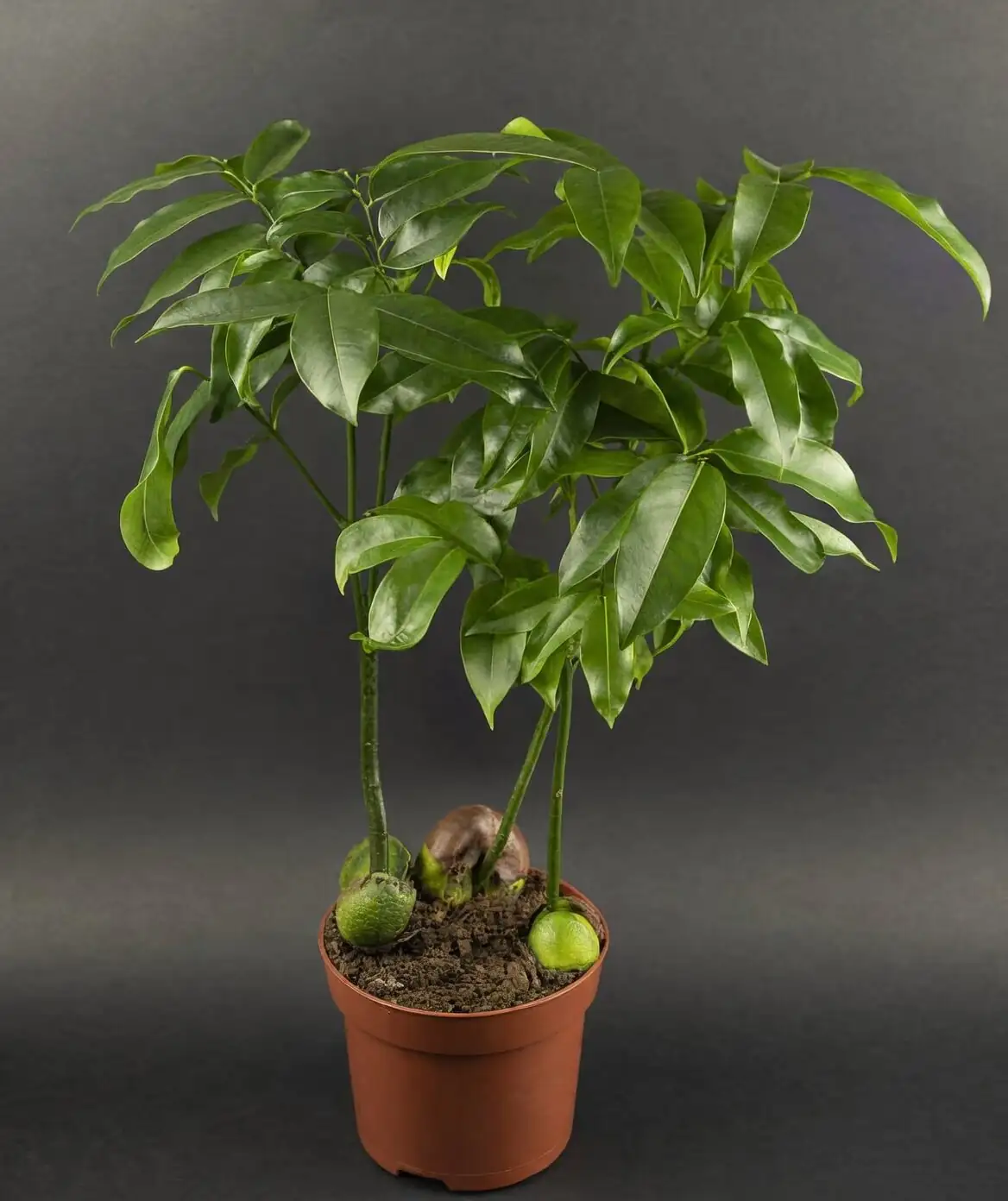
Imagine two little jade ingots prying themselves open, hoisting a miniature umbrella of glossy leaflets into the light. That’s Castanospermum australe—an Australian evergreen tree moonlighting as a tabletop “money tree”—and it’s full of delightful quirks that make plant lovers grin.
Meet the plant behind the nickname
- Scientific name: Castanospermum australe (family Fabaceae)
- Common aliases: Black Bean Tree, Moreton Bay Chestnut, and widely marketed as “Money Tree”
- Native range: Northeastern Australia
- Habit: Upright, evergreen tree with dense branching; often sold as tiny potted seedlings, yet trainable indoors over years into a 1–2 m statement plant
- Leaf look: Glossy, pinnate leaflets; seedlings show two thick, fleshy green cotyledons that spread sideways like a pair of coins
The star of the show: those fleshy cotyledons
If you’ve ever wondered why this plant became a desk celebrity, start with the cotyledons—the seed’s first leaves.
How they actually work
- Built-in battery: The cotyledons are nutrient-packed “lunchboxes” fueling the seedling’s early growth while roots and true leaves get established.
- Green and working: Unusually for many beans, these cotyledons are thick, fleshy, and green, so they can photosynthesize while feeding the plant.
- The ingot effect: As they open sideways, they resemble a pair of shiny ingots—hence the money-themed marketing and the irresistibly cute “cradling” look of new sprouts.
- What healthy looks like: Firm, bright green cotyledons plus fresh green new leaflets. If the cotyledons shrivel early or discolor, check watering and light.
Why seedlings look like tiny sculptures in water culture
Few plants “pose” as gracefully in a vase. In water display, the seed’s smooth, chestnut-like halves and the paired cotyledons frame a vertical stem like a minimalist art piece.
Tips to keep the look crisp:
- Use a clear vase with pebbles to stabilize the seed; keep the stem base just above the waterline to discourage rot.
- Bright, indirect light makes the forms pop; avoid harsh midday sun that can scorch new leaves.
- Change water weekly; rinse roots gently.
- Enjoy it as a display for a period; you can later pot the plant into a rich, well-drained mix to grow it on.
Temperature sweet spots (and why they matter)
Think of this plant as a warm-weather fan with two comfort zones—one for sprouting, one for growing.
- Germination comfort: 13–18°C (55–64°F)
- Best active growth: 20–28°C (68–82°F)
- Winter minimum for potted plants: Keep above 7°C (45°F)
- Leaf-drop alert: Below about 5°C (41°F) leaf drop is likely
Pro tip: Warmth plus reasonably high humidity = steadier growth and fewer cosmetic leaf issues.
Light and humidity: the pretty-plant combo
- Light: Young plants excel in bright, indirect light to partial shade. Larger plants tolerate brighter light, but avoid harsh summer midday sun. An east- or south-facing window with a sheer curtain is ideal.
- Humidity: Prefers humid air. In dry summer/autumn rooms, mist foliage about twice per week. In winter, ease up on watering.
The easy-care cheat sheet
- Potting mix: Fertile, well-drained blend—think loam or quality garden soil + peat-based medium + sand, with a touch of well-rotted organic fertilizer. Avoid waterlogged mixes.
- Watering: Keep evenly moist during active growth but never soggy. In winter, reduce watering.
- Feeding: Every 2–3 months in the growing season with a balanced fertilizer (e.g., 20-20-20) or diluted organic feed. Overfeeding can make growth spindly.
- Pruning: If it stretches too tall for your shelf, pinch or cut back shoot tips in autumn to winter to encourage branching.
- Repotting: Every ~2 years—trim old or rotten roots, refresh the mix, and give partial shade while it re-establishes.
- Pests/diseases: Watch for spider mites and scale; rinse leaves and use horticultural oil/soap if needed. Improve airflow to prevent rust disease; treat early with an appropriate fungicide where permitted.
- Safety note: Household safety isn’t firmly established in this source. As a precaution, keep seeds and plant parts away from pets and children and avoid ingestion.
Choosing a great plant in the shop

- Look for intact, fully green cotyledons and fresh green, emerging pinnate leaves.
- For a 12–15 cm (4.7–6 in) pot, a clump with about 7–9 strong sprouts gives that plush, full look.
- After arrival: Place in bright, indirect light; keep the mix evenly moist (not waterlogged); and mist to boost humidity.
Keep it cute—or go big
- Want a forever mini? Restart from fresh seed every so often to keep that sculptural, seedling charm.
- Want a statement plant? Pot several robust seedlings into a deeper container (20–30 cm / 8–12 in deep) and train it over a few years into a 1–2 m indoor specimen for a hallway or living room.
Flowering and the long game
Indoors, it’s prized for foliage. On mature plants, flowers appear from late spring through late summer—classic pea-family blooms. Many indoor specimens won’t flower for a long while, but the foliage show is more than enough.
Quick propagation notes (seed-first species)
- Use fresh seed. Soak for 24 hours in warm water.
- Sow on clean, moist sand or another sterile medium with the seed seam facing downward.
- Maintain high humidity; germination is best at 13–18°C (55–64°F).
- Transplant gently once roots have established; seedlings can also be displayed in water culture.
Fun oddities and party facts
- The “money tree” moniker: Those thick green cotyledons open like tiny ingots—great marketing and even better plant theater.
- A tree in disguise: Though often sold as a tiny desk companion, it’s truly an evergreen tree from northeastern Australia.
- Water-culture beauty: Seedlings can be displayed hydroponically for a time, which is why they’re favorites beside computers and on countertops.
- Texture and shine: New leaflets unfurl a fresh, lacquered green that contrasts charmingly with the satin-smooth seed halves.
- A nose for nuance: Freshly cut twigs are often noted by growers and woodworkers to give off a green, fresh scent.
- Temperature trivia: It loves sprouting cool (13–18°C) but grows best warm (20–28°C)—a neat two-stage comfort profile.
Good-luck symbolism (and what it really means)
The prosperity vibe is all about visuals and hope, not botany. As the cotyledons spread like a pair of little “coins,” people gift it to wish for steady growth and good fortune. It’s a gentle reminder that nurturing creates results—care for the plant, and you get beauty; care for your projects, and you get progress.
One-minute troubleshooting
- Cotyledons shriveling early? Check for underwatering or too-bright, direct sun scorching.
- Sudden leaf drop in winter? Suspect chills: keep above 7°C (45°F), away from drafts.
- Sticky leaves or stippling? Likely scale or spider mites—rinse, raise humidity, and treat promptly.
- Leggy growth? Light is too low or fertilizer too strong; increase bright, indirect light and dial back feeding.
Castanospermum australe is the rare plant that delights both minimalists and maximalists: a perfectly poised seedling sculpture today, and—if you wish—a glossy-leaved indoor tree tomorrow. All it asks is warmth, bright filtered light, and just enough water to keep those jade “ingots” gleaming.