


If your calla lily (Zantedeschia aethiopica) seems to disappear after its big show, don’t panic—this sculptural beauty simply keeps time to a seasonal rhythm. The secret to stress-free success is to let the rhizomes rest cool, dry, and frost-free; tell true dormancy from decline; then wake them gently in late winter. Follow this reassuring, step-by-step plan and you’ll power into spring with sturdy leaves and elegant, long-lasting spathes.
Meet the plant: how Zantedeschia aethiopica likes to live
- Identity: Calla lily, arum lily—technically not a true lily. The “petal” you see is a spathe (a modified leaf) wrapped around a central spadix filled with tiny flowers.
- Origin and habit: Southern African perennial, clump-forming from a thick rhizome (often sold “like a bulb”).
- Seasonal rhythm:
- Active growth and bloom: spring into summer (often late spring to midsummer in containers).
- Rest: after flowering, foliage naturally yellows and dies back as the plant slips into dormancy.
- Light and temperature: Bright, filtered light; best performance in cooler-mild conditions around 10–20°C (50–68°F). Protect from frost; prolonged heat above ~25°C (77°F) or cold near/below ~5°C (41°F) can push dormancy and reduce performance.
- Moisture preferences: Moisture-loving in growth; dislikes sitting wet in dormancy.
Tip for climate: In mild regions (roughly USDA 8–10), established plants of the white arum lily can often stay outdoors year-round in a sheltered spot. Everywhere else, overwinter rhizomes dry, cool, and frost-free.
Dormancy or decline? Read the signs with confidence
Signs of normal dormancy (all is well)
- Leaves yellow gradually, starting with the oldest, then collapse and detach easily.
- The crown remains firm; no sour or “swampy” smell.
- Potting mix has been allowed to dry more between waterings as the plant winds down.
What can trigger dormancy besides season? Finishing bloom, a stretch of heat above ~25°C, a cool snap near ~5°C, short days, or simply the plant’s internal clock.
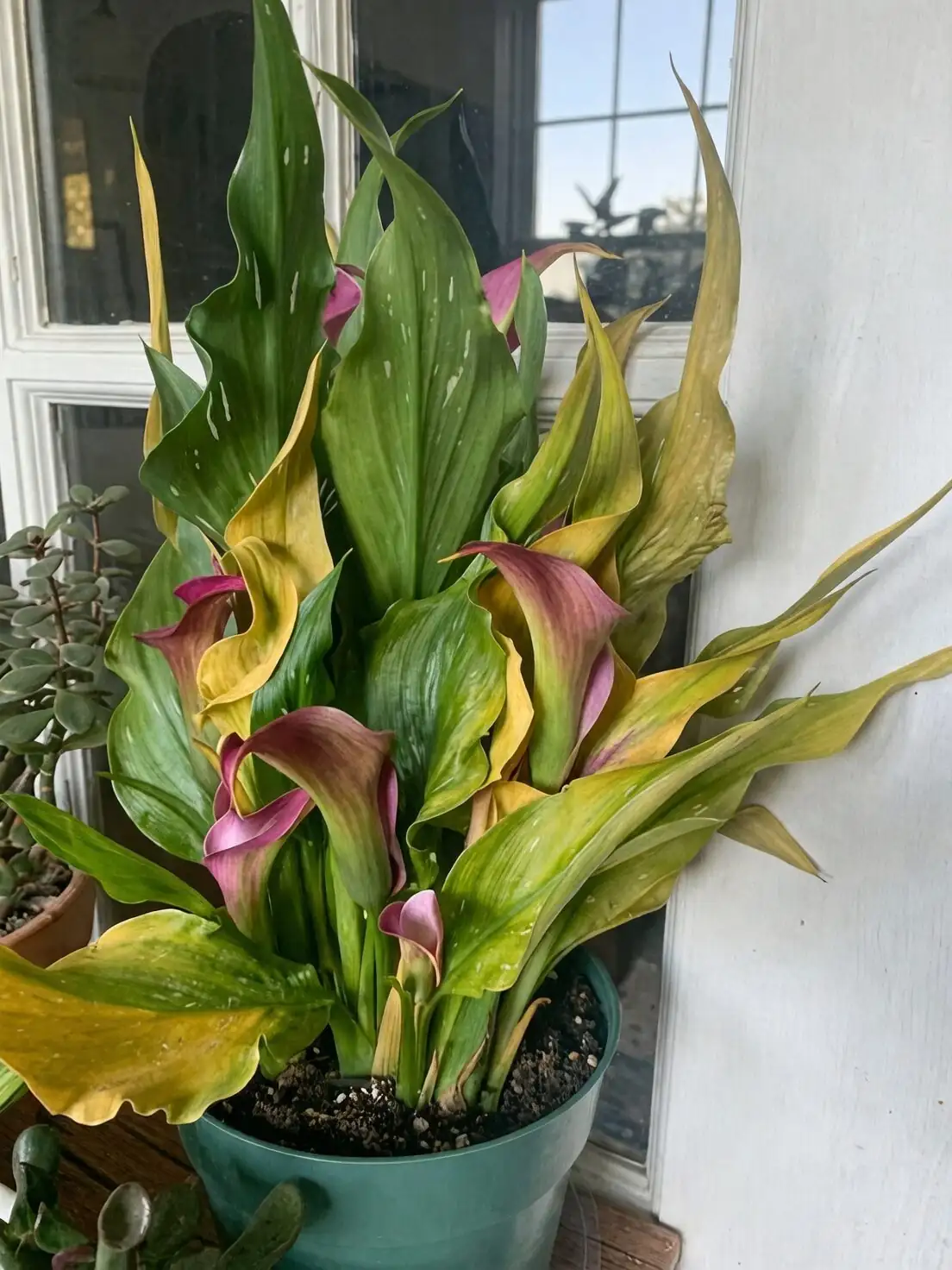
Red flags of trouble (take action)
- Mushy, soft, or foul-smelling rhizome or crown—classic rot from staying wet in rest.
- Rapid collapse of still-green leaves.
- Constantly soggy potting mix, poor drainage, or no drainage holes.
- Pest issues (aphids, spider mites, thrips, mealybugs) causing distortion, stippling, or stickiness.
Quick checks:
- Squeeze test: A healthy dormant rhizome feels firm and weighty, not squishy.
- Sniff test: Any sour/rotten odor means discard.
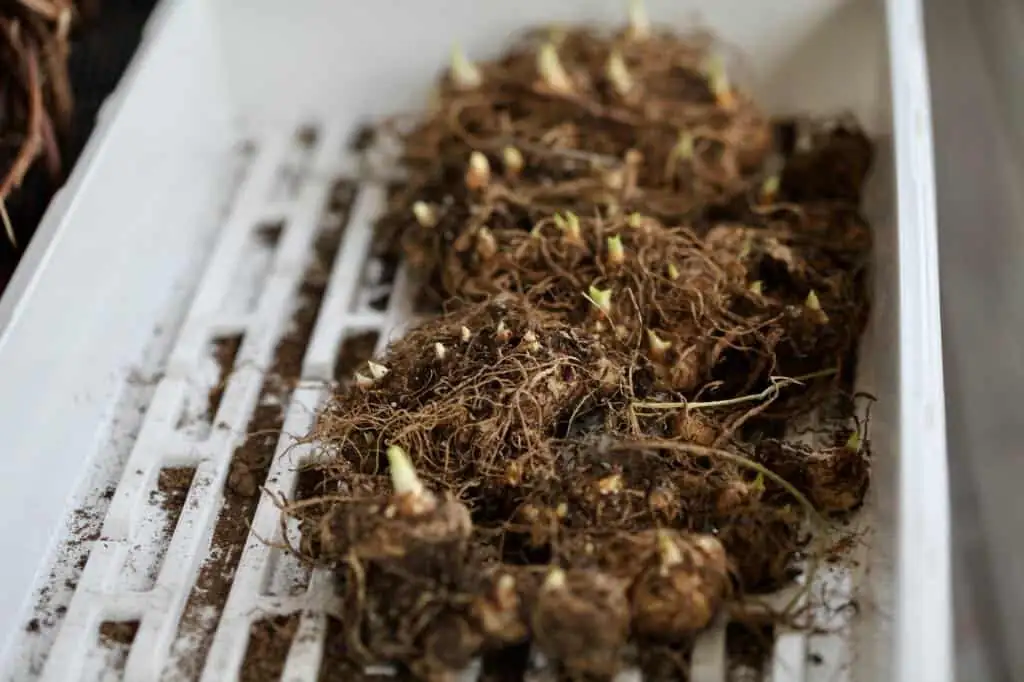
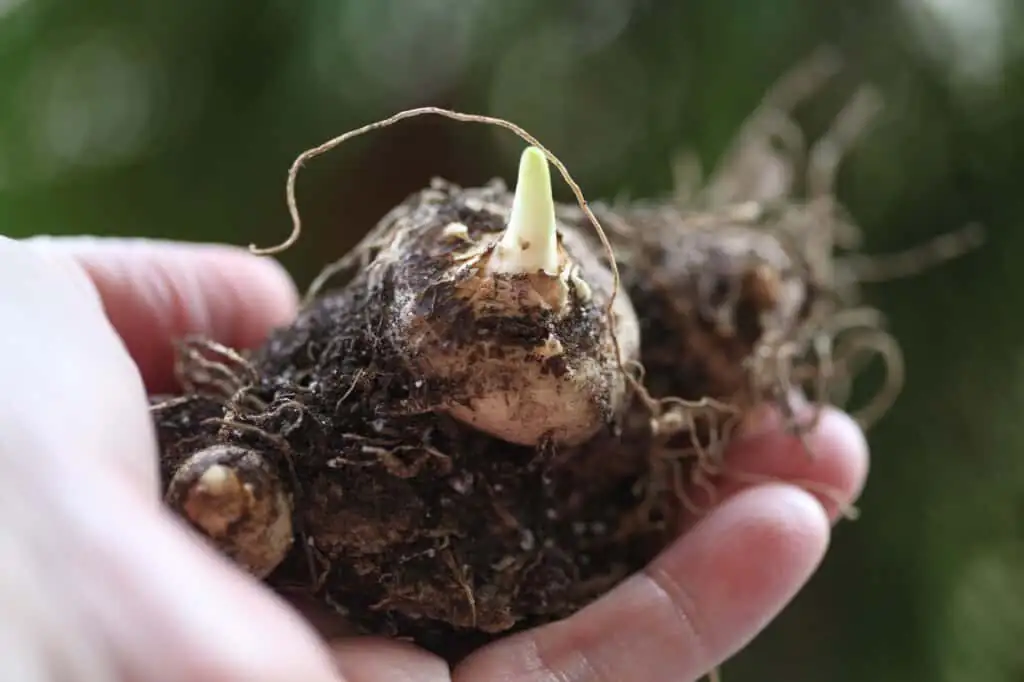
- Eye check: Look for firm “eyes” (growth points) on the rhizome.
The cool, dry, frost-free nap: two safe storage methods
Whether you grow in pots or lifted clumps, the goal is the same: keep rhizomes almost dry, cool, and frost-free with airflow.
Option A: Store in their pot (lowest fuss)
- After flowering, reduce watering gradually; let foliage yellow naturally.
- Remove spent stems and collapsing leaves.
- Move the pot to a cool, airy, frost-free place out of direct sun.
- Keep the mix almost dry through winter—just an occasional sip to prevent bone-dry desiccation if your space is very warm.
Best for: Rhizomes you won’t divide this year and mixes that drain very freely.
Option B: Lift, clean, and store bare (great for dividing)
- Let foliage yellow, then cut it back.
- Unpot gently and brush away old mix; don’t gouge the rhizome.
- Inspect and discard any soft or smelly pieces.
- Air-dry on a tray for a day or two in a cool, shaded, well-ventilated spot.
- Store in a breathable paper bag or box with a little dry, inert cushioning (e.g., shredded paper, dry peat-free fiber, or vermiculite). Label cultivars.
- Conditions: Cool and frost-free with airflow—aim for roughly 5–12°C (41–54°F), or up to about 15°C (59°F) if that’s what your home offers. Never freeze. Avoid hot, heated rooms.
- Check monthly. Remove any that soften or mold.
Note for mild-winter gardens (USDA 8–10): Many gardeners leave white arum lilies in the ground. Choose a sheltered spot, mulch lightly, and let winter be drier. Heavy winter rain on tight soils invites rot—if that’s your reality, lift and store instead.
Late winter: repot, reawaken, and set the stage for spring
Late winter is the sweet spot to refresh the mix and restart growth.
What you’ll need
- A pot with drainage, preferably wider than deep (improves aeration and reduces waterlogging).
- Fertile, humus-rich, moisture-retentive yet free-draining mix: think loam + coir/peat-free fiber + perlite/sand, plus a little well-rotted compost.
- Clean, firm rhizomes; a sharp, clean knife if dividing.
Step-by-step repotting
- Inspect and divide (optional): Separate offsets so each division has an obvious “eye.” Dusting cuts isn’t essential if you allow them to dry briefly and plant into fresh, well-drained mix.
- Positioning: Set rhizomes with the eyes facing up and leave the top slightly exposed above the mix. This reduces rot risk at the crown.
- Spacing: For a full display, some growers place 3–5 rhizomes in a 12–15 cm (4.7–5.9 in) pot; scale up pot width for more space and better drainage.
- First watering: Settle the mix with a light watering. Then pause—keep barely moist until growth begins.
- Placement: Bright, filtered light in a cool room (about 10–20°C / 50–68°F). Good airflow; no cold drafts or heater blasts.
Phase water, light, and feed for a strong restart
Think of wake-up as a soft sunrise, not a spotlight flicked on.
- Weeks 0–2 (just potted): Bright, indirect light; mix slightly moist, never wet. No feeding yet.
- Weeks 2–4 (eyes/nubs visible): Increase water gradually toward evenly moist. Slide the plant into brighter filtered light—an east window or a south window with a sheer curtain is perfect.
- Weeks 4–8 (leaves expanding): Keep moisture steady and start feeding every 2 weeks with a balanced liquid fertilizer while the plant is actively producing leaves and buds.
- Flowering: Maintain even moisture; avoid wetting the spathes to prevent spotting or rot. Many growers reduce or stop feeding once flowering is in full swing.
- After bloom: Let leaves continue for a while to recharge the rhizome. Then, as yellowing starts, taper water again and prepare for rest.
Light notes:
- Avoid harsh midday sun in hot climates; morning sun with afternoon shade is ideal outdoors.
- Indoors, bright filtered light boosts flowering; too little light = lush leaves, few blooms.

Mix, moisture, and pot choice: the rot-proof trifecta
- Mix: Moisture-retentive but well-drained. If water pools on the surface, lighten the mix with more perlite or coarse sand.
- Pot: Wider-than-deep containers encourage a stable, airy root zone.
- Watering rhythm:
- Growth and bloom: generously, consistently moist—not waterlogged.
- Dormancy: almost dry; err dry rather than wet.
Troubleshooting quick-reference
- No sprouts by mid-spring: Rhizomes may be too cold, too dry, or non-viable. Unpot and check firmness and eyes.
- Sudden collapse after restart: Likely overwatering in cool conditions. Improve drainage, allow the top mix to dry slightly between waterings, and ensure airflow.
- Small or few flowers: Underpowered rhizome, low light, overcrowding, or feeding stopped too soon. Next cycle, divide or size up, brighten the site, and feed through leaf-and-bud build.
- Leaf speckling or sticky residue: Check for aphids, thrips, mites, or mealybugs. Rinse foliage, improve airflow, and treat with insecticidal soap or horticultural oil as labeled.
- Brown-spotted spathes: Water droplets on blooms or poor airflow. Water at soil level and keep spathes dry.
Safety first
All parts are toxic if chewed or ingested due to insoluble calcium oxalate crystals. Keep away from pets and children; wear gloves if you have sensitive skin and wash hands after handling rhizomes.
A note on symbolism and “flower language”
Calla lilies are icons of pared-back elegance—staples of weddings and formal bouquets. White forms are often linked with purity and sympathy, which is why you see them in both bridal and memorial arrangements. “Flower language” traditions vary by culture and era, so treat specific stem counts or strict meanings as poetic, not universal rules. Choose what resonates for your occasion.
Your seasonal blueprint (at a glance)
- Late summer–autumn: Bloom winds down; foliage yellows. Reduce water.
- Winter: Store rhizomes cool, dry, and frost-free—either in their pot almost dry, or lifted and bagged with breathable packing. Check monthly.
- Late winter: Repot into fresh, free-draining, fertile mix with eyes up and the top slightly exposed. Begin the gentle wake-up routine.
- Spring–summer: Keep evenly moist in bright, filtered light; feed every 2 weeks until flowering is established; enjoy the show.
Follow this rhythm—dry, cool, and calm in winter; bright, moist, and fed in spring—and your Zantedeschia aethiopica will return each year with renewed poise and power.