

If you’ve ever watched the cream swirls on your variegated star jasmine suddenly soften—or worse, a shoot go fully green—you know variegation can be a moving target. The good news: with the right light, temperature, watering rhythm, and timely pruning, Trachelospermum asiaticum ‘Variegatum’ keeps its crisp, two-tone foliage year-round and makes a graceful, fragrant companion on a small trellis or in a hanging pot.
Here’s a plain-language road map to keep those patterns bold—and what to do when they blur.
Meet the plant
- Botanical name: Trachelospermum asiaticum ‘Variegatum’ (Variegated Star Jasmine; also called Variegated Asiatic/Japanese Star Jasmine)
- Family: Apocynaceae
- Habit: Evergreen twining/trailing vine for pots, hanging baskets, and small trellises; also attractive in clear-water culture
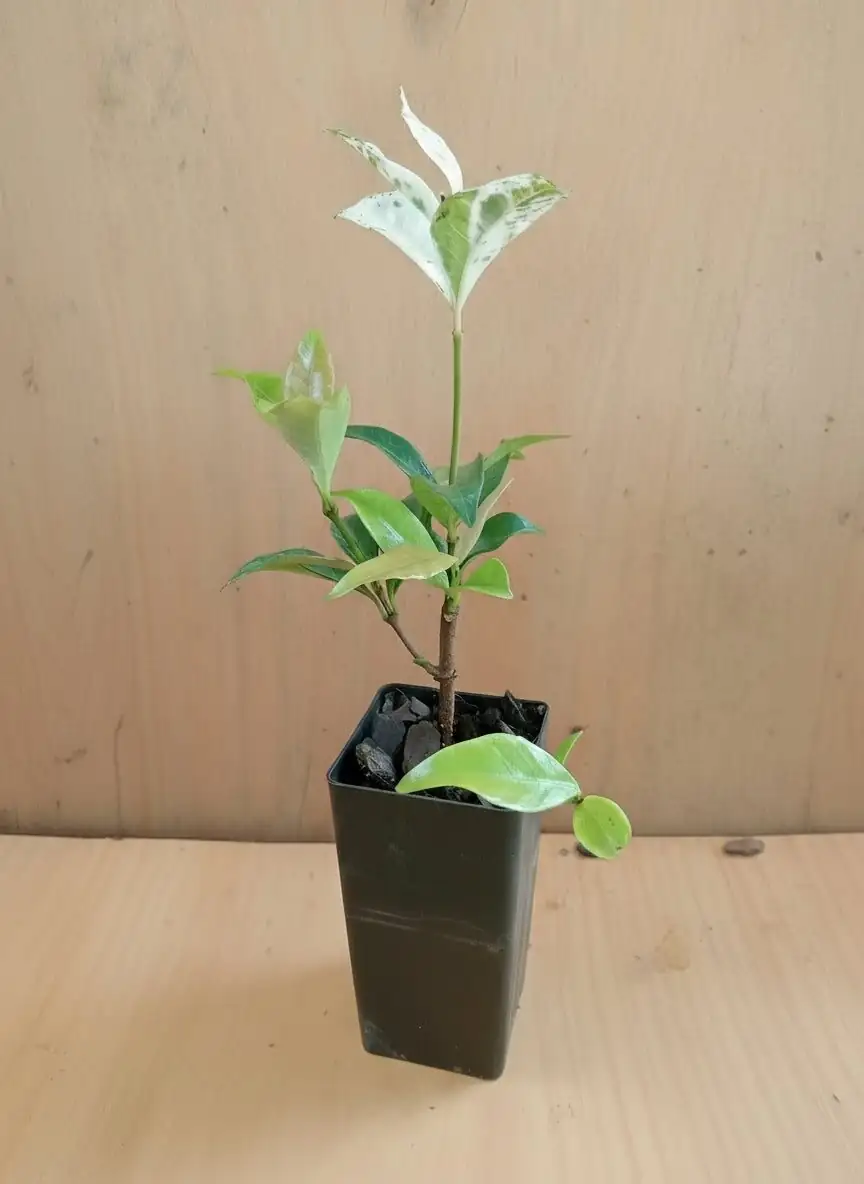
- Foliage: Glossy leaves patterned in cream/white and green
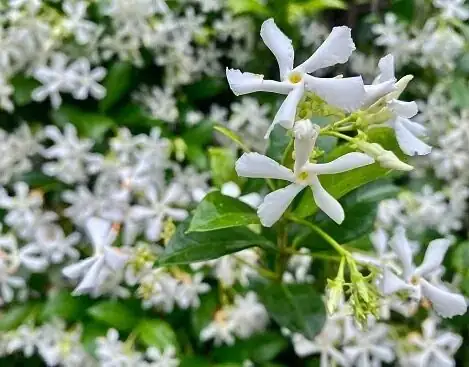
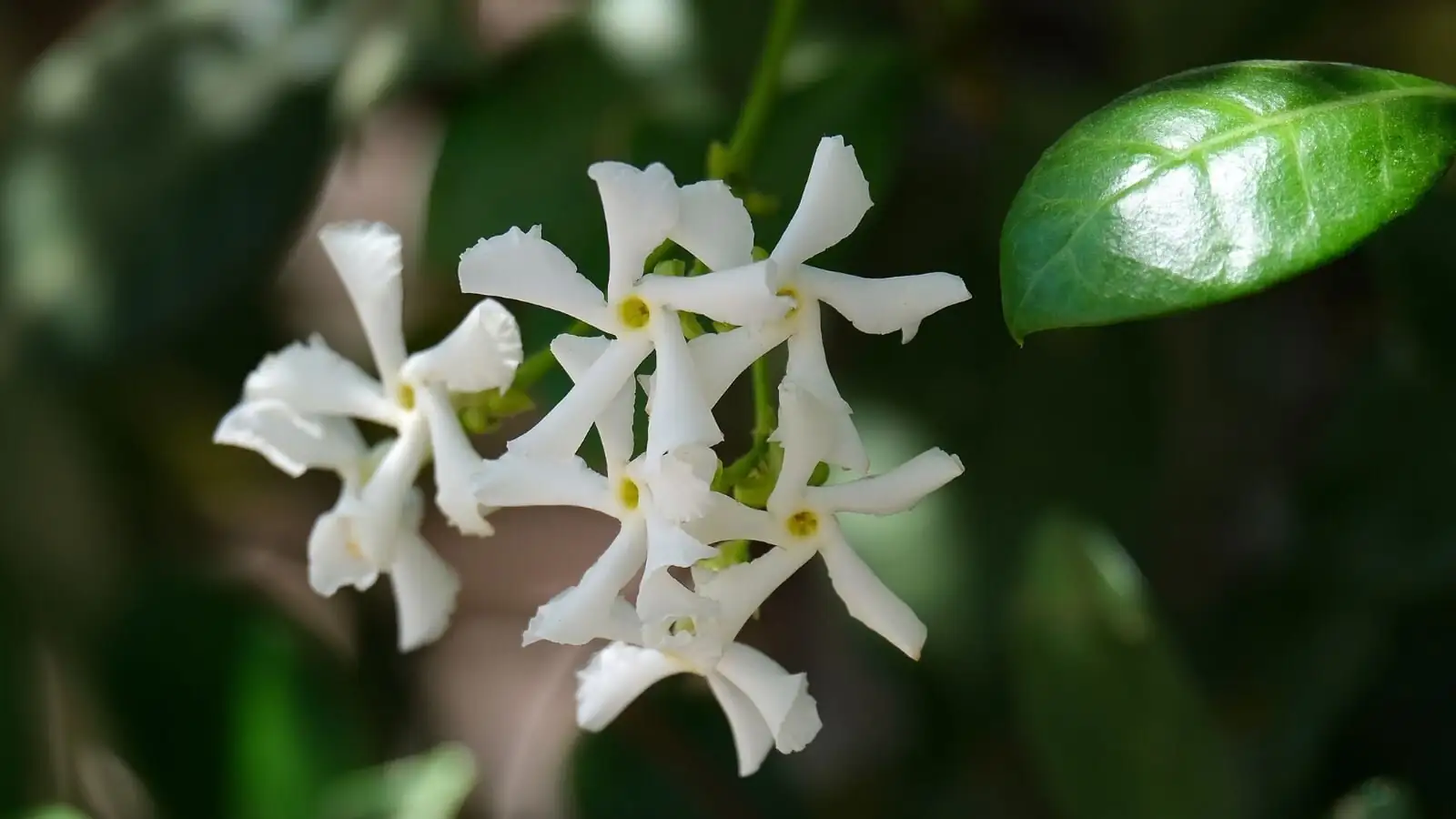
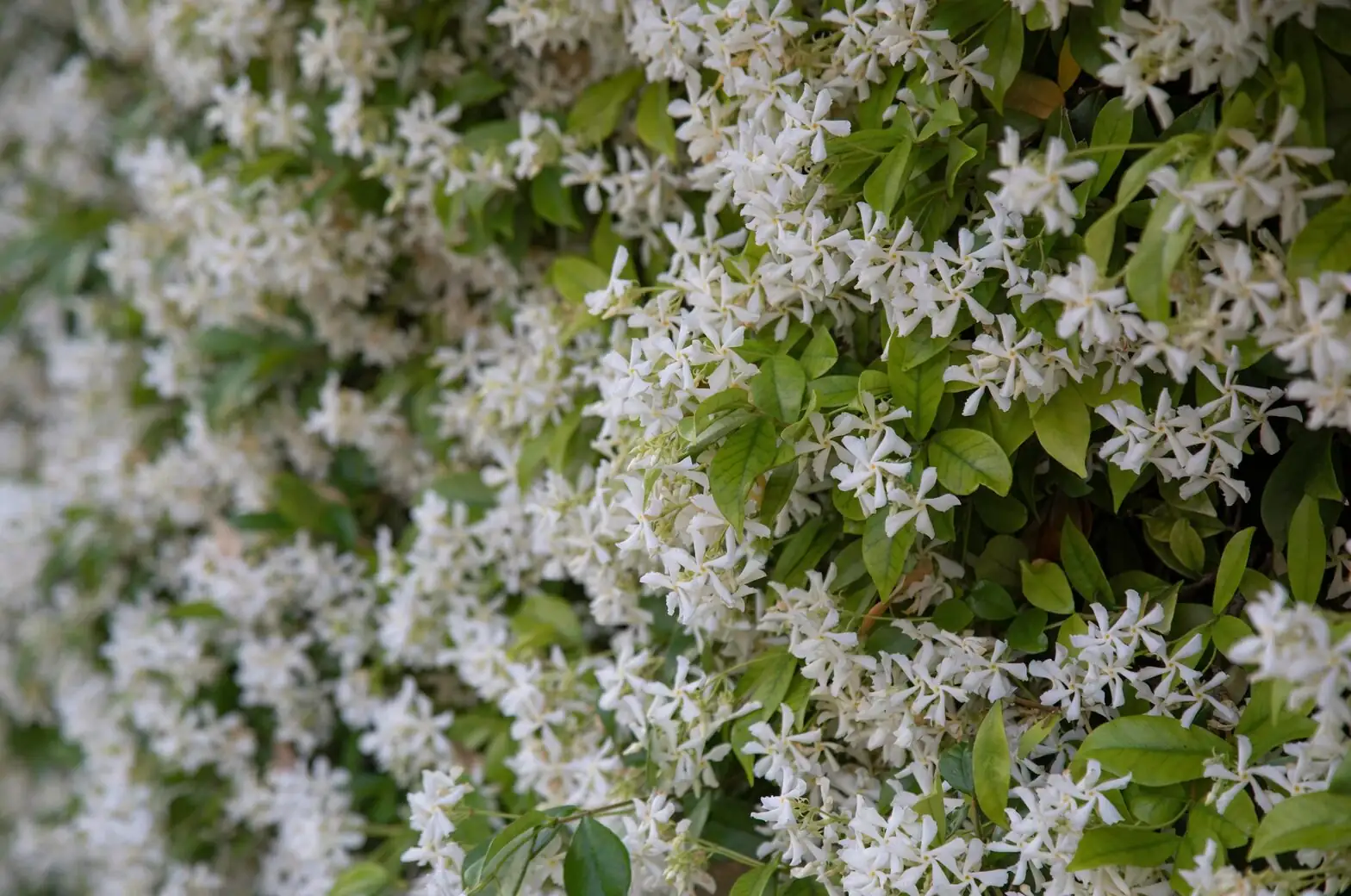
- Flowers: Small, starry, sweetly scented white blooms in summer (more reliable outdoors; indoor plants may flower less)
Variegation 101: why patterns fade, dull, or “go green”
Think of variegation as a balancing act. Creamy leaf areas have little to no chlorophyll, so they photosynthesize less than the green parts. That makes the plant:
- More light-hungry than its solid-green relatives
- Prone to “reverting” (producing all-green shoots) if it’s stressed or underpowered
There are two common things you’ll see:
1) Dulling or blurring of variegation
- Often happens under stress—especially bright sun paired with cold, or a long spell of chill, low light, and wet soil.
- Colors look muted, edges less sharp.
2) True reversion (solid-green shoots)
- Some stems switch to green-only growth. These are more vigorous and can overtake the plant.
- You can’t make that reverted section re-variegate, but you can prune it out to preserve the patterned parts.
Bottom line: Feed the plant enough light and warmth to support its pale tissue, and be decisive with your pruning shears.
Light: bright to sunny, but mind the season
- Aim for bright light to full sun for strongest growth and best color.
- Indoors, an east- or south-facing window is ideal. A few hours of gentle morning sun plus bright afternoon light keeps the foliage sharp.
- Partial shade is tolerated, but extended low light encourages green-heavy growth and weak variegation.
- Avoid harsh sun when temperatures are low. Cold + strong sun can dull variegation and increase wilting/leaf drop risk, especially near winter windows.
Pro tip: If variegation is fading indoors, slide the plant closer to the window or raise light levels gradually over 1–2 weeks. If leaves are puckering or edges crisping in winter sun, diffuse it with a sheer curtain.
Temperature: warmth keeps color; cold invites trouble
- Sweet spot: 20–25°C (68–77°F)
- Overwinter above: 10°C (50°F) to reduce leaf drop
- Brief dips near 0°C (32°F) may be tolerated, but prolonged cold commonly causes defoliation
The “do not do” combo for this plant’s variegation: cold + wet. That’s the classic trigger for yellowing followed by leaf drop.
Watering and humidity: steady, not soggy
- Growing season: Keep the mix evenly moist, never waterlogged.
- Autumn–winter: Reduce watering; let the top layer of soil dry a bit more between drinks.
- Just repotted? Go light on water at first and mist occasionally while roots re-establish.
- Humidity: Prefers moderate humidity with good airflow. In very dry indoor air, occasional misting helps—but avoid keeping foliage constantly wet.
Soil, pots, and water culture
- Use a fertile, loose, well-drained potting mix (leaf-mold based or high-quality all-purpose).
- Drainage matters year-round; in winter it’s non-negotiable.
- Water culture option: It thrives in clear water if you top up and change water regularly and add a suitable nutrient solution. Keep roots rinsed and the vessel clean.
Feeding for vigor (and the occasional bloom)
- Feed monthly during active growth.
- Want flowers? Add 1–2 extra feeds higher in phosphorus and potassium before summer.
- Skip heavy winter feeding; focus on warmth, light, and careful watering.
Training and pruning: how to keep the pattern crisp
Think sculptor, not spectator. Shape and select to favor the prettiest growth.
- Start support early: When shoots hit ~30 cm (12 in), add a small trellis or hoop and guide vines gently.
- Pinch to branch: Tip-pinch to encourage fuller, multi-stem growth and more patterned leaves on display.
- Thin congestion: Open up crowded sections to boost airflow and even light.
- Remove all-green shoots immediately:
- Trace the green stem back to where it emerges from variegated tissue.
- Cut cleanly just into the variegated portion (below the first fully green node), using sterilized pruners.
- Don’t leave a stump that can resprout green.
- Rejuvenate older plants (every 3–4 years):
- Hard-prune in spring to a neat framework. New shoots re-leaf quickly in good light.
- Resume feeding once fresh growth is underway.
Tip: When you see a shoot with excellent patterning, favor it—give it the best light, train it prominently, and prune competing green-leaning shoots harder.
Troubleshooting color and leaf issues
- Variegation looks dull or muddy
- Common causes: low light; cold plus bright sun; nutrient-starved after heavy pruning.
- Fix: Increase light gradually; warm it up above 10°C/50°F; resume a modest feeding schedule once new growth starts.
- Stems turning solid green (reversion)
- Cause: Green tissue outcompetes the slower variegated parts, especially in shade or after stress.
- Fix: Prune out reverted stems promptly back to variegated growth; improve light and overall vigor to favor patterned shoots.
- Yellowing leaves and drop
- Likely the winter “cold + wet” combo or chronically soggy soil.
- Fix: Warm the root zone, reduce watering frequency, and ensure excellent drainage. Keep the plant bright.
- No flowers indoors
- Normal. It blooms more reliably outdoors. For the best shot indoors, maximize bright light and give those pre-summer bloom feeds.
Propagation (and why cuttings beat seed for pattern)
- Tip cuttings: In early summer, take 10–12 cm (4–5 in) semi-ripe tips, keep 3–4 top leaves, remove lower leaves, and root in moist sand/gritty mix. Expect roots in ~3–4 weeks.
- Water cuttings: Stems also root readily in plain water.
- Layering: Peg down a long stem in a pot of mix; separate once rooted.
- Seed: Can be sown promptly at 13–16°C (55–61°F), but seedlings may revert to solid green—so use cuttings if you want to preserve variegation.
Pests, diseases, and safety
- Watch for spider mites in dry indoor air. Increase humidity, rinse foliage, and treat with insecticidal soap/horticultural oil or a labeled miticide if needed.
- Leaf spot can occur. Improve airflow, avoid late-day leaf wetting, remove affected leaves; a broad-spectrum fungicide labeled for leaf spot can help if the issue persists.
- Safety: Specific toxicity data for this cultivar is inconsistent. As a precaution with pets or children, prevent chewing/ingestion and seek advice if symptoms occur.
Seasonal care snapshot
- Spring
- Repot every ~2 years into loose, fertile mix.
- Start monthly feeding; install supports; begin tip-pinching.
- Early summer
- Take 10–12 cm cuttings; consider an extra bloom-leaning feed.
- Summer
- Keep evenly moist; enjoy any sweet, starry flowers.
- Autumn
- Reduce watering; keep bright light.
- Winter
- Aim for >10°C (50°F); keep slightly drier; avoid cold, wet soil and harsh sun on cold days.
Buying smart (so you start ahead)
Choose a plant with:
- Dense, well-branched growth
- Glossy leaves with crisp cream/green contrast
- No leaf spots or mite stippling
After bringing it home: give it bright, airy conditions, occasional misting, and shape-prune if stems are leggy. Wait for fresh growth before feeding.
A note on symbolism (flower “language”)
Because this is a cultivated variegated form of Asiatic jasmine, any “flower language” is modern and interpretive rather than rooted in old folklore. Its evergreen nature and twining habit often symbolize steadfastness and loyalty—the kind of quiet devotion that steadily climbs and stays. It’s less about historic legend and more about the plant’s character: always green, gently clinging, and reliably graceful.
—
The takeaway: Variegation is beautiful—but it asks for payment in light, warmth, and a little courage with the pruners. Keep your variegated star jasmine bright and comfortably warm, water it wisely (especially in winter), and edit out any green-only ambition. Do that, and the cream-and-green marbling will stay crisp, lively, and unmistakably yours.