

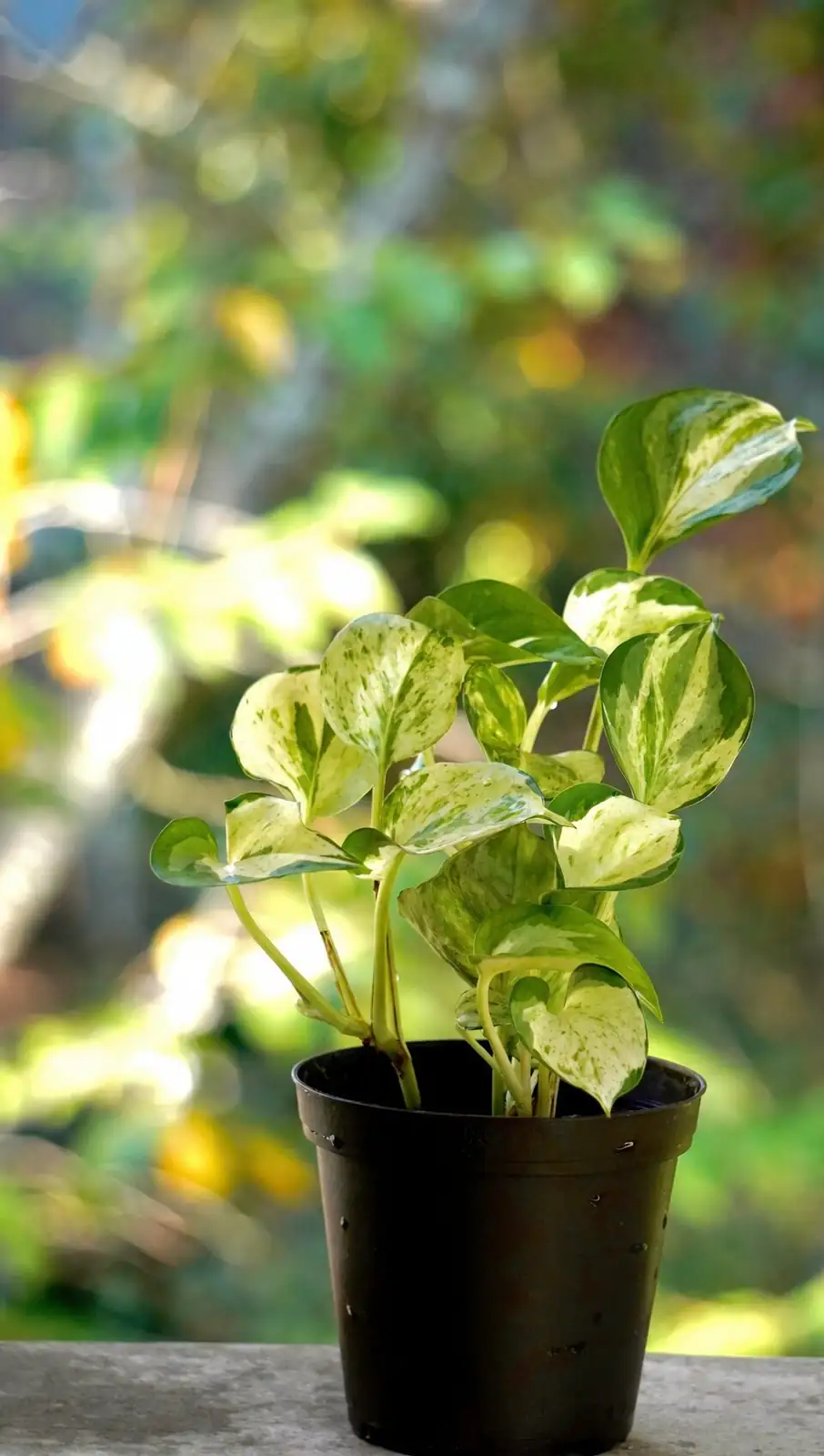
If you’ve ever wanted a variegated vine that behaves beautifully in a pot, Variegated Star Jasmine (Trachelospermum asiaticum ‘Variegatum’) is your plant. Those cream-and-green leaves gleam year-round, trailing or twining just where you guide them—provided you give a few confident nudges: train 30 cm shoots, pinch for bushiness, evict green reversions, and every few years, dare to rejuvenate. Here’s how to shape a refined, long-lived specimen with ease.
Meet Variegated Star Jasmine: what to expect
- Botanical name: Trachelospermum asiaticum ‘Variegatum’ (Apocynaceae)
- Habit: Evergreen, twining/trailing vine for pots, hanging baskets, and small trellises; also excellent in water culture
- Foliage: Glossy leaves splashed and edged in cream/white and green
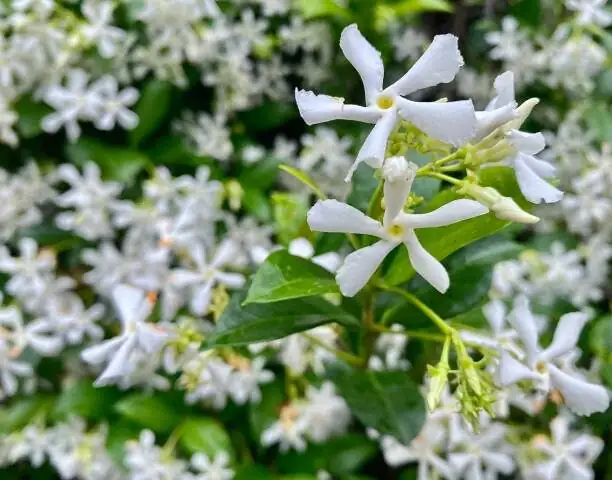
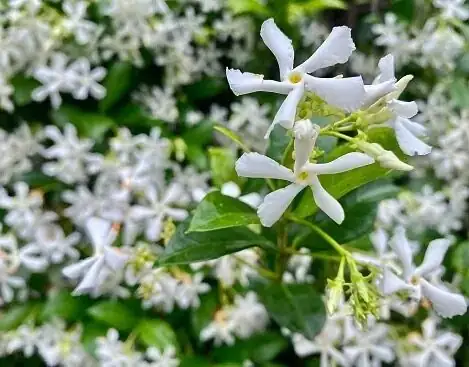
- Flowers: Small starry white blooms in summer with a sweet scent; outdoor plants flower more reliably than indoor ones
- Origin: A cultivated (man-made) variegated selection grown primarily for decorative foliage
Set it up for success (so your pruning pays off)
- Light: Bright light to sun for strong growth and best variegation; indoors, an east- or south-facing window is ideal. Avoid harsh sun during cold spells, which can dull variegation.
- Temperature: Thrives at 20–25°C (68–77°F). Keep above 10°C (50°F) in winter. Brief chills around 0°C (32°F) can cause leaf drop.
- Watering: Keep evenly moist in active growth, never soggy. From autumn onward, water less; cold + wet is the classic yellowing/leaf-drop trigger.
- Soil: Rich, loose, well-drained potting mix. After repotting, water lightly and let it settle.
- Feeding: Monthly during the growing season; if you’re chasing blooms, add 1–2 extra feeds higher in P and K before summer.
- Air and humidity: Prefers moderate humidity and good airflow. In dry rooms, occasional misting helps—avoid stagnant, overly humid corners.
Guide new 30 cm shoots: trellis training made easy
As soon as fresh shoots hit about 30 cm (12 in), it’s time to set their course. Getting this right early prevents tangles later and builds a full, elegant framework.
What you’ll need
- A small trellis, hoop, mini obelisk, or taut wires
- Soft ties or clips that won’t cut into stems
- Clean snips
Step-by-step
- Install support before tying: Add a small support/trellis when new shoots reach about 30 cm (12 in), positioning it firmly in the pot.
- Spiral, don’t stretch: Gently wind each shoot in a loose S-curve around the support rather than pulling it straight up. This creates density and reduces gaps.
- Tie lightly, often: Use soft ties every 8–10 cm (3–4 in). Don’t cinch—stems thicken as they grow.
- Share the spotlight: Distribute multiple shoots in different directions so each gets light. Full light equals crisp variegation.
- Refresh the map: As shoots extend, keep guiding tips. Twining vines respond fast—little tucks now save big edits later.
Tip for hanging baskets: Instead of climbing, let a few leaders trail while you tie others back into the crown. This makes a cascading skirt with a leafy, full top.
For water-culture displays
- Add a slender trellis or clear rods in the vessel, or run near-invisible nylon lines for gentle guidance.
- Top up and change water regularly; add an appropriate nutrient solution to keep growth even and variegation strong.
Pinch for lushness: the anatomy of a bushy vine
Pinching interrupts apical dominance (the “I’m the boss” hormone signal from a tip) and coaxes side shoots for a fuller plant.
- When to start: Begin once leaders are established on the support and actively growing.
- How to pinch:
- Use clean fingers or snips to remove 1–2 cm (about ½ in) of soft tip growth, just above a leaf pair (node).
- Prioritize the fastest leaders to balance the plant.
- How often: Every 3–4 weeks during the growing season, rotating which stems you pinch so you don’t stall the whole plant at once.
- What to expect: Two or more side shoots emerge near each pinch point, thickening the framework and creating a lush, patterned facade.
Pro move: Alternate between training one flush and pinching the next. Train, pinch, fill, repeat—like building a living lattice.
Stop green takeovers: managing reversion
Variegated plants sometimes throw all-green shoots (reversions). These photosynthesize more and can overwhelm the patterned parts if left unchecked.
- Spot it early: Reversions have solid green leaves and often grow faster and bolder.
- Remove decisively: Trace the green shoot back to its origin and cut it out where it meets variegated tissue, not just the top. Clean tools before and after.
- Light matters: Strong, indirect light helps maintain clear variegation. Stress—especially cold combined with strong sun—can dull patterns and invite leaf drop.
- Keep watch: Re-check every few weeks in active growth. Quick edits now prevent big surgery later.
Go bold: rejuvenation pruning for 3–4-year-old pots
Even well-kept plants can get leggy. The fix? A confident reset. Older container plants (around 3–4 years) can be hard-pruned to rejuvenate.
When to do it
- Best in late winter to early spring, as days lengthen and recovery is swift. Pair with your spring repot if needed.
How bold is “bold”?
- Reduce the plant to a simple framework by cutting back long, woody stems by 50–70%, or down to 2–3 healthy nodes above the base on each main stem.
- Thin congested, crossing, or weak interior growth entirely to open airflow and light.
Aftercare playbook
- Light: Bright and airy, protected from harsh sun during cold snaps.
- Water: Slightly on the drier side at first—never soggy. Increase watering only as new growth expands.
- Feeding: Wait until fresh leaves are pushing well (often 3–6 weeks), then resume monthly feeding.
- Training: As new shoots reach ~30 cm, start guiding and pinch to rebuild a balanced framework.
Nervous? Stage it. Rejuvenate one half now and the other half in 6–8 weeks for continuous cover.
Make more plants from your trimmings
This vine is famously easy to propagate—perfect when you’re already cutting.
- Tip cuttings (early summer): Take 10–12 cm (4–5 in) semi-ripe cuttings, keep 3–4 leaves, remove lower leaves, and root in moist sand or a gritty mix. Expect roots in about 3–4 weeks.
- Water cuttings: Stem pieces root readily in plain water—great for windowsill science.
- Layering: Pin a long stem into a neighboring pot or along the soil surface; once rooted, sever and pot up.
- Seed: Can be sown fresh at 13–16°C (55–61°F), but seedlings may revert to green and lose variegation.
A seasonal rhythm you can trust
- Spring: Repot every ~2 years into a fertile, well-drained mix. Begin training and pinching as growth starts. Rejuvenate older plants every 3–4 years.
- Growing season: Keep lightly moist; fertilize monthly. If you want flowers, add 1–2 bloom-focused feeds before summer.
- Early summer: Prime time for 10–12 cm semi-ripe cuttings.
- Autumn: Reduce watering as growth slows.
- Winter: Keep slightly dry and ideally above 10°C (50°F). Avoid cold, wet soil to prevent leaf drop.
Troubleshooting quick hits
- Yellowing and leaf drop?
- Usual culprits: low light or the cold + overwatering combo.
- Fix: Brighter spot, warmer conditions, and allow the mix to dry a bit more between winter waterings.
- Variegation looks dull?
- Check light levels and recent stress. Provide bright light, steady warmth, and avoid cold, wet soil.
- Pests and diseases:
- Spider mites love dry, indoor air: rinse foliage, raise humidity, and use insecticidal soap/horticultural oil or a labeled miticide if needed.
- Leaf spot: Improve airflow, avoid late-day leaf wetting, remove affected leaves; a broad-spectrum fungicide labeled for ornamental leaf spot can help if necessary.
Safety and a note on symbolism
- Safety: Specific toxicity for this exact cultivar isn’t consistently documented. As a sensible precaution—especially with pets and small children—prevent chewing/ingestion and seek medical or veterinary advice if symptoms occur.
- Symbolism (flower language): Often linked with steadfastness and loyalty—evergreen leaves and twining stems “hold on” through seasons. This meaning likely evolved from gardeners’ observations rather than ancient lore: a plant that endures, clings, and stays present makes a fitting emblem for constancy.
—
With bright light, thoughtful watering, and these simple shaping moves—guide at 30 cm, pinch for fullness, delete green reversions, and rejuvenate with courage—you’ll have a variegated star jasmine that looks meticulously designed but feels effortlessly alive.