

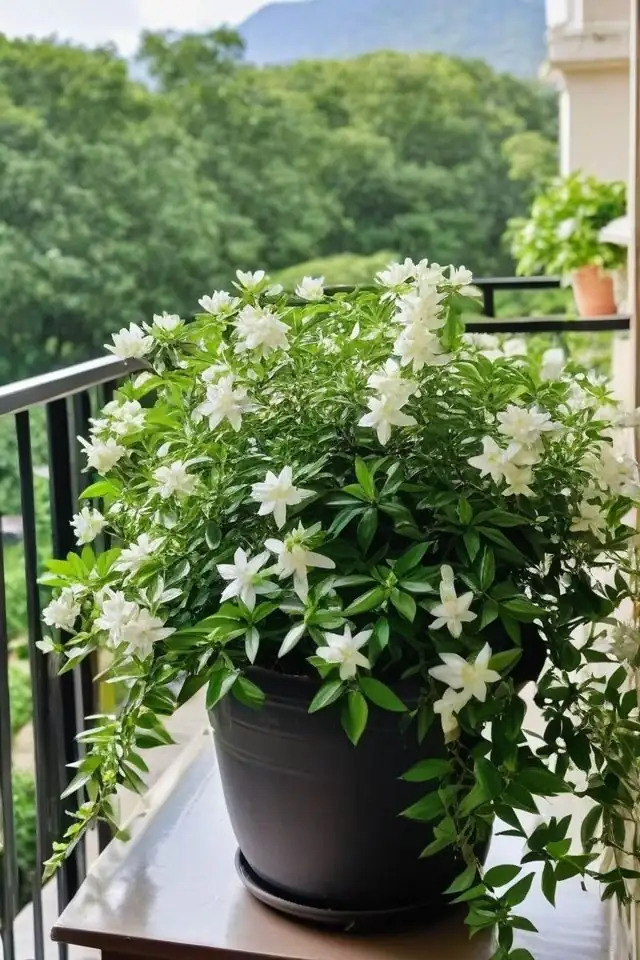
If you garden on a balcony or crave lushness in a compact courtyard, Variegated Star Jasmine (Trachelospermum asiaticum ‘Variegatum’) is your secret stylist. Its cream-and-green leaves catch light even in shade, it trails or twines with impeccable manners, and it plays nicely in mixed containers—so long as you pair it with plants that match its pace. Here’s how to build containers that celebrate its variegation, layer texture, and stay beautifully balanced through the seasons.
Meet the plant: a versatile, shade-savvy scene‑setter
- Evergreen, twining/trailing vine with glossy variegated foliage that looks “lit from within.”
- Happy in bright light to sun, but also tolerant of partial shade—ideal for east or bright south windows and airy balconies.
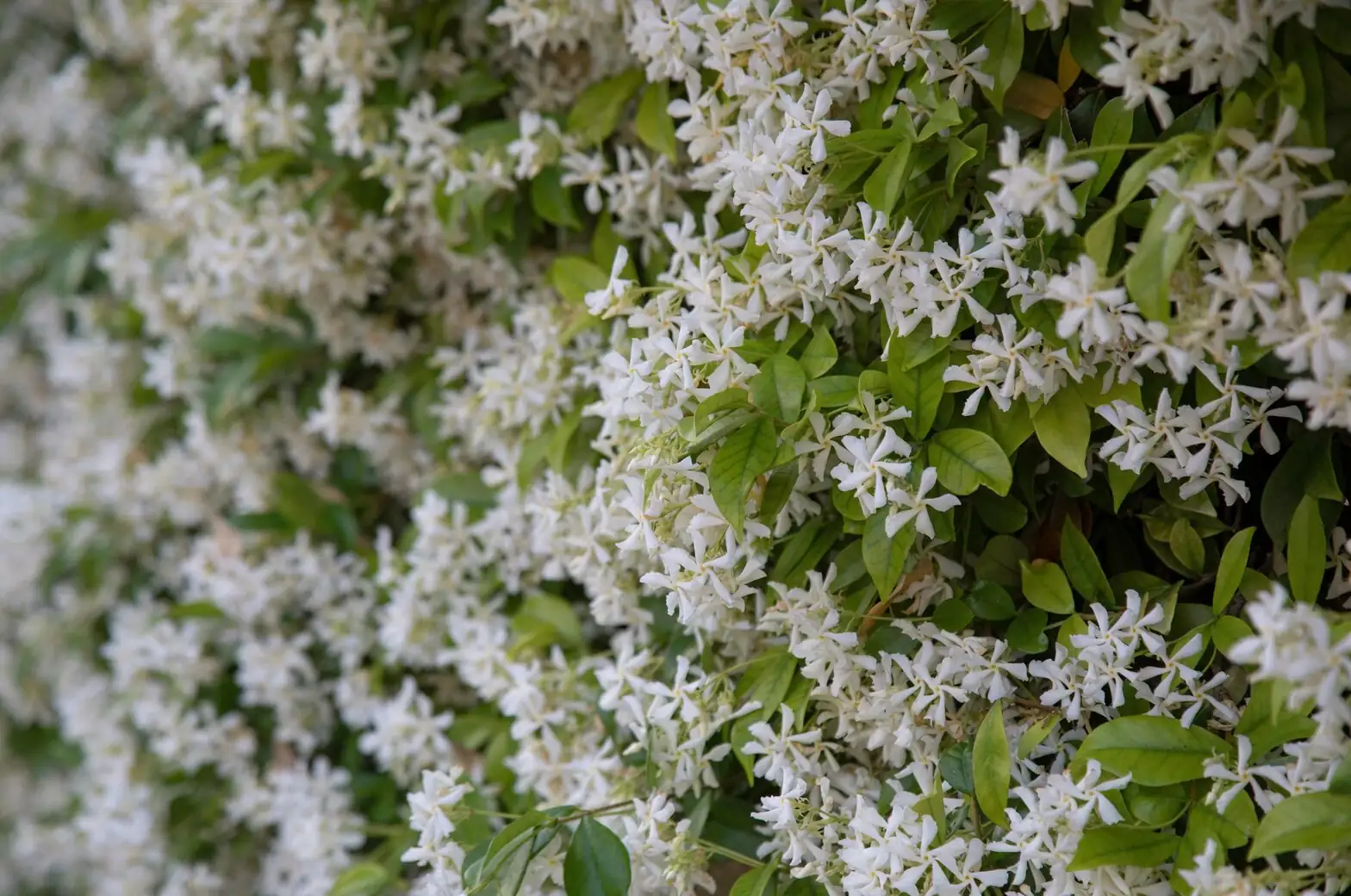
- In summer, small starry white flowers can appear with a sweet fragrance (outdoor bloom is more reliable than indoors).
- Excellent in pots, hanging baskets, small trellises—and striking as a single-specimen water-culture display.
Designer note: In cold, wet conditions—especially in winter—leaves may yellow and drop. Keep it warm and never waterlog the soil to keep those creamy margins crisp.
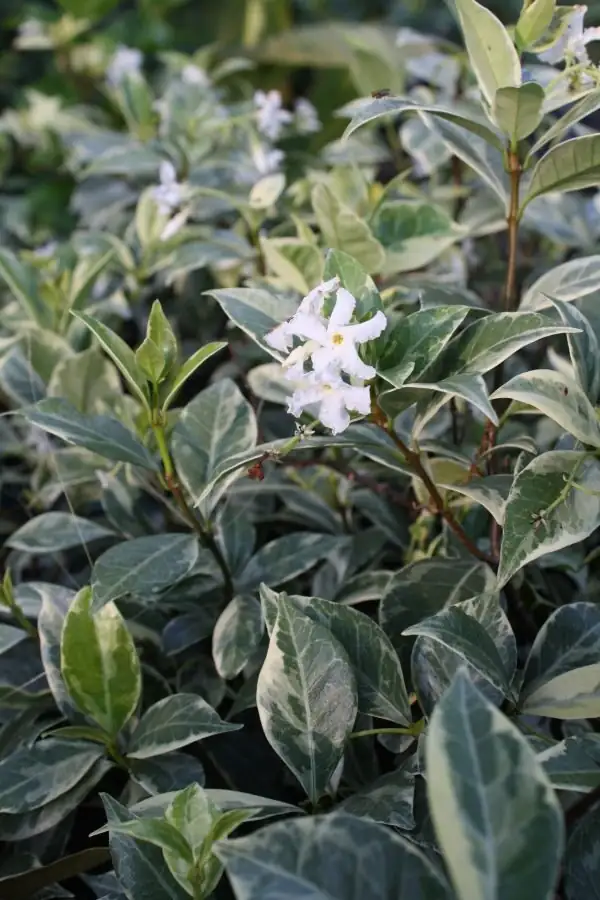
Design rules for spotlighting variegation on balconies
- Calibrate the light
- Bright light keeps variegation sharp; partial shade is fine, but very low light mutes patterning.
- Avoid harsh sun combined with cold, which can dull the cream tones.
- Match growth rates
- This cultivar is a moderate grower in containers: steady, not a sprinter.
- Pair with plants that won’t swamp it (skip rampant trailers like English ivy or creeping fig).
- Likewise, don’t bury ultra-slow miniatures next to it—your jasmine will read as “messy” rather than composed.
- Lean into texture contrast
- Glossy jasmine + matte fern
- Broad, smooth leaves (aspidistra, hosta) + fine, tufted blades (carex, black mondo)
- Velvet (heuchera) against shine (jasmine) makes the cream variegation pop.
- Color choreography
- Use dark foliage foils—purples, bronzes, near-black—to make the cream edges glow.
- Keep flowers simple and seasonal (white or soft pastels) so the foliage stays the star.
- Structure the pot
- Give jasmine a slim trellis once shoots reach ~30 cm (12 in), or let it spill as a “spiller.”
- Use a fertile, loose, free-draining mix and a pot with generous drainage.
Foolproof container recipes that won’t crowd
Each pairing keeps similar water, light, and growth habits so the pot stays harmonious month after month.
Bright morning sun to bright shade (east-facing balcony)
The Modern Woodland Trio (40–45 cm/16–18 in low bowl)
- Spiller: Variegated Star Jasmine trained to drape the rim.
- Filler: Heuchera ‘Obsidian’ or ‘Palace Purple’ (lush, dark velvet leaves).
- Fine texture: Carex oshimensis ‘Evergold’ (buttery variegation echoes the jasmine’s cream).
Why it works: All are moderate growers, shade-tolerant, and texturally distinct. The dark heuchera intensifies the jasmine’s light edges.
Dappled shade or north balcony
A Quiet Study in Greens (30–35 cm/12–14 in tall cylinder with trellis)
- Climber: Variegated Star Jasmine gently twined up a narrow obelisk.
- Understory: Asplenium scolopendrium (hart’s-tongue fern) or Dryopteris erythrosora (autumn fern).
- Grounding accent: Ophiopogon planiscapus ‘Nigrescens’ (black mondo grass) at the base.
Why it works: Matte fronds meet glossy variegation; black blades are the perfect foil. All plants prefer even moisture without sogginess.
Compact balcony ledge or windowsill
Cast-Iron Chic (rectangular trough, 50–60 cm/20–24 in)
- Upright anchor: Aspidistra elatior (cast-iron plant), one clump off-center.
- Spiller: Variegated Star Jasmine trailing from both ends.
- Interlace: Liriope muscari or dwarf mondo for a low grassy seam.
Why it works: Slow-to-moderate growth across the board; shade-tolerant, textural, and unfussy about an urban microclimate.
Hanging basket in bright shade
Two-Tone Cascade (30 cm/12 in basket)
- Main spiller: Variegated Star Jasmine.
- Accent threads: A light touch of silver Dichondra (trim monthly to keep it in check).
- Seasonal sparkle: Add a few white New Guinea impatiens for summer bloom.
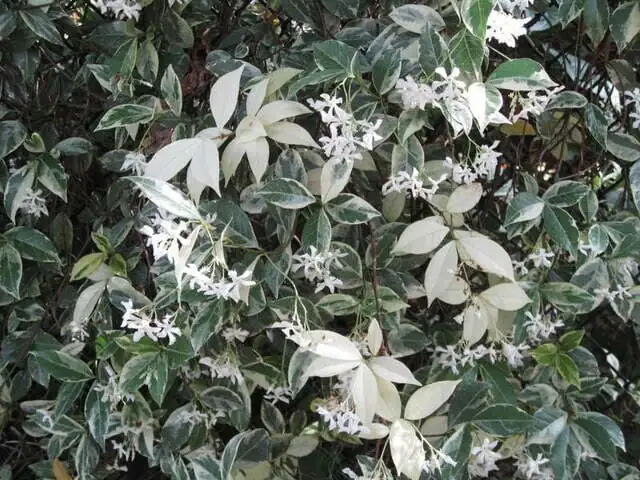
Why it works: The jasmine’s cream variegation reads bright even overhead; companions are shade-friendly. Prune dichondra to keep pace with the jasmine.
Minimalist statement, indoors or a sheltered balcony
Water-Culture Solo
- A clear glass cylinder with rinsed pebbles; one well-rooted jasmine cutting or small plant.
- Top up and change water regularly; add a suitable nutrient solution.
Why it works: Sleek, sculptural foliage becomes living decor, no soil splashes on tight balconies. Keep in bright light and good airflow.
Training and spacing that prevent a tangle
- Add a slim support when new shoots hit ~30 cm (12 in).
- Pinch tips for branching; thin congested stems to maintain air and light.
- Prune out any solid-green reversions promptly—they’re more vigorous and will outpace the variegated sections.
- In mixed pots, keep neighbors 8–10 cm (3–4 in) from the jasmine’s crown so you can water at the base without soaking foliage.
Care that keeps the cream edges glowing
- Light: Bright light to sun for strongest growth and any hope of flowers; partial shade is fine for foliage beauty.
- Temperature: Best at 20–25°C (68–77°F). Protect containers from extended cold; aim to overwinter above 10°C (50°F). Brief dips near 0°C (32°F) can trigger leaf drop.
- Water: Keep evenly moist in the growing season—never soggy. Reduce in autumn; slightly drier in winter. Cold + wet is the classic yellowing/leaf-drop combo.
- Soil: Rich, loose, well-drained potting mix. Water lightly right after potting so roots settle without suffocating.
- Feeding: Monthly, spring through summer. If you’re chasing flowers, add 1–2 extra bloom-focused feeds before summer.
- Humidity & airflow: Prefers moderate humidity; occasional misting is fine if air circulates well.
- Repotting: Every ~2 years in spring, into a slightly larger pot. Planting three young plants in one 15–20 cm (6–8 in) pot creates instant fullness.
- Pests/disease: Watch for spider mites in dry air; rinse foliage and use insecticidal soap or horticultural oil as needed. Improve airflow to deter leaf spot and remove affected leaves promptly.
Balcony winter tip: Group pots, lift them off cold slabs with pot feet, and move the jasmine to shelter before prolonged chills. Indoors, an east or bright south window is ideal.
Common pitfalls in mixed containers (and easy fixes)
- Overly thirsty companions: Avoid shade annuals that want constant wet (your jasmine will protest). Choose plants happy with “evenly moist, never soggy.”
- Bully neighbors: Skip aggressive vines/groundcovers (e.g., vigorous ivies, creeping fig). They’ll overrun the pot.
- Starved light: Dense companion canopies can mute variegation. Thin or move darker foliage away from the jasmine’s crown.
- Ignoring reversion: Remove all-green shoots immediately to preserve pattern.
Quick buying-and-setup checklist
- Choose plants with dense branching, glossy leaves, and clean variegation.
- Acclimate in a bright, airy spot; avoid scorching sun right away.
- After shaping, wait for fresh growth before feeding.
- For water culture: top up and change water regularly; add appropriate nutrients.
Propagation for perfectly matched sets
- Take 10–12 cm (4–5 in) semi-ripe tip cuttings in early summer; keep 3–4 top leaves and root in moist sand or a gritty mix. Roots form in about 3–4 weeks.
- Stems also root readily in water—ideal for creating multiples for a balcony series.
- Layering long stems during the growing season is another reliable option.
- Seed isn’t recommended for maintaining variegation; seedlings may revert to green.
A note on symbolism (flower language)
Evergreen, steady, and gently twining, this jasmine is often linked with steadfastness and loyalty. The sentiment likely arose from its year-round foliage and the way it “holds on” as it climbs—an emblem of constancy more than fleeting bloom. In design terms, that translates to presence: even when not flowering, it shows up every day, brightening shade with quiet confidence.
A balcony grower’s mini calendar
- Spring: Repot if needed; start monthly feeding; train new shoots to a support.
- Early summer: Take cuttings; consider 1–2 bloom-oriented feeds before peak warmth.
- Late summer: Light grooming to keep proportions tidy.
- Autumn: Reduce watering; keep in bright, airy light.
- Winter: Keep slightly drier and above 10°C (50°F) if possible; avoid cold, wet soil to prevent leaf drop.
Safety note: Specific toxicity data for this exact cultivar isn’t consistent. As a precaution with pets or small children, prevent chewing or ingestion and seek advice if symptoms occur.
With thoughtful pairings and just-right care, Trachelospermum asiaticum ‘Variegatum’ becomes the luminous thread that ties a container composition together—never domineering, always dependable, and irresistibly chic in shade.