

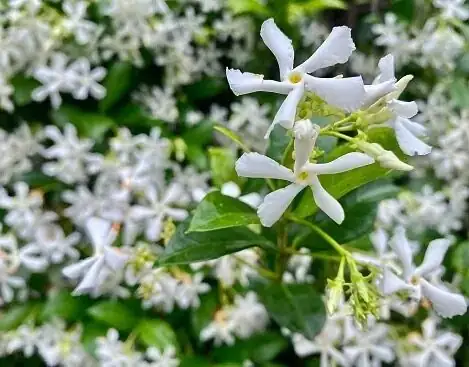
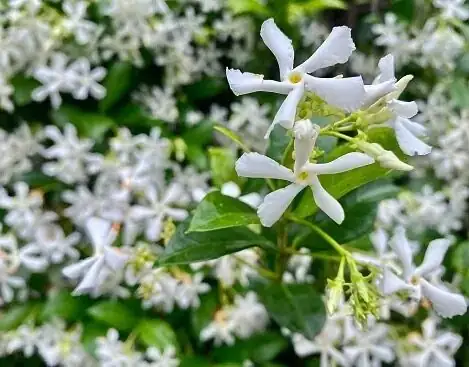
If you’ve ever wished you could clone those glossy cream-and-green leaves of variegated star jasmine on command, this is your workshop. Trachelospermum asiaticum ‘Variegatum’ is famously easy to propagate, and you’ve got three excellent, confidence-boosting routes: semi-ripe tip cuttings in a gritty mix, water rooting in a vase, and old-school layering. Below, we’ll compare timelines, media, step-by-steps, and pro hacks so you can choose the right method for your space and season.
Before we start: this plant loves bright light and steady warmth. Keep it around 20–25°C (68–77°F) during propagation; cool + wet is the fast lane to yellowing leaves and sulking cuttings. Ready? Let’s root.
Meet the plant, choose the wood
- What to cut: Semi-ripe tips—new growth that’s firmed up slightly—are the sweet spot for quick, reliable roots.
- Keep the pattern: Select well-variegated shoots. If you see any stems reverting to solid green, cut those out on the mother plant and don’t use them for propagation.
- Hydrate first: Water the mother plant the day before you take material so cuttings are nicely turgid.
Tools, media, and environment
- Tools: Sharp, sanitized snips/blade; clean pots or trays; labels; optional rooting hormone.
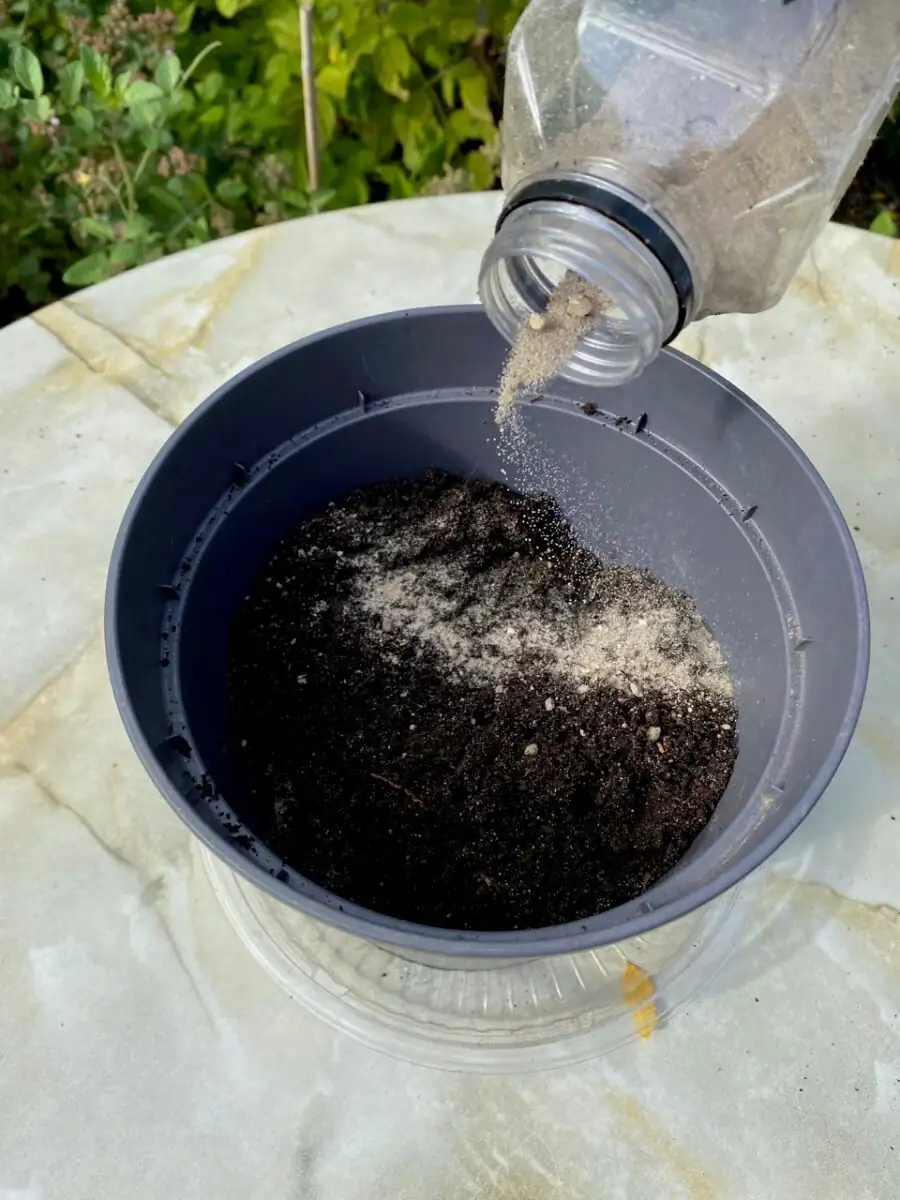
- Media for cuttings: Moist sand or a gritty blend that drains fast (for example: 50–60% coarse sand or perlite + 40–50% fine bark/peat-free seed mix). Avoid rich, soggy compost at this stage.
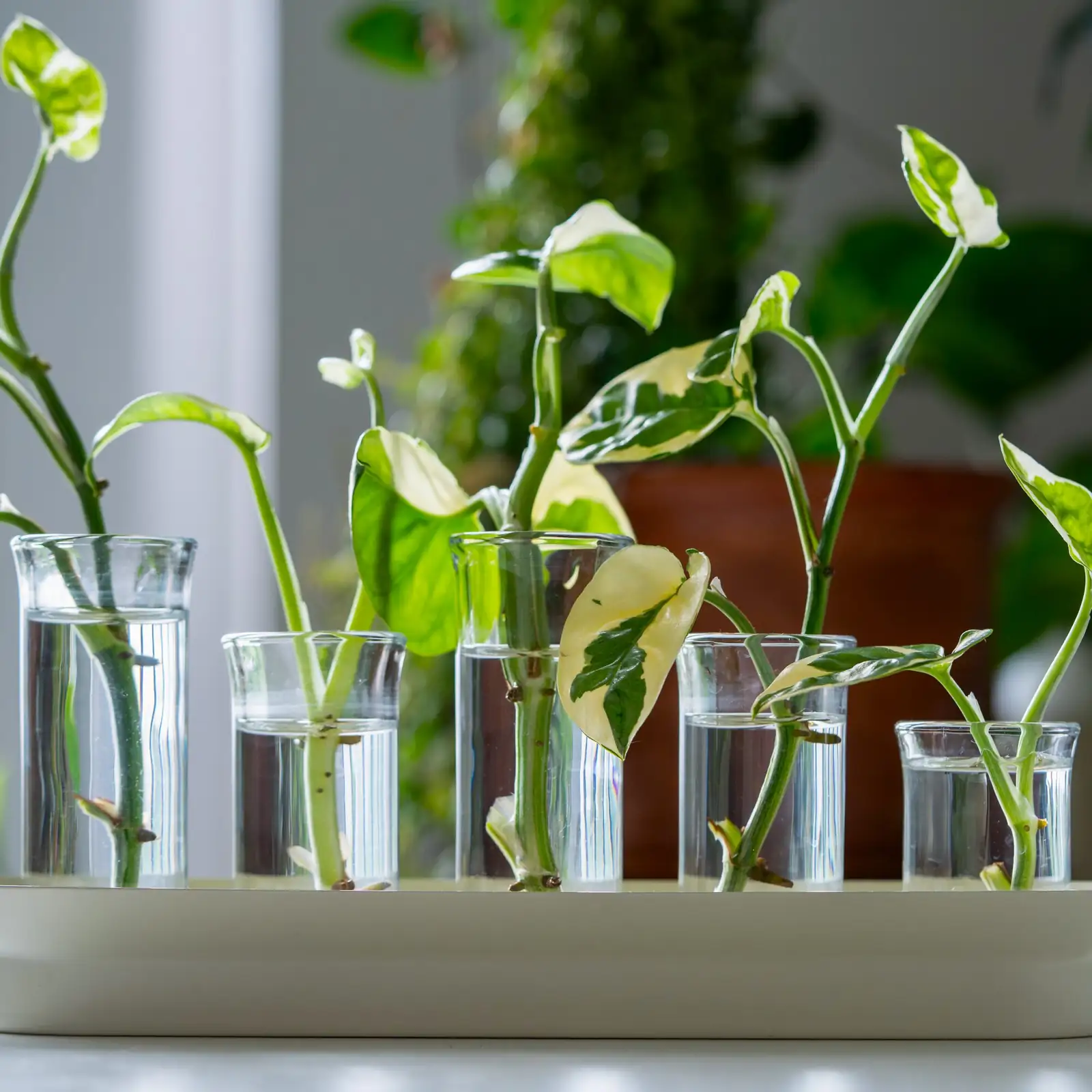
- Water rooting: A clean glass or jar, chlorine-free water, and bright light without scorching midday sun.
- Layering: A spare pot with a loose, well-drained mix and a pin or soft tie to hold nodes in place.
- Climate: Bright light to sun (avoid harsh sun when it’s cold), 20–25°C (68–77°F), gentle airflow, and moderate humidity.
Method 1: Semi-ripe tip cuttings in mix (fastest overall)
This is the nursery workhorse for a reason—roots form quickly and the transition to potting mix is seamless.
Step-by-step
- Timing: Early summer is prime.
- Take cuttings: Snip 10–12 cm (4–5 in) tips. Keep 3–4 leaves; strip off the rest so one or two nodes are bare.
- Prep the base: Trim just below a node. Optional: light scrape on one side of the stem base to expose a sliver of cambium for quicker rooting; dip in rooting hormone if you like.
- Stick: Insert into pre-moistened sand/gritty mix so at least one node is buried.
- Spacing: 2–3 cuttings per 9 cm pot, or a tray with 3–4 cm spacing.
- Conditions: Bright, warm, no direct midday sun. Keep the medium just moist, never wet. A loose humidity cover is fine—but vent daily to prevent fungus.
- Timeline: Expect roots in about 3–4 weeks.
- Potting on: Move to a fertile, loose, well-drained potting mix once roots are 2–3 cm long and resist a gentle tug. Water lightly at first.
Success hacks
- Leaf size control: If leaves are very large, halve them to reduce transpiration.
- Bottom warmth: A warm surface (not hot) speeds rooting.
- “Fuller pot” trick: Plant 3 rooted cuttings in a 15–20 cm (6–8 in) pot for an instant bushier effect.
Common pitfalls
- Wilting/blackened bases: Too wet or too cold. Ease off water and raise temperature.
- Pale variegation: Light’s too low, or it’s getting harsh sun in cold weather—rebalance.
Method 2: Water rooting (see the roots, zero mess)
Perfect for beginners and for stylish, modern water-culture displays—this cultivar roots readily in water.
Step-by-step
- Timing: Spring through summer.
- Prep: Take 10–12 cm (4–5 in) tips, remove lower leaves, and keep one node submerged.
- Vessel: Use clean, room-temperature water in a narrow glass (it holds stems upright).
- Light: Bright, indirect light; warmth 20–25°C (68–77°F).
- Upkeep: Change water every 3–5 days; top up as needed.
- Timeline: Little root nubs in 10–14 days; transplantable roots typically around 3–4 weeks.
Potting from water to mix
- Move gently once roots are 2–5 cm long.
- Plant into a loose, well-drained mix and keep evenly moist for 1–2 weeks while water-roots adapt.
- Gradually reduce watering to “lightly moist, never soggy.”
Pros and cautions
- Pros: You can watch progress; very low setup cost.
- Cautions: Water-formed roots are tender and can shock when moved to soil; handle carefully and avoid overwatering the first week.
Extra tips
- A dark or opaque container can reduce algae growth.
- In water-culture displays kept long-term, change water regularly and add an appropriate nutrient solution to prevent chlorosis.
Method 3: Layering (ultra-reliable, minimal stress)
Let a long stem root while still attached to the mother plant—great if your environment is a bit challenging or if you want near-100% take.
Simple layering, step-by-step
- Timing: Any time in the growing season.
- Set up: Place a small pot of loose, well-drained mix next to the mother plant.
- Choose a flexible shoot: Gently wound the underside of a node (optional), pin it into the pot so the node is in contact with the medium, and cover it lightly.
- Care: Keep the layered spot evenly moist; bright light and warmth as usual.
- Timeline: Check for roots in 4–8 weeks. Once firmly rooted, cut the connection to the mother plant and grow on.
Why layering shines
- Highest reliability and lowest wilting risk.
- Clonal fidelity for variegation.
- Zero transplant shock until you separate.
Which method when? Quick comparison
- Fastest turnaround: Semi-ripe tip cuttings in a gritty mix (roots in ~3–4 weeks).
- Easiest to monitor: Water rooting (roots often in ~3–4 weeks; gentler handling needed on pot-up).
- Most foolproof: Layering (4–8 weeks; ideal if humidity is tricky or you want near-guaranteed takes).
- Winter option: Some growers take smaller semi-hardwood cuttings in cool seasons but expect slower progress and be meticulous about warmth and moisture. If your space runs cool, layering is the safer cold-season play.
Aftercare for new plants: from tiny starts to showpieces
- Light: Bright light to sun for strong growth; indoors, east or south windows are ideal.
- Water: Keep evenly moist in active growth; reduce in autumn; slightly drier in winter. Cold + wet invites yellowing and leaf drop.
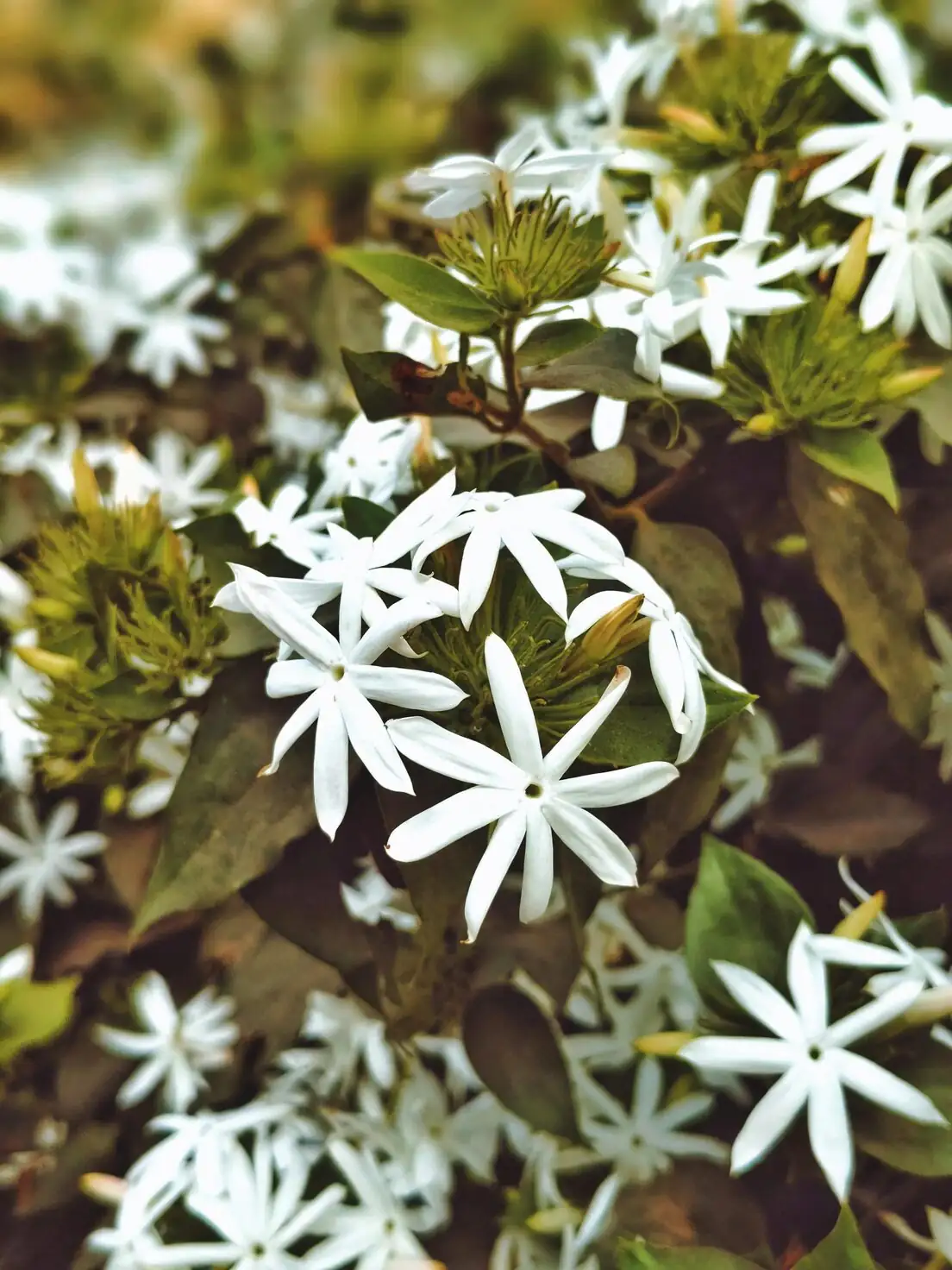
- Feeding: Monthly during the growing season. A couple of bloom-focused feeds before summer can encourage the sweet, starry white flowers (more reliable outdoors).
- Training: When shoots reach ~30 cm (12 in), guide onto a small trellis or let them trail. Pinch tips for branching.
- Variegation care: Promptly remove any all-green reverted shoots to preserve the patterned look.
- Repotting: Every ~2 years in spring, into a fertile, loose, well-drained mix. Water sparingly right after repotting.
Troubleshooting propagation and young plants
- Yellowing/dropping leaves: Usually low light or cold + overwatering. Move brighter, keep warmer (ideally >10°C/50°F in winter), and water less in cool conditions.
- Rotting cuttings: Medium too wet, poor airflow, or low temps. Switch to grittier mix, increase ventilation, hold temperatures steady.
- Leaf spot: Improve airflow, avoid wet foliage late in the day; remove affected leaves. Use a broad-spectrum fungicide labeled for ornamental leaf spot if needed.
- Spider mites (especially indoors, dry air): Raise humidity, rinse foliage, and treat with insecticidal soap/horticultural oil or a labeled miticide as directed.
Why not seed?
Seeds can be sown fresh at 13–16°C (55–61°F), but seedlings often lose the cream-and-green and revert to solid green. If you love the variegation (who doesn’t?), stick with cuttings or layering for clonal copies.
Propagation checklists
Semi-ripe tip cuttings (mix)
- 10–12 cm tips; 3–4 leaves retained
- Moist sand/gritty medium
- Bright, warm, ventilated
- Roots: ~3–4 weeks
Water rooting
- 10–12 cm tips; one node submerged
- Change water every 3–5 days
- Bright, warm
- Roots: ~3–4 weeks
Layering
- Pin a node into a pot of loose, well-drained mix
- Keep evenly moist
- Bright, warm
- Roots: ~4–8 weeks
Symbolism, briefly
Variegated star jasmine is evergreen and twining—traits long read as signs of loyalty and steadfastness in garden lore. While “flower language” traditions aren’t formal science, the idea has stuck: a plant that clings and endures becomes a quiet emblem of constancy. It’s a fitting metaphor for this cultivar too—once established, it stays beautiful with minimal fuss and is remarkably faithful in propagation.
Happy cloning—and remember: bright light, warm roots, and a gritty medium are the trio that turn “maybe” into “of course it’s rooted.”